
Strait of Hormuz Blockade Triggers Global Oil Shock as Saudi Arabia, UAE and Qatar Energy Crisis Destabilizes USA Aviation; United Airlines Accelerates 55 Boeing 737 MAX Deliveries to Combat $200/bbl Oil Threat in May 2026
A strategic blockade of the Strait of Hormuz has ignited a global energy crisis, sending oil prices to record highs. As Saudi Arabia, the UAE, and Qatar face export disruptions, United Airlines announces a massive fleet boost with 55 new Boeing 737 MAX jets to mitigate the impact of the 2026 global oil shock.

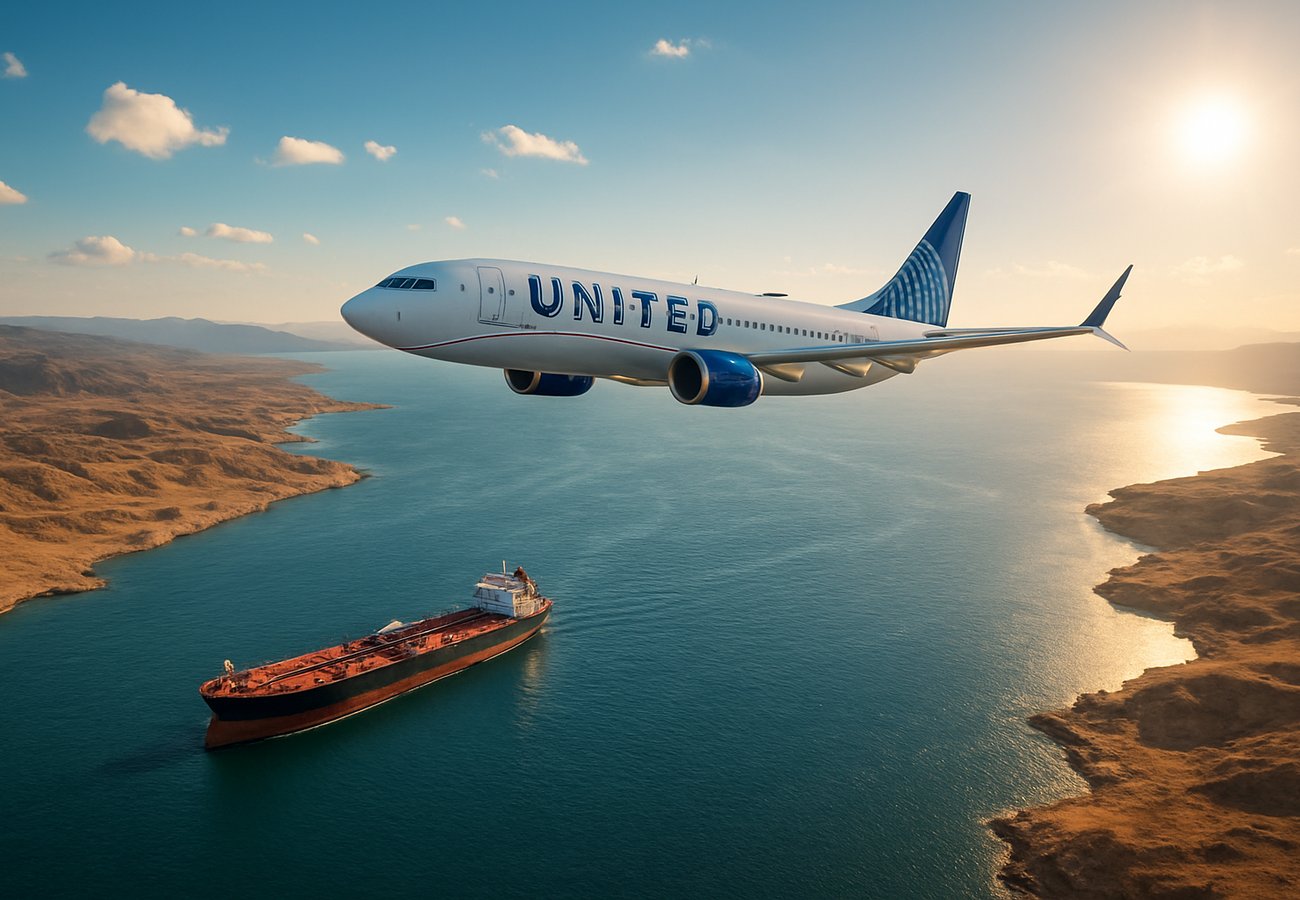
Image generated by AI
A global energy crisis of existential magnitude has erupted following the strategic blockade of the Strait of Hormuz, triggering an immediate oil price shock that is now forcing a radical restructuring of the United States’ aviation strategy. As the United States, Iran, and Gulf Cooperation Council (GCC) nations including Saudi Arabia, the UAE, and Qatar move to the brink of a total regional war, United Airlines has made a definitive defensive move. On May 10, 2026, the carrier announced it is accelerating the delivery of 55 new Boeing 737 MAX jets as part of a broader 87-aircraft fleet boost designed to survive the $200/bbl oil environment created by the maritime standoff in the Persian Gulf.
The move by United Airlines underscores the extreme vulnerability of the global aviation sector to maritime instability. With the Strait of Hormuz serving as the primary exit point for over 20% of the world's petroleum, the transition to ultra-fuel-efficient aircraft like the Boeing 737 MAX has shifted from a sustainability goal to a survival mandate.
Expanded Overview: The 21% Global Oil Supply Severed
The blockade of the Strait of Hormuz — a narrow chokepoint through which 21 million barrels of oil per day (approximately 21% of global petroleum consumption) pass — represents a total collapse of international energy security. For major petroleum exporters like Kuwait, Iraq, and Bahrain, and the world’s leading LNG supplier, Qatar, the inability to access the sea has rendered their primary economic assets unreachable.
As the International Energy Agency (IEA) activates emergency protocols, the impact on US carriers is manifesting as a massive cost-per-seat-mile escalation. United’s decision to integrate 55 new 737 MAX jets — which offer a 15-20% reduction in fuel burn compared to previous generations — is a direct counter-maneuver against the skyrocketing cost of jet fuel arriving at US hubs from the conflict zone.
Geopolitical Context: US-Iran Military Standoff
The current crisis is the result of a rapid and violent escalation in the US-Iran conflict. Following the deployment of naval assets and the reported placement of maritime mines by the Iranian Revolutionary Guard Corps (IRGC), the United States Centcom has authorized "freedom of navigation" operations, while Saudi Arabia and the UAE have called for immediate diplomatic restraint to protect their offshore energy infrastructure.
The role of Qatar is particularly critical. As a primary energy supplier to the global market and a key diplomatic mediator, Qatar’s export halt is creating a massive energy supply vacuum. This energy crisis is not just a regional issue; it is a direct threat to the financial viability of long-haul flights from Chicago, Houston, and San Francisco.
Global Energy Impact: Record Oil Prices and Supply Chain Risks
The economic fallout was instantaneous. Brent Crude prices have surged by over $25 per barrel in less than 24 hours, with the "war premium" now built into every operational decision in the U.S. aviation sector.
- Oil Prices: The price surge has translated directly into record-high jet fuel costs, forcing US carriers to implement immediate "emergency fuel surcharges" and reduce flight frequencies on less profitable domestic routes.
- Shipping Disruptions: The closure of the Strait has forced a massive rerouting of tankers, adding weeks to the delivery of refined petroleum products to American ports.
- Supply Chain Risk: The aviation industry's reliance on specialized engine components — often produced using energy-intensive processes — is being tested. United’s 2026 fleet boost is an attempt to lock in modernized infrastructure before the global supply chain for aerospace parts further degrades under the weight of the energy shock.
Shipping & Trade Impact: Vessel Rerouting and Insurance Spikes
The maritime industry is in a state of total panic as the Persian Gulf becomes a "no-go zone" for commercial tankers.
Vessel Rerouting: The shift to the long-haul route around Africa has increased maritime freight costs by over 350%. This is impacting the delivery of refined aviation fuel to US hubs, further driving up the operational costs for major carriers. Insurance Costs: War-risk insurance premiums for vessels operating near the Arabian Peninsula have skyrocketed, with many underwriters suspending coverage for any vessel linked to the US-Iran conflict. Trade Delays: The logistical bottleneck is already impacting the delivery of high-value goods moving between the USA and the global market, further straining global trade security.
Regional Impact: The Gulf States and USA’s Strategic Concerns
For the Gulf states — Saudi Arabia, UAE, Qatar, Kuwait, Oman, and Bahrain — the blockade is a fiscal disaster. Their primary revenue stream has been "locked," leading to a sudden halt in sovereign wealth fund investments across the United States.
In the USA, the government is monitoring the situation with extreme concern. The aviation and tourism sectors are vital components of the American economy. If the global energy crisis continues to drive fuel prices higher, the 55 Boeing 737 MAX jets being delivered to United will be the carrier's primary defense against a total suspension of non-essential domestic travel. The ability of these jets to operate medium-haul routes with significantly lower fuel consumption makes them the most valuable assets in the 2026 market.
Industry / Expert Analysis: The Survival of the Most Efficient
Aviation analysts suggest that United’s fleet expansion is a symptom of a broader survival strategy. "The USA’s aviation sector is operating on the edge," says one senior energy strategist. "The investment in the 737 MAX is a direct consequence of the Strait of Hormuz blockade hitting the 'fuel-cost ceiling.' Airlines like United simply cannot survive a sustained $200/bbl oil shock without a radical reduction in their fleet's average fuel burn."
According to IATA, the global airline industry is facing a period of "unprecedented volatility" where geopolitical threats in the Middle East can decide the bankruptcy or survival of a carrier in Chicago within hours.
What Happens Next: Diplomatic Scenarios
Scenario 1: Coalition Escorts: A US-led naval coalition begins escorting tankers through the Strait, restoring some flow but maintaining a state of low-level maritime warfare. Oil prices remain at a "permanently high" war-premium.
Scenario 2: Successful Mediation: Diplomatic efforts by Qatar and Oman lead to a temporary de-escalation, allowing the Strait to reopen. Prices stabilize, but the logistical backlog for the US hubs takes weeks to clear.
Scenario 3: Total Regional War: The conflict spreads, leading to the destruction of key refineries in Saudi Arabia and the UAE. This would trigger a permanent global energy crisis and a total shutdown of the world's non-essential aviation network.
Conclusion: Reinforcing Global Risk and Uncertainty
United Airlines’ massive delivery of 55 Boeing 737 MAX jets is a stark warning of the world's dangerous dependence on a single maritime chokepoint. The Strait of Hormuz blockade has proven that a geopolitical crisis in the Middle East can dictate the fleet strategy of a US carrier within hours. As Saudi Arabia, Iran, and the United States continue their dangerous high-stakes standoff, the global aviation industry and the traveling public must prepare for a period of extreme risk, record-high costs, and systemic uncertainty.
Key Takeaways
- Strait of Hormuz blockade has severed 21% of the world's oil supply, triggering a global energy crisis
- United Airlines to receive 55 Boeing 737 MAX jets in 2026 as a hedge against record-high oil prices
- US-Iran conflict and maritime mine deployment have created a global security threat
- Saudi Arabia, UAE, and Qatar face existential economic risks as exports are halted
- Oil prices have surged by over $25 per barrel, driving record-high jet fuel costs in the USA
- Global trade is facing massive delays as shipping reroutes around Africa
- Travelers are advised to monitor rebooking policies and expect sustained price hikes
Related Travel Guides
Strait of Hormuz Blockade Triggers Global Oil Shock: 119 Flights Delayed at LAX Airport
European Aviation Chaos: 2,233 Flights Delayed as Global Energy Crisis Hits Heathrow and Frankfurt
United Airlines Fleet Modernization Guide: Surviving the 2026 Global Oil Shock
Disclaimer: Fleet delivery data for United Airlines is based on corporate announcements as of May 10, 2026. Geopolitical events and their impact on global energy markets are subject to rapid change. Travelers are advised to verify all flight details directly with their airlines and monitor official government travel advisories.
Kunal K Choudhary
Co-Founder & Contributor
A passionate traveller and tech enthusiast. Kunal contributes to the vision and growth of Nomad Lawyer, bringing fresh perspectives and driving the community forward.
Learn more about our team →