
Strait of Hormuz Blockade Triggers Global Oil Shock as Saudi Arabia, UAE and Qatar Energy Crisis Destabilizes Asia Aviation; Singapore Changi Airport Dominates Global Rankings Amid US-Iran Conflict and Global Trade Security Threat in May 2026
A strategic blockade of the Strait of Hormuz has ignited a global energy crisis, sending oil prices to record highs. As Saudi Arabia, the UAE, and Qatar face export disruptions, Singapore’s Changi Airport (SIN) maintains its world-class dominance with 6.10 million passengers, reinforcing its role as a resilient hub during the 2026 oil shock.

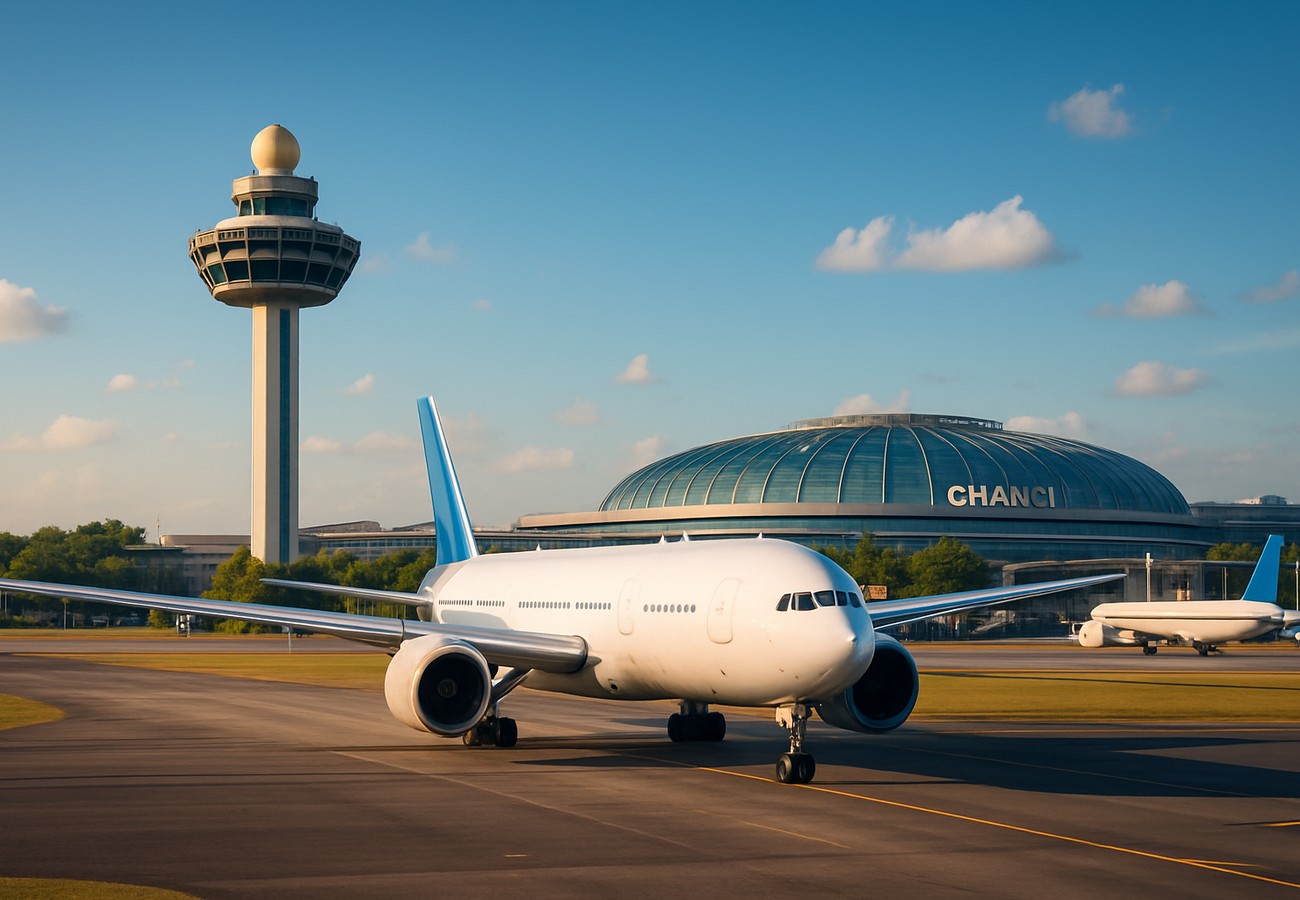
Image generated by AI
A global energy crisis of historic magnitude has erupted following the strategic blockade of the Strait of Hormuz, triggering an immediate oil price shock that is now testing the operational limits of every major international aviation hub. As the United States, Iran, and Gulf Cooperation Council (GCC) nations including Saudi Arabia, the UAE, and Qatar move to the brink of military conflict, Singapore’s Changi Airport (SIN) has emerged as a beacon of resilience. Reporting a staggering 6.10 million passenger movements in its most recent operational cycle, Changi continues to dominate global rankings, leveraging its world-class automation and strategic location to maintain global connectivity as the Persian Gulf becomes a maritime "no-go zone."
The dominance of Changi Airport during this period of unprecedented volatility underscores Singapore’s role as a critical node in the global trade network. With the $200/bbl oil threat looming, the airport’s focus on digital innovation and terminal efficiency has become a vital asset for airlines seeking safe havens and reliable refueling corridors in the Asia-Pacific region.
Expanded Overview: Changi as a Fortress of Resilience
The blockade of the Strait of Hormuz — a narrow chokepoint through which 21 million barrels of oil per day (approximately 21% of global petroleum consumption) pass — represents a total collapse of international energy security. For major petroleum exporters like Kuwait, Iraq, and Bahrain, and the world’s leading LNG supplier, Qatar, the inability to access the sea has rendered their primary economic assets unreachable.
As the International Energy Agency (IEA) activates emergency protocols, Singapore is playing a dual role as both a primary refinery hub and a premier aviation gateway. Changi’s ability to handle over 6.10 million passengers while maintaining record-high service levels is a testament to its strategic depth. By serving as a bridge between Asia, Europe, and the West that avoids the conflict-ridden Middle Eastern corridors, Changi is effectively absorbing the logistical pressure caused by the global shipping disruption and the US-Iran military standoff.
Section-Wise Breakdown: Changi Airport’s Operational Dominance
Terminal Efficiency and Biometric Resilience
Changi’s official corporate data reveals a heavy investment in digital and automation technologies. These are no longer just "luxuries"—they are essential tools for managing the systemic strain of the oil shock. Automated baggage handling and biometric immigration processing allow the airport to handle massive traffic volumes with minimal human intervention, reducing the risk of the labor shortages that are currently crippling airports in Europe and North America.
Jewel Changi: A Lifestyle Sanctuary in a Volatile World
The Jewel Changi Airport complex, featuring the iconic Rain Vortex and lush indoor gardens, provides more than just aesthetic appeal; it serves as a high-value transit sanctuary for travelers displaced by the global crisis. As long-haul flights are rerouted to avoid the Middle East, layover times are increasing. Jewel’s integrated retail and dining precincts allow Changi to maintain its revenue streams even as fuel costs eat into airline margins.
Strategic Global Connectivity
Changi serves as an international gateway to more than 100 cities and territories. During the current blockade, this network has become a lifeline for global trade. Airlines operating from Singapore are providing the "safe corridors" needed to move high-value goods and personnel across regions without entering the Persian Gulf risk zone.
Flight Details and Traffic Statistics
| Performance Indicator | Data Point (March 2026) | Trend |
|---|---|---|
| Total Passenger Movements | 6.10 Million | ⬆️ Increasing |
| Connectivity Network | 100+ Cities Global | 🔄 Stable |
| Aircraft Movements | Thousands Daily | 📊 Robust |
| Cargo Throughput | Rising Year-on-Year | 📈 Strong |
Note: While Changi remains operational, travelers should expect systemic "fuel-adjustment surcharges" on all long-haul flights connecting through Singapore due to the $25/bbl war-premium currently affecting the global jet fuel market.
Passenger Impact: Navigating the High-Cost Era
For the millions of travelers passing through Changi, the impact of the global energy crisis is most visible in ticket pricing and schedule consolidation. However, Changi’s "resilience-first" approach means that once inside the terminal, the experience remains world-class. The airport’s award-winning immigration services and passenger comfort facilities are providing a necessary buffer against the "travel chaos" seen elsewhere.
The ripple effect of the Strait of Hormuz blockade means that layovers in Singapore are becoming a strategic choice for travelers who wish to avoid the airspace closures and insurance spikes affecting Gulf-based hubs.
Industry Analysis: The Future of the Global Hub
Aviation analysts suggest that Singapore is currently defining the future of the "crisis-ready" airport. "Changi is not just reigning in the rankings; it is reigning in its ability to withstand a global oil shock," says one senior energy strategist. "By decoupling its terminal efficiency from manual labor and focusing on a diversified global network, Singapore has built a 'geopolitical insurance policy' for its aviation sector."
According to IATA, the global airline industry is looking to hubs like Changi to lead the way in sustainable and automated growth, especially as the US-Iran conflict makes traditional Middle Eastern hubs less predictable for long-term route planning.
Conclusion: Setting the Global Benchmark for 2026
The sustained performance of Singapore’s Changi Airport represents a significant milestone in air travel innovation. As Saudi Arabia, the UAE, and the United States navigate the fallout of the Strait of Hormuz blockade, Changi stands as a model of how a nation can maintain global connectivity during a historic oil shock. Through strategic planning, continuous innovation, and an unwavering focus on the passenger experience, Changi Airport remains the gold standard for the future of international air transport in a volatile world.
Key Takeaways
- Strait of Hormuz blockade continues to drive a global energy crisis, positioning Singapore as a safe-haven hub.
- 6.10 million passengers passed through Changi in March 2026, marking record traffic levels.
- 100+ cities remain connected via Changi, providing vital trade links during the US-Iran conflict.
- Automation and Biometrics: Changi’s digital-first approach mitigates the operational risks of the global oil shock.
- Jewel Changi serves as a strategic sanctuary for long-haul travelers facing extended layovers.
- Economic Pillar: Changi’s robust performance supports Singapore’s ambition to remain the premier aviation center in Asia.
- Travelers are advised to leverage Singapore’s efficiency as a buffer against global travel disruptions.
Related Travel Guides
Strait of Hormuz Blockade Triggers Global Oil Shock: 119 Flights Delayed at LAX Airport
European Aviation Chaos: 2,233 Flights Delayed as Global Energy Crisis Hits Heathrow and Frankfurt
Singapore Transit Guide: Maximizing Your Layover During the 2026 Global Oil Shock
Disclaimer: Operational details for Changi Airport are based on official management reports as of May 10, 2026. Geopolitical events and their impact on global energy markets are subject to rapid change. Travelers are advised to verify all flight details directly with their airlines and monitor official government travel advisories.
Kunal K Choudhary
Co-Founder & Contributor
A passionate traveller and tech enthusiast. Kunal contributes to the vision and growth of Nomad Lawyer, bringing fresh perspectives and driving the community forward.
Learn more about our team →