
Storms Staffing Turmoil Snarl Flights: 3K+ Delays Hit US Hubs
Storms staffing turmoil disrupted 2,951 flights across major US hubs on March 19, 2026. Chicago, Orlando, Denver, and Dallas faced severe delays as airlines struggled with recovery operations following a powerful March storm system.

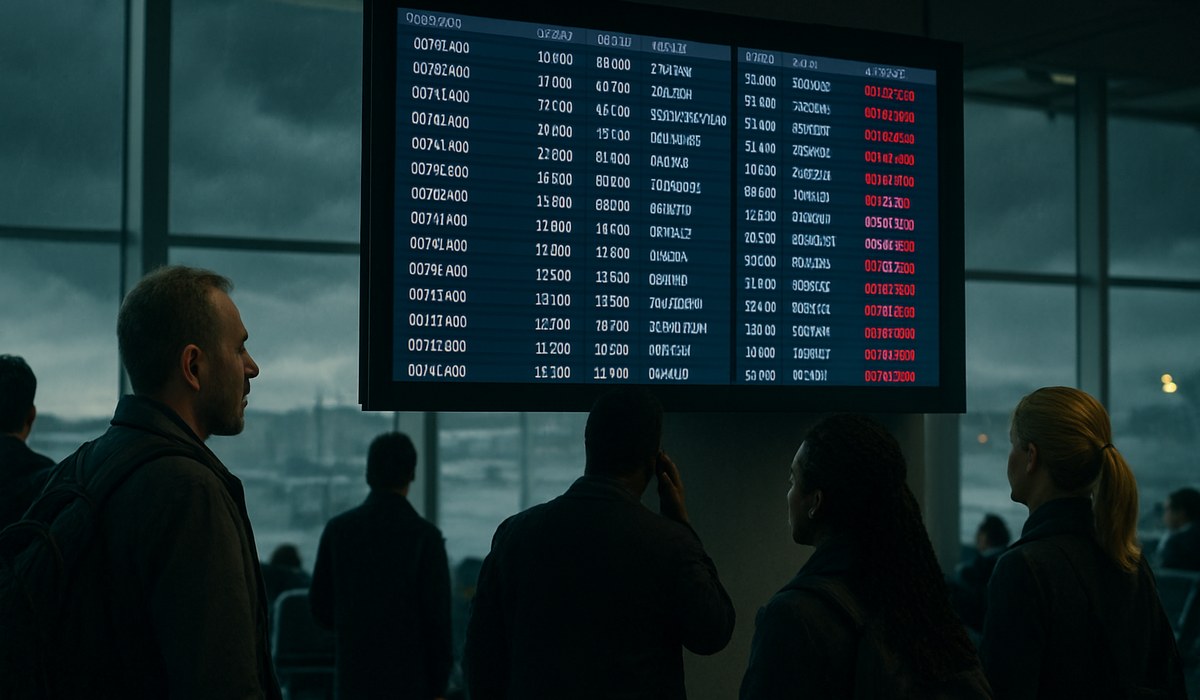
Image generated by AI
Massive Flight Disruption Hits Six Major U.S. Airport Hubs
A powerful convergence of storms, staffing constraints, and seasonal demand created significant chaos across American aviation on March 19, 2026. Flight-tracking data revealed 101 cancellations and 2,951 delays affecting Chicago (ORD/MDW), Orlando (MCO), Denver (DEN), Washington D.C. (IAD/DCA), Detroit (DTW), and Dallas (DFW/DAL). Spirit Airlines, Southwest Airlines, United Airlines, and Delta Air Lines bore the brunt of operational strain. The disruptions extended a recovery period that began after a destructive March 13–17 storm system swept across the Midwest and Northeast, leaving aircraft, crew, and ground operations scrambled across the country.
Chicago O'Hare: A Hub in Crisis Mode
Chicago's position as a critical connecting point for United Airlines and American Airlines made it ground zero for cascading delays. O'Hare International Airport (ORD) experienced crowded terminals, extended customer service lines, and departure boards dominated by red delay indicators on March 19. The storms staffing turmoil created bottlenecks at gates as arriving aircraft waited on taxiways for available parking positions. Since Chicago feeds connecting traffic nationwide, delays multiplied across secondary markets far from the original storm track. Passengers reported missing connections in Atlanta, Denver, and Miami due to the compounding ripple effect. According to FlightAware, ORD remained one of the top five most-delayed airports globally throughout the afternoon.
Orlando International: Spring Break Disruptions Peak
Orlando International Airport (MCO) snarled passenger schedules during peak spring break travel season. Flight-tracking systems documented extended ground holds, late departures, and crew repositioning delays throughout March 19. Families heading to theme parks, cruise terminals, and beach resorts faced significant itinerary disruptions. Spirit Airlines, which operates substantial leisure routes from MCO, struggled with tight aircraft utilization that left minimal recovery margin when early-morning cancellations cascaded into afternoon delays. Passengers reported limited same-day rebooking options due to already-full flights at competing carriers.
Denver, Washington D.C., and Dallas: Regional Hubs Strain Under Load
Denver International Airport (DEN) and the Washington D.C. region airports—including Dulles International (IAD) and Reagan National (DCA)—experienced waves of delays as carriers repositioned aircraft and crews throughout the day. Dallas/Fort Worth International (DFW) and Southwest's primary base at Dallas Love Field (DAL) also reported elevated disruption relative to typical March weekday operations. The storms staffing turmoil concentrated pressure at these three regional hubs, which serve as vital connection points for domestic networks. Detroit Metropolitan Wayne County Airport (DTW), Delta's important hub, faced widespread knock-on effects despite being geographically removed from the heaviest precipitation zones.
Spirit, Southwest, United, and Delta Navigate Network Recovery
The four largest carriers affected—Spirit, Southwest, United, and Delta—grappled with cascading operational challenges on March 19, 2026. Southwest Airlines, with major operations at Denver, Chicago Midway (MDW), and Dallas Love Field, received particular scrutiny from passengers citing rolling departure times and limited rebooking capacity. This echoed concerns from previous operational disruptions, though the current scope remained smaller in scale. United Airlines, anchored at Chicago O'Hare with substantial Denver and Washington Dulles presence, faced dense clusters of delayed flights driven by gate availability and crew scheduling pressures. Delta's role as a network carrier meant that Detroit-hub delays rippled across multiple connecting routes. Spirit Airlines experienced acute strain at Orlando due to high seasonal demand and minimal operational slack. According to IATA, network carriers typically operate with 2–4% schedule slack; tight margins amplify weather impact.
Root Causes: Weather Legacy, Lean Staffing, Maximized Schedules
The storms staffing turmoil resulted from three converging factors: severe weather aftermath, minimal crew reserves, and aggressive aircraft utilization strategies. The March 13–17 storm system generated blizzard conditions across the Upper Midwest and heavy rain/wind in eastern regions, displacing crews and aircraft across multiple airports. Even after meteorological clearing, recovery required repositioning aircraft and rebuilding crew rest cycles—a multi-day process. Airlines maintain lean staffing levels post-pandemic to maximize profitability during strong demand periods, particularly spring break travel windows. This operational model leaves minimal redundancy when major disruptions occur. Additionally, the FAA and ground operations at major hubs face staffing constraints that slow aircraft processing and gate assignment. According to the U.S. Department of Transportation, these systemic factors increasingly drive cumulative delay patterns across networks.
Traveler Impact: Real Numbers Behind the Disruptions
| Metric | Data Point |
|---|---|
| Total Cancellations (March 19, 2026) | 101 flights |
| Total Delays (March 19, 2026) | 2,951 flights |
| Primary Affected Hubs | Chicago (ORD/MDW), Orlando (MCO), Denver (DEN), D.C. (IAD/DCA), Detroit (DTW), Dallas (DFW/DAL) |
| Most-Impacted Carriers | Spirit, Southwest, United, Delta |
| Storm Period | March 13–17, 2026 |
| Peak Delay Hours | 10 a.m.–6 p.m. ET |
| Average Delay Duration | 45–90 minutes per affected flight |
What This Means for Travelers: Action Steps You Can Take Right Now
The combination of storms staffing turmoil and tight airline schedules means passengers must adopt proactive strategies. First, check your flight status 24–48 hours before departure using FlightAware or your airline's app; early warning enables rebooking on alternative carriers. Second, arrive at the airport 90 minutes before domestic departures—ground delays extend boarding windows. Third, book afternoon or early-evening flights when possible; early-morning departures face compounding delays. Fourth, document any cancellation or >3-hour delay with your confirmation number and boarding pass for potential DOT compensation eligibility. Fifth, maintain contact with your airline's customer service team via phone or app; text-based support queues move faster than airport counters. Sixth, consider purchasing trip delay insurance ($10–30) for future bookings during historically volatile weather months (March, November, December).
Frequently Asked Questions
What causes storms staffing turmoil to cascade across multiple airports in 2026? Storms staffing turmoil creates delays when a weather system disrupts aircraft and crew positioning at multiple hubs simultaneously. Airlines operate with minimal schedule slack to maximize utilization, so a single major cancellation at Chicago or Denver triggers downstream delays across the entire network. When crews exceed legal rest limits or aircraft require maintenance after diversions, recovery extends 2–4 days beyond the storm's end.
How long will it take airlines to recover from the March 2026 storm disruptions? Historical data suggests major weather events require 48–72 hours for complete schedule normalization across six or more hubs. The March 13–17 storm affected 2,951 flights on March 19 alone; full recovery typically requires parallel recovery of crew scheduling, aircraft repositioning, and maintenance backlogs. Airlines may continue reporting elevated delays through March 21–22, 2026.
Which airports should travelers avoid during storms staffing turmoil events? During storms staffing turmoil periods, prioritize departures from smaller regional airports (like Austin, Phoenix, Nashville) over major hubs (Chicago, Denver, D.C., Dallas). If hub travel is unavoidable, book afternoon departures; morning flights compound previous night's delays. Connecting passengers should avoid 2–4 hour layovers at O'Hare, Denver, or Dallas during March.
What compensation am I entitled to if storms staffing turmoil delays my flight 3+ hours? Under U.S. Department of Transportation regulations, passengers delayed >3 hours on domestic flights may receive $400–$750 compensation depending on flight length, provided the airline caused the delay. Weather-related cancellations and delays typically qualify as "extraordinary circumstances" that void compensation eligibility; however, airlines must provide meal vouchers, rebooking, and hotel accommodations for overnight delays within their control.
Related Travel Guides
Spring Break Flight Disruption Survival Guide 2026 How to Rebook Flights After Cancellation: DOT Rules & Airline Policies Best Times to Fly: Seasonal Delay Patterns and Weather-Proof Travel Tips
Disclaimer
This article is for informational and educational purposes only. It does not constitute legal, financial, or professional advice. While we strive to provide accurate and up-to-date information, travel policies, regulations, and conditions change rapidly. Always verify information with official sources before making travel decisions. Nomad Lawyer makes no representations about the accuracy, reliability, completeness, or suitability of the information provided. Readers should consult qualified professionals for advice specific to their circumstances. The views expressed in this article are those of the author and do not necessarily reflect the views of Nomad Lawyer.
Preeti Gunjan
Contributor & Community Manager
A passionate traveller and community builder. Preeti helps grow the Nomad Lawyer community, fostering engagement and bringing the reader experience to life.
Learn more about our team →