
Markets Travel Slowdown: US Visa Jitters Hit Japan, France, UK, Brazil 2026
Major source markets for US inbound tourism show unexpected weakness in 2026 as visa policy concerns and economic headwinds deter international visitors from Japan, France, UK, Brazil and Mexico.

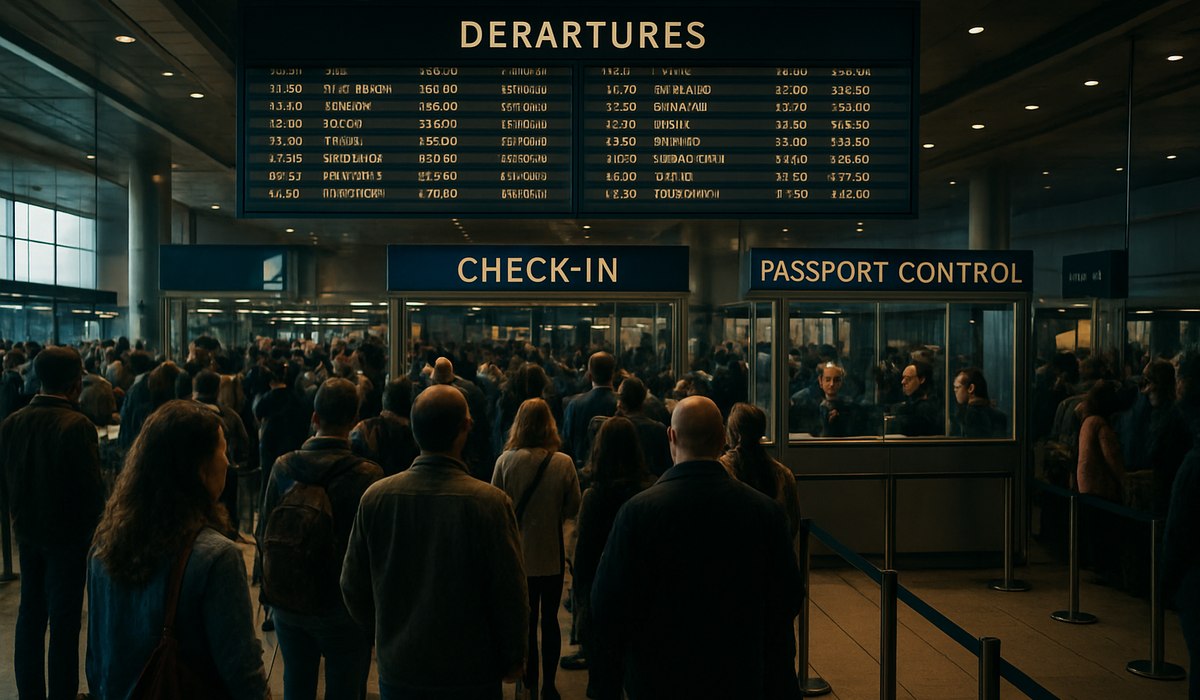
Image generated by AI
Markets Travel Slowdown Hits Major US Inbound Tourism Routes
Inbound tourism to the United States from Japan, France, the United Kingdom, Brazil, and Mexico is experiencing unexpected weakness in 2026, signaling that visa concerns and economic barriers are deterring international visitors despite robust global travel demand. Industry data reveals that arrivals from these five key markets are significantly lagging prior-year forecasts, as travelers cite mounting anxiety over US visa policy tightening, longer consular processing times, and enhanced background check procedures. This divergence between worldwide passenger growth and US-specific softness highlights how visa complexity and policy uncertainty can suppress demand among traditionally reliable source markets.
Key Markets Losing Momentum on US Routes
Western European nations have recorded the most pronounced slowdown in US-bound bookings. France and the United Kingdom, which have historically anchored transatlantic connectivity, are now posting year-over-year declines in visitor arrivals despite strong intra-European and Asia-Pacific travel patterns elsewhere. Analysts attribute much of this weakness to perception of administrative burden rather than actual policy changes affecting UK and French nationals.
Japan presents a more complex recovery scenario. Once a dependable long-haul engine for US destinations, Japanese visitor volumes are climbing slower than anticipated due to currency fluctuations, broader Northeast Asia economic headwinds, and shifting travel preferences toward regional destinations. Major carriers including Japan Airlines have responded by concentrating capacity on major trunk routes—Tokyo to New York, Los Angeles, and Seattle—while deferring growth on secondary city pairs.
Brazil and Mexico, leading Latin American markets, are similarly showing softer northbound growth rates. Both nations are increasingly redirecting tourism spend toward intra-regional travel and European alternatives perceived as less administratively complicated. For Mexico particularly, proximity to the US is being offset by visa perception challenges that push leisure travelers toward Caribbean and Central American alternatives.
Visa Jitters and Economic Barriers Cited
US visa policy changes introduced since mid-2025 have amplified traveler anxiety, particularly around expanded visa bond schemes, intensified overstay-detection protocols, and selective background check enhancements. While these measures don't directly target French, Japanese, or UK nationals, widespread media coverage of policy shifts has inflated perceptions of entry risk and complexity across all markets.
Travel advisors across Europe and Latin America report increased client inquiries about consular wait times, secondary screening likelihood at US ports of entry, and documentation requirements. Previous consular backlogs—though substantially cleared—have created lasting negative perception that deters repeat bookings. Many potential visitors now view Canada, Schengen nations, and Caribbean destinations as simpler alternatives requiring fewer procedural steps.
Policy debates in Washington regarding national security reviews and potential entry restrictions further amplify uncertainty, even when measures affect only narrow country cohorts. This visibility of policy discourse influences decision-making among travelers across all markets. For business travelers and holiday planners accustomed to treating US travel as straightforward, the shifting environment is prompting destination diversification away from traditional American gateways.
Check current entry requirements on the US State Department's travel advisory portal and IATA Travel Centre before planning your trip.
Airlines Adjust 2025-2026 Capacity Plans
Major carriers have recalibrated their transatlantic and transpacific capacity deployment to reflect softer-than-expected forward bookings. Japan Airlines, while maintaining North America as strategic priority, is concentrating aircraft deployment on marquee routes (Tokyo-New York, Tokyo-Los Angeles) while deferring growth on secondary city pairs where demand softness emerged in advance bookings.
United Airlines and other legacy carriers similarly report more selective scheduling, focusing resources on proven high-yield routes rather than expanding into thinner markets. Winter 2025-2026 season data shows reduced frequency on certain secondary routes while maintaining or increasing service on primary gateways. This rebalancing reflects both near-term booking weakness and airline caution about capital deployment until market sentiment stabilizes.
Airlines anticipate demand stabilization by Q3 2026 as visa policy clarity emerges and currency conditions potentially improve. However, schedule adjustments underscore how visa jitters translate directly into reduced flight availability on affected routes, which can further suppress demand through limited seat availability and higher fares.
Recovery Forecasts Push to 2026 and Beyond
Earlier industry forecasts suggested France, Brazil, and Mexico would only recover to pre-pandemic US visitation levels during 2026, following flat or declining arrivals throughout 2024-2025. Current revisions push recovery timelines further, with many analysts now projecting full recovery across these five markets by Q4 2026 or Q1 2027.
Three critical factors will determine recovery speed: clarification of US visa policy and permanence of recent measures, improvement in currency conditions particularly affecting Japanese yen and Mexican peso, and positive media narratives demonstrating visa processing simplicity. Until one or more of these catalysts emerge, markets travel slowdown will likely persist across these key corridors.
Industry associations including the US Travel Association and regional tourism boards are actively lobbying Washington to clarify long-term visa policy direction, recognizing that policy uncertainty inflicts as much damage as actual restrictive policies. Communications campaigns targeting key source markets are underway to rebuild confidence in US entry accessibility.
What This Means for Travelers
If you're planning US travel from Japan, France, UK, Brazil, or Mexico, consider these actionable steps:
-
Apply for visas early—current processing times are improved but still variable by location; applications 4-6 months before travel reduce stress and secondary screening risk perception.
-
Prepare comprehensive documentation—the more thorough your visa application package, the lower your secondary screening likelihood; gather employment verification, financial statements, and detailed itineraries.
-
Monitor policy changes—subscribe to US State Department alerts and your nation's embassy travel advisory channels for the latest visa requirement updates before booking flights.
-
Book redundantly—given capacity constraints, book accommodations and attractions with flexible cancellation terms in case flight availability tightens on your preferred dates.
-
Consider timing alternatives—shoulder season travel (April-May, September-October) often experiences less visa processing congestion than peak summer and holiday periods.
-
Budget for visa bond costs—if applicable to your nationality, factor visa bond expenses into total trip budgeting; requirements vary by country and evolve regularly.
FAQ: Markets Travel Slowdown and US Visa Concerns
Q: How long are US visitor visa processing times currently for Japanese nationals? A: Standard processing times for Japanese nationals at Tokyo embassy posts average 5-7 business days for visa interviews, though expedited services can reduce this to 1-2 business days for an additional fee. Check travel.state.gov for your specific location's current timeline.
Q: Are UK and French citizens facing new visa restrictions for 2026? A: UK and French nationals continue to qualify for standard B1/B2 visitor visas without country-specific restrictions; however, enhanced background checking procedures may extend processing time by 2-3 weeks depending on interview circumstances.
Q: What is the expanded visa bond scheme mentioned in recent policy changes? A: The visa bond program requires certain nationalities (country list updated regularly) to post financial guarantees demonstrating visitor ties and low overstay risk. Check your nation's embassy website for current requirements, as country classifications change quarterly.
Q: Will markets travel slowdown eventually reverse if visa policy stays unchanged? A: Yes. Industry forecasts suggest demand stabilization by late 2026 as media narrative shifts from policy uncertainty to policy clarity, currency conditions normalize, and travelers experience straightforward processing. Tourism typically recovers within 12-18 months of perception improvement.
Related Travel Guides
- [Complete Guide to US B1/B2 Visitor Visa Requirements for International Travelers](/blog/b1-b2-
Disclaimer
This article is for informational and educational purposes only. It does not constitute legal, financial, or professional advice. While we strive to provide accurate and up-to-date information, travel policies, regulations, and conditions change rapidly. Always verify information with official sources before making travel decisions. Nomad Lawyer makes no representations about the accuracy, reliability, completeness, or suitability of the information provided. Readers should consult qualified professionals for advice specific to their circumstances. The views expressed in this article are those of the author and do not necessarily reflect the views of Nomad Lawyer.
Raushan Kumar
Founder & Lead Developer
Full-stack developer with 11+ years of experience and a passionate traveller. Raushan built Nomad Lawyer from the ground up with a vision to create the best travel and law experience on the web.
Learn more about our team →