
Spirit Flight Grounded in Miami Sparks Nationwide Rolling Delays Across 50+ Destinations
A single grounded Spirit Airlines aircraft at Miami International Airport triggered cascading delays affecting 50+ U.S. destinations in April 2026, exposing critical vulnerabilities in domestic aviation operations during peak travel season.

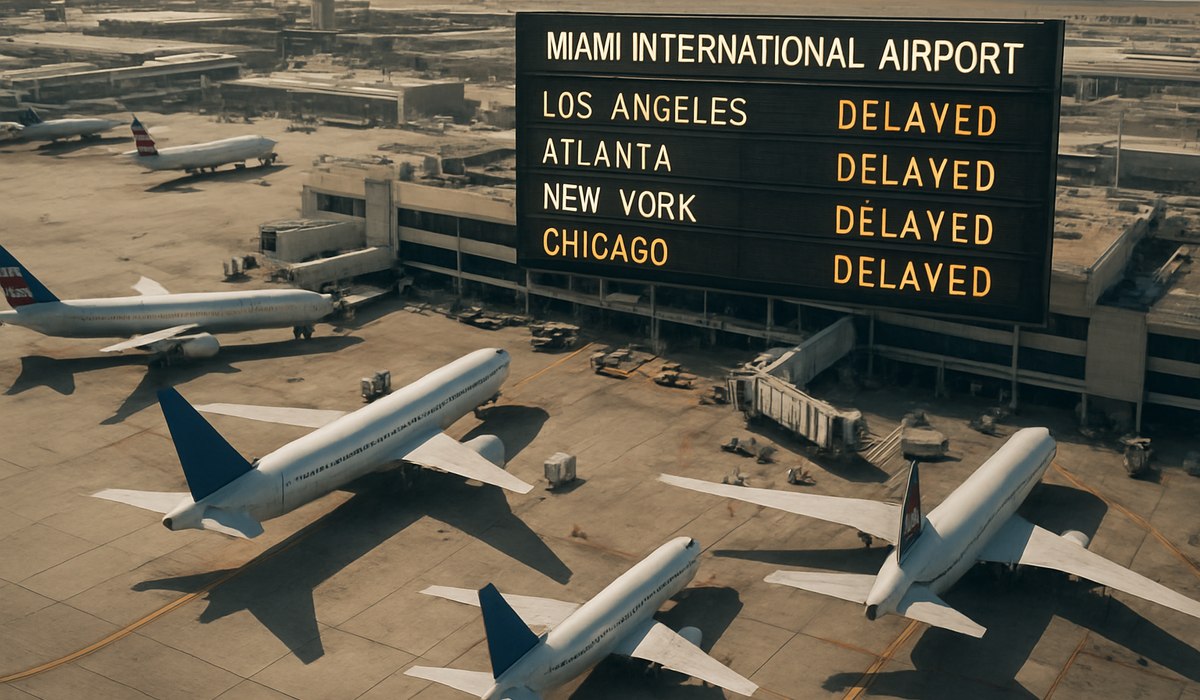
Image generated by AI
A Single Aircraft Shutdown Creates Network-Wide Disruption
Spirit Airlines experienced significant operational strain on April 12, 2026, when one grounded aircraft at Miami International Airport triggered rolling delays across its entire network. The low-cost carrier's Miami hub became the epicenter of a cascading disruption that affected more than 50 destinations nationwide, impacting thousands of passengers during peak spring travel season. The incident underscores how tightly scheduled operations and lean aircraft utilization at budget carriers can amplify small disruptions into system-wide bottlenecks.
The grounded aircraft was scheduled to operate a sequence of short and medium-haul flights connecting major leisure markets. With Spirit operating minimal buffer time between rotations—a strategy essential to its low-cost model—extended ground time at Miami quickly rippled through subsequent flight assignments. Passengers reported departure boards shifting back by 30 to 60 minutes incrementally, creating uncertainty about whether flights would operate at all.
How One Grounded Aircraft Created a Network-Wide Bottleneck
When Spirit's grounded aircraft failed to depart as scheduled from Miami International Airport, the airline lacked sufficient spare aircraft and crews to absorb the delay. This operational vulnerability is common among budget carriers running maximized utilization rates. Each delayed leg fed directly into the next scheduled flight, creating a domino effect.
By mid-afternoon, the initial ground delay had spawned more than ten rolling delays across Spirit's network. Passengers experienced departure boards that continuously updated with new times rather than outright cancellations, complicating travel decisions and connection planning. Gate areas became congested as travelers waited for clarity on whether their flights would depart.
The cascading impact reflected a fundamental fragility in 2026 U.S. aviation infrastructure. According to operational data from the FAA, single-point failures at major hubs can trigger hundreds of downstream delays when carriers operate with minimal redundancy. Spirit's Miami focus city, central to its post-bankruptcy recovery strategy, proved particularly vulnerable to such disruptions.
Rolling Delays Ripple Across More Than 50 Destinations
Spirit's route network meant the Miami disruption spread rapidly across the United States. Major leisure gateways in Florida, secondary hubs including Fort Lauderdale and Orlando, and Northeast airports in New York became sites of notable delays. The airline's strategy of operating through multiple focus cities rather than traditional spokes made it impossible to isolate disruption to a single corridor.
Travel data tracking April 12, 2026 performance showed Spirit posting one of the highest delay counts among U.S. carriers that day. Affected destinations included:
- Florida leisure markets (Tampa, Jacksonville, Fort Myers)
- Caribbean gateway connections
- Northeast metropolitan areas (New York, Boston)
- Midwest hubs (Detroit)
- Secondary leisure destinations (Myrtle Beach, Cancun)
Airports that had already experienced earlier weather-related slowdowns absorbed additional congestion as delayed Spirit aircraft sought new takeoff slots. Crowded concourses, extended boarding queue waits, and missed connections characterized the traveler experience throughout the day. Social media posts documented stranded passengers, overnight hotel expenses, and uncertainty about schedule resumption.
Systemic Vulnerabilities: Why Spirit's Tight Schedules Amplify Disruption
Budget airline operations depend on maximizing aircraft utilization—operating planes with minimal ground time between flights. Spirit's model achieves profitability through this efficiency, but it eliminates operational slack. Unlike full-service carriers with larger spare aircraft pools and crew reserves, Spirit's lean staffing approach means any ground delay immediately threatens subsequent rotations.
The April 2026 disruption occurred amid broader aviation stress. February had brought crew shortage cancellations as Spirit recalled furloughed staff following its second bankruptcy filing in under two years. March and early April experienced persistent weather impacts affecting national delay totals, which climbed into thousands on multiple days. Staffing gaps left minimal recovery capacity when individual flights fell behind schedule.
This backdrop made Spirit particularly vulnerable. Industry analysts noted that carriers operating with tight crew scheduling and high aircraft utilization cannot quickly recover from unexpected delays. A grounded aircraft at a busy airport like Miami compounds every hour, eliminating flexibility that other carriers maintain through buffer scheduling.
The U.S. aviation system's sensitivity to disruption became evident. National delay statistics from early April 2026 demonstrated how interconnected operations create vulnerability. When one carrier experiences disruption at a major hub, secondary effects ripple through shared airport facilities, air traffic control patterns, and crew connections.
What This Means for Travelers and the Industry
The Miami incident highlights critical vulnerabilities in domestic air travel that 2026 travelers must understand. Budget carriers' operational efficiency comes with trade-offs in disruption resilience. Passengers choosing budget airlines should expect higher vulnerability to cascading delays when mechanical issues, weather, or staffing constraints arise.
For the aviation industry, the April disruption raises questions about scheduling practices. Current FAA regulations permit carriers to operate at utilization levels that eliminate disruption buffers. As airlines optimize profitability, passengers bear increasing risk from single-point failures. Industry observers suggest that regulatory discussion about minimum ground times and crew availability might address systemic fragility.
The incident also reflects broader 2026 aviation challenges. Pandemic-era staffing gaps persist despite recovery efforts. Weather volatility continues creating delays at major hubs. Holiday and seasonal peak periods strain capacity. These pressures combine to create an environment where a single grounded aircraft can affect 50+ destinations.
Travelers should monitor their flights actively during peak periods using real-time tracking tools. Building connection buffers beyond minimum requirements provides protection. Understanding your airline's operational model—particularly its aircraft utilization rate—helps assess disruption risk when purchasing tickets.
Traveler Action Checklist
If your Spirit Airlines flight was affected by the April 2026 Miami disruption, follow these steps:
-
Check flight status immediately on FlightAware or your airline app for real-time updates and rebooking options.
-
Document your flight details including confirmation number, scheduled time, actual delay length, and any expenses incurred.
-
Request compensation eligibility through the U.S. Department of Transportation's consumer rights portal if applicable under 14 CFR 259.
-
File a formal complaint with the DOT if compensation is denied, including supporting documentation of delays exceeding three hours.
-
Review baggage policies to understand coverage for lost luggage caused by operational disruptions.
-
Explore airline-offered vouchers or rebooking options before accepting compensation, as sometimes alternative arrangements provide greater value.
-
Notify your accommodation or ground transportation provider of revised arrival times to avoid missed reservations.
-
Maintain all receipts for meals, hotel stays, and alternative transportation used during delays.
-
Contact credit card companies about travel delay protection if you purchased tickets with premium cards offering such coverage.
-
Follow up with Spirit within 30 days to ensure your claim receives proper processing.
Key Data: April 12, 2026 Spirit Airlines Disruption
| Metric | Details |
|---|---|
| Grounded Aircraft Location | Miami International Airport (MIA) |
| Affected Destinations | 50+ U.S. airports including Florida, Northeast, Midwest |
| Rolling Delays Triggered | 10+ cascading delays by late afternoon |
| Peak Delay Range | 30-60 minute incremental updates throughout day |
| Secondary Hubs Impacted | Fort Lauderdale, Orlando, Detroit, New York area airports |
| Operational Factors | Minimal crew reserves, tight turnaround scheduling, prior staffing gaps |
| Busiest Affected Markets | Tampa, Jacksonville, New York, Boston, Cancun |
| Traveler Impact | Missed connections, unplanned overnight stays, delayed |
Disclaimer
This article is for informational and educational purposes only. It does not constitute legal, financial, or professional advice. While we strive to provide accurate and up-to-date information, travel policies, regulations, and conditions change rapidly. Always verify information with official sources before making travel decisions. Nomad Lawyer makes no representations about the accuracy, reliability, completeness, or suitability of the information provided. Readers should consult qualified professionals for advice specific to their circumstances. The views expressed in this article are those of the author and do not necessarily reflect the views of Nomad Lawyer.
Raushan Kumar
Founder & Lead Developer
Full-stack developer with 11+ years of experience and a passionate traveller. Raushan built Nomad Lawyer from the ground up with a vision to create the best travel and law experience on the web.
Learn more about our team →