
Flight disruptions loom as Nigeria's rainy season threatens domestic aviation
Flight disruptions loom across Nigeria's domestic network as meteorological forecasts predict a wetter-than-usual 2026 rainy season. Thunderstorms, flooding, and airport congestion threaten Lagos, Abuja, and Port Harcourt routes.

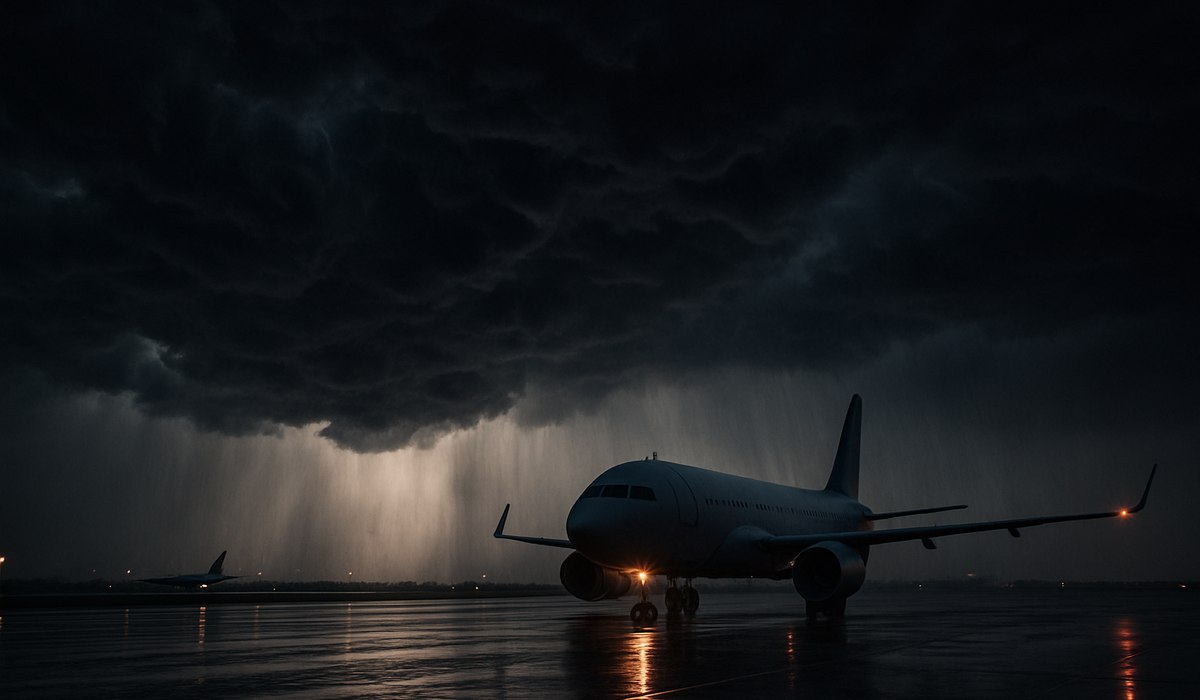
Image generated by AI
Rainy Season Threatens Nigeria's Busiest Flight Routes
Nigeria's domestic aviation sector faces significant challenges as the 2026 rainy season approaches with forecasts predicting wetter-than-usual conditions across West Africa. The Nigerian Meteorological Agency's seasonal climate prediction indicates intense thunderstorms, squall lines, and reduced cloud ceilings will strain schedules on high-traffic routes connecting Lagos, Abuja, and Port Harcourt—three hubs handling tens of thousands of daily passengers. Airlines operating these corridors are bracing for widespread flight disruptions, with weather-related delays and cancellations expected to spike during peak rainfall months.
The convergence of meteorological hazards and expanding airport capacity is creating operational bottlenecks that amplify disruption cascades. As newer facilities like Victor Attah International Airport in Akwa Ibom State ramp up international operations, route networks are densifying precisely when seasonal storms become most volatile. Carriers operating with minimal scheduling buffers and limited spare aircraft face compounding risks of missed connections, overnight repositioning, and passenger rebooking challenges.
Stormier Skies and a Busier Aviation Map
Nigeria's aviation infrastructure is simultaneously expanding and contending with nature's fiercest seasonal threat. Climate outlooks indicate a wetter-than-usual 2026 rainy season, increasing the probability of intense thunderstorms during daylight and evening travel peaks. The Nigerian Meteorological Agency specifically identifies convective storms, microbursts, and wind shear as primary hazards capable of triggering sudden flight disruptions, particularly on the Lagos-Abuja, Abuja-Port Harcourt, and Lagos-Port Harcourt domestic corridors where storm cells form with minimal warning.
Victor Attah International Airport's recent approval for expanded international operations exemplifies how route networks are growing during a meteorologically challenging period. Additional airport capacity draws traffic into regions experiencing some of Nigeria's heaviest rainfall annually. Sector analysts warn that this expansion, while beneficial for long-term connectivity, coincides with tighter airline schedules offering diminished operational flexibility. Routine squalls that might have caused manageable single-flight delays on previous-generation networks now risk cascading into systemic disruptions affecting multiple flights and hundreds of passengers simultaneously. Learn more about weather impacts on flight operations at FlightAware.
Weather Hazards Threatening Key Routes
Thunderstorms, low-visibility conditions, and microbursts present distinct operational challenges across Nigeria's primary domestic corridors. The Nigerian Civil Aviation Authority's historical performance data reveals that weather consistently ranks among the top three causes of schedule disruption, alongside technical issues and air traffic control constraints.
Research published in early 2026 found that rainy-season storms increase delay likelihood by substantial margins—particularly when combined with runway lighting constraints, instrument landing system limitations, and conservative operating minima imposed during low cloud ceilings. Experienced Nigerian pilots and aviation consultants consistently identify poor visibility, wet runways, and wind shear as structural challenges that no schedule flexibility can fully mitigate.
Parallel to aeronautical threats, ground-level hazards are escalating. Lagos, Abuja, and other major cities face urban drainage inadequacy when sustained downpours occur. Nigeria's 2025 floods demonstrated how prolonged rainfall rapidly overwhelms municipal drainage infrastructure, creating waterlogged access roads that prevent passengers and staff from reaching airports even when aircraft are flight-ready. This ground-infrastructure vulnerability transforms localized storms into systemic airport access failures. Consult the FAA's weather and flight safety resources for additional context.
Capacity Expansion Narrows Operational Buffers
As Nigeria's aviation sector modernizes with upgraded terminals and expanded international permissions, domestic flight schedules have become increasingly dense. Victor Attah International Airport, Nnamdi Azikiwe International Airport in Abuja, and Murtala Muhammed International Airport in Lagos now accommodate significantly higher passenger volumes than five years ago. This growth is positive for connectivity but problematic during severe weather events.
Airlines operating domestic networks increasingly utilize tight turnarounds—scheduling aircraft for back-to-back flights with minimal ground time. This efficiency model maximizes revenue but eliminates the scheduling slack that once absorbed weather delays. When thunderstorms divert aircraft to alternate airports or cause extended ground stops, cascading delays affect subsequent flights throughout the day. A two-hour storm-related ground stop at Lagos can trigger eight to twelve hours of downstream disruptions on dependent services. Carriers lack spare aircraft to substitute for delayed flights, forcing passenger rebooking onto already-full flights or involuntary overnight accommodations.
Historical Impact of Seasonal Weather Patterns
Nigeria's domestic aviation has consistently demonstrated weather's dominance as a disruption driver. The Nigerian Civil Aviation Authority documented thousands of weather-related delays and dozens of cancellations during just a two-month rainy period in 2024. Engineering and operations research published in 2026 systematically analyzed this pattern, concluding that seasonal thunderstorms, visibility reduction, and runway conditions represent the single most controllable disruption factor—yet remain largely uncontrollable given Nigeria's tropical climate.
Wind shear occurrences near major runways have featured prominently in accident investigation reports over the past decade, prompting industry-wide caution regarding takeoff and landing operations during storm proximity. Harmattan haze overlap with early rainy-season thunderstorms—as documented in January 2026 meteorological bulletins—creates compound visibility hazards requiring enhanced flight-planning protocols. Airlines have responded by obtaining detailed airport-specific forecasts and implementing conservative operating procedures, yet these measures merely reduce risk rather than eliminate weather-dependent disruptions.
Key Data on Nigeria's Rainy Season Aviation Impact
| Factor | Impact | Affected Routes | Typical Duration |
|---|---|---|---|
| Convective Thunderstorms | Flight delays, diversions, cancellations | Lagos-Abuja, Abuja-PH, Lagos-PH | May-October |
| Microbursts & Wind Shear | Go-around delays, missed approaches | All major hubs | June-September |
| Low Cloud Ceilings | Instrument-approach minimums | Lagos, Abuja (ILS-dependent flights) | May-October |
| Runway Flooding | Ground operations delays, taxi congestion | Lagos, Abuja (urban drainage strain) | July-September |
| Visibility Reduction | Extended flight times, diversions | Northern routes (residual harmattan) | April-June |
| Staff/Passenger Access Issues | Gate delays, operational staffing gaps | Lagos, Abuja, Port Harcourt | July-September |
What This Means for Travelers
Flight disruptions loom across Nigeria's domestic network, requiring proactive traveler preparation. Here are essential steps for navigating the 2026 rainy season:
-
Book flights early morning or late evening when atmospheric stability is higher and convective activity less likely; mid-afternoon thunderstorm risk peaks.
-
Purchase travel insurance covering weather-related cancellations and delays; standard airline policies often exclude force majeure event reimbursement.
-
Monitor airport-specific forecasts 72 hours before departure via Nigerian Meteorological Agency advisories and airline notifications.
-
Arrive 3 hours early for domestic flights during rainy months; ground congestion and storm-related procedures extend processing times.
-
Identify alternate travel dates before booking; flexibility dramatically improves rebooking success if disruptions occur.
-
Confirm your flight 24 hours prior with your airline; storm forecasts often trigger schedule adjustments requiring passenger notification.
-
Know your passenger rights regarding hotel accommodations, meal vouchers, and rebooking options under US DOT regulations applicable to
Disclaimer
This article is for informational and educational purposes only. It does not constitute legal, financial, or professional advice. While we strive to provide accurate and up-to-date information, travel policies, regulations, and conditions change rapidly. Always verify information with official sources before making travel decisions. Nomad Lawyer makes no representations about the accuracy, reliability, completeness, or suitability of the information provided. Readers should consult qualified professionals for advice specific to their circumstances. The views expressed in this article are those of the author and do not necessarily reflect the views of Nomad Lawyer.
Kunal K Choudhary
Co-Founder & Contributor
A passionate traveller and tech enthusiast. Kunal contributes to the vision and growth of Nomad Lawyer, bringing fresh perspectives and driving the community forward.
Learn more about our team →