
Spain Partners with WTM London 2026 as Lead Accessibility Partner to Address Inclusive Tourism Gap
The Spanish Tourist Office becomes Lead Accessibility Partner at WTM London 2026, pairing record arrivals with practical reforms for disabled travelers.

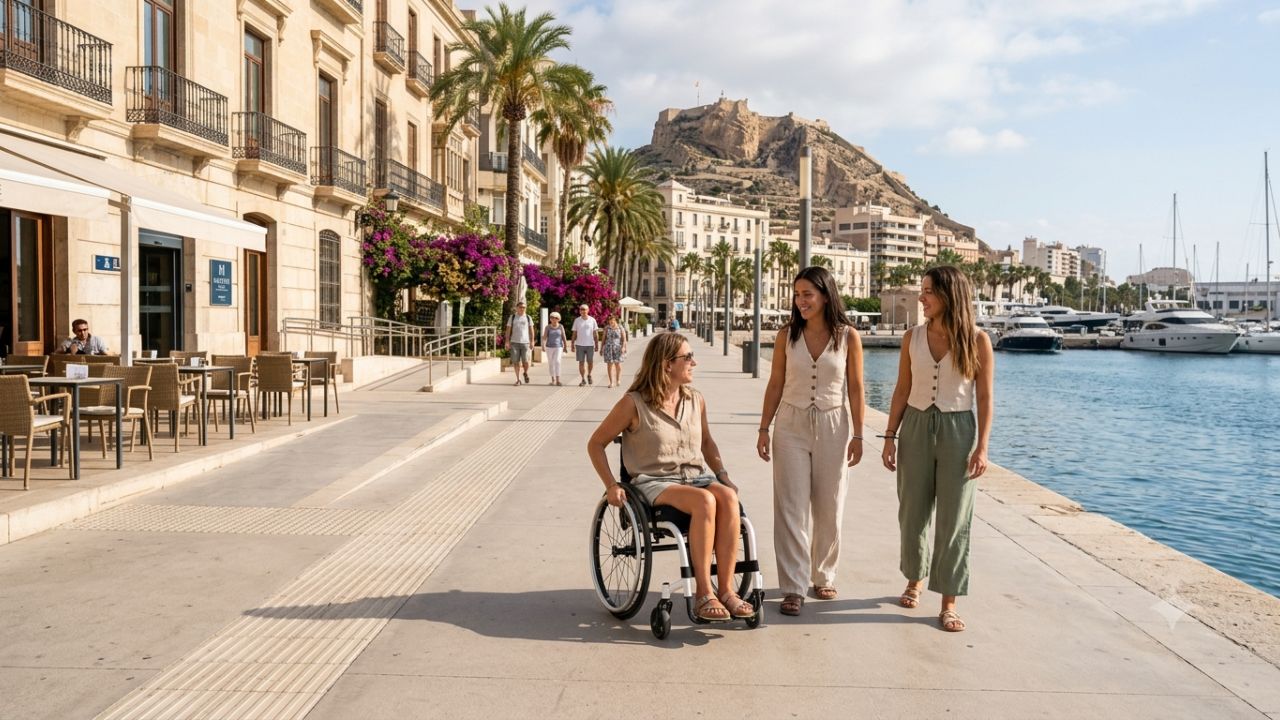
Turespaña and the Spanish Tourist Office partner with WTM London 2026 to elevate accessibility standards and detailed travel information for disabled holidaymakers.
The Spanish Tourist Office (Turespaña) has entered into a landmark accessible tourism alliance with World Travel Market London, becoming the trade show’s first Lead Accessibility Partner ahead of its November 2026 gathering. Announced in early October, the strategic agreement seeks to bridge the critical gap between high-level destination marketing and the granular, practical requirements of travelers with physical, sensory, and neurodivergent disabilities across the whole travel journey.
Taking place at ExCeL London from November 3 to 5, WTM London 2026 will feature a dedicated Spain presentation, targeted accessibility awards, and upgraded onsite physical assistance services. Crucially, the initiative will provide an operational update on the "Spain for All" advisory panel, establishing a structured mechanism to move inclusive tourism from aspirational rhetoric into transparent booking criteria.
Bridging the Information Gap in Inclusive Travel
For millions of holidaymakers with access requirements, booking international travel remains fraught with uncertainty. Generic terminology such as "accessible room" or "wheelchair-friendly" often masks substantial barriers—ranging from single-step entryways and narrow bathroom doorways to absent visual alarms or lack of step-free transport transfers.
The partnership builds directly upon Turespaña's foundational Accessibility Findings Report, developed in consultation with disability advocacy groups, industry operators, and accessibility specialists. The research emphasizes that accessibility extends far beyond wheelchair ramps:
| Strategic Pillar | Core Objective | Industry Implementation Requirement | Holidaymaker Benefit |
|---|---|---|---|
| Broadened Definition | Move beyond wheelchair-only perspectives | Train staff on sensory, cognitive, and hidden disabilities | Inclusive hospitality tailored to diverse needs |
| Granular Transparency | Eliminate vague marketing descriptors | Publish door dimensions, roll-in shower specs, bed heights | Confident bookings without onsite surprises |
| Co-Design & Consultation | Involve travelers with lived experience | Establish recurring advisory panels with disabled consumers | Policies reflecting real-world travel realities |
| Verified Data Standards | Replace self-assessed claims with audits | Implement third-party accessibility inspection metrics | Reliable, auditable property listings |
| End-to-End Journey | Connect flights, transfers, stays, and venues | Integrate accessible rail, airport assistance, and adapted taxis | Seamless door-to-door transit without broken links |
The report specifically warns hoteliers and travel agents that treating accessibility as a simple binary—either accessible or inaccessible—fails travelers. Exact physical dimensions, photographic documentation of bathrooms, and transparent declarations of venue limitations allow disabled individuals to determine whether a property meets their individual needs.
Commercial Imperative: Spain’s Surging Tourism Economy
The initiative comes against a backdrop of record-shattering international tourism receipts for Spain. Provisional data released by Spain's National Statistics Institute (INE) reveals unprecedented volume through the first eight months of 2026:
| Official Economic Indicator | Reporting Period | Reported Metric | Year-on-Year Growth | Strategic Relevance |
|---|---|---|---|---|
| International Tourist Arrivals (FRONTUR) | Jan–Aug 2026 | 70.4 million visitors | +5.4% | Sets all-time record for inbound international traffic |
| Total Tourist Expenditure (EGATUR) | Jan–Aug 2026 | €99.892 billion | +8.0% | Demonstrates expanding revenue per visiting traveler |
| UK-Resident Tourist Arrivals | August 2026 | ~2.4 million visitors | +9.3% | Solidifies Britain as Spain’s paramount outbound market |
With the United Kingdom cementing its position as Spain’s largest inbound source market, London represents a pivotal venue to align travel agencies, tour operators, and hoteliers serving British holidaymakers. Industry analysts note that travelers with disabilities and their traveling companions represent an underserved segment with high loyalty and longer average lengths of stay.
However, consumer advocates caution that high-level exhibition alliances do not instantly translate into nationwide infrastructure overhauls. An exhibition partnership sets standards and sparks industry dialogue, but it does not automatically certify every resort, restaurant, or regional bus line in Spain as fully barrier-free.
Operational Recommendations for Travel Operators and Hoteliers
To translate the WTM London commitment into everyday operational reality, travel industry stakeholders are urged to adopt four practical standards:
- Provide Verified Technical Specifications: Instead of blanket "handicap-accessible" labels, list precise room measurements, including bathroom doorway widths (minimum 80 cm for manual wheelchairs, 85+ cm for power chairs), shower threshold heights, and turning radiuses.
- Confirm Pre-Booked Assistance in Writing: Document specialized assistance requests—such as airport PRM (Persons with Reduced Mobility) services, adapted coach transfers, and shower chair availability—directly on the customer confirmation invoice.
- Audit Transport Connectivity: Ensure that adapted hotel rooms are supported by accessible transit links. A barrier-free hotel room loses its utility if local accessible taxis are unavailable or local train platforms lack level boarding.
- Communicate Limitations Openly: Clearly state where physical barriers exist—such as historic cobblestone streets in medieval quarters or steep terrain—allowing travelers to plan ahead without embarrassment or distress.
Official national travel guidance from Turespaña encourages businesses across Spain’s autonomous communities to upload detailed access guides to their digital channels.
Practical Guidance for Travelers with Accessibility Requirements
- Request Direct Photographic Evidence: Before transferring non-refundable deposits, request timestamped photographs of bathroom layouts, entry thresholds, and bed heights from the property manager.
- Book Flight Assistance 48 Hours Ahead: Under European Regulation (EC) No 1107/2006, notify airlines and departure airports of mobility equipment dimensions and required assistance at least 48 hours prior to scheduled departure.
- Verify Local Adapted Transfers: Pre-arrange accessible van or taxi transfers from the airport to your accommodation. In major hubs like Madrid, Barcelona, and Málaga, Eurotaxi fleets must be booked in advance during peak periods.
- Utilize Spain’s Certified Municipal Beach Programs: Coastal municipalities in regions like Valencia, Catalonia, and the Canary Islands provide amphibious beach wheelchairs, shade awnings, and trained lifeguard assistance during the summer bathing season.
Related Travel Guides
- Taiwan Tourism Expands US Presence: Portland Marathon 2026 Wellness Push
- Spain’s Southern Tourism Boom: Andalucía Autumn Hotel Occupancy and Flights
- Brussels Tourism Slowdown: Museum Visits and Overnight Stays Decline
Frequently Asked Questions
Does the Spain-WTM partnership guarantee all Spanish hotels are accessible?
No. The agreement is an industry initiative aimed at improving standards and information transparency. Travelers must still confirm the specific physical facilities of each individual hotel, transport service, and attraction prior to booking.
What are the five pillars of Spain's accessibility findings report?
The pillars comprise a broader understanding of accessibility, clearer and more precise information, direct consultation with disabled people, verified data collection, and continuous improvements across the entire customer journey.
How many international tourists visited Spain in early 2026?
According to official INE FRONTUR statistics, Spain welcomed approximately 70.4 million international tourists between January and August 2026, generating nearly €100 billion in visitor expenditure.
What should disabled travelers verify before confirming accommodation?
Travelers should request clear photographs of bathrooms, precise doorway widths, information on step-free routes, and written confirmation of any specialized equipment or assistance required during their stay.
Disclaimer
This article is for informational and educational purposes only. It does not constitute legal, financial, or professional advice. While we strive to provide accurate and up-to-date information, travel policies, regulations, and conditions change rapidly. Always verify information with official sources before making travel decisions. Nomad Lawyer makes no representations about the accuracy, reliability, completeness, or suitability of the information provided. Readers should consult qualified professionals for advice specific to their circumstances. The views expressed in this article are those of the author and do not necessarily reflect the views of Nomad Lawyer.
Kunal K Choudhary
Co-Founder & Contributor
A passionate traveller and tech enthusiast. Kunal contributes to the vision and growth of Nomad Lawyer, bringing fresh perspectives and driving the community forward.
Learn more about our team →