
Historic 2026 Solar Eclipse Spain: Tourism Surge Transforms the Country Into Europe's Must-Visit Summer Destination: What Every Traveller Must Know
Spain prepares for a massive tourism boost as travelers arrive for the rare 2026 solar eclipse on August 12. Learn about EES border procedures and summer heat warnings.

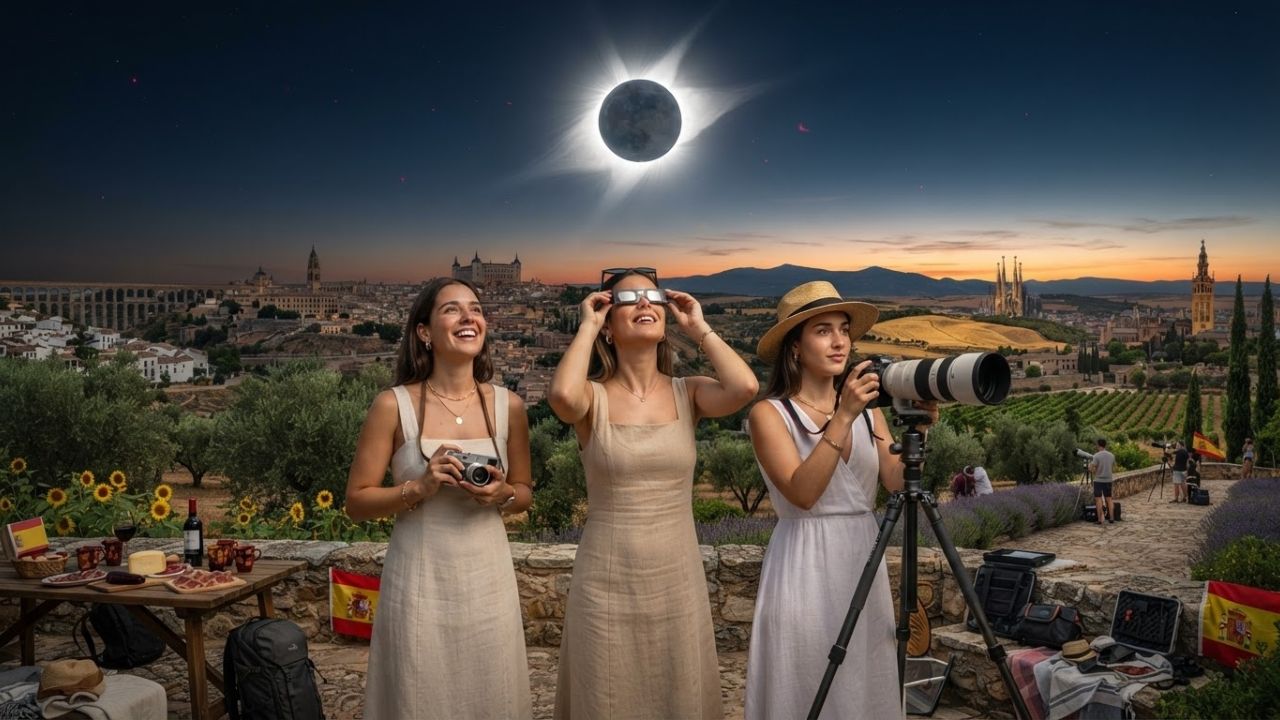
Image generated by AI
As the highly anticipated August 12, 2026 celestial event approaches, a massive wave of global travelers is preparing for the 2026 solar eclipse Spain, turning the nation into Europe's primary summer travel hotspot. This sudden influx of international holidaymakers is driving a record-breaking surge in tourism bookings, prompting officials to advise visitors on planning ahead for severe summer heat, destination crowds, and new border controls. Travelers must ensure they secure accommodation early, review changing biometric entry procedures, and obtain adequate travel insurance before departure.
📌 Quick Summary
- Historic Event: The solar eclipse of August 12, 2026, marks the first total eclipse visible in mainland Spain in more than a century.
- Tourism Surge: Accommodation and travel insurance metrics show a major increase in international bookings.
- Summer Challenges: Visitors must prepare for extreme August heat, heavy transport congestion, and public crowding.
- Biometric Borders: New European Union Entry/Exit System (EES) rules introduce mandatory digital checks for non-EU travelers.
- Logistical Readiness: Early booking of flights and accommodation is critical for popular viewing spots.
Published on July 22, 2026
The upcoming total solar eclipse has transformed Spain into the focal point of global tourism, drawing unprecedented attention from astronomy enthusiasts, professional photographers, and traditional summer holidaymakers alike. As visitors finalize their travel itineraries, insurance providers are reporting a significant rise in policies purchased for travel to the Iberian Peninsula. While this rare celestial event offers a once-in-a-lifetime experience, the combination of peak summer tourism and specialized event travel is expected to test the limits of local infrastructure and border security.
The Impact of the 2026 Solar Eclipse Spain on Travel Dynamics
The total solar eclipse on August 12, 2026, represents one of the most significant astronomical events visible in Europe in decades. This rare celestial occurrence, which has not crossed mainland Spain for over a century, is driving a unique wave of astronomy-focused tourism. The timing of this historic alignment during the peak summer holiday season has amplified traveler demand for accommodations and transportation across key viewing routes.
Consequently, many visitors are combining eclipse observation with broader explorations of scenic landmarks. The table below outlines how different travel sectors are preparing for this influx:
| Travel Sector | Expected Activity | Key Risks & Operations |
|---|---|---|
| Aviation & Transit | Unprecedented passenger numbers at major entry points | Longer immigration wait times due to new EU border system |
| Accommodation | High demand in rural regions and minor municipal areas | Booking shortages and premium pricing closer to August 12 |
| Local Hospitality | Surge in restaurant, guide, and local transport bookings | High passenger congestion on public transport networks |
| Adventure & Optics | High movement toward open areas and high-elevation spots | Risks of overexposure to sun and severe outdoor summer heat |
Where to Go: Best Routes for the 2026 Solar Eclipse Spain
While metropolitan hubs like Madrid, Barcelona, Valencia, and Seville remain popular for summer travel, optimal viewing routes lie outside these busy urban environments. Open countrysides and natural landscapes offer the best vantage points for photographers and stargazers.
Northern Spain is the primary corridor for total visibility. Regions like Galicia, Asturias, and parts of Castilla y León are expecting high visitor numbers due to their open spaces and scenic backdrops. However, local infrastructure in these smaller municipalities faces heavy pressure, making early bookings for rural accommodation vital.
Risk and Impact: Heat, Crowds, and Infrastructure Volatility
August represents the hottest month in Spain, and the sudden arrival of eclipse visitors is expected to test local infrastructure. Spending hours in open viewing locations without shelter increases health risks.
Key challenges confronting travelers include:
- Extreme Temperatures: High temperatures increase the risk of dehydration, heat exhaustion, and sun stroke during outdoor activities.
- Lack of Shade: Open viewing sites offer minimal immediate protection from the sun.
- Transportation Pressures: Highways, regional rail services, and transit hubs will experience heavy congestion.
- Crowded Public Venues: Major tourist attractions and viewing coordinates will operate at maximum capacity.
- Security Concerns: Large crowds at transit hubs increase the risk of opportunistic crimes like pickpocketing.
What Official Authorities are Saying: Safety and Preparedness
Official bodies urge travelers to prepare carefully for outdoor conditions by carrying adequate water, using sunscreen, and wearing certified solar-viewing glasses. Traffic authorities in Northern Spain plan to monitor main highway routes closely, warning that temporary road closures or parking controls may be implemented to manage vehicular flow near viewing zones. Additionally, environmental agencies remind campers to respect fire safety rules due to high seasonal wildfire risks.
Practical Traveler Advice: Schengen EES Border Rules and Insurance
Non-European travelers entering Spain in 2026 must navigate the European Union’s new Entry/Exit System (EES), which replaces physical passport stamps with biometric registration (facial images and fingerprints).
To minimize airport delays, travelers should follow these steps:
- Allow Extra Time: Arrive earlier than usual at airport immigration points.
- Plan Layovers Carefully: Ensure connection windows at European hubs accommodate border processing.
- Check Documents: Confirm passports are valid for at least three months beyond the departure date.
- Secure Insurance: Verify that travel insurance covers medical treatment, travel delays, and cancellations.
Having comprehensive coverage is highly recommended due to high private healthcare costs in Europe, especially for travelers spending long hours outdoors during the heatwave.
Broader Context: A Complete European Vacation Gateway
The solar eclipse offers a perfect opportunity to experience Spain's diverse summer appeal. Many international visitors are extending their stays to visit architectural highlights in Barcelona, world-class museums in Madrid, and historical landmarks in Andalusia—such as Granada, Córdoba, and Seville. Combining astronomical observations with traditional culinary tours and Mediterranean beach retreats allows for a complete European summer journey.
Looking Ahead: Preparing for the Eclipse Logistics
In the lead-up to the eclipse, travelers must secure transport and bookings early as local rail, flight, and car rental networks will operate at capacity. Visitors should regularly monitor destination information on the Official Spain Tourism Portal (Spain.info) and track border system updates via the Official EU Entry/Exit System (EES).
With the right balance of preparation, safety awareness, and flexibility, visitors can enjoy one of the century's most extraordinary natural spectacles while exploring the very best of Spanish hospitality.
Conclusion
Experiencing the total solar eclipse in Spain promises to be an unforgettable highlight of the 2026 summer travel season. However, because the event coincides with peak holiday demand, successful journeys will depend heavily on early planning, caution, and adaptability. By securing bookings early, preparing for the summer heat, and understanding new border procedures, travelers can ensure a safe and memorable celestial adventure.
FAQ: Spain's 2026 Solar Eclipse and Travel Warnings
What makes the 2026 solar eclipse in Spain so unique?
The total solar eclipse on August 12, 2026, is the first of its kind visible from mainland Spain in over a century, making it a once-in-a-lifetime opportunity for travelers.
Will the new EU border system (EES) affect my trip to Spain?
Yes. The Entry/Exit System (EES) requires non-EU travelers to register biometric data (fingerprints and facial scans), which may lead to longer queues at airport immigration points.
What are the main health risks during the August eclipse?
The primary health concerns are related to extreme summer heat and direct sun exposure, which can cause dehydration, heat exhaustion, and severe heatstroke if travelers do not take precautions.
Why is travel insurance recommended for this event?
High demand for travel, crowded hubs, and potential transport delays increase the likelihood of disruptions. Travel insurance helps cover medical emergencies, lost baggage, and trip cancellations.
Related Travel Guides
- Jordan, Oman, and Saudi Arabia Join Australia's Level Three Middle East Travel Warning as Geopolitical Tensions Escalate: New Travel Alert
- Canada Expands Travel Advisory Framework to Level 3 for the UAE, Qatar, Saudi Arabia, Jordan, and Oman Following Geopolitical Escalation: Latest Update
- Australia Issues Travel Warning for Qatar and UAE as Doha Security Alerts Impact Gulf Transit Hubs in 2026
- Article Tags: Europe summer travel, Madrid Spain, Northern Spain travel, Solar Eclipse 2026, spain tourism
Disclaimer
This article is for informational and educational purposes only. It does not constitute legal, financial, or professional advice. While we strive to provide accurate and up-to-date information, travel policies, regulations, and conditions change rapidly. Always verify information with official sources before making travel decisions. Nomad Lawyer makes no representations about the accuracy, reliability, completeness, or suitability of the information provided. Readers should consult qualified professionals for advice specific to their circumstances. The views expressed in this article are those of the author and do not necessarily reflect the views of Nomad Lawyer.
Kunal K Choudhary
Co-Founder & Contributor
A passionate traveller and tech enthusiast. Kunal contributes to the vision and growth of Nomad Lawyer, bringing fresh perspectives and driving the community forward.
Learn more about our team →