
Spain Leads Europe's Overtourism Crisis in 2026: Barcelona's Rental Ban, Venice's Entry Fees, and What Travelers Must Know
Spain, Italy, Japan, and Greece are implementing aggressive anti-tourism measures in 2026. Barcelona is banning short-term rentals, Venice charges day-tripper fees, and mandatory permits reshape global travel planning.

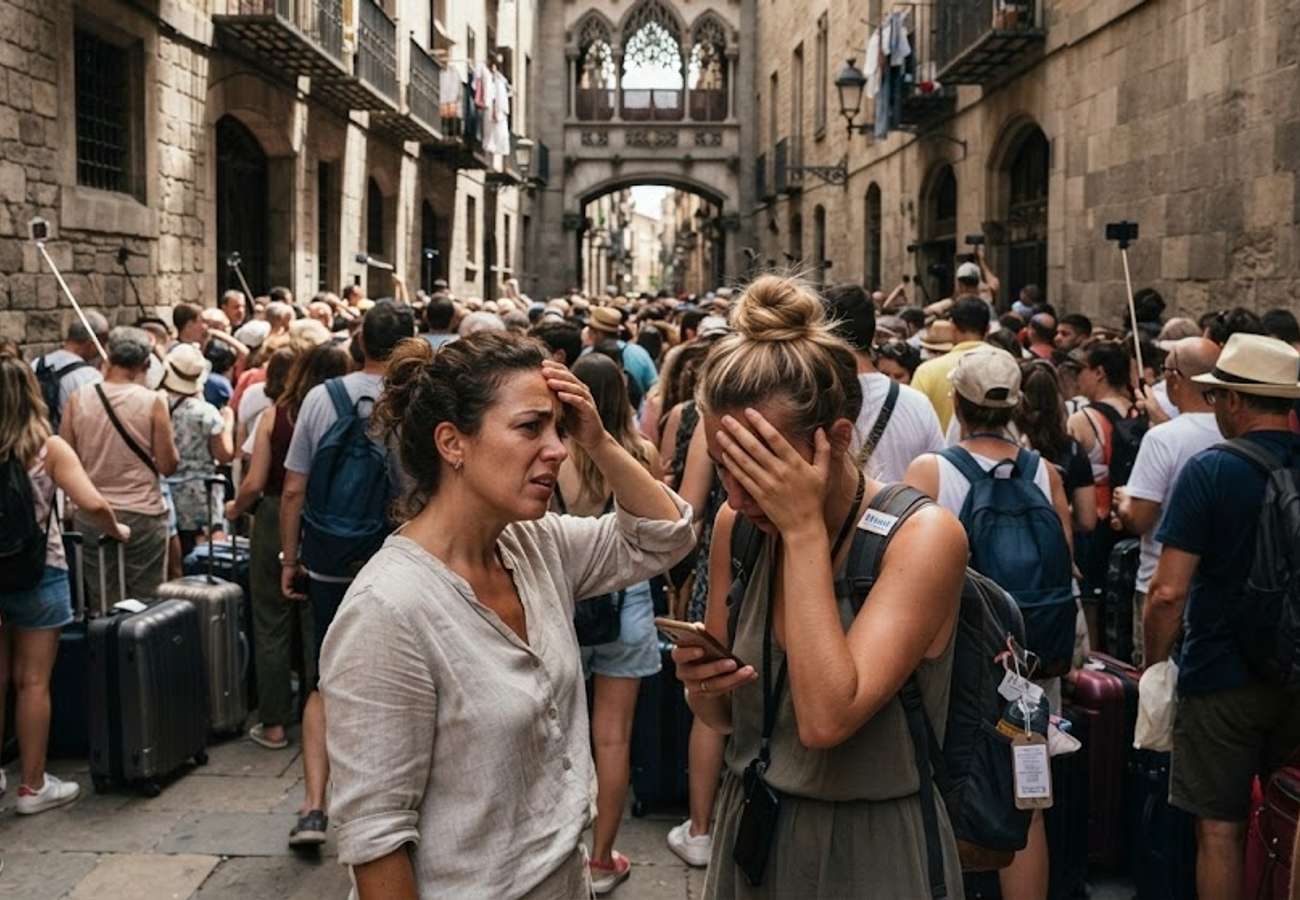
Image generated by AI
The global travel map is officially melting down. Millions of vacationers are flooding into historic cities, and the welcome signs are coming down fast. Local residents have finally reached their breaking point. What was once a casual vacation option—spontaneous flights, budget Airbnbs, last-minute itineraries—is now a logistical minefield wrapped in legal restrictions, punishing fees, and aggressive government counter-tourism campaigns.
In 2026, the tourism industry has hit a volatility threshold that academic researchers warned about for years. Now it's happening. Spain, Italy, Japan, Greece, India, and the Netherlands are experiencing unprecedented resource strain, environmental degradation, and civic unrest. The response? Governments are no longer competing for tourist dollars. They're actively weaponizing regulations to reclaim their cities from the travel masses.
The Global Overtourism Reckoning
The numbers tell an alarming story. Cheap commercial aviation has democratized travel to the point of catastrophe. Social media has weaponized wanderlust. Short-term vacation platforms have essentially destroyed long-term housing markets in vulnerable historic cities. The result: residents are being displaced, infrastructure is crumbling, and local governments are declaring war on tourism itself.
This isn't hyperbole. In cities from Barcelona to Venice to Kyoto, authorities are deploying emergency measures that would have seemed unthinkable five years ago.
Reddit: "I went to Barcelona three years ago and could afford a decent Airbnb. I just checked prices for next summer—it's insane. Now they're banning them anyway. The damage is already done to the locals." — r/travel
Spain's Housing Apocalypse: The Barcelona Model
Barcelona is making history—but not the kind it wants. The Spanish city has become ground zero for Europe's anti-tourism resistance. The municipal government has enacted an unprecedented complete phase-out of all short-term rental licenses by 2028. This isn't a suggestion. This is a legal deadline.
Why the nuclear option? The answer lies in brutal housing economics. Long-term residents have been systematically priced out of their own neighborhoods as landlords discovered that a tourist renting an apartment for seven nights generates more revenue than a resident paying a 12-month lease. The local housing crisis became an international scandal.
The breakdown is staggering:
- Barcelona's short-term rental ban: All Airbnbs and holiday platforms must cease operations by 2028
- Balearic Islands eco-tax increases: Regional authorities have dramatically raised tourist environmental taxes
- Organized tour group caps: San Sebastián limits guided tours to maximum 25 people per group
- Canary Islands resource strain: Water scarcity and infrastructure overwhelm have triggered emergency tourism restrictions
The crisis reached a boiling point during Housing Action Days, when thousands of residents marched through Spanish urban centers with protest banners and water pistols, declaring tourism an unregulated social catastrophe. Spanish regional governments got the message.
Italy's Dynamic Pricing: Venice's Controversial Entry Fee System
If Barcelona is banning rentals, Venice is taking a different approach: making day-trippers pay for the privilege of walking through fragile historic streets.
Venice expanded its controversial "day-tripper entry fee" to cover dozens of high-traffic peak days throughout 2026. The city is essentially charging visitors a toll to enter its own center. This isn't about revenue optimization—it's about rationing access to a UNESCO heritage site that's literally sinking and being crushed by foot traffic.
The Italian model targets a specific problem: unregulated day-trippers arriving via massive cruise ships. Some days, more than 10,000 cruise passengers disembark in Venice, a city built for 260,000 residents (now down to 250,000 and dropping). The structural wear and tear on medieval buildings, bridges, and canal infrastructure is accelerating, with UNESCO repeatedly warning about irreversible damage.
Venice's additional measures include:
- Strict bans on large cruise ships docking in the central lagoon
- Timed entry slots for major landmarks (advance booking required)
- Pedestrian flow management in narrow historic districts
Similar patterns are erupting across Italy: Florence, Rome, and the Amalfi Coast are implementing their own reservation systems, eco-taxes, and visitor caps.
Japan's Mount Fuji Mandate: Entry Fees and Daily Hiker Caps
Across the Pacific, Japan is taking a hard line on one of Asia's most iconic natural sites. Mount Fuji introduced a mandatory entry fee and strict daily hiker caps in 2026. This represents a seismic shift in Japan's approach to tourism.
The context: A weak Japanese Yen triggered an explosion of international visitors following the 2024 Olympics afterglow. Budget airlines flooded the market with cheap flights. Every travel influencer on Instagram was broadcasting Mount Fuji climbing routes. The result was predictable chaos: gridlocked hiking trails, destroyed natural habitat, and gridlock on local transit systems.
Kyoto, Japan's cultural heartland, deployed even more aggressive measures:
- Tourism police units: Dedicated officers manage foot traffic in historic geisha districts
- Private street bans: Tourists are banned from entering private streets in the Gion district (the geisha quarter)
- Behavioral enforcement: Penalties for disrespectful tourist conduct and Geisha harassment
Japanese authorities report widespread "kanko kogai" (thoughtless tourism)—disrespectful behavior ranging from photo harassment to cultural disruption. The response is zero tolerance.
Greece's Island Saturation: Cruise Ship Quotas and Price Inflation
The Greek government has proposed strict caps on cruise ship arrivals for popular islands like Santorini and Mykonos. Why? Because tiny island infrastructure cannot handle the logistics of 10,000+ day-trippers simultaneously.
The knock-on effects are brutal:
- Power grid failures: Island electrical systems are failing during peak tourist season
- Water rationing: Freshwater supplies are being depleted by tourist consumption
- Astronomical real estate prices: Essential workers (teachers, doctors) are being priced entirely out of island housing markets
- Seasonal lodging tax hikes: Significantly raised accommodation taxes during peak season to deter casual visitors
India's Himalayan Traffic Jam: Vehicle Quotas and Waste Management
India's Himalayan hill stations—Shimla, Manali, and other summer escape destinations—are experiencing domestic tourism surges that have completely overwhelmed local infrastructure.
The crisis looks like this:
- Bumper-to-bumper gridlock: Vehicle traffic on mountain roads is creating 12+ hour delays
- Seasonal water rationing: Hill stations run completely dry during peak tourism months
- Soil erosion and deforestation: Unmanaged trail traffic and waste is destroying the natural landscape
- Plastic waste crisis: Mountains are being buried in single-use waste from day-trippers
Local authorities are implementing emergency measures: vehicle entry quotas, waste management penalties with teeth, and aggressive promotion of off-season "eco-travel" to distribute visitor pressure.
The Three Dominant Trends Reshaping Travel in 2026
The Housing Battleground
The single biggest flashpoint isn't crowded streets—it's housing. Short-term vacation rentals have severed long-term rental supplies entirely. Locals are being forced out of their own cities. This is sparking legal and political revolutions across Europe and North America.
De-Marketing: Paying Tourists to Go Away
Here's the inversion nobody expected: Tourism boards are now spending millions on campaigns telling certain types of tourists to stay away. The Netherlands, Japan, and Spain have all launched "de-marketing" initiatives promoting alternative destinations. The goal is ruthlessly simple: spread the tourist load thinner or discourage discretionary visitors entirely.
Pay-to-Play Tourism: The End of Frictionless Travel
The era of cheap, spontaneous, boundary-free travel is officially dead. 2026 has seen a massive uptick in:
- Mandatory entry fees for cities and natural parks
- Timed-reservation systems for major landmarks
- Tourist eco-taxes ranging from 10-15% of accommodation costs
- Permit requirements for hiking, swimming, and visiting heritage sites
You can no longer just book a flight and show up. Hidden fees are lurking at every corner.
What This Means for Your 2026 Travel Plans
If you're booking international travel this year, the rules of engagement have fundamentally changed:
Research destination regulations before booking. Barcelona may ban your Airbnb before your arrival. Venice will charge you just to enter the city center. Mount Fuji requires advance permits. Japanese geisha districts have tourist bans.
Budget for mandatory fees. Entry fees, eco-taxes, and reservation charges are no longer optional. Greece, Spain, and Italy now charge significant day-tripper tolls. Budget 15-25% more than you did three years ago.
Book accommodation early. Hotel availability is tightening as short-term rentals disappear. Early booking is no longer optional—it's survival.
Avoid peak seasons entirely. If you have flexibility, travel in shoulder seasons (April-May or September-October). Peak summer tourism is becoming functionally impossible in major European destinations.
Choose lesser-known alternatives. France is promoting rural regions instead of Paris. Spain is pushing regional cities instead of Barcelona. Thailand is promoting northern destinations instead of Bangkok. Follow the de-marketing campaigns.
The age of casual, spontaneous global travel has ended—welcome to the era of regulated, heavily taxed, and carefully rationed tourism.
Related Travel Guides
Disclaimer
This article is for informational and educational purposes only. It does not constitute legal, financial, or professional advice. While we strive to provide accurate and up-to-date information, travel policies, regulations, and conditions change rapidly. Always verify information with official sources before making travel decisions. Nomad Lawyer makes no representations about the accuracy, reliability, completeness, or suitability of the information provided. Readers should consult qualified professionals for advice specific to their circumstances. The views expressed in this article are those of the author and do not necessarily reflect the views of Nomad Lawyer.
Raushan Kumar
Founder & Lead Developer
Full-stack developer with 11+ years of experience and a passionate traveller. Raushan built Nomad Lawyer from the ground up with a vision to create the best travel and law experience on the web.
Learn more about our team →