
Southwest and SkyWest Cancel 4 Flights at Colorado Springs as Delays Ripple Across Denver, Dallas, Chicago, Phoenix
Southwest and SkyWest Airlines cancelled 4 flights at Colorado Springs Municipal Airport on June 18, 2026, with cascading delays affecting Denver, Dallas, Chicago, and Phoenix routes.

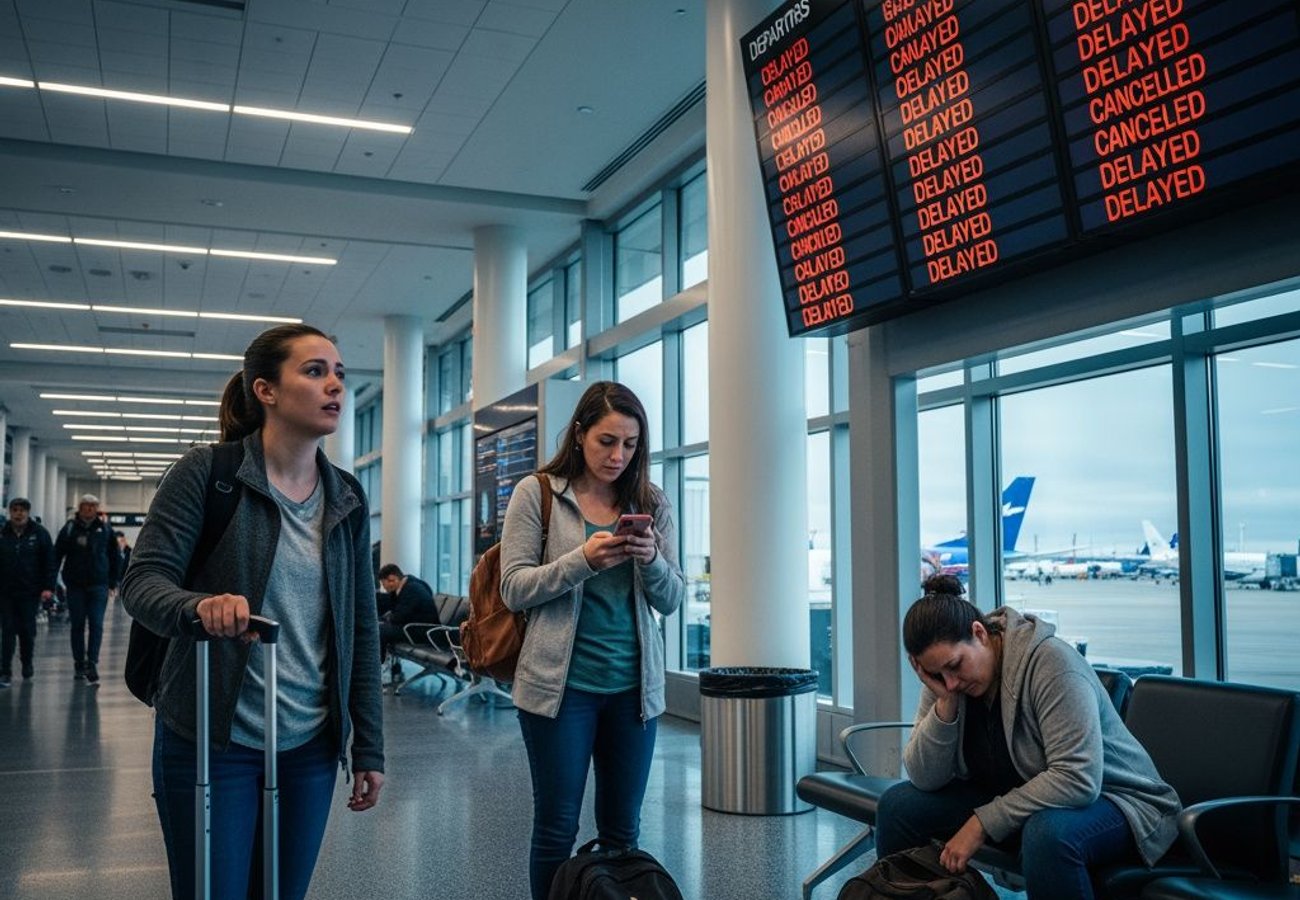
Image generated by AI
The Disruption Unfolds
On June 18, 2026, travel chaos erupted at Colorado Springs Municipal Airport when Southwest Airlines and SkyWest Airlines simultaneously cancelled four flights and reported multiple delays affecting connections across the American network. What began as a localized operational issue quickly snowballed into a nationwide headache, with ripple effects cascading through seven major US hubs and leaving thousands of passengers scrambling to salvage their travel plans.
The scale of the problem was unmistakable: passenger frustration mounted as longer wait times, missed connections, and unexpected schedule changes became the order of the day. Airlines were forced into reactive mode, adjusting networks and working overtime to minimize further damage.
Where the Damage Hit Hardest
The disruption didn't stay contained at Colorado Springs. Instead, it spread like wildfire across critical US travel corridors:
Denver, Dallas, Chicago, Las Vegas, Phoenix, Minneapolis–Saint Paul, and Colorado Springs itself all reported significant operational challenges. Chicago O'Hare International Airport (ORD) emerged as the epicenter, accounting for more than 100 cancelled flights and becoming the primary bottleneck in the broader network breakdown.
Beyond these major hubs, the cancellation list reads like a map of America's busiest regional airports: Louisville, Indianapolis, Traverse City, Detroit, Cincinnati, Toronto, St. Louis, Boston, Atlanta, Pittsburgh, Dayton, Fort Wayne, Rochester, Columbus, Jacksonville, Nashville, Cleveland, Milwaukee, Buffalo, Appleton, Green Bay, Raleigh, and Montreal all experienced elevated cancellation rates.
Reddit: "Stuck in Chicago for the third time this month. Airlines need to get their operations under control before summer travel peaks." — r/travel
The Numbers Behind the Chaos
The data tells a sobering story:
| Airline | Cancelled Flights | Delayed Flights |
|---|---|---|
| Southwest | 3 | 3 |
| SkyWest | 1 | 5 |
While the headline figures appear modest at Colorado Springs itself, the domino effect across the national network painted a far grimmer picture. When you factor in Chicago's 100+ cancellations and the spillover into dozens of secondary airports, the operational strain became genuinely severe.
The cross-border implications were equally significant, with both domestic and international travel disrupted. Passengers traveling to Canada, including Toronto and Montreal, faced unexpected schedule changes and extended delays.
What Passengers Can Actually Do
If your flight gets cancelled, panic doesn't help—action does. Here's the game plan:
Monitor All Channels Immediately. Check your email, phone notifications, and the airline's mobile app for rebooking confirmations and updates. Most carriers now send alerts via multiple channels, so don't rely on just one source of information.
Contact Customer Service Strategically. If you're already at the airport, head to the service desk directly. If you're not, use the airline's online chat system or phone line to avoid getting stuck in physical queues. This saves critical time when schedules are tight.
Know Your Rights Before Acting. Familiarize yourself with the airline's cancellation policy. Many carriers—particularly in the EU under established passenger protection regulations—offer mandatory rebooking or compensation depending on the cancellation's cause. The difference between knowing your rights and being uninformed could mean hundreds of dollars.
Explore All Alternatives. Ask about the next available flight on your airline, but also consider competing carriers on the same route. Sometimes booking a new ticket through a different airline is faster than waiting for rebooking. Don't overlook trains, buses, or rental cars if time permits.
Stay Flexible With Your Itinerary. Rigid travel plans become liabilities during disruptions. Having buffer time between connections and flexibility on dates dramatically improves your chances of reaching your destination without additional stress.
Why This Matters for Summer Travel
These disruptions are happening during a critical window. As airlines ramp up capacity for peak summer season, operational breakdowns like this one signal deeper infrastructure strain across the network.
Chicago O'Hare's disproportionate impact—accounting for the majority of cancellations while Colorado Springs triggered the initial cascade—reveals how hub-and-spoke networks concentrate risk. A single point of failure at a major hub can paralyze dozens of downstream destinations. The FAA has previously warned about capacity constraints at major airports, and this incident validates those concerns.
The timing is significant: mid-June represents the unofficial kickoff of summer travel season, when airports operate at near-maximum capacity. Adding operational disruptions to already-tight schedules creates compounding delays that can take days to fully recover from.
The Recovery Timeline
As of the incident's reporting, Southwest and SkyWest were actively working to restore normal operations and accommodate affected travelers. However, expect lingering impacts: recovery from network disruptions this scale typically takes 24-48 hours minimum, even with aggressive schedule adjustments.
Passengers with connections through impacted airports should plan for delays extending well beyond the initial cancellation window. A cancelled flight at Colorado Springs can delay a Chicago-to-Dallas connection hours later, creating a cascading effect that catches people by surprise.
What You Need to Know Right Now
Real-time monitoring is non-negotiable. FlightAware remains the gold standard for real-time flight tracking, offering more granular data than airline apps alone. Check it before leaving for the airport.
Airlines are actively modifying schedules based on safety and operational capacity. This isn't negligence—it's necessary. Staying calm and maintaining flexible expectations directly improves your travel experience during disruptions.
Maintaining buffer time between connections is no longer optional. A single-hour connection through Chicago or Denver is a gamble during peak season. Build in at least 2-3 hours for domestic connections and 3-4 hours for international ones.
The disruptions at Colorado Springs Municipal Airport serve as a stark reminder that the US air travel network remains vulnerable to cascading failures when multiple carriers face simultaneous operational challenges. As summer travel season intensifies, passengers should treat real-time flight monitoring not as an option but as an essential travel habit.
Monitor, stay flexible, and never assume your flight is on time until you're airborne.
Related Travel Guides
Disclaimer
This article is for informational and educational purposes only. It does not constitute legal, financial, or professional advice. While we strive to provide accurate and up-to-date information, travel policies, regulations, and conditions change rapidly. Always verify information with official sources before making travel decisions. Nomad Lawyer makes no representations about the accuracy, reliability, completeness, or suitability of the information provided. Readers should consult qualified professionals for advice specific to their circumstances. The views expressed in this article are those of the author and do not necessarily reflect the views of Nomad Lawyer.
Raushan Kumar
Founder & Lead Developer
Full-stack developer with 11+ years of experience and a passionate traveller. Raushan built Nomad Lawyer from the ground up with a vision to create the best travel and law experience on the web.
Learn more about our team →