
LAX Operational Meltdown: Alaska Airlines, JetBlue, Southwest, Qantas Ground 7 Flights, Trigger 100+ Delays Across Global Routes
Seven flights grounded at Los Angeles International Airport as Alaska Airlines, JetBlue, Southwest, and Qantas face cascading delays affecting routes spanning the US, Canada, Mexico, Japan, Australia, and beyond.

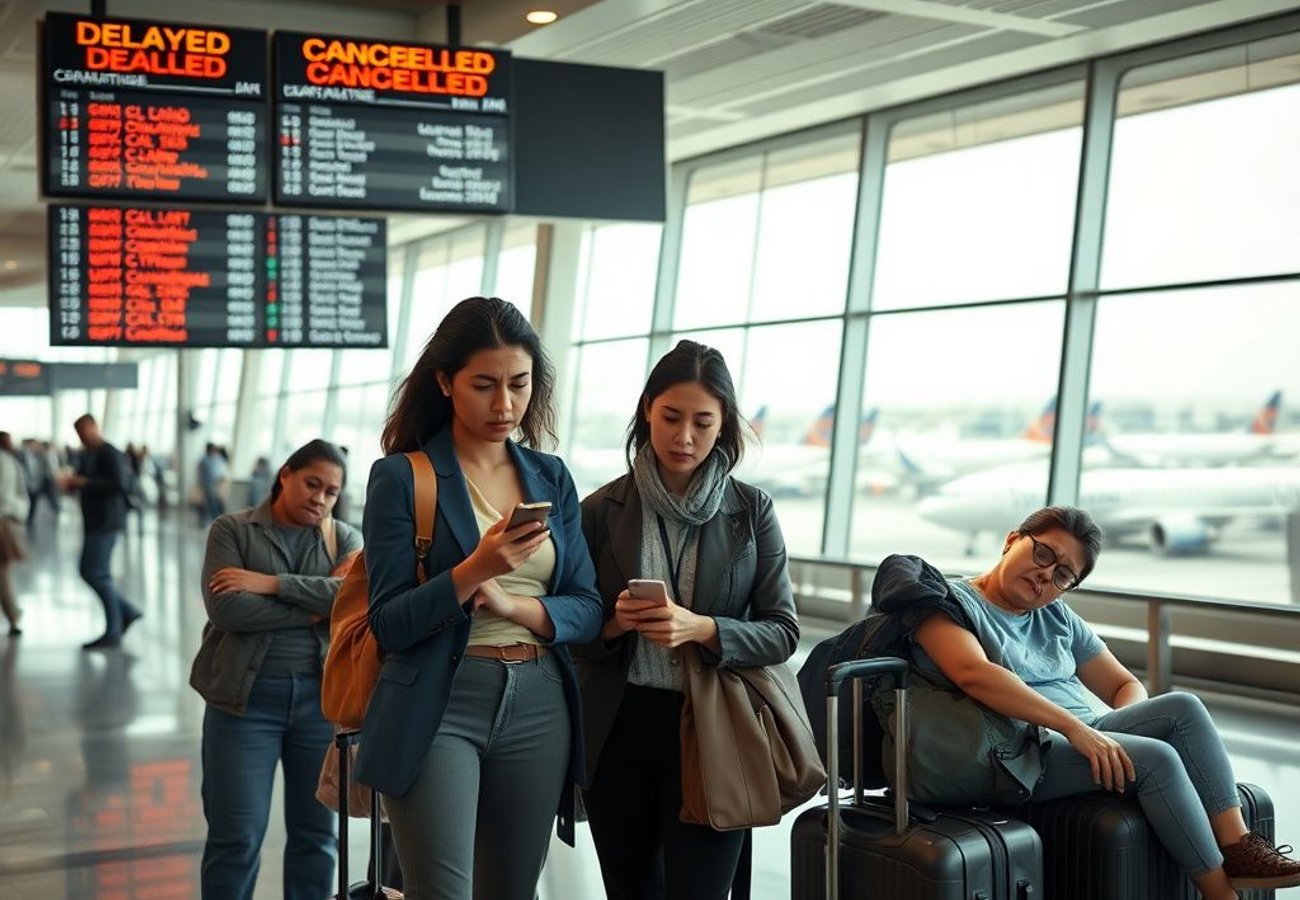
Image generated by AI
Chaos Erupts at LAX as Four Major Carriers Ground 7 Flights
Los Angeles International Airport descended into operational turmoil on June 23, 2026, when four major carriers simultaneously grounded aircraft and faced a cascading wave of delays. Alaska Airlines, JetBlue, Southwest Airlines, and Qantas collectively canceled seven flights and reported more than 100 schedule disruptions throughout the day. The incident created immediate ripple effects across some of the world's most critical aviation corridors.
What started as a localized airport issue rapidly exploded into a global travel crisis. Passengers holding tickets on connecting flights across North America, Europe, Asia-Pacific, and Latin America found themselves stranded or facing severe schedule changes. The breadth of the disruption underscored how fragile international aviation networks can be when a single hub experiences operational failure.
The Numbers Tell the Story
The breakdown reveals how unevenly the disruption was distributed among carriers:
Southwest Airlines bore the brunt of the delays with 69 reported schedule disruptions, despite canceling only a single flight. JetBlue grounded two aircraft while reporting 17 delays. Alaska Airlines canceled three flights and faced 14 delays. Qantas canceled one international service with no additional delays reported.
Reddit: "One canceled flight at LAX shouldn't cause this much chaos. Something else is going on operationally." — r/flying
The lopsided delay-to-cancellation ratio for Southwest suggests the carrier experienced cascading schedule failures throughout its network as aircraft continued circulating but fell increasingly behind schedule.
A Global Network Under Pressure
The geographic scope of the disruption was staggering. Within the United States alone, 44 cities experienced delays or cancellations, from major hubs like Atlanta, Chicago, Dallas-Fort Worth, and New York to smaller regional markets including Reno, Tucson, and Jackson Hole.
International destinations felt equal pressure. Toronto, Vancouver, and Montreal in Canada struggled to accommodate connections. European gateways including Frankfurt, Munich, Paris, London, and Copenhagen reported downstream effects. The disruption stretched across Asia, impacting Tokyo, Beijing, Shanghai, Hong Kong, and Manila. Melbourne and other Qantas-heavy Australian routes experienced cascading delays, while Mexico City, Puerto Vallarta, and Cabo San Lucas reported passenger backlogs.
This isn't unusual—major hub disruptions routinely affect 30+ countries within hours. When LAX experiences operational stress, the effect propagates instantly across every airline's network touching that airport.
What Passengers Must Know
If your flight was affected, immediate action matters. Airlines typically notify passengers via text, email, and mobile apps, but don't wait passively.
Contact your carrier immediately. Use the airline's customer service app, phone line, or airport service desk. Calling often beats waiting in airport queues for same-day rebooking.
Know your rights. Under U.S. Department of Transportation rules, carriers must either rebook you on the next available flight to your destination at no extra cost or offer a refund. International passengers may qualify for EU261 compensation if traveling within or from the European Union, regardless of carrier nationality.
Document everything. Photograph your boarding pass, cancellation notice, and any expenses incurred. Save all airline communications. This evidence becomes critical if you later pursue compensation.
Consider alternatives. Ask the airline about flights on competing carriers. If none exist within 24 hours, book your own alternative and retain receipts—you can file for reimbursement after the fact.
Why LAX Remains Vulnerable
Los Angeles International Airport ranks among the world's five busiest aviation hubs, processing over 85 million passengers annually. This volume creates incredible operational fragility—the airport's gates, runways, and ground infrastructure operate near maximum capacity during peak hours.
When even a handful of flights cancel or experience mechanical issues, the domino effect accelerates. Aircraft scheduled to depart that airport next can't position. Crews miss connections. Spare aircraft aren't available to substitute. Within hours, the disruption metastasizes across continental and transpacific networks.
The June 23 incident demonstrated precisely this vulnerability. Seven cancellations—less than 0.1% of daily traffic—somehow triggered 100 additional delays. This ratio reflects how interconnected modern aviation truly is.
The Airline Industry's Achilles Heel
The broader lesson: network effects in aviation are asymmetric and brutal. A single mechanical failure, weather event, or operational error at a major hub can disrupt travel for hundreds of thousands of passengers across 50+ countries within 24 hours.
Airlines have reduced spare aircraft, tightened crew scheduling, and eliminated buffer flights to maximize profitability. This efficiency gains evaporate instantly when anything goes wrong.
Reddit: "LAX delays have become the new normal. When will airlines actually fix the root cause instead of overbooking flights?" — r/travel
As travel demand continues surging in 2026, the industry faces a critical question: Can legacy hub-and-spoke networks sustain the passenger volumes airlines are attempting to push through finite airport infrastructure? Events like the LAX incident suggest the answer is increasingly no.
What To Do If Stranded
Stay calm. Panic clouds judgment. Monitor your airline's app obsessively—rebooking often happens automatically without passenger intervention. If rebooking doesn't trigger within two hours, contact the airline directly.
Book a hotel if overnight delay is likely. Most carriers will reimburse reasonable lodging for delays exceeding 12 hours, though you'll submit receipts later.
Consider ground transportation alternatives. Rental cars, trains, or buses may reach your destination faster than waiting for the next available flight. Airlines must reimburse documented transportation costs incurred to reach your final destination as an alternative to flying.
Purchase travel insurance for future bookings if you don't already carry it. Standard policies include rebooking assistance and delay compensation that exceeds what airlines legally must provide.
The Ripple Effect Continues
As of reporting time, LAX ground operations teams and airline staff worked to clear the backlog. However, the cascading effects would reverberate for days as aircraft continued missing scheduled rotations across North America, Europe, and Asia-Pacific.
Passengers holding tickets for flights through LAX over the subsequent 48 hours faced elevated risks of additional delays as the airport struggled to restore normal flow. Airlines wouldn't fully recover operations for 72+ hours.
The incident served as a stark reminder: modern air travel's remarkable efficiency exists only one disruption away from complete breakdown.
The skies connect us all—but fragile networks mean chaos travels faster than planes.
Related Travel Guides
Disclaimer
This article is for informational and educational purposes only. It does not constitute legal, financial, or professional advice. While we strive to provide accurate and up-to-date information, travel policies, regulations, and conditions change rapidly. Always verify information with official sources before making travel decisions. Nomad Lawyer makes no representations about the accuracy, reliability, completeness, or suitability of the information provided. Readers should consult qualified professionals for advice specific to their circumstances. The views expressed in this article are those of the author and do not necessarily reflect the views of Nomad Lawyer.
Raushan Kumar
Founder & Lead Developer
Full-stack developer with 11+ years of experience and a passionate traveller. Raushan built Nomad Lawyer from the ground up with a vision to create the best travel and law experience on the web.
Learn more about our team →