
Southwest Airlines Signals Major Overhaul: Premium Cabins and Lounges Set to Transform Low-Cost Carrier Model
Breaking airline news and aviation industry updates for 2026.

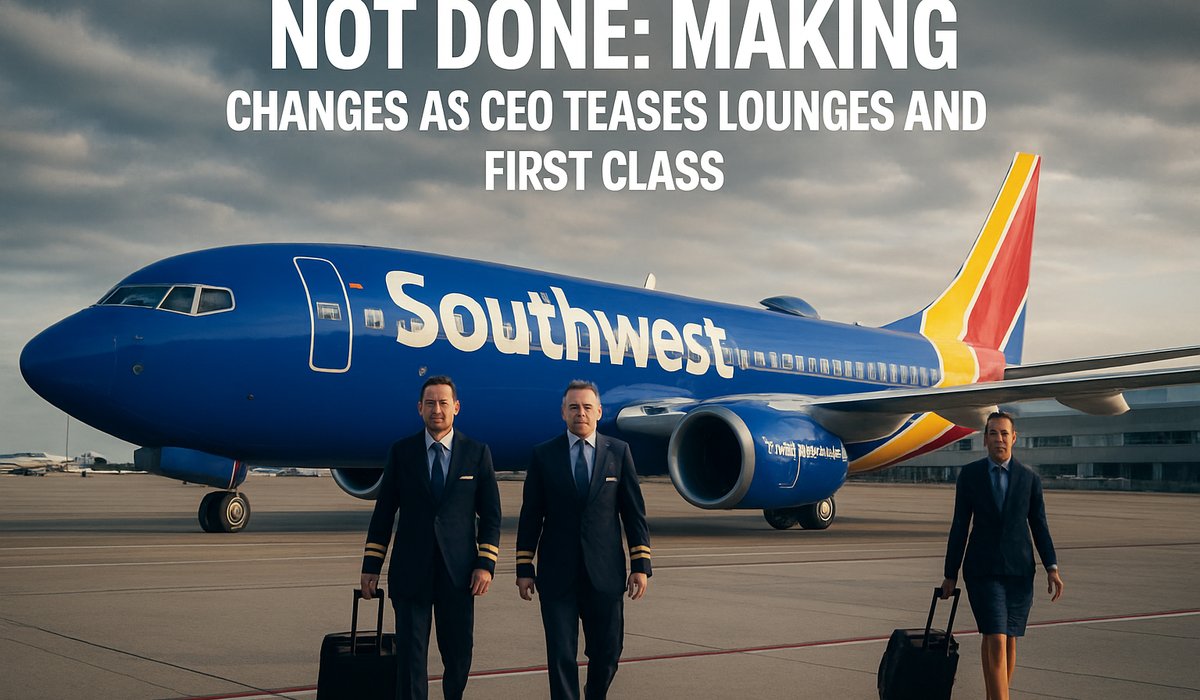
Image generated by AI
Southwest Airlines Signals Major Overhaul: Premium Cabins and Lounges Set to Transform Low-Cost Carrier Model
CEO hints at dramatic strategic shift away from decades-old free baggage policy and open seating, signaling end of the carrier's iconic budget positioning
Southwest Accelerates Transformation Beyond Baggage Charges and Assigned Seats
Southwest Airlines is preparing to venture further into uncharted territory, with leadership signaling plans to introduce premium cabin configurations and exclusive airport lounges—a striking departure from the carrier's historically austere operational model. The Dallas-based airline, which has spent over 18 months dismantling its once-defining "bags fly free" guarantee and phasing out open seating, is now positioning itself for a comprehensive business model overhaul that industry analysts say could fundamentally reshape its competitive positioning.
The airline's chief executive has indicated that the transformation extends well beyond recent baggage and seating modifications, hinting at amenity offerings traditionally reserved for full-service legacy carriers. This strategic pivot represents perhaps the most significant repositioning in Southwest's 50-year history, moving the carrier toward a hybrid business model that blurs the lines between budget and premium aviation.
Breaking With Three Decades of Brand Identity
For over 30 years, Southwest's corporate identity was anchored by three core principles: complimentary checked baggage, self-service seating, and aggressive cost-cutting. The elimination of both free baggage and open seating within a 14-month window already signaled a fundamental recalibration of the airline's value proposition, generating considerable customer backlash and industry speculation about the carrier's strategic direction.
The introduction of premium seating sections and branded airport lounges would complete this transformation, placing Southwest in direct competition with American Airlines, Delta Air Lines, and United Airlines across multiple market segments—a departure that challenges the carrier's traditional role as America's leading low-cost operator.
Implications for Jet Fuel Costs and Airline Fee Structures
Industry observers attribute much of Southwest's strategic realignment to persistent operational pressures, including elevated jet fuel prices and the need to improve revenue per available seat mile—metrics that have pressured margins across the aviation sector since 2022. By introducing tiered pricing models and premium ancillary services, Southwest aims to offset fuel cost volatility while reducing its dependence on high-volume, thin-margin leisure traffic.
This development signals broader industry trends: even carriers traditionally positioned at the budget end of aviation are now implementing premium revenue streams and bundled pricing structures once considered incompatible with low-cost operations.
What Comes Next
Leadership has confirmed that additional announcements regarding the premium offerings will materialize in coming months. The timing coincides with a broader industry recovery, rising business travel demand, and competitive pressure from ultra-low-cost carriers capturing leisure market share.
FAQ: Southwest Airlines' Strategic Transformation and Travel Impact
Q: Why is Southwest Airlines abandoning its 'bags fly free' policy? A: Elevated jet fuel prices and margin pressure have prompted Southwest to implement ancillary revenue streams, including baggage charges, to remain competitive while investing in premium offerings.
Q: Will Southwest Airlines' premium lounges and first-class cabins increase ticket prices? A: The carrier will likely implement tiered pricing, with premium cabin and lounge access available as paid add-ons rather than base fare increases for economy passengers.
Q: How do airline baggage fees and jet fuel costs connect to overall travel expenses? A: Rising fuel prices compress airline margins, forcing carriers to introduce baggage charges and premium ancillaries to maintain profitability—ultimately shifting costs to passengers.
Q: Is Southwest still considered a budget airline after these changes? A: Southwest is transitioning toward a hybrid carrier model, competing across multiple market segments rather than maintaining its traditional low-cost positioning.
Q: When will Southwest's premium lounges and first-class seating launch? A: The airline has not announced specific timelines, though leadership has indicated rollout plans will materialize within the coming months.
Related Travel Guides
Flight Delay Compensation Guide 2026
Understanding Airline Route Changes
Airport Security Process Updated (2026)
External Resources
Disclaimer
This article is for informational and educational purposes only. It does not constitute legal, financial, or professional advice. While we strive to provide accurate and up-to-date information, travel policies, regulations, and conditions change rapidly. Always verify information with official sources before making travel decisions. Nomad Lawyer makes no representations about the accuracy, reliability, completeness, or suitability of the information provided. Readers should consult qualified professionals for advice specific to their circumstances. The views expressed in this article are those of the author and do not necessarily reflect the views of Nomad Lawyer.
Raushan Kumar
Founder & Lead Developer
Full-stack developer with 11+ years of experience and a passionate traveller. Raushan built Nomad Lawyer from the ground up with a vision to create the best travel and law experience on the web.
Learn more about our team →