
Southwest Airlines Flight WN650 Boeing 737 MAX 8 Diverts to Fort Myers After Unexpected Route Change on Louisville to Tampa Service July 30 2026
Southwest Airlines Flight WN650 from Louisville to Tampa diverted to Southwest Florida International Airport in Fort Myers on 30 July 2026 aboard a Boeing 737 MAX 8, landing safely after an unexpected route adjustment.

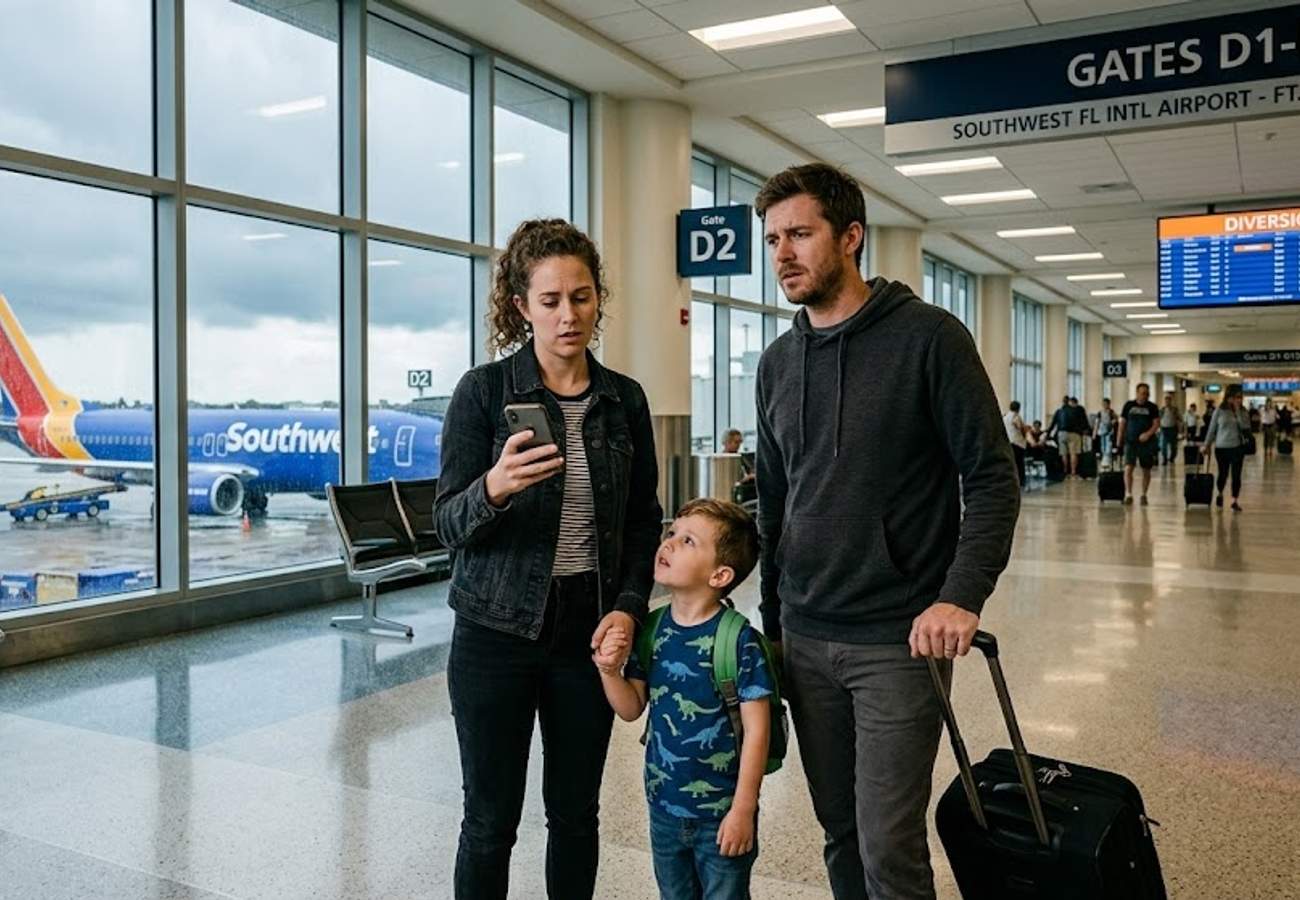
Image generated by AI
A Southwest Airlines Boeing 737 MAX 8 operating Flight WN650 from Louisville to Tampa diverted to Southwest Florida International Airport in Fort Myers on 30 July 2026, disrupting travel plans for passengers aboard the domestic service.
The aircraft registered as N9014W landed safely at Fort Myers approximately 1 hour and 34 minutes behind its scheduled Tampa arrival time, with the airline yet to release the cause of the unexpected route change.
Disruption Details: What Happened on Flight WN650
Southwest Airlines Flight WN650, also identified in aviation systems as SWA650, was scheduled to operate a domestic service from Louisville Muhammad Ali International Airport (SDF) in Kentucky to Tampa International Airport (TPA) in Florida on Thursday, 30 July 2026.
The flight was operated using a Boeing 737 MAX 8 aircraft with registration N9014W. The aircraft departed from Gate B17 at Louisville at approximately 10:56 AM EDT. During the journey, the flight crew executed an unexpected route adjustment, diverting the aircraft away from Tampa and landing instead at Southwest Florida International Airport (RSW) in Fort Myers.
Flight tracking systems show the aircraft arrived at Fort Myers at approximately 1:54 PM EDT. This placed the arrival roughly 1 hour and 34 minutes behind the originally scheduled arrival time at Tampa International Airport. The aircraft completed the diversion landing without reported incident, and all passengers and crew disembarked safely at the alternate airport.
Flight and Airport Impact Breakdown
Key operational details from the incident include:
- Flight Number: WN650 / SWA650
- Airline: Southwest Airlines
- Aircraft Type: Boeing 737 MAX 8
- Registration: N9014W
- Departure Airport: Louisville Muhammad Ali International Airport (SDF), Kentucky
- Departure Gate: B17
- Departure Time: Approximately 10:56 AM EDT on 30 July 2026
- Original Destination: Tampa International Airport (TPA), Florida
- Diversion Airport: Southwest Florida International Airport (RSW), Fort Myers, Florida
- Actual Arrival Time at RSW: Approximately 1:54 PM EDT on 30 July 2026
- Delay Relative to Scheduled TPA Arrival: Approximately 1 hour and 34 minutes
- Reported Reason for Diversion: Not immediately released by Southwest Airlines
Why Was Fort Myers Selected as the Diversion Airport
Southwest Florida International Airport in Fort Myers sits within Florida's major aviation network and offers the infrastructure required to accommodate narrow-body aircraft such as the Boeing 737 MAX 8. The airport provides compatible runway capabilities, passenger handling facilities, and airline operational support necessary for managing unscheduled arrivals.
Our analysis of diversion routing indicates that pilots and airline operations teams evaluate multiple factors when selecting an alternate airport. These include runway length and load capacity, weather conditions at the alternate field, fuel requirements, air traffic control coordination, and the availability of ground services for passengers. Fort Myers met the operational criteria for this flight, allowing Southwest Airlines to complete the route adjustment safely.
The exact trigger for the diversion — whether weather, a medical situation, an aircraft system consideration, or an airport-related issue at Tampa — has not been publicly confirmed by the airline as of the time of this report.
Passenger Rights and Advisory
For the affected passenger, this means your flight did not arrive at the destination you booked, and you may be entitled to specific forms of assistance and compensation depending on the circumstances.
US Department of Transportation Guidelines
Under US DOT policies, domestic diversions are generally treated as operational decisions made in the interest of safety. When a flight diverts to an alternate airport, the airline is expected to:
- Provide passengers with updates and reasonable assistance during the delay
- Arrange onward transportation to the final destination (Tampa International Airport in this case) or offer rebooking options
- Offer refunds for unused portions of travel if the passenger chooses not to continue
Our analysis of the policy suggests that if the diversion was caused by a safety-related or weather-related decision, passengers are unlikely to receive cash compensation beyond rebooking and ground transportation. However, if the diversion resulted from an airline-controlled operational issue — such as a mechanical consideration or crew scheduling problem — passengers may have grounds to seek additional remedies.
Southwest Airlines Specific Policies
Southwest Airlines typically handles diversions by:
- Transporting passengers from the diversion airport to the original destination via ground transportation or a rebooked flight
- Allowing passengers to cancel remaining travel segments for a refund if the disruption significantly alters their plans
- Providing flight credits in cases where passengers choose not to continue travel
What Passengers Should Do Now
If you were aboard Flight WN650 on 30 July 2026, consider the following steps:
- Save your boarding pass, baggage tags, and any receipts for expenses incurred during the diversion
- Document the actual arrival time and any communications from Southwest Airlines staff
- Contact Southwest Airlines customer service to confirm your onward travel arrangements from Fort Myers to Tampa
- If you missed a connecting flight or a prepaid booking in Tampa, request written confirmation of the diversion cause from the airline to support any compensation claim
- Check whether your travel insurance policy covers diversion-related expenses, as some plans include provisions for additional accommodation and transport costs
Industry Analyst View
The diversion of Flight WN650 highlights the operational flexibility built into the US domestic aviation network. The Boeing 737 MAX 8 is a core aircraft type in Southwest Airlines' fleet, offering the range and performance characteristics needed for medium-distance routes such as Louisville to Tampa. When unexpected situations arise mid-flight, the ability to divert to a well-equipped alternate airport like Southwest Florida International Airport allows airlines to prioritise passenger safety without leaving the aircraft stranded in unsuitable conditions.
Flight tracking data from systems such as FlightAware routinely captures similar diversions across the US network. While diversions add time and logistical complexity, they remain a standard safety tool available to flight crews. The roughly 1 hour and 34 minute delay on this service, while disruptive to individual passengers, represents a relatively contained operational impact compared to diversions that result in overnight stays or aircraft changes.
The incident also underscores the importance of passenger awareness regarding diversion procedures. Travellers on domestic US flights should familiarise themselves with their airline's policies on alternate airport landings, as the rights and remedies available differ significantly from those provided under frameworks such as EU261/2004 for European departures.
Key Takeaways for Travellers
- Southwest Airlines Flight WN650 diverted from Tampa to Fort Myers on 30 July 2026, landing safely aboard a Boeing 737 MAX 8 registered N9014W
- The flight arrived at Fort Myers approximately 1 hour and 34 minutes behind its scheduled Tampa arrival time
- The airline has not publicly confirmed the cause of the diversion
- Passengers are entitled to onward transportation to their original destination and may seek refunds for unused travel segments
- Documenting the diversion and retaining receipts strengthens any subsequent compensation claim
Stay informed on airline operational disruptions and passenger rights by following our ongoing aviation coverage.
Related Travel Guides
Disclaimer
This article is for informational and educational purposes only. It does not constitute legal, financial, or professional advice. While we strive to provide accurate and up-to-date information, travel policies, regulations, and conditions change rapidly. Always verify information with official sources before making travel decisions. Nomad Lawyer makes no representations about the accuracy, reliability, completeness, or suitability of the information provided. Readers should consult qualified professionals for advice specific to their circumstances. The views expressed in this article are those of the author and do not necessarily reflect the views of Nomad Lawyer.
Kunal K Choudhary
Co-Founder & Contributor
A passionate traveller and tech enthusiast. Kunal contributes to the vision and growth of Nomad Lawyer, bringing fresh perspectives and driving the community forward.
Learn more about our team →