
Southwest Airlines WN471 Diverts from Denver to Oklahoma City Instead of Dallas Love Field
Southwest Airlines Boeing 737 Max flight WN471, scheduled from Denver to Dallas Love Field, diverted to Oklahoma City on April 30, 2026, departing Denver at 11:05 AM and landing in Oklahoma City at 2:41 PM after approximately 2 hours and 36 minutes of flight time, with a subsequent same-day WN471 segment also departing late.

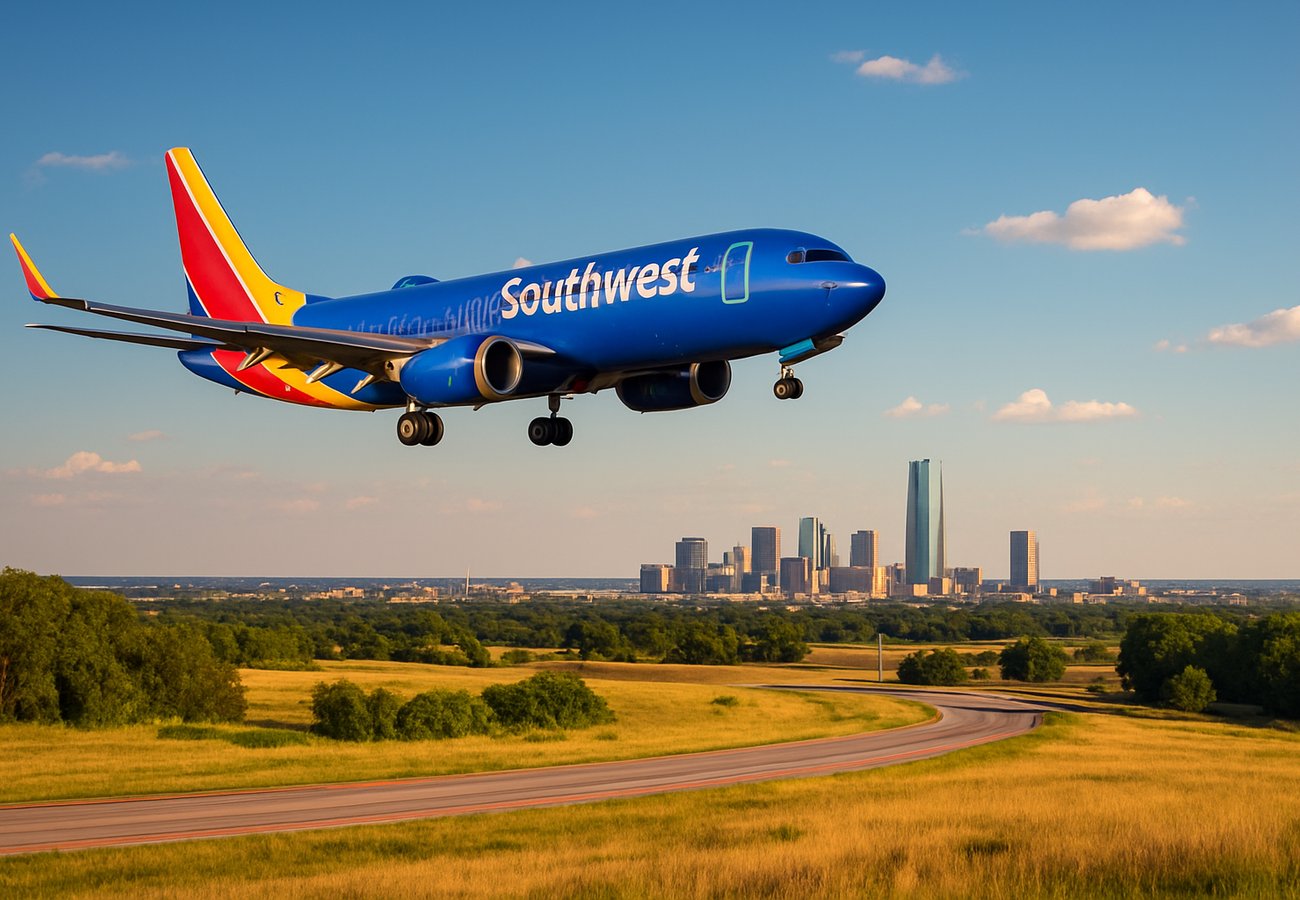
Image generated by AI
Southwest Airlines Boeing 737 Max Flight WN471 Diverts Mid-Flight from Denver to Oklahoma City Instead of Dallas Love Field — Timeline, Cascade Impact, and What Passengers Need to Know
A scheduled Denver–Dallas Love Field service ended 400 miles short of its destination — and the ripple effects extended to a second WN471 segment on the same day.
Southwest Airlines Boeing 737 Max flight WN471, operating the Denver to Dallas Love Field route, executed an unscheduled diversion to Oklahoma City on April 30, 2026 — landing at an airport that was never on its original flight plan. The aircraft departed Denver at 11:05 AM local time, five minutes behind its scheduled 11:00 AM departure, before redirecting mid-route and touching down in Oklahoma City at 2:41 PM — a total airborne duration of approximately 2 hours and 36 minutes on a diversion that removed every passenger from their intended Dallas Love Field destination.
Quick Summary
- Southwest Airlines WN471 (Boeing 737 Max) diverted from its Denver → Dallas Love Field route to Oklahoma City
- Aircraft departed Denver at 11:05 AM (5 min behind the scheduled 11:00 AM); landed Oklahoma City at 2:41 PM
- Total flight duration on the diverted route: approximately 2 hours and 36 minutes
- A second WN471 segment at 1:35 PM to Dallas was also marked "departing late" on the same day — confirming cascading network impact
- Three WN471 entries recorded for the day: one "scheduled", one "diverted", one "departing late"
FLIGHT WN471: THE COMPLETE DIVERSION TIMELINE
| Data Point | Detail |
|---|---|
| Airline | Southwest Airlines |
| Flight Number | WN471 |
| Aircraft | Boeing 737 Max |
| Origin | Denver (DEN) |
| Intended Destination | Dallas Love Field (DAL) |
| Actual Landing | Oklahoma City (OKC) |
| Scheduled Departure | 11:00 AM local time |
| Actual Departure | 11:05 AM local time |
| Arrival at Oklahoma City | 2:41 PM |
| Total Diverted Flight Duration | ~2 hours 36 minutes |
| Status | Diverted |
| Same-Day Second Segment (1:35 PM) | Departing Late |
WHAT HAPPENED: DENVER DEPARTURE, MID-ROUTE REDIRECT, OKLAHOMA CITY LANDING
Flight WN471 pushed back from Denver on schedule — or nearly so. The five-minute delay between the planned 11:00 AM and actual 11:05 AM departure is operationally negligible and consistent with normal pre-departure processing time. There was no indication at departure that the aircraft would not reach its published destination.
What changed came after wheels-up. At some point during the flight's progression toward Dallas Love Field, the crew initiated a course change redirecting the aircraft toward Oklahoma City — a diversion point that sits approximately 200 miles north of the original Dallas destination. The aircraft landed safely in Oklahoma City at 2:41 PM, completing a diversion flight of approximately 2 hours and 36 minutes.
The official cause of the diversion has not been publicly disclosed in the operational flight data. This is not unusual — airlines and regulatory bodies typically conduct an internal review before making any public determination on diversion causation, particularly when the situation involves potential technical, meteorological, or airspace factors.
THE CASCADE: A SECOND WN471 SEGMENT DEPARTS LATE THE SAME DAY
The operational impact of the WN471 diversion did not end with the aircraft's arrival in Oklahoma City. Flight data for the same day records three distinct WN471 entries:
- "Scheduled" — the planned operation
- "Diverted" — the morning service that ended in Oklahoma City instead of Dallas Love Field
- "Departing Late" — a subsequent WN471 segment at 1:35 PM to Dallas that was delayed
The presence of the 1:35 PM departure marked "departing late" is a direct signature of the diversion's downstream consequences. In Southwest's operations model — and in airline network management generally — an aircraft and crew that were expected to complete the Denver–Dallas run and immediately cycle into their next rotation were instead holding in Oklahoma City. This removed that specific aircraft from its planned position in the network, forcing schedule adjustments on the next WN471 departure of the day.
This cascade pattern — where a single diversion creates a delayed second departure under the same flight number — is one of the clearest operational mechanisms through which a localized disruption propagates into broader network inefficiency.
WHY DO DIVERSIONS HAPPEN? THE COMMON TRIGGERS
The official cause of the WN471 diversion remains unconfirmed. However, the aviation safety framework within which Southwest operates means that any mid-flight diversion is necessarily a safety-driven decision. Common triggers for this type of unscheduled rerouting in the central United States corridor include:
- Weather systems at the destination: If convective activity, low visibility, or wind shear conditions at Dallas Love Field made an approach unsafe or inadvisable at the time of arrival, rerouting to an alternate airport is standard protocol
- Mechanical or technical indication: An alert on any aircraft system — even one that turns out to be minor after ground inspection — can trigger a precautionary diversion as crew follow mandatory response procedures
- Medical emergency onboard: A passenger or crew medical event can require immediate landing at the nearest suitable airport, regardless of proximity to the intended destination
- Air traffic control directive: ATC may issue rerouting instructions due to airspace congestion, flow control restrictions at the destination airport, or emergency sequencing requirements
Oklahoma City's airport serves as a well-equipped regional diversion point for flights operating across the central US corridor — geographically positioned and infrastructure-equipped to handle unscheduled commercial arrivals. Its selection as the diversion airport for WN471 reflects standard alternate airport planning for the Denver–Dallas corridor.
The absence of specific terminal and gate assignment data for the Oklahoma City arrival in the flight record is consistent with an unscheduled operational landing rather than a planned commercial stop — further reinforcing that the diversion was reactive rather than pre-planned.
PASSENGER IMPACT: UNSCHEDULED LANDING, REBOOKING, AND ONWARD LOGISTICS
For the passengers aboard WN471, the diversion created a multi-layer disruption sequence:
Immediate: An arrival in Oklahoma City — not Dallas Love Field — requiring all passengers to disembark at an airport they had no intention of using, with all ground logistics (transport, hotel, connecting flights) planned around the Dallas destination now invalid.
Short-term: Passengers required rebooking on the next available Southwest service from Oklahoma City to Dallas Love Field, or alternative transport arrangements. For those with onward connections from Dallas Love Field to domestic US destinations, the diversion-created delay cascaded into connection failures on subsequent flights.
Operational: Southwest's customer service and ground operations teams at Oklahoma City activated contingency protocols — providing re-accommodation options, customer communication, and coordination with Dallas Love Field's ground team for the expected inbound passenger volume once the situation was resolved.
The 1:35 PM WN471 departure's "departing late" status suggests that Southwest was working through the operational reset in real time, with the delayed afternoon segment reflecting the time required to restore aircraft positioning and crew rotation after the morning diversion.
INDUSTRY CONTEXT: DIVERSIONS AND NETWORK RESILIENCE
The WN471 diversion is a reminder that commercial aviation's operational resilience is tested not by the frequency of disruptions — which remain statistically rare — but by the speed and quality of the recovery mechanism that activates when they occur.
Southwest Airlines' point-to-point network model means that a single diversion's downstream effects are typically contained within a specific route pairing rather than propagating across a hub-and-spoke connection web. However, as the same-day 1:35 PM delay demonstrates, even the point-to-point model is not immune to cascade effects when an aircraft is displaced from its expected rotation point.
The Boeing 737 Max — Southwest's fleet type on this operation — is currently the backbone of the airline's domestic fleet, making its operational reliability a central concern for the carrier's network performance. Any diversion involving a 737 Max will attract close attention from both the airline and safety regulators, regardless of whether the aircraft type played any role in the event.
CONCLUSION: SAFETY PROTOCOL CONFIRMED, RECOVERY IN PROGRESS
Southwest Airlines Boeing 737 Max flight WN471 departed Denver at 11:05 AM, redirected mid-route, and landed safely in Oklahoma City at 2:41 PM — 2 hours and 36 minutes after leaving Denver, and at an airport approximately 200 miles from the intended Dallas Love Field destination. The diversion's official cause remains unconfirmed. A subsequent WN471 segment at 1:35 PM departed late, confirming the cascading operational impact. Passengers are advised to check Southwest's rebooking channels and monitor flight status for any ongoing adjustments on the Denver–Dallas Love Field corridor.
KEY TAKEAWAYS
- Southwest Airlines WN471 (Boeing 737 Max) diverted from Denver to Oklahoma City instead of its planned Dallas Love Field destination.
- Aircraft departed Denver at 11:05 AM (scheduled 11:00 AM) and landed Oklahoma City at 2:41 PM.
- Total diverted flight duration: approximately 2 hours and 36 minutes.
- Official diversion cause: not publicly disclosed in available flight data.
- A second WN471 segment at 1:35 PM to Dallas was recorded as "departing late" the same day — a direct cascade from the morning diversion.
- Three WN471 statuses recorded for the day: scheduled, diverted, and departing late.
- Oklahoma City serves as a standard diversion alternate for the central US Denver–Dallas corridor.
- Passengers were affected by unscheduled landing logistics, rebooking requirements, and potential missed connections at Dallas Love Field.
Disclaimer
This article is for informational and educational purposes only. It does not constitute legal, financial, or professional advice. While we strive to provide accurate and up-to-date information, travel policies, regulations, and conditions change rapidly. Always verify information with official sources before making travel decisions. Nomad Lawyer makes no representations about the accuracy, reliability, completeness, or suitability of the information provided. Readers should consult qualified professionals for advice specific to their circumstances. The views expressed in this article are those of the author and do not necessarily reflect the views of Nomad Lawyer.
Kunal K Choudhary
Co-Founder & Contributor
A passionate traveller and tech enthusiast. Kunal contributes to the vision and growth of Nomad Lawyer, bringing fresh perspectives and driving the community forward.
Learn more about our team →