
Aviation Updates: Southwest Airlines SWA761 Diverts to Albuquerque Amid Severe Rocky Mountain Travel Chaos
Violent wind shear and severe thunderstorms force a Houston-to-Denver Boeing 737 into an emergency diversion, stranding passengers in New Mexico.

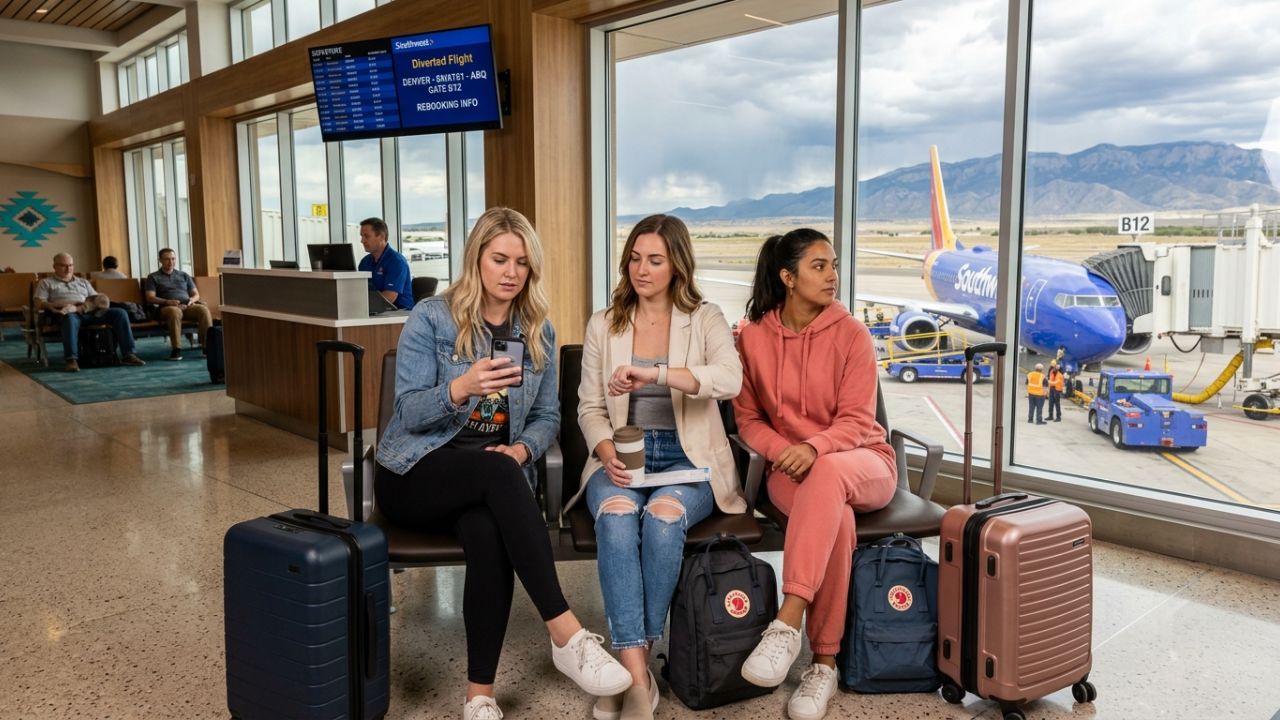
Image generated by AI
Aviation Updates: Southwest Airlines SWA761 Diverts to Albuquerque Amid Severe Rocky Mountain Travel Chaos
As violent summer thunderstorms and aggressive wind shear completely shattered arrival patterns across the Rocky Mountains on Sunday evening, a fully loaded Southwest Airlines flight from Houston was forced into an emergency diversion, plunging passengers into severe regional travel chaos.
Image generated by AI
As urgent airline news platforms and highly critical aviation updates continuously document the extreme fragility of summer flight schedules, a massive weather-induced detour has severely disrupted domestic transit. On Sunday evening, holidaymakers and corporate travelers onboard Southwest Airlines flight SWA761 faced an intense, unscheduled route disruption midway through their journey from Houston, Texas, to Denver, Colorado. Because rapidly building atmospheric instability severely compromised the arrival corridors into Colorado, the highly seasoned flight deck crew made a rapid tactical decision to abandon the approach. The Boeing 737-7H4 was aggressively diverted, landing safely on the secure tarmac of Albuquerque International Sunport in New Mexico. While the diversion absolutely prioritized passenger safety and protected the mechanical integrity of the aircraft, the sudden operational adjustment triggered immediate, localized travel chaos. Displaced passengers must now frantically navigate automated rebooking systems to secure onward connections, battling the looming threat of massive flight cancellations and severe downstream airport disruptions.
Expanded Overview: The Threat of High-Altitude Instability
When analyzing the massive aerodynamic forces that dictate commercial aviation safety, the sheer volatility of Rocky Mountain weather systems cannot be overstated.
Unpredictable localized cells frequently develop over Colorado during the intense summer months, generating terrifying wind shear patterns and severe thunderstorms that instantly complicate standard aircraft landings. When these violent atmospheric conditions build rapidly, regional air traffic management is legally forced to implement incredibly strict arrival delays to protect incoming traffic. Continuing an approach into Denver International Airport under these volatile metrics was aerodynamically impossible. The captain of SWA761, aggressively monitoring the collapsing weather radar alongside corporate dispatchers, realized that circling in a holding pattern would dangerously deplete fuel reserves, forcing the immediate diversion into New Mexico.
Section-Wise Breakdown: The Denver Arrival Gridlock
The absolute core of this massive operational disruption stems from the cascading failure of the Denver arrival corridors.
As the severe thunderstorms parked directly over the primary flight paths, air traffic control logs confirmed that regular arrival patterns were completely paralyzed during the late afternoon and early evening hours. The intense wind shear created a highly dangerous landing environment, forcing ground controllers to issue strict arrival holds. Because Southwest Airlines operates a massive hub in Denver, this localized weather event created a massive bottleneck. Rather than risk the aircraft in turbulent airspace, the SWA761 crew elected to definitively break the holding pattern and seek immediate refuge at a secondary airfield.
Section-Wise Breakdown: The Albuquerque Staging Point
To save the aircraft from the collapsing weather system, the crew forcefully re-routed the Boeing jet toward the absolute safest regional alternative.
Albuquerque International Sunport immediately served as the primary refueling and staging point. By choosing a well-equipped, massive commercial facility in New Mexico, the carrier ensured that the mechanical systems of the Boeing 737-7H4 remained fully supported by expert ground personnel while awaiting clearer conditions. Ground crews instantly met the arriving aircraft on the tarmac, coordinating emergency customer assistance protocols and preparing the jet for a potential rapid departure once the Denver airspace reopened.
Flight Details: Southwest Airlines SWA761 Flight Diversion Matrix
The exact operational telemetry outlining this highly dramatic flight diversion, detailing the specific aircraft deployment, the original route architecture, and the primary catalyst for the disruption, has been consolidated into the mandatory matrix below.
Southwest Airlines SWA761 Flight Diversion Matrix (2026)
| Operational Metric | Verified Flight Data |
|---|---|
| Airline Operator | Southwest Airlines |
| Flight Number | SWA761 |
| Aircraft Type | Boeing 737-7H4 |
| Original Route | Houston, Texas to Denver, Colorado |
| Diversion Location | Albuquerque International Sunport, New Mexico |
| Disruption Catalyst | Severe Rocky Mountain thunderstorms and wind shear |
Passenger Impact: Navigating the Digital Recovery
For the stranded holidaymakers forcefully displaced by this massive diversion, the immediate priority is securing rapid, automated rebooking to escape the terminal gridlock.
Because Denver remains a massive operational hub for Southwest Airlines, alternative flights are regularly scheduled throughout the subsequent morning hours. Passengers are aggressively advised to utilize the digital mobile application to secure automated rebooking choices, completely bypassing the massive, chaotic queues at the physical service desks inside the Albuquerque terminal. The airline typically prioritizes placing stranded individuals on the next available corporate departure without charging additional fare differences. Affected flyers must explicitly check their digital boarding passes and monitor SMS notifications for real-time seat assignments and sudden gate changes to avoid missing their highly coveted recovery flights.
Industry Analysis: Financial Compensation and Luggage Logistics
Aviation economists explicitly highlight that navigating financial compensation during weather diversions requires passengers to intimately understand aviation law.
Because the SWA761 route alteration was directly triggered by severe thunderstorms and wind shear, standard carrier rules classify the event strictly as an "act of nature." Under these parameters, the airline is not legally mandated to provide financial compensation for the delay, unlike a mechanical failure where the carrier assumes full responsibility for lodging and meals. However, passengers may still qualify for specific travel vouchers or frequent flyer point deposits as a gesture of corporate goodwill. Furthermore, ground personnel strongly advise all passengers to physically retain their original baggage claim receipts; tracking checked luggage during a complex, multi-leg diversion recovery is notoriously difficult, and maintaining physical documentation is essential to simplify the retrieval process in Denver.
Conclusion: Surviving the Rocky Mountain Bottleneck
Ultimately, the sudden and dramatic diversion of Southwest Airlines flight SWA761 is a terrifying reminder of the absolute volatility of summer aviation. Severe thunderstorms and dangerous wind shear created a highly lethal landing environment in Denver, forcing the highly trained flight crew into a critical tactical decision that absolutely guaranteed safety but triggered massive travel chaos. As Southwest customer service teams aggressively coordinate automated rebookings for the stranded passengers in Albuquerque, travelers must remain fiercely proactive. In an era completely defined by unpredictable weather and severe airport disruptions, aggressively utilizing airline mobile apps and understanding the strict legal definitions of weather delays is the absolute only way to survive the grueling reality of modern domestic air travel.
Key Takeaways
- Dramatic Regional Diversion: Southwest Airlines flight SWA761, originally scheduled from Houston to Denver, was forced to divert on a Sunday evening due to severe weather.
- The Aircraft Involved: The domestic route was operated using a Boeing 737-7H4, which safely landed on the secure tarmac in New Mexico.
- The Weather Catalyst: Rapidly building summer thunderstorms and severe wind shear over the Rocky Mountains disrupted Denver's regular arrival patterns, forcing ATC to issue strict holds.
- The Albuquerque Staging Point: The crew selected Albuquerque International Sunport as a secure refueling and staging facility to protect the aircraft's mechanical systems.
- Passenger Recovery Logistics: Passengers are being automatically rebooked onto alternative morning flights to Denver, though financial compensation is unlikely as the diversion was classified as an act of nature.
FAQ: Southwest Airlines SWA761 Albuquerque Diversion 2026
Why did Southwest Airlines flight SWA761 divert to Albuquerque? The Boeing 737-7H4 encountered severe thunderstorms and highly dangerous wind shear as it approached Colorado. Because air traffic control issued strict arrival holds for Denver, the crew diverted to Albuquerque for safety and refueling.
How do stranded SWA761 passengers get rebooked to Denver? Passengers are heavily advised to use the Southwest digital mobile app to secure automated rebooking assignments on morning flights to the Denver hub, bypassing long lines at the Albuquerque airport service desks.
Will Southwest Airlines provide financial compensation for this diversion? Because the diversion was directly caused by severe weather (classified as an act of nature), the airline is not legally required to provide lodging or financial compensation, though they may offer travel vouchers as a customer service gesture.
Related Travel Guides
Norwegian Nordic Leisure Travel Group Acquisition Travel Chaos 2026
SkyWest American Airlines SKW6427 Aspen Diversion Travel Chaos 2026
North America Regional Flight Disruption Survival Guide 2026
Disclaimer: This article is strictly for informational and aviation safety purposes. The operational flight data, specific aircraft assignment (Boeing 737-7H4 on flight SWA761), and designated alternate airfields (Albuquerque International Sunport) are based on live flight tracking telemetry and official airline diversion protocols available at the time of publication. Mountain weather systems, specific wind shear parameters, and airline rebooking operations (including automated mobile app reassignments and compensation eligibility based on "act of nature" classifications) are highly dynamic and subject to immediate, unannounced modification. Passengers involved in flight diversions must explicitly verify exact baggage transfer protocols, specific rebooking options, and consumer rights directly with Southwest Airlines customer service agents prior to leaving the secure terminal area.
Disclaimer
This article is for informational and educational purposes only. It does not constitute legal, financial, or professional advice. While we strive to provide accurate and up-to-date information, travel policies, regulations, and conditions change rapidly. Always verify information with official sources before making travel decisions. Nomad Lawyer makes no representations about the accuracy, reliability, completeness, or suitability of the information provided. Readers should consult qualified professionals for advice specific to their circumstances. The views expressed in this article are those of the author and do not necessarily reflect the views of Nomad Lawyer.
Raushan Kumar
Founder & Lead Developer
Full-stack developer with 11+ years of experience and a passionate traveller. Raushan built Nomad Lawyer from the ground up with a vision to create the best travel and law experience on the web.
Learn more about our team →