
Southwest Airlines Family Seating Conflict: $600 Upcharge Highlights Shift to Assigned Seating in 2026
A dispute over a $600 family seating charge at Southwest Airlines underscores the volatile transition from open seating to assigned fares, leaving Basic fare travelers vulnerable to seat separation.

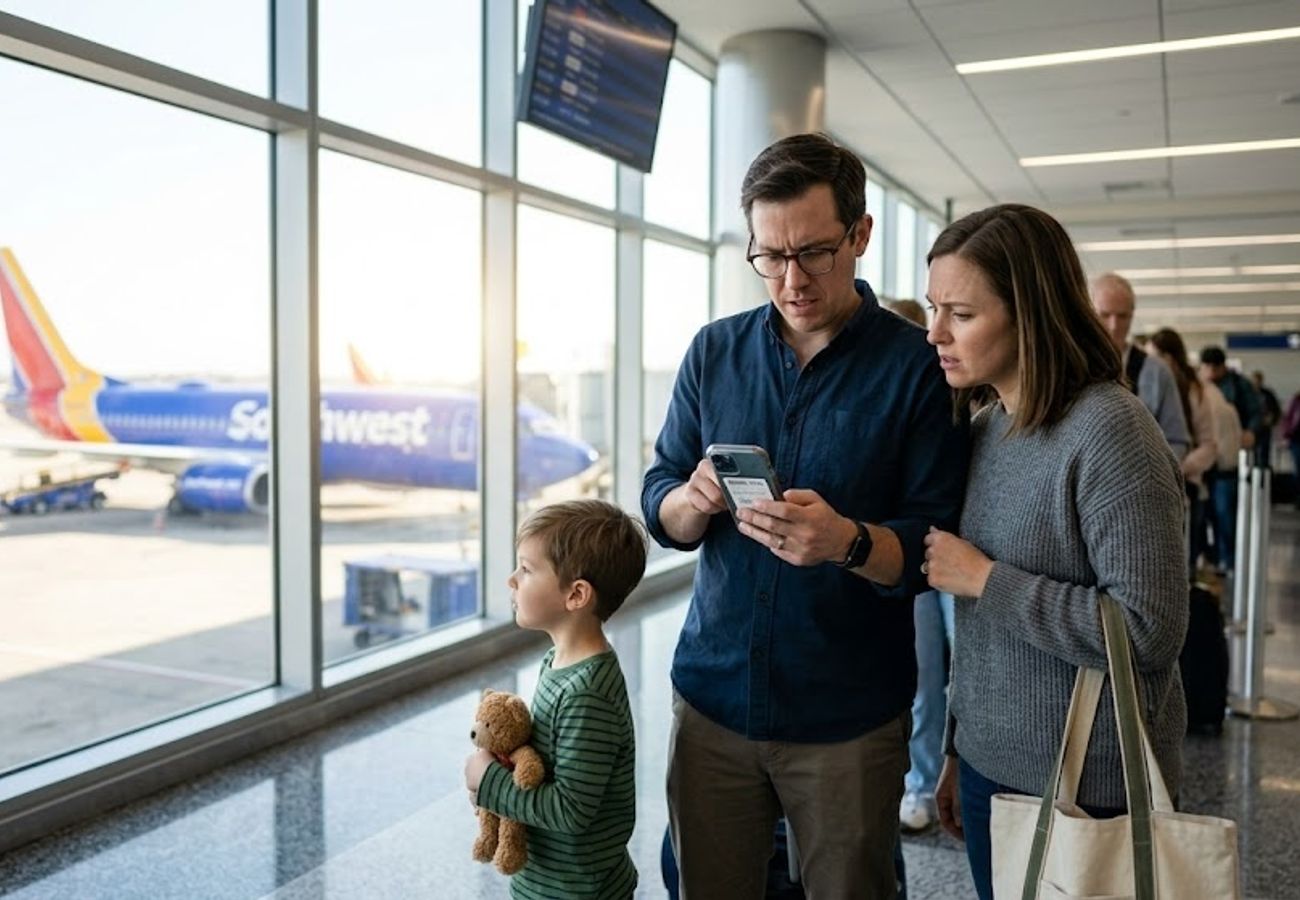
Image generated by AI
The cost of securing adjacent seats for a family of three on a single Southwest Airlines itinerary recently spiked to $600, a stark contrast to the carrier's historical "open seating" model where such arrangements cost $0. This incident, reported by a passenger who ended a 12-year loyalty streak with the airline, serves as a data point for the friction occurring as Southwest transitions toward a traditional assigned-seat framework.
The Revenue Shift in Family Seating Numbers
The financial friction in this case stems from the delta between "Basic" fares and "Choice" bundles. The passenger in question faced a potential $600 surcharge—approximately $100 per seat, each way—to ensure a six-year-old child was not seated next to a stranger on a four-hour flight. This pricing reflects a broader industry movement toward unbundling services, where the "baseline" ticket no longer guarantees the basic utility of family proximity.
According to the U.S. Department of Transportation (DOT), Southwest is currently categorized among carriers that have not fully committed to fee-free family seating. The removal of "Family Boarding" in January has eliminated the primary mechanism families previously used to secure rows together for free. Under the new regime, those opting for the lowest price point are relegated to the final boarding group (Group 8), leaving them entirely dependent on the algorithm's random assignment 24 hours before departure.
Comparative Market Analysis: Assigned vs. Open Seating
The transition from an open-seating model to a tiered assigned-seat system represents a fundamental shift in Southwest's market positioning. While the airline promised "refined" seating six months ago, the data suggests a widening gap between the "Basic" experience and the "Choice" experience.
The following table breaks down the current cost-to-benefit ratio for families navigating the 2026 Southwest fare structure:
| Fare Bundle | Estimated Added Price | Seat Selection Capability | Family Seating Guarantee | Boarding Priority |
|---|---|---|---|---|
| Choice Extra | +$130 to $180+ | Premium/Exit/First 5 Rows | Guaranteed Premium Adjacent | Groups 1 & 2 |
| Choice Preferred | +$70 to $100 | Front Cabin/Standard | Guaranteed Front Adjacent | Groups 3 & 4 |
| Choice | +$30 to $45 | Standard (Rear Cabin) | Safest Baseline for Families | Groups 3 to 7 |
| Basic | Baseline | Randomly Assigned | Not Guaranteed | Group 8 |
When compared to other major U.S. carriers, Southwest's move mirrors the "Basic Economy" strategies seen at Delta or United, but with the added volatility of a customer base that spent decades expecting zero-cost seat flexibility. The International Air Transport Association (IATA) has noted a global trend toward ancillary revenue growth, and Southwest's $15 to $40 à la carte seat selection for Basic fares is a direct application of this model.
What This Means for Travelers
For the individual traveler, the "Southwest Advantage" of the past—where speed of check-in guaranteed a window or aisle—is dead. The data indicates that "Basic" fares are now a high-risk option for anyone traveling with minors.
If you are booking travel for 2026, the following actionable strategies are grounded in current fare data:
- Avoid Basic Fares for Families: The risk of separation is statistically high for Group 8 boarders. Upgrading to a "Choice" fare (adding $30–$45) is a significantly more cost-effective insurance policy than paying the $100+ per-seat "emergency" fees at the gate or via the app.
- The 24-Hour Window: For those on Basic fares, the "Manage Reservation" tool in the mobile app allows for seat purchases up to 60 minutes before departure. Monitoring this window can sometimes yield cheaper options than the initial booking phase.
- Gate Agent Intervention: While the airline emphasizes paid upgrades, there are documented instances of gate agents manually adjusting assignments for families with children under 12. However, this is a "best-effort" service and not a guaranteed right under the current terms of service.
Forward Projection: The End of the "Low-Cost" Identity
The current trajectory suggests that Southwest is moving away from being a "disruptor" of the hub-and-spoke model and toward a standardized legacy carrier experience. The backlash from the "loyalist" passenger highlights a critical branding risk: the airline is charging premium prices for seat assignments while maintaining a "low-cost" image.
As we move into late 2026, expect the "Basic" fare to become even more restrictive. The data shows that when airlines introduce tiered seating, the "bottom" tier is often squeezed further to push passengers toward the mid-tier "Choice" bundles. We project that "Family Seating" will eventually become a standalone paid add-on rather than a feature of a bundle, further increasing the cost for parents.
FAQ: Southwest Family Seating 2026
Will seat prices go up for families? Yes. The shift from free open seating to tiered assigned seating means families must now pay for "Choice" fares or à la carte assignments to guarantee proximity, with some cases reaching $600 for a round-trip family of three.
Is it still possible to sit with my child for free? Southwest states they will "endeavor" to seat children (12 and under) next to an adult on the same reservation at no cost, but this is "to the extent practicable" and not guaranteed for Basic fares.
Which fare is best for a family of four? The "Choice" fare is the most efficient baseline. It provides a guaranteed way to secure adjacent seats at a significantly lower cost than the "Choice Extra" or last-minute gate upgrades.
Does the new boarding process help families? It removes the physical "scramble" for seats, but it replaces it with a digital lottery for Basic fare holders, who board last and have the least control over their location.
The era of the free family row is over; the era of the algorithmic upcharge has arrived.
Related Travel Guides
Disclaimer
This article is for informational and educational purposes only. It does not constitute legal, financial, or professional advice. While we strive to provide accurate and up-to-date information, travel policies, regulations, and conditions change rapidly. Always verify information with official sources before making travel decisions. Nomad Lawyer makes no representations about the accuracy, reliability, completeness, or suitability of the information provided. Readers should consult qualified professionals for advice specific to their circumstances. The views expressed in this article are those of the author and do not necessarily reflect the views of Nomad Lawyer.
Kunal K Choudhary
Co-Founder & Contributor
A passionate traveller and tech enthusiast. Kunal contributes to the vision and growth of Nomad Lawyer, bringing fresh perspectives and driving the community forward.
Learn more about our team →