
Southwest Airlines Faces Historic Shift as Competition Intensifies on 60% of Monopoly Routes by 2026
Breaking airline news and aviation industry updates for 2026.

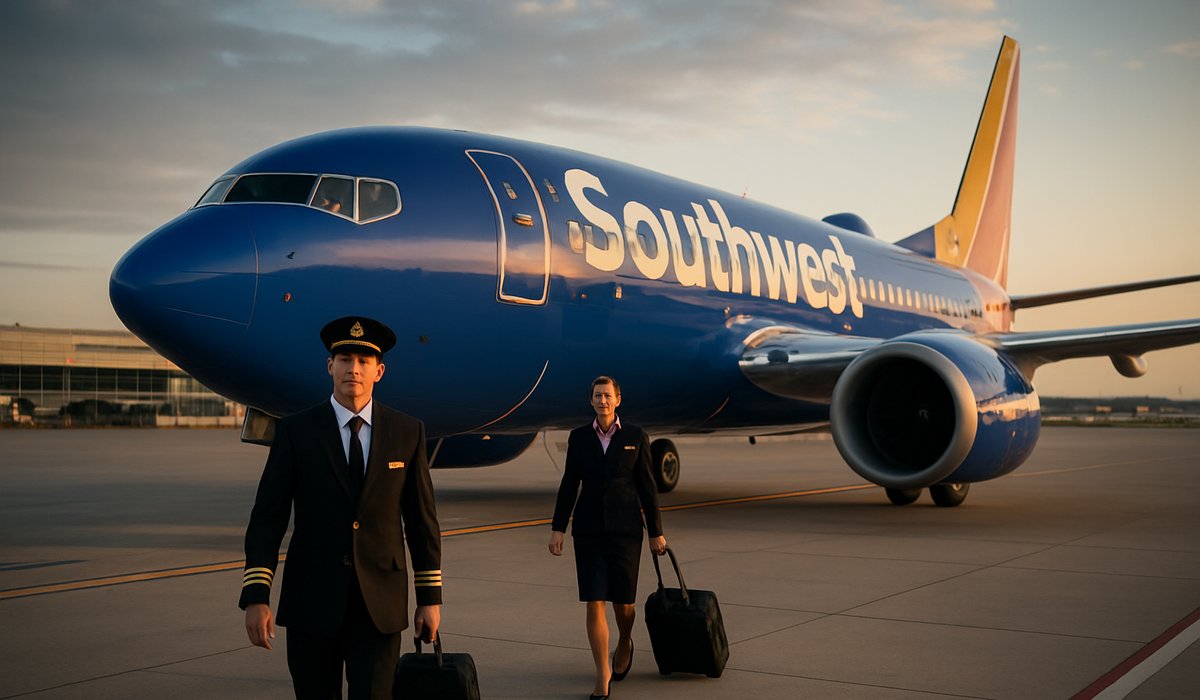
Image generated by AI
Southwest Airlines Faces Historic Shift as Competition Intensifies on 60% of Monopoly Routes by 2026
The low-cost carrier's decades-long strategy of avoiding direct competition crumbles as rivals target its most profitable uncontested markets
The End of an Era: Southwest's Competitive Moat Erodes
Southwest Airlines faces an unprecedented competitive reckoning in 2026 as rivals aggressively target the carrier's historically protected market segments. The Dallas-based airline has built its operational model on a foundational principle that has served it well for nearly five decades: compete where no one else wants to fly. Today, that strategic advantage is evaporating.
The airline currently operates without direct competitors on approximately 60% of its route network—a competitive luxury unmatched among major US carriers. However, this insulation from head-to-head competition is rapidly deteriorating as budget and legacy carriers alike identify Southwest's secondary airport hubs and underserved city pairs as premium profit opportunities.
How Southwest Built Its Fortress
Southwest's historical success stemmed from a deliberately unconventional approach to network planning. While American Airlines, United Airlines, and Delta Air Lines battled for dominance in major metropolitan hubs like Dallas-Fort Worth, Atlanta, and Chicago, Southwest systematized operations from secondary airports and regional markets that larger competitors dismissed as unprofitable.
The carrier's point-to-point network model, combined with its famous single-aircraft-type strategy using Boeing 737s, enabled the airline to establish quasi-monopolistic positions on numerous routes. These uncontested markets generated substantial margins, providing Southwest with financial flexibility that competitors operating in saturated markets could not match.
The Competitive Landscape Transforms
Industry analysts project that direct competition will materialize on up to 60% of Southwest's current uncontested routes by 2026. This shift reflects a broader industry trend: as fuel costs stabilize, aircraft availability improves, and regional carriers expand their networks, the remaining white space in US aviation grows increasingly scarce.
Ultra-low-cost carriers, including Spirit Airlines and Frontier Airlines, are expanding capacity specifically targeting Southwest's secondary markets. Simultaneously, legacy carriers are deploying regional jets to routes previously abandoned as economically unviable.
Financial Implications and Strategic Crossroads
The loss of pricing power on monopoly routes threatens Southwest's margin structure. Without direct competitors, the airline maintained flexibility on fares. Competitive entry typically compresses yields by 15-25%, industry data suggests, forcing carriers to choose between volume growth or margin preservation.
Southwest must now confront strategic questions that have largely eluded its leadership for decades: how to compete aggressively while protecting profitability, and whether its operational model—optimized for secondary markets—remains viable as competition normalizes across its network.
FAQ: Southwest Airlines and Airline Competition in 2026
What percentage of Southwest Airlines routes currently have no direct competition? Southwest operates without direct competitors on approximately 60% of its route network, though this advantage is expected to diminish significantly by 2026 as rival carriers identify these underserved markets as expansion opportunities.
How does jet fuel pricing impact airline competition on secondary routes? Fuel costs directly influence route profitability. When fuel prices decline, previously uneconomical routes become viable for competitors. Conversely, fuel spikes protect monopoly carriers by raising entry barriers for smaller rivals.
Why did Southwest historically avoid competing against legacy carriers? Southwest deliberately positioned itself in secondary airports and underserved city pairs where major carriers like American, United, and Delta saw limited demand or insufficient profitability, avoiding the price wars characteristic of hub markets.
What competitive threats does Southwest face from budget carriers in 2026? Ultra-low-cost carriers like Spirit and Frontier are aggressively expanding into Southwest's protected markets, leveraging lower cost structures and leveraging baggage fees to undercut the carrier's fares.
How will increased competition affect airline baggage fees and ancillary charges? Competitive pressure typically forces carriers to reduce or restructure ancillary revenue strategies. Baggage charges and seat fees may decrease on newly competitive routes, potentially reducing overall airline industry fee structures.
Related Travel Guides
-
US Air Force Keeps Boeing 707 Fleet Operational Into 2026 Despite Aircraft's 70-Year Legacy
-
Flight Centre Taps Zahrah Roush as Global Air and Ancillaries Head
External Resources
Disclaimer
This article is for informational and educational purposes only. It does not constitute legal, financial, or professional advice. While we strive to provide accurate and up-to-date information, travel policies, regulations, and conditions change rapidly. Always verify information with official sources before making travel decisions. Nomad Lawyer makes no representations about the accuracy, reliability, completeness, or suitability of the information provided. Readers should consult qualified professionals for advice specific to their circumstances. The views expressed in this article are those of the author and do not necessarily reflect the views of Nomad Lawyer.
Preeti Gunjan
Contributor & Community Manager
A passionate traveller and community builder. Preeti helps grow the Nomad Lawyer community, fostering engagement and bringing the reader experience to life.
Learn more about our team →