
Southwest Airlines Flight SWA4762 Diverted to Indianapolis Due to Mid-Air Anomaly
Southwest Airlines flight SWA4762 from Orlando to Chicago diverted to Indianapolis International Airport after encountering severe weather conditions.

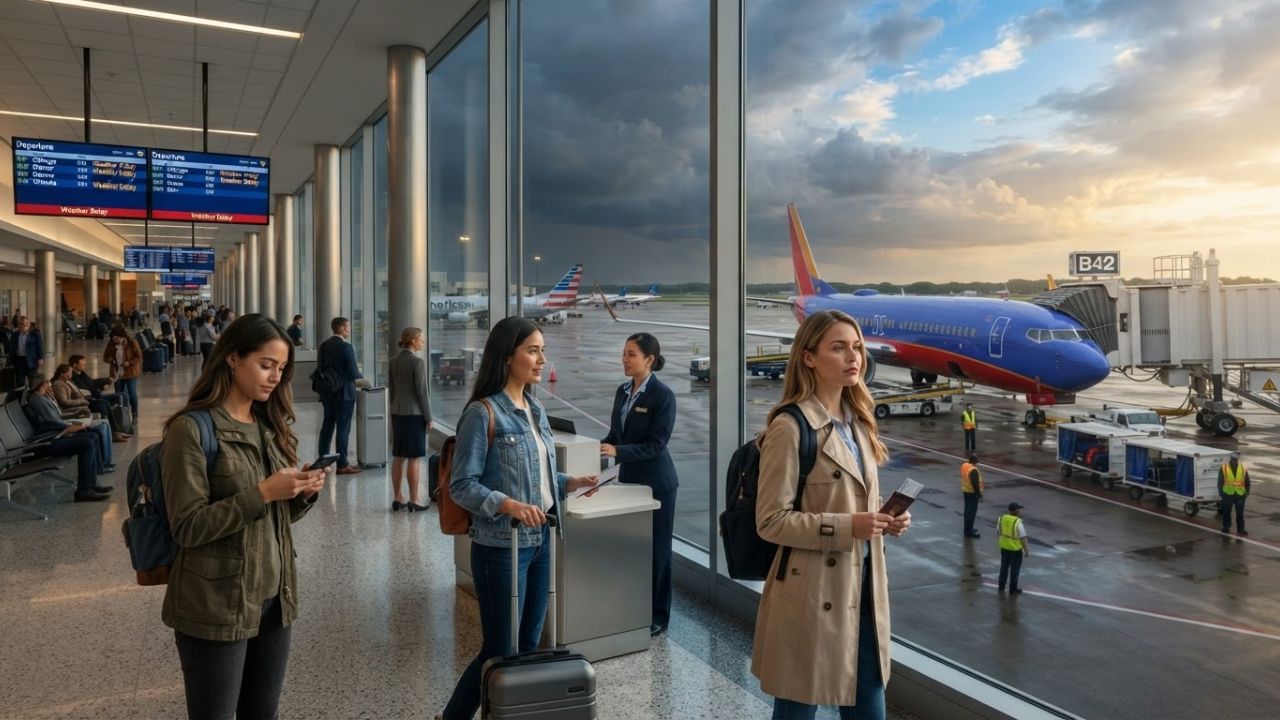
Image generated by AI
Southwest Airlines flight SWA4762 from Orlando to Chicago has diverted to Indianapolis International Airport. The Boeing 737 MAX 8 aircraft was rerouted after severe storm activity blocked runway approaches at the primary destination.
Convective Storms Disrupt Midwestern Airspace
The flight operations managed by Southwest Airlines to redirect aircraft during summer storm activity prioritize passenger safety. Flight SWA4762 was transiting from Orlando when pilot teams received weather alerts.
Severe convective storm systems brought intense lightning and shifting crosswinds directly over Chicago. These atmospheric conditions quickly dropped runway visibility levels below required civil aviation safety margins.
Rather than entering a prolonged holding pattern that would deplete fuel reserves, the flight crew selected an inland diversion point.
Standard Safety Descent into Indianapolis
The aircraft was guided to a lower cruising altitude to bypass the active weather cells. The Boeing 737 MAX 8 landed safely at Indianapolis International Airport (IND) after pilots declared an operational anomaly to air traffic control.
Onboard computing systems updated the flight coordinates to ensure a stable approach trajectory. Ground operations staff coordinated runway clearance with regional radar controllers.
Upon arrival, maintenance crews performed inspections on the aircraft engines and airframe structure, confirming zero defects.
Flight Profiles and Weather Disruption Parameters
The tables below present the flight profiles, operational data, and regional airport adjustments.
Southwest Airlines Flight SWA4762 Diversion Profile
| Flight Characteristic | Operational Detail |
|---|---|
| Airline Carrier | Southwest Airlines |
| Flight Number | SWA4762 |
| Aircraft Equipment | Boeing 737 MAX 8 |
| Origin Gateway | Orlando International Airport (MCO) |
| Scheduled Destination | Chicago Midway International Airport (MDW) |
| Diversion Airport | Indianapolis International Airport (IND) |
| Disruption Trigger | Severe Midwestern convective storm cells |
Aircraft Technical Status and Operational Details
| Aircraft Parameter | Status Detail | Flight Systems Role |
|---|---|---|
| Airframe Structural Check | Zero mechanical anomalies reported | Maintain fuselage integrity under turbulence |
| Engine Performance | Maintained peak operational efficiency | Support altitude adjustments during descent |
| Flight Management Computers | Auto-recalculated coordinates for Indianapolis | Provide pilot crew with revised routing parameters |
Weather Metrics and Regional Air Traffic Control Coordination
| Weather Hazard | Airspace Region | Air Traffic Control Action | Logistical Resolution |
|---|---|---|---|
| Convective Lightning Cells | Midwestern Approach Sector | Isolate designated descent altitude blocks | Redirect SWA4762 to Indianapolis |
| Shifting Crosswinds | Chicago Midway Airport | Adjust arrival spacing for trailing traffic | Suspend original landing approaches |
| Sudden Visibility Drop | Great Lakes Area | Coordinate runway slots at alternate airfields | Deploy passenger hotel vouchers & coaches |
Terminal Services and Ground Logistics Support
The customer support team assembled at the terminal gate to process the displaced travelers. Station managers coordinated rebooking options and distributed hotel vouchers for the overnight delay.
Baggage handlers were scheduled at short notice to expedite luggage delivery at the arrival terminal. The airline's central planning center adjusted downstream schedules to prevent subsequent network delays.
Federal safety investigators will review flight recorder logs as part of standard weather-related incident tracking.
Aviation Routing and Airspace Management
Pilots planning their approach sequence into Chicago Midway International Airport (MDW) monitor regional wind shear warning systems. Rerouting to airports with larger runway space helps manage crosswind landing challenges.
Air traffic controllers manage the flow of traffic by adjusting flight speeds during severe weather events. This coordination prevents spacing conflicts when multiple flights seek diversions simultaneously.
The use of advanced onboard radar systems helps pilot teams steer clear of severe turbulent cells.
Fleet Positioning and Network Maintenance
Airlines must balance fuel reserves with holding pattern times to avoid declaring emergency fuel states. Diverting early in the descent phase preserves crew duty times and scheduling flexibility.
Indianapolis serves as a key diversion anchor due to its extensive gate capacity and support infrastructure. This resource availability allows carriers to park aircraft safely during terminal closures.
Operating crews comply with FAA regulations regarding flight hour limitations and cabin rest periods.
Why This Matters
Our analysis of the flight data indicates that summer convective storms in the Midwest pose significant challenges for regional low-cost carriers. Chicago Midway's runway configuration is more sensitive to crosswinds than larger hubs like O'Hare. When wind limits are exceeded, flight crews must divert immediately to ensure safety.
Additionally, choosing Indianapolis (IND) as a diversion site minimizes passenger displacement. The airport is situated within a three-hour drive of Chicago, allowing the airline to utilize ground transportation alternatives if flight corridors remain closed.
Industry Outlook
Market trends suggest that airlines will increase their integration of real-time meteorological forecasting tools in the cockpit. Regulatory safety audits and airport resource planning continue to align with federal aviation guidelines.
Expect regional dispatch teams to refine their seasonal weather diversion checklists ahead of late 2026. The airline plans to resume normal flight operations on the Chicago sector tomorrow morning.
Key Takeaways
- Sudden Diversion: Southwest flight SWA4762 diverted to Indianapolis on July 3, 2026.
- Storm Disruption: Severe convective weather and crosswinds at Chicago Midway prompted the rerouting.
- Technical Integrity: The Boeing 737 MAX 8 performed normally with no mechanical faults detected.
- Passenger Ground Care: Travelers were provided with hotel vouchers and rebooking options upon arrival at IND.
- Airspace Safety: Air traffic control successfully isolated altitude blocks to coordinate the descent.
FAQ
Why was Southwest flight SWA4762 diverted?
The flight diverted due to severe summer thunderstorms and high crosswinds at Chicago Midway Airport.
What aircraft was used on this flight?
The flight was operated using a Boeing 737 MAX 8 aircraft.
Where did the flight land?
The flight landed safely at Indianapolis International Airport (IND).
What options were provided to passengers?
Passengers received hotel vouchers, refreshments, and rebooking confirmations from ground staff at Indianapolis.
Related Travel Guides
- Aviation Updates: Travel Chaos Hits Martha's Vineyard as Tradewind Aviation Leads Regional Flight Cancellations
- Etihad Airways and Uzbekistan Airways Launch Strategic Codeshare Partnership Linking Abu Dhabi and Tashkent to Safeguard Travelers from Flight Cancellations and Travel Chaos: New Aviation Updates
- Singapore Airlines Pulled Into April 2026 Asian Aviation Crisis
Disclaimer
This article is for informational and educational purposes only. It does not constitute legal, financial, or professional advice. While we strive to provide accurate and up-to-date information, travel policies, regulations, and conditions change rapidly. Always verify information with official sources before making travel decisions. Nomad Lawyer makes no representations about the accuracy, reliability, completeness, or suitability of the information provided. Readers should consult qualified professionals for advice specific to their circumstances. The views expressed in this article are those of the author and do not necessarily reflect the views of Nomad Lawyer.
Kunal K Choudhary
Co-Founder & Contributor
A passionate traveller and tech enthusiast. Kunal contributes to the vision and growth of Nomad Lawyer, bringing fresh perspectives and driving the community forward.
Learn more about our team →