
Aviation Updates: Southwest Airlines Flight SWA4752 Diverts to Louisville to Bypass St. Louis Travel Chaos and Severe Weather
Southwest Airlines Flight SWA4752 from Washington DCA to St. Louis executed a precautionary diversion to Louisville International Airport amid midwest airport disruptions.

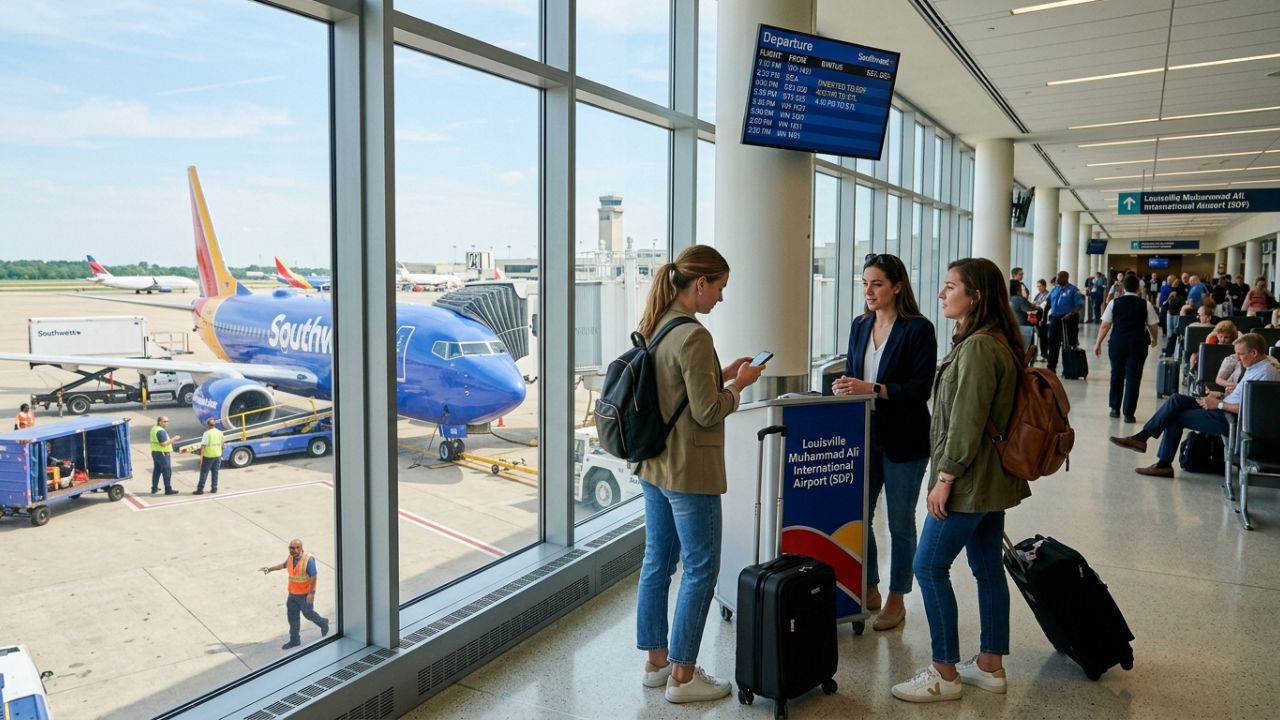
Image generated by AI
Aviation Updates: Southwest Airlines Flight SWA4752 Diverts to Louisville to Bypass St. Louis Travel Chaos and Severe Weather
By actively monitoring shifting midwestern airspace conditions, the flight crew executed a flawless precautionary diversion, prioritizing operational safety over risking severe airborne turbulence and regional airport disruptions.
Image generated by AI
In a textbook demonstration of proactive aviation safety, Southwest Airlines Flight SWA4752 executed an unexpected mid-air diversion during a routine domestic sector. According to the latest airline news and flight tracking telemetry from FlightAware and Flightradar, the Boeing 737-700 was operating a scheduled service from Washington National Airport (DCA) to St. Louis Lambert International Airport before suddenly altering its trajectory. Rather than risking the severe travel chaos and unpredictable meteorological conditions looming over the midwest, the crew safely diverted the aircraft to Louisville International Airport, successfully concluding the flight without declaring an emergency.
Expanded Overview: Proactive Safety Over Punctuality
While the general public often views mid-flight diversions with anxiety, modern aviation protocols consider them a highly structured and standard defensive maneuver. The airspace connecting the eastern seaboard to the American midwest is notoriously volatile, frequently impacted by shifting seasonal thunderstorms and intense traffic congestion.
When environmental uncertainty arises, pilots operating under strict Federal Aviation Administration (FAA) guidelines are empowered to prioritize safety margins. By diverting to Louisville rather than holding above a congested St. Louis terminal—which frequently leads to fuel exhaustion and subsequent flight cancellations—the Southwest crew effectively shielded their passengers from a rapidly deteriorating operational environment.
Section-Wise Breakdown: The Washington DCA Departure
The flight originated at Washington National Airport (DCA), an airport uniquely known for its stringent noise abatement procedures and complex departure corridors. Following a standard takeoff, the Boeing 737-700 proceeded westbound along its designated route. Initial tracking data indicated a completely routine operation, with the aircraft maintaining optimal altitude and speed. The decision to reroute did not stem from a departure anomaly but rather from real-time intelligence gathered en route regarding destination conditions.
Section-Wise Breakdown: The Louisville Diversion Strategy
Once the crew identified operational constraints ahead, Louisville International Airport was selected as the optimal diversion point. Geographically situated between the eastern departure point and the midwestern destination, Louisville is recognized throughout the industry as a premier strategic diversion hub. It possesses extensive runway infrastructure, minimal airspace congestion compared to major legacy hubs, and robust ground handling capabilities. For Southwest Airlines, deploying to Louisville minimizes ground-level travel chaos, allowing the airline to quickly reassess the aircraft and redistribute passengers with minimal friction.
Section-Wise Breakdown: St. Louis Congestion and Weather Variability
While Southwest Airlines has not officially cited a specific meteorological alert, aviation analysts studying these aviation updates point to the intense variability of weather near the St. Louis airspace. Rapidly shifting wind systems, pop-up thunderstorms, and resulting air traffic control arrival sequencing delays often trigger localized airport disruptions. Rather than engaging in a prolonged and turbulent holding pattern near St. Louis Lambert International Airport, the conservative operational choice to divert ensures absolute structural stability for the Boeing 737-700.
Flight Details: SWA4752 Operations Matrix
The precise operational telemetry regarding this specific flight diversion has been consolidated into the matrix below based on publicly verified flight tracking data.
Flight SWA4752 Incident Summary Matrix
| Flight Indicator | Details |
|---|---|
| Airline | Southwest Airlines |
| Flight Number | SWA4752 |
| Aircraft Type | Boeing 737-700 |
| Origin Airport | Washington National Airport (DCA) |
| Scheduled Destination | St. Louis Lambert International Airport |
| Diversion Airport | Louisville International Airport |
| Operational Status | Diverted safely, no emergency declared |
Passenger Impact: Mitigating Severe Delays
For the passengers aboard Flight SWA4752, the diversion undoubtedly caused immediate inconvenience and disruption to their schedules. However, this inconvenience pales in comparison to the alternative. A prolonged holding pattern through severe midwestern turbulence often leads to passenger distress, and attempting to land at a congested airport can result in the aircraft being stranded on the tarmac for hours.
By landing cleanly in Louisville, passengers avoided the severe travel chaos associated with forced airborne holding. While the delay required the airline to manage re-accommodation and onward travel logistics, it ultimately preserved the physical safety of everyone on board.
Industry Analysis: The FAA's Conservative Safety Framework
The seamless diversion of Southwest Airlines Flight SWA4752 serves as a testament to the rigorous, highly structured safety framework governing US commercial aviation. The Boeing 737-700 is a highly capable aircraft, fully equipped to handle adverse weather. However, FAA protocols and Southwest's internal safety policies mandate that human intuition and conservative decision-making always override mechanical capability.
If a flight crew assesses that landing confidence is compromised by either weather, traffic congestion, or localized airport disruptions, a diversion is immediately executed. The fact that this incident did not escalate into a declared emergency further proves that the US aviation network possesses immense redundancy, with strategic airports like Louisville constantly acting as vital safety nets.
Conclusion: Routine Excellence in Action
Ultimately, the diversion of Southwest Airlines Flight SWA4752 from its planned St. Louis arrival to Louisville International Airport highlights the resilience and reliability of US domestic air travel. By actively bypassing potential airspace hazards and avoiding the flight cancellations that often plague congested hubs, the flight crew demonstrated routine operational excellence. The event reinforces the reality that in modern aviation, safety parameters are non-negotiable, and precautionary diversions are a hallmark of a robust, highly functioning airline industry.
Key Takeaways
- Proactive Diversion: Southwest Airlines Flight SWA4752 diverted from its planned DCA to St. Louis route, landing safely at Louisville International Airport.
- No Emergency: The diversion was a precautionary measure; no official emergency was declared by the crew or the FAA.
- Aircraft and Route: The flight was operated by a highly capable Boeing 737-700, demonstrating standard conservative safety protocols.
- Strategic Hub: Louisville serves as a vital US diversion point due to its long runways and lower congestion levels.
- Bypassing Disruptions: The diversion actively shielded passengers from severe midwestern travel chaos and localized airspace congestion.
FAQ: Southwest Airlines Flight SWA4752 Diversion
Why did Southwest Airlines Flight SWA4752 divert to Louisville? The Boeing 737-700 diverted to Louisville International Airport as a precautionary safety measure, likely influenced by shifting weather conditions, airspace congestion, or operational constraints near its original destination of St. Louis.
Was an emergency declared during the flight? No. Aviation tracking systems and authorities confirmed that the aircraft remained completely stable throughout the flight, and no emergency was escalated. It was a standard, controlled diversion.
Where did Flight SWA4752 originate? The flight originated at Washington National Airport (DCA) and was operating a routine domestic sector toward St. Louis Lambert International Airport prior to the reroute.
Related Travel Guides
Amsterdam Schiphol Airport KLM Delays Travel Chaos 2026
Madrid Barajas Airport Iberia Air Europa Delays Travel Chaos 2026
Southwest Airlines Flight Diversion Survival Guide 2026
Disclaimer: This article is strictly for informational purposes. Flight tracking details, diversion causes, and operational reasoning are based on publicly available data from FlightAware and Flightradar at the time of reporting. Passengers are advised to follow official airline communications regarding specific flight delays and re-accommodation protocols.
Disclaimer
This article is for informational and educational purposes only. It does not constitute legal, financial, or professional advice. While we strive to provide accurate and up-to-date information, travel policies, regulations, and conditions change rapidly. Always verify information with official sources before making travel decisions. Nomad Lawyer makes no representations about the accuracy, reliability, completeness, or suitability of the information provided. Readers should consult qualified professionals for advice specific to their circumstances. The views expressed in this article are those of the author and do not necessarily reflect the views of Nomad Lawyer.
Raushan Kumar
Founder & Lead Developer
Full-stack developer with 11+ years of experience and a passionate traveller. Raushan built Nomad Lawyer from the ground up with a vision to create the best travel and law experience on the web.
Learn more about our team →