
Southwest Airlines Flight SWA4191 Diverts to Sacramento Due to Dense Coast Fog
Southwest Airlines flight SWA4191 from San Diego to Santa Rosa diverts to Sacramento International Airport after dense fog restricts visibility at the destination.

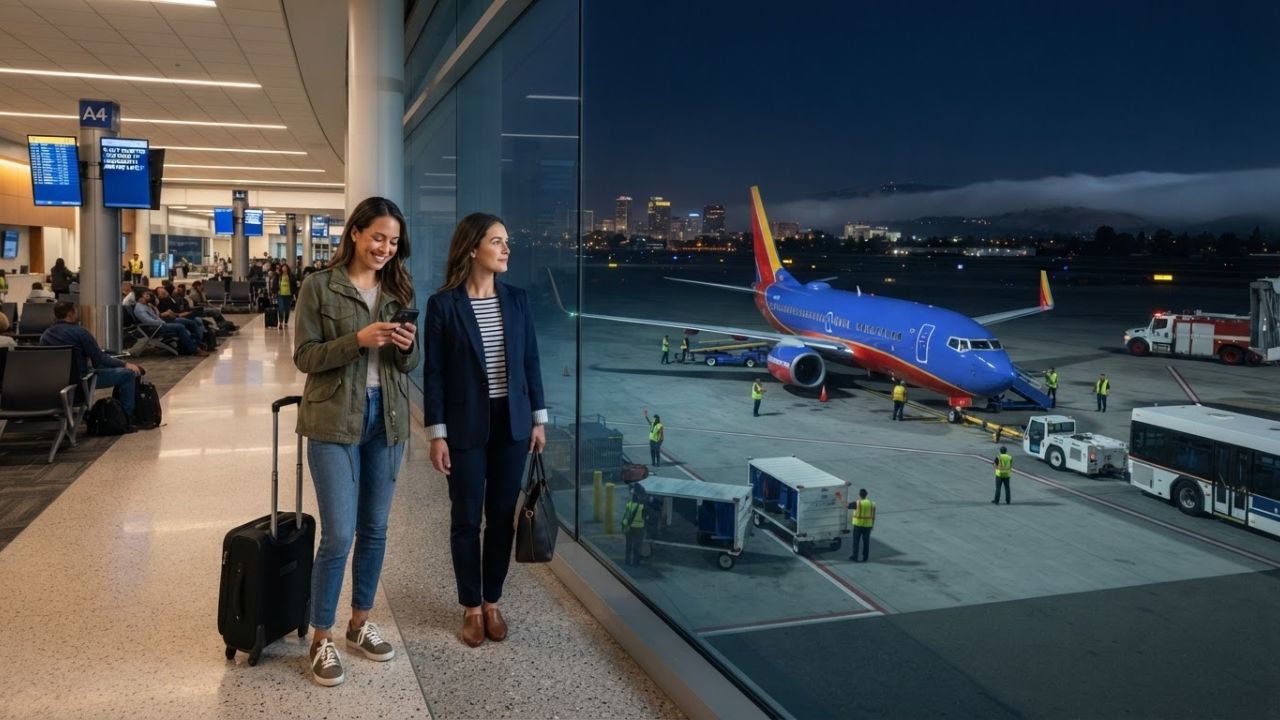
Image generated by AI
Southwest Airlines flight SWA4191 from San Diego to Santa Rosa has diverted to Sacramento International Airport. The routing change was initiated after dense coastal fog compromised runway visibility at the scheduled destination.
Marine Layer Disrupts West Coast Flight Path
The flight operations managed by Southwest Airlines to maintain passenger safety are frequently impacted by marine layer patterns. High-density coastal fog along Northern California during summer seasons creates rapid drops in cloud base levels.
Flight SWA4191, operated by a Boeing 737-7H4 aircraft, departed San Diego on schedule. As the plane approached the North Bay airspace, pilot teams observed rapidly deteriorating ground visibility.
Safety regulations restrict landing attempts when runway visual ranges fall below designated minimum thresholds.
Managing the Inland Diversion Sequence
After evaluating the localized meteorological data, the cockpit crew initiated a standard holding pattern to check fuel levels. Ground dispatch coordinators identified Sacramento as the optimal alternate airfield due to stable inland conditions.
The commercial jetliner was safely diverted to Sacramento International Airport (SMF) after pilots confirmed runway availability. Air traffic controllers provided routing adjustments to guide the aircraft away from coastal terrain.
Station managers at the terminal organized passenger reception facilities to coordinate ground transport operations.
Flight Profiles and Airport Infrastructure
The tables below display the flight parameters, weather vulnerabilities, and airport specifications.
Southwest Airlines Flight SWA4191 Diversion Profile
| Flight Metric | Confirmed Operational Detail |
|---|---|
| Airline Carrier | Southwest Airlines |
| Flight Number | SWA4191 |
| Aircraft Equipment | Boeing 737-7H4 |
| Origin Gateway | San Diego International Airport (SAN) |
| Scheduled Destination | Charles M. Schulz-Sonoma County Airport (STS) |
| Diversion Airfield | Sacramento International Airport (SMF) |
| Disruption Cause | Dense coastal fog and marine layer visibility drop |
Comparative Airport Infrastructure and Weather Sensitivity
| Airport Facility | Runways & Instrument Landing Options | Weather Vulnerability Level | Alternate Role |
|---|---|---|---|
| Charles M. Schulz-Sonoma County Airport (STS) | Short runways, limited low-visibility approach systems | High (susceptible to coastal marine fog) | Target destination |
| Sacramento International Airport (SMF) | Multi-runway configuration, Category III ILS systems | Low (stable inland meteorological conditions) | Primary weather diversion anchor |
Northern California Coastal Weather Patterns and Aviation Operations
| Meteorological Event | Regional Impact Area | Operating Crew Action | Logistical Resolution |
|---|---|---|---|
| Dense Coastal Fog | Pacific Coastline & North Bay | Initiate holding pattern & evaluate fuel reserves | Reroute to Sacramento (SMF) |
| High-Velocity Winds | Coastal Mountain Ridges | Monitor wind shear indicators in the cockpit | Adjust approach path away from terrain |
| Inland Clearness | Central Valley Region | Secure runway landing slot with ATC | Deploy motor coaches for passengers |
Ground Transport Coordination for Displaced Passengers
Upon landing, the airline's customer service teams deployed commercial buses to transport passengers to Santa Rosa. Station managers coordinated directly with motor coach operators to minimize arrival delays.
Passengers were provided with regular schedule updates while baggage transfers were processed at the terminal. The ground transit operation allowed travelers to reach the North Bay by morning.
Inland airports serve as important safety anchors when coastal weather conditions force runway closures.
Technical Factors in Fog-Related Diversions
Pilots check landing systems available at Charles M. Schulz-Sonoma County Airport (STS) to determine if safe approaches are possible. If runway visibility drops suddenly, landing attempts are canceled to prevent runway excursions.
Dispatch teams use weather tracking software to feed real-time wind speed and ceiling height data to the cockpit. This coordination helps flight crews make early decisions regarding alternate routing.
Using Category III instrument landing systems at Sacramento allows aircraft to land under low-visibility conditions.
Strategic Role of Sacramento in Regional Aviation
Inland airports with long runway configurations help manage diverted traffic during coastal weather events. These facilities possess the gate capacity and ground equipment needed to handle unexpected aircraft arrivals.
Aviation planners organize fuel reserves and aircraft scheduling to accommodate weather-related flight plan changes. Having reliable backup airfields is required to support schedule reliability.
The airline's operations center manages the positioning of replacement aircraft to prevent downstream delays.
Why This Matters
Our analysis of the flight data indicates that marine layer fog in Northern California frequently moves faster than forecast models predict. When visibility drops below one mile at regional airports like Santa Rosa, narrow-body jets must divert to avoid fuel exhaustion. Choosing Sacramento over closer Bay Area airports reduces airspace congestion delays.
Furthermore, Sacramento has larger runway lengths and better taxiway layouts. These features make it easier to park diverted aircraft without blocking scheduled domestic departures.
Industry Outlook
Market trends suggest that airlines will continue to invest in advanced flight tracking systems to manage weather disruptions. Regulatory safety audits and pilot simulator training programs comply with FAA guidelines.
Expect regional operators to refine their ground transportation partnerships to manage passenger displacements during the summer fog season. The airline plans to maintain its standard diversion procedures through late 2026.
Related Travel Guides
Disclaimer
This article is for informational and educational purposes only. It does not constitute legal, financial, or professional advice. While we strive to provide accurate and up-to-date information, travel policies, regulations, and conditions change rapidly. Always verify information with official sources before making travel decisions. Nomad Lawyer makes no representations about the accuracy, reliability, completeness, or suitability of the information provided. Readers should consult qualified professionals for advice specific to their circumstances. The views expressed in this article are those of the author and do not necessarily reflect the views of Nomad Lawyer.
Kunal K Choudhary
Co-Founder & Contributor
A passionate traveller and tech enthusiast. Kunal contributes to the vision and growth of Nomad Lawyer, bringing fresh perspectives and driving the community forward.
Learn more about our team →