
Southern Europe Wildfire Crisis 2026: France, Spain, and Greece Face Mass Evacuations and Travel Disruptions
Destructive wildfires across France, Portugal, Spain, Greece, Croatia, and Albania are forcing mass evacuations and disrupting the Tour de France as extreme heat reshapes summer travel in 2026.

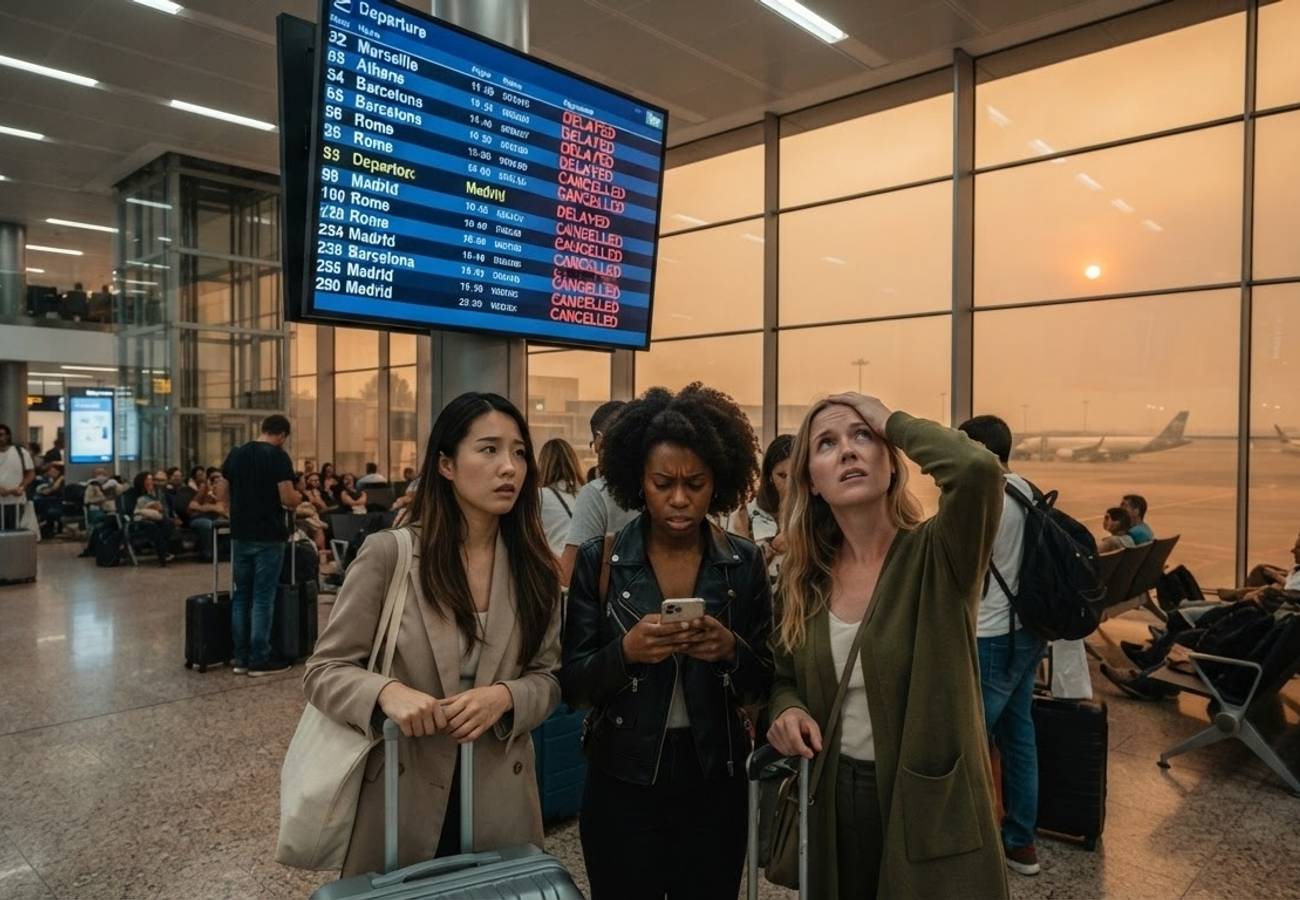
Image generated by AI
Southern Europe is confronting a severe summer travel crisis as destructive wildfires sweep through France, Portugal, Spain, Greece, Croatia, and Albania. Extreme heat and prolonged drought have triggered mass evacuations and significant disruptions to transportation and major international events.
The regional emergency is driven by a combination of scorching temperatures, powerful winds, and critically dry vegetation. This has created a volatile environment where blazes ignite earlier than historical norms and spread with unprecedented speed.
Regional Crisis Overview
Large-scale fires have already consumed over 19,000 hectares of forests, vineyards, and rural landscapes. Emergency services are operating at maximum capacity, deploying specialized aircraft and thousands of personnel to prevent urban encroachment.
Critical Impact Summary:
- France: Massive blazes near Perpignan have forced the evacuation of 10,000 residents.
- Portugal: Northern regions have seen 13,000 hectares burned.
- Spain: The Costa Brava coastline is battling fires covering 2,200 hectares.
- Greece: Industrial zones near Thessaloniki have suffered factory damage and hazardous air quality.
- Balkans: Active fires reported on Hvar Island (Croatia) and near Tale (Albania).
France: Perpignan Blazes and Tour de France Restrictions
France is currently among the hardest-hit nations. A massive fire in the southwest near Perpignan has surged across difficult mountain terrain, nearly tripling in size due to intense wind and heat. Approximately 700 firefighters are currently battling the flames to protect populated areas.
The crisis has directly impacted the Tour de France. Organizers have restricted spectator access along portions of the race route crossing into France via the Pyrenees. This measure ensures emergency services have unrestricted access to volatile zones, though it significantly reduces foot traffic for local hotels and restaurants.
Regional Fire Status and Travel Impact
| Country | Current Situation | Primary Travel Impact |
|---|---|---|
| France | Major wildfire near Perpignan | Evacuations; Tour de France restrictions |
| Portugal | Large forest fire in northern region | Smoke hazards; regional travel advisories |
| Spain | Costa Brava wildfire expanding | Hiking and rural tourism disruptions |
| Greece | Industrial/forest fires near Thessaloniki | Air quality warnings; local evacuations |
| Croatia | Wildfires on Hvar Island | Outdoor activity and tourism disruptions |
| Albania | Forest fire near Tale | Local travel precautions |
Spain and Portugal: Persistent High-Risk Zones
In Spain, the Costa Brava fire remains a primary concern. With temperatures hitting 40 degrees Celsius, firefighting crews are struggling with active hotspots within burned areas. Rural tourism and hiking routes are facing temporary closures.
Portugal's northern region continues to manage the aftermath of a 13,000-hectare burn. While the perimeter is largely contained, the government remains on high alert due to forecasts of continued heatwaves and wind.
Greece, Croatia, and Albania: Expanding Threat
The emergency extends beyond the major Western Mediterranean hubs. In Northern Greece, a fast-moving fire near Thessaloniki breached industrial sectors, damaging two factories. Residents were ordered to remain indoors to avoid hazardous smoke. Meanwhile, the tourism-heavy Hvar Island in Croatia and the Tale region in Albania are reporting active blazes, signaling a widespread regional vulnerability.
Why This Matters: Industry Implication
Industry observers note that the 2026 season marks a shift from "sporadic" fire events to "systemic" seasonal disruptions. The fact that the Tour de France—an event with immense economic and logistical momentum—had to restrict public access indicates that climate risks are now overriding traditional tourism operations.
For the aviation and hospitality sectors, this suggests a need for "hyper-flexible" booking policies. When multiple Mediterranean hubs face simultaneous evacuations, the ripple effect on regional flights and hotel cancellations creates a volatility that standard travel insurance may struggle to cover. The early onset of this fire season suggests that the "safe" window for Southern European tourism is shrinking.
Forward Outlook
Meteorologists forecast another surge of intense heat moving northward, with temperatures expected to exceed 40 degrees Celsius in several regions. Travelers should expect:
- Increased volatility in rural and mountainous itineraries.
- Potential for further road closures and air quality alerts in Northern Greece and Southern France.
- Stricter regulations on outdoor activities and national park access.
Travelers are urged to monitor local emergency updates in real-time before venturing into rural Mediterranean landscapes.
Related Travel Guides
Disclaimer
This article is for informational and educational purposes only. It does not constitute legal, financial, or professional advice. While we strive to provide accurate and up-to-date information, travel policies, regulations, and conditions change rapidly. Always verify information with official sources before making travel decisions. Nomad Lawyer makes no representations about the accuracy, reliability, completeness, or suitability of the information provided. Readers should consult qualified professionals for advice specific to their circumstances. The views expressed in this article are those of the author and do not necessarily reflect the views of Nomad Lawyer.
Raushan Kumar
Founder & Lead Developer
Full-stack developer with 11+ years of experience and a passionate traveller. Raushan built Nomad Lawyer from the ground up with a vision to create the best travel and law experience on the web.
Learn more about our team →