
Gulf Flight Chaos Strands Hundreds Across Middle East Hubs
Gulf flight chaos has stranded hundreds of passengers in 2026 as 53 flights cancel and 125 delay across Dubai, Doha, and regional aviation hubs. Major carriers including Emirates and FlyDubai adjust schedules amid airspace constraints and regional disruptions.

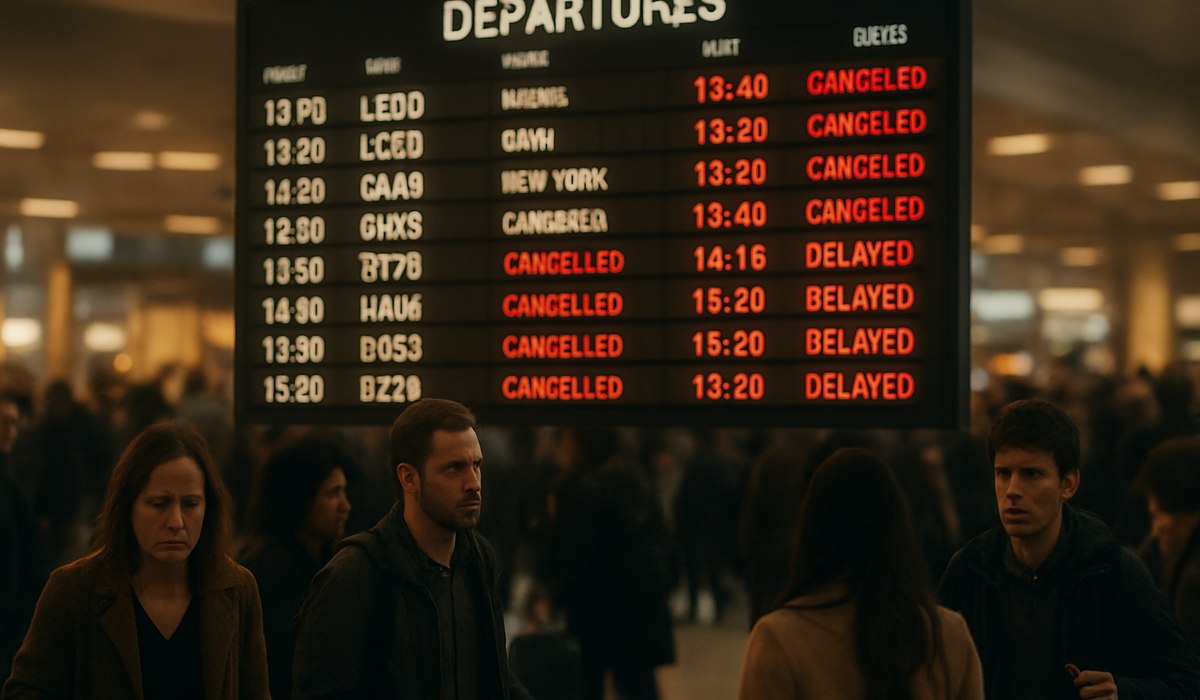
Image generated by AI
Hundreds Stranded as Gulf Flight Chaos Disrupts Regional Travel
Unprecedented disruption across Gulf aviation hubs has left hundreds of passengers stranded as a fresh wave of cancellations and delays ripples through the Middle East's busiest travel corridors. At least 53 flights were cancelled and approximately 125 delayed across Dubai, Doha, Bahrain, and neighboring markets on April 26, 2026, affecting major carriers including Emirates, FlyDubai, and Gulf Air. The disruptions concentrate on short- and medium-haul routes connecting the UAE, Qatar, Bahrain, Kuwait, Saudi Arabia, Egypt, and Jordan—corridors where passengers depend on frequent connections and tight schedule coordination. Regional travel outlets report crowded departure halls, extended customer-service queues, and many travelers learning of cancellations only minutes before scheduled departure times, severely limiting rebooking options at short notice.
Targeted Cancellations Hit Key Gulf Routes
The scale of gulf flight chaos reflects deep operational strain across interconnected networks. Bahrain-based Gulf Air's hub operations show particular pressure, with extended ground times, rolling schedule changes, and several services withdrawn with minimal advance notice. FlyDubai, the Emirates low-cost subsidiary, has trimmed frequencies on high-demand routes to Kuwait City, Doha, and select Saudi Arabian destinations, while Emirates itself has adjusted long-haul services as it navigates regional airspace constraints.
Flight-tracking data available via FlightAware confirms the magnitude of disruption during peak travel periods. The concentration of cancellations on regional feeder routes amplifies passenger impact because many journeys from Asia or Africa to Europe and North America depend on seamless connections through one or two primary hubs. When a single link in that chain breaks, entire itineraries collapse, leaving transit passengers stranded in intermediate cities or unable to begin their trips. What makes this round of gulf flight chaos particularly challenging is that many affected routes operate at high frequency, meaning each cancellation removes hundreds of available seats from an already-constrained market.
Which Airlines and Airports Are Most Affected
Dubai International Airport remains the focal point of regional disruption, handling substantial volumes for both Emirates and FlyDubai operations. Local coverage indicates both carriers continue prioritizing passengers from cancelled flights, which limits available seats on high-demand routes for new bookings. Hamad International in Doha, serving Qatar Airways and connecting traffic from across the region, reports similar backlogs and extended passenger processing times.
Additional pressure points include Bahrain International, serving as Gulf Air's primary hub; King Fahd International near Dammam, Saudi Arabia; and Cairo International, which handles significant onward traffic to Africa. Each airport manages rolling backlogs of stranded travelers, with check-in counters and customer-service desks operating under sustained demand. Regional and international carriers operating through these hubs face crew positioning challenges, with aircraft left out of their planned rotation sequences, further compounding schedule compression and potential for cascading delays.
Regional Airspace Constraints Drive Schedule Reductions
Industry analysis links the current gulf flight chaos to a combination of heightened regional tensions, intermittent airspace closures, and capacity restrictions affecting Gulf airspace. Recent closures and rerouting requirements, particularly for flights passing near conflict-affected zones, have forced carriers to suspend select services or extend flight times significantly. Even limited airspace closures trigger cascading operational effects: aircraft turnarounds lengthen, crew scheduling becomes fragmented, and buffers built into timetables are quickly exhausted.
Airlines have shifted strategy toward protecting core trunk routes while reducing marginal frequencies on secondary regional sectors. Emirates operates a reduced schedule across more than 100 destinations, with particular pressure on Middle Eastern and South Asian routes. When airlines attempt to compress revised routing into already-saturated airport slots, additional delays multiply at major connection points. Analysis from industry observers highlights lingering operational fragility from earlier mass cancellations in March 2026, when airspace closures and military activity disrupted schedules region-wide. Although many long-haul corridors have partially reopened, the underlying network remains more vulnerable to secondary shocks.
Major Hubs Face Stranded Passenger Backlogs
Airports across the Gulf and eastern Mediterranean now manage substantial passenger backlogs from the ongoing gulf flight chaos. Dubai International, Kuwait International, Bahrain International, Doha's Hamad International, Jeddah's King Abdulaziz International, and Cairo International all report overnight queues at check-in counters, transfer desks, and customer-service facilities.
Passengers attempting to secure seats on reduced-capacity onward flights face extremely limited options, with many high-demand corridors oversold by cancelled services. Regional travel media describes scenes of fatigue and frustration as travelers navigate manual rebooking processes, lengthy hold times on airline phone lines, and uncertainty about when normal operations might resume. Ground staff at major hubs report unprecedented volumes at service counters, with some passengers waiting six or more hours for rebooking assistance.
Live Tracking and Real-Time Updates
Travelers experiencing disruption can monitor live flight status via FlightAware and airline mobile applications. Major carriers, including Emirates, FlyDubai, and Gulf Air, have repeatedly urged passengers to verify flight status before heading to the airport and to monitor official channels for schedule changes. Direct contact via airline customer service remains essential, as automated systems often lag behind manual schedule adjustments during periods of disruption.
Check your airline's website or mobile app for real-time departure and arrival information. Do not rely solely on booking confirmations; gulf flight chaos at this scale requires active status monitoring. Most major Middle Eastern carriers offer SMS alerts and push notifications for schedule changes—enable these features immediately if you have upcoming travel through the region.
Traveler Action Checklist
If your travel plans include Gulf aviation hubs during this disruption period, follow these steps:
-
Verify flight status immediately by checking your airline's website, mobile app, or calling customer service directly—do not assume your flight is operating based on booking confirmation alone.
-
Monitor real-time tracking via FlightAware at least 24 hours before your flight and again 2-4 hours before scheduled departure.
-
Understand your passenger rights under US DOT regulations if you hold a US-issued ticket, or equivalent rules in your home country regarding compensation and rebooking.
-
Contact your airline proactively before appearing at the airport if any flight on your itinerary appears likely to cancel; securing alternative routing early is vastly preferable to rebooking from a departures hall.
-
Request written confirmation of any rebooking, alternative routing, or delay compensation claim; take screenshots of all email and SMS confirmations.
-
Document all expenses resulting from cancellation or delay, including meals, accommodation, transportation, and communication—these may be recoverable under applicable regulations.
-
Consider travel insurance claims if you purchased coverage; file claims promptly with documentation of your actual expenses and airline communications.
-
Allow extra buffer time for your next journey through the region; the current operational environment makes tight connections extremely risky.
Key Data: Gulf Flight Chaos Impact Summary
| Metric | Details |
|---|---|
| Flights Cancelled | 53+ across Gulf region, April 26, 2026 |
| Flights Delayed | 125+ with rolling schedule adjustments |
| Primary Hubs Affected | Dubai International, Hamad International (Doha), Bahrain, Jeddah, Cairo |
| Airlines Most Impacted | Emirates, FlyDubai, Gulf Air, regional/international carriers |
| Route Focus |
Disclaimer
This article is for informational and educational purposes only. It does not constitute legal, financial, or professional advice. While we strive to provide accurate and up-to-date information, travel policies, regulations, and conditions change rapidly. Always verify information with official sources before making travel decisions. Nomad Lawyer makes no representations about the accuracy, reliability, completeness, or suitability of the information provided. Readers should consult qualified professionals for advice specific to their circumstances. The views expressed in this article are those of the author and do not necessarily reflect the views of Nomad Lawyer.
Raushan Kumar
Founder & Lead Developer
Full-stack developer with 11+ years of experience and a passionate traveller. Raushan built Nomad Lawyer from the ground up with a vision to create the best travel and law experience on the web.
Learn more about our team →