
South Korea Records 10.71 Million Visitors in First Half of 2026
South Korea welcomed 10.71 million foreign visitors in H1 2026, positioning the country to achieve its 30 million target ahead of schedule.
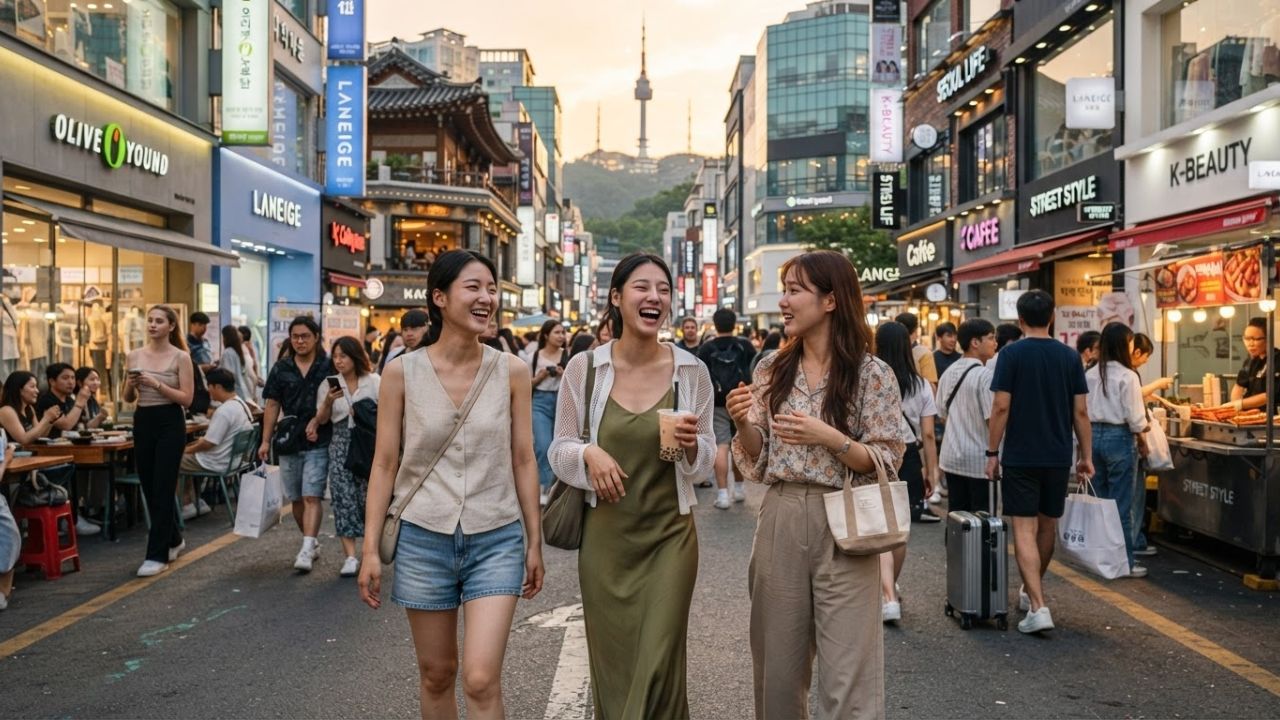
Image generated by AI
Welcoming a record 10.71 million foreign visitors between January and June 2026 and generating over 10.03 trillion won (approximately $6.8 billion) in card spending, South Korea is accelerating its timeline to reach 30 million tourists.
The Core Transit Update
Regional aviation networks and domestic entry portals across South Korea are managing unprecedented inbound volumes. According to official data from the Ministry of Culture, Sports, and Tourism (MCST) and the Korea Tourism Organization (KTO), first-half arrivals reached 10.71 million.
This represents a 21.3 per cent year-on-year increase and stands 27 per cent above pre-pandemic benchmarks. While Incheon and Gimpo airports handle the bulk of international routes, arrivals through regional airports rose by 42.5 per cent, and sea port arrivals in Busan grew by 13.2 per cent, helping distribute passenger spending beyond the Seoul metropolitan area.
Source Market Metrics & Macro Tourism Targets
Reaching the target of 30 million tourists requires tracking visitor arrivals from key East Asian markets and evaluating the macroeconomic impact of traveler spending. The following tables outline South Korea's source market arrivals and analyze its national tourism targets.
| International Visitor Source | H1 / June 2026 Arrivals | YoY Percentage Growth Rate | Stated Strategic Travel Behavior |
|---|---|---|---|
| Mainland China | 3.21 million (Jan–June) | +27.1% YoY increase | High spending, using restored flight routes |
| Japan | 348,216 (June 2026) | +21.3% YoY increase | High frequency of repeat weekend getaways |
| Taiwan | 223,127 (June 2026) | +35.3% YoY increase | Blistering +160% growth over 2019 baseline |
| Americas | 219,948 (June 2026) | Staggering US growth | Over +160% growth compared to 2019 |
| Southeast Asia | 230,000 (June 2026) | 6 key combined markets | Driven by K-drama fans & visa relaxations |
| Europe | 119,445 (June 2026) | Steady baseline volumes | High interest in cultural & heritage sites |
South Korea inbound visitor arrivals by source market (2026).
| National Tourism Indicator | Target Value / Metric | Stated Target Year / Timeline | Stated Macroeconomic & Economic Role |
|---|---|---|---|
| Total Inbound Arrivals | 30 million tourists | 2030 (accelerated to 2028/2029) | Transitions services into a primary industry |
| Foreign Card Spending | 10.03 trillion won | Breached in H1 2026 (June) | Directly stimulates regional consumer markets |
| Per-Tourist Spend Average | $1,327 per visitor | 2026 baseline survey | Injects capital into local SMEs and shops |
| Annual Economic Effect | ~$39.8 billion (58T won) | Upon reaching 30m target | Redistributes wealth to non-metropolitan zones |
South Korea macroeconomic tourism targets and timeline projection.
Traveler Logistics Guide
From a ground-level perspective, the best way to navigate this is to submit your K-ETA (Korea Electronic Travel Authorization) registration at least one week before departure, as immigration authorities are handling high passenger volumes, and processing delays can disrupt tight flight connections. Checking regional airport schedules is recommended.
To plan your trip:
- Allow Safe Flight Transfers: If connecting from Incheon (ICN) to Gimpo (GMP) for domestic flights to Jeju, allow at least three hours to clear customs and transfer by rail.
- Observe Visa Rules: South Korea has relaxed visa rules for Southeast Asian countries, including a group visa system for Indonesia introduced in June 2026. Check the latest rules on the official portal.
- Avoid Predatory Pricing: Newly approved anti-price-gouging rules under the Tourism Promotion Act went into effect on August 4, 2026. Report any homestays or Hanok properties that fail to display room rates.
- Leverage Regional Subsidies: Utilize local "half-price travel" programs to offset transportation costs when visiting cities outside Seoul, such as Busan or Gyeongju.
Infrastructure Impact Assessment
The legislative elevation of tourism to a "key strategic industry" and the redistribution of arrivals through regional airports protect non-metropolitan economies from population decline.
By directing traveler spending to local small-and-medium enterprises (SMEs), traditional markets, and regional food trails (managed under the "Taste your Korea" program), the national strategy supports municipal transport upgrades, funds a new 50,000-seat K-pop concert arena scheduled for 2030, and balances visitor density away from central Seoul.
Related Travel Guides
- US Inbound Tourism Faces Pressures from Softening Job Market
- Saint Lucia Re-Engineers Caribbean Tourism Model: 100 Delegates Convene as Community Enterprise and Underwater Sculpture Park Debut
- Johannesburg Overtakes Nairobi and Others as the Only Major African Airport to Record British Tourist Arrival Growth for Eight Consecutive Months in 2026
Disclaimer
This article is for informational and educational purposes only. It does not constitute legal, financial, or professional advice. While we strive to provide accurate and up-to-date information, travel policies, regulations, and conditions change rapidly. Always verify information with official sources before making travel decisions. Nomad Lawyer makes no representations about the accuracy, reliability, completeness, or suitability of the information provided. Readers should consult qualified professionals for advice specific to their circumstances. The views expressed in this article are those of the author and do not necessarily reflect the views of Nomad Lawyer.