
South Korea Jet Collision: Pilot Photo Distractions Prompt New Aviation Safety Rules
A mid-air collision between two South Korean F-15K fighter jets has exposed dangerous pilot distractions, leading to a formal Air Force apology and a total ban on personal devices in cockpits.

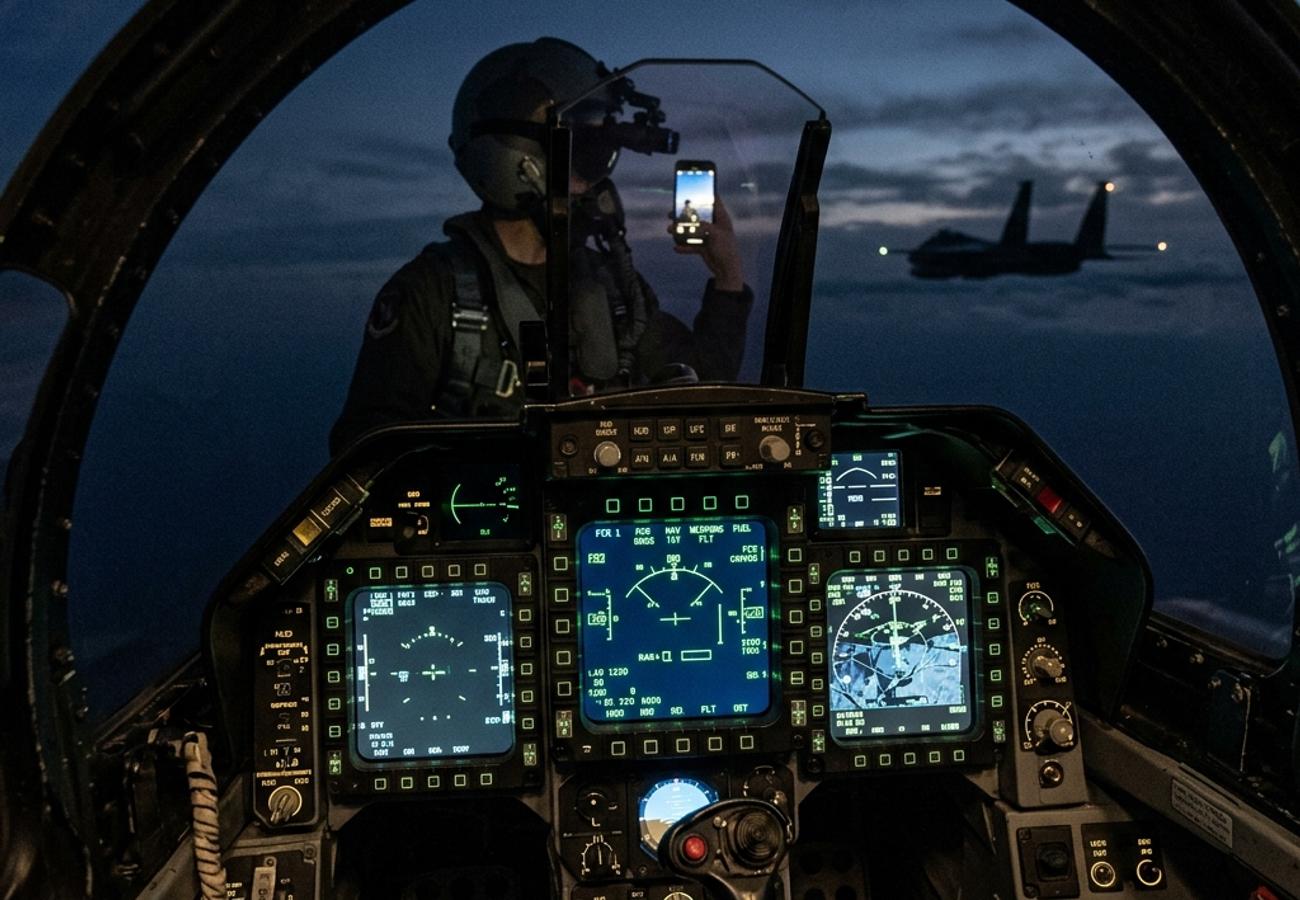
Image generated by AI
Quick Summary
- The Incident: A mid-air collision between two F-15K fighter jets occurred near Daegu during a routine formation mission.
- The Cause: A 2026 government audit by the Board of Audit and Inspection (BAI) concluded the crash was caused by pilots attempting to take commemorative photos and videos while flying.
- Financial Impact: The collision resulted in approximately 880 million won (~US$600,000) in structural damage to the aircraft.
- New Regulations: The ROK Air Force has issued a formal apology and implemented a total ban on personal photography and recording devices in cockpits during operational flights.
In a landmark aviation safety disclosure, the Republic of Korea (ROK) Air Force has admitted that a mid-air collision between two elite fighter jets was the result of severe pilot distraction. The audit findings, released in April 2026, have sent shockwaves through both military and commercial aviation circles, highlighting how the misuse of personal devices in high-stakes environments can lead to catastrophic failures. The incident has prompted an immediate overhaul of cockpit discipline and formation flight policies across South Korea’s military fleet.
ROK Air Force F-15K Collision: Incident and Audit Summary (April 2026)
The audit highlights a lack of formal regulation concerning personal device usage in military cockpits at the time of the incident.
| Category | Details | Status / Result |
|---|---|---|
| Aircraft Involved | Two F-15K Fighter Jets | Both landed safely with damage |
| Incident Location | Near Daegu, South Korea | Formation flight mission |
| Primary Cause | Pilot distraction (Photography/Video) | Confirmed by BAI Audit |
| Repair Cost | 880 million won (~$600k USD) | Paid by government & pilot share |
| Pilot Liability | 1/10th of total repair cost | Reduced on appeal (lack of rules) |
| Disciplinary Action | Suspension & Military Exit | Pilot left service after incident |
| New Policy | Absolute Ban on Personal Devices | Effective May 2026 |
The "Photo Moment" that Triggered an Aviation Disaster
According to the BAI report, the wingman pilot intended to capture images of his final mission with the unit. During the return leg of the flight:
- Distraction Escalation: The wingman began taking photos with a personal camera, while the lead aircraft pilot asked a crew member to record video of the wingman.
- Uncoordinated Maneuver: To improve the camera angle, the wingman performed an abrupt climb and banking maneuver without coordinating with the lead pilot.
- The Collision: The wingman’s tail stabilizer clipped the lead aircraft’s left wing, causing significant structural damage to both multimillion-dollar jets.
South Korea Air Force Official Apology and Disciplinary Actions
A spokesperson for the ROK Air Force issued a public apology in April 2026, acknowledging the risk to public and military safety. The primary pilot involved was suspended from flying duties and has since transitioned out of active military service. The Air Force emphasized that while the aircraft were successfully landed, the breach of situational awareness was "unacceptable and entirely preventable."
New Cockpit Regulations: Banning Personal Devices
To ensure such an incident does not recur, the South Korean military has established a series of new, strict regulations for 2026:
- Device Ban: All personal photography and recording devices are strictly prohibited during operational and formation flights.
- Cockpit Discipline: Enhanced oversight and periodic audits of cockpit behavior are now mandatory.
- Formation Policy: Revised guidelines for formation maneuvering, explicitly prohibiting uncoordinated changes for non-operational purposes.
- Training Overhaul: New pilot training modules focused exclusively on distraction avoidance and situational awareness in high-speed environments.
Implications for Global Aviation and Commercial Safety
While this collision was a military event, its findings are being closely monitored by global aviation authorities. Safety analysts point out that "photo-taking" and "selfie culture" in the cockpit represent a growing threat to aviation safety worldwide. This case serves as a benchmark for how regulatory bodies—both military and commercial—might tighten rules on personal behaviors that interfere with operational focus.
FAQ: South Korea Jet Collision & Safety Audit 2026
Were any civilians at risk during the fighter jet collision? The collision occurred in designated military airspace near Daegu. Both aircraft were able to return to base safely, and no civilian injuries or property damage were reported.
What is the new rule for South Korean pilots regarding smartphones? Pilots are now legally barred from using personal smartphones or cameras for photography while the aircraft is in operation. Only mission-authorized recording equipment is permitted.
Does this affect commercial travelers in South Korea? While the rules apply to the military, they reinforce the strict "no-distraction" culture in Korean aviation. Travelers may see increased enforcement of cockpit safety standards across all South Korean carriers.
Related Travel Guides
Disclaimer
This article is for informational and educational purposes only. It does not constitute legal, financial, or professional advice. While we strive to provide accurate and up-to-date information, travel policies, regulations, and conditions change rapidly. Always verify information with official sources before making travel decisions. Nomad Lawyer makes no representations about the accuracy, reliability, completeness, or suitability of the information provided. Readers should consult qualified professionals for advice specific to their circumstances. The views expressed in this article are those of the author and do not necessarily reflect the views of Nomad Lawyer.
Kunal K Choudhary
Co-Founder & Contributor
A passionate traveller and tech enthusiast. Kunal contributes to the vision and growth of Nomad Lawyer, bringing fresh perspectives and driving the community forward.
Learn more about our team →