
South Korea Airlines Face 27% Complaint Surge — Tourists Warned
Qatar Airways, Korean Air and Asiana face a 27% complaint surge in South Korea. Here's how the crisis is hitting tourism and hotels.

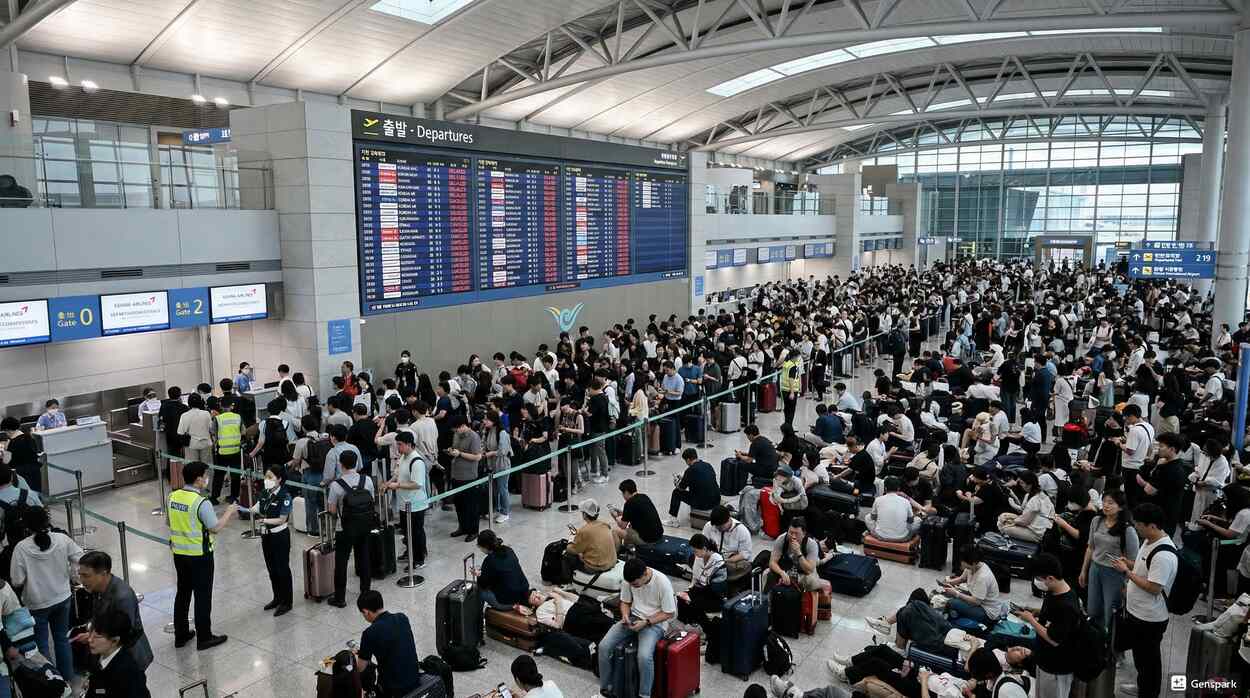
Image generated with AI
Quick Summary
- Passenger complaints against major airlines in South Korea have surged 27%, driven by flight cancellations, delays, and poor service
- ** Qatar Airways, Korean Air, and Asiana** are the primary carriers under scrutiny
- South Korea's tourism and hospitality industries are absorbing the downstream impact through missed arrivals and shifting hotel bookings
- Airlines are offering fee-free rebooking waivers — travelers are urged to check policies before departure
South Korea's aviation landscape is under significant pressure after a 27% surge in passenger complaints targeting major international and domestic carriers. ** Qatar Airways, Korean Air, and Asiana Airlines** are facing growing traveler frustration over widespread flight cancellations, extended delays, and a perceived decline in service standards. The fallout isn't confined to airports — the disruptions are reverberating across South Korea's tourism and hospitality sectors, threatening the country's reputation as one of Asia's most reliable travel destinations.
Rising Complaints: A Wake-Up Call for the Airline Industry
The spike in complaints is stark and hard to ignore. Over recent months, passengers flying through South Korea have voiced increasing dissatisfaction with key international carriers, citing delayed and cancelled flights, inadequate communication at airport gates, and prolonged waiting times with little to no updates from airline staff.
Qatar Airways — both long considered among the world's most trusted long-haul carriers — are finding that post-pandemic operational pressures combined with elevated travel demand are straining their ability to deliver on their reputations. Korean Air, South Korea's flag carrier, and Asiana Airlines, its primary domestic rival, are experiencing similar challenges on both domestic and international routes.
The 27% rise in complaints signals a systemic issue that extends beyond one or two incident-driven disruptions. Industry observers note that passengers are increasingly unwilling to accept delays without clear, timely communication — and airlines in this region are currently failing that expectation at scale.
Flight Cancellations and Delays: The Key Trigger
At the core of the complaint surge lies a consistent pattern of flight cancellations and delays affecting South Korea's busiest international routes.
Qatar Airways, one of the primary long-haul operators serving South Korea, has drawn particularly sharp criticism for late departures — in many cases leaving passengers stranded with no clear guidance on revised departure times. For travelers with connecting flights, this has resulted in missed onward legs and unplanned overnight stays.
Korean Air passengers have reported a troubling frequency of last-minute cancellations, often with minimal advance notice. The inconsistency in service quality has heightened frustration among both leisure and business travelers. Asiana Airlines has similarly struggled to maintain schedule reliability on both domestic and international routes, compounding a difficult operating environment for South Korea's broader aviation sector.
These disruptions are particularly damaging in a competitive market. South Korea sits at a critical crossroads in Asia-Pacific aviation, and unreliable scheduling undermines its role as a hub for regional connectivity.
Impact on South Korea's Tourism Industry
The airline turbulence is producing measurable consequences for South Korea's tourism sector, which has been working hard to rebuild international visitor numbers since the pandemic.
South Korea draws millions of tourists annually — especially from neighbouring markets including China, Japan, and Southeast Asia — drawn by the country's rich history, distinctive culture, and leading-edge urban experiences. When major international carriers repeatedly fail to deliver reliable air access, the destination itself suffers reputationally.
Last-minute cancellations and multi-hour delays are directly disrupting the carefully structured itineraries of international visitors. Shortened stays due to late arrivals mean less time spent exploring Seoul, Busan, Jeju Island, and other key destinations — translating into reduced spending across restaurants, retail, and tour operators. Persistent negative travel experiences also shape online reviews and social media narratives, creating lingering perceptions of South Korea as a difficult destination to reach reliably.
Hospitality Industry Feels the Strain
The hotel sector is absorbing the disruptions in concrete, operational terms. Hotels in Seoul, Busan, and Jeju Island depend on reasonably predictable flight arrivals to manage check-in workflow, staff scheduling, and room assignment logistics. When guests arrive hours late — or fail to arrive at all due to missed connections — the ripple effects include extended front-desk hours, reassigned rooms, and increased service costs.
The unpredictability has created particular pressure during peak seasons when occupancy rates are high and rooms cannot easily be held pending late arrivals. Major chains including Hilton, Marriott, and Hyatt are seeing more frequent late-arrival requests as disrupted passengers coordinate with hotel teams from airport terminals.
Local transport services, sightseeing operators, and retail businesses in tourist zones are also absorbing the downstream impact through reduced footfall and last-minute booking cancellations tied to delayed flight arrivals.
How Tourism Operators Are Adapting
South Korea's tour operators are responding to the disruptions with a visible shift toward flexibility. Companies are now proactively tracking international flight statuses and contacting arriving guests before they land to confirm updated schedules and adjust planned activities accordingly.
Flexible itinerary options — including extended hotel check-in windows, alternative activity scheduling, and complimentary transport adjustments — are becoming standard offerings as operators work to protect the overall guest experience despite airline-driven delays. Several Seoul-based tour companies are providing real-time flight monitoring as part of their arrival coordination services, significantly reducing the stress for international visitors dealing with schedule uncertainty.
Travel Tips for Visiting South Korea in 2026
International travelers planning to visit South Korea this year should take proactive steps to minimise the impact of potential airline disruptions:
- Check flight status early and often: Use your airline's app for real-time tracking — ** Qatar Airways, and Korean Air** all offer live status updates
- Book with rebooking flexibility: Confirm your airline's weather and disruption waiver policies at time of booking; Qatar Airways offer rebooking options for affected passengers
- Choose direct flights where possible: Fewer connections reduce the risk of a missed leg cascade from a single delay
- Allow buffer time between connections: If a layover is unavoidable, opt for at least 2–3 hours at major hub airports to protect against delays
- Notify your hotel immediately: If your flight is delayed, contact your hotel directly — South Korean hotels are largely accommodating of late arrivals when informed in advance
- Review your travel insurance: Ensure your policy covers airline disruption-related costs including accommodation, meal expenses, and rebooking fees
Frequently Asked Questions
Which airlines are facing the biggest complaint surge in South Korea? Qatar Airways, Korean Air, and Asiana Airlines are the four carriers facing a combined 27% increase in passenger complaints, primarily due to flight cancellations, multi-hour delays, and poor on-ground communication during disruptions.
How are flight cancellations in South Korea affecting tourism? Repeated cancellations and delays are disrupting international visitor itineraries, shortening effective stays, and reducing expenditure across hotels, tour operators, and local businesses. The cumulative effect is creating a reputational headwind for South Korea as a reliable tourist destination.
Are airlines offering compensation for cancelled or delayed flights in South Korea? Qatar Airways have activated rebooking waivers for disruption-affected passengers. Korean Air and Asiana are also offering rebooking assistance. Compensation for delays under South Korean aviation regulations depends on delay duration and whether the cause is within the airline's control.
What should international tourists do if their connecting flight through Seoul is cancelled? Contact the airline immediately via app or airport desk to explore the fastest onward route. Inform your hotel of the delay and request a late check-in. If delay exceeds a qualifying threshold under your travel insurance policy, document all receipts for accommodation and meal costs incurred during the wait.
Related Travel Guides
Asia Hit by 568 Cancellations and 2,075 Delays — Bangkok, Delhi, Tokyo and Doha Worst Affected
Canada Flight Chaos: 60 Cancellations and 635 Delays as Arctic Storms Ground Air Canada & WestJet
Minnesota Storm Grounds Delta & United at MSP — International Tourists Warned
Disclaimer
This article is for informational and educational purposes only. It does not constitute legal, financial, or professional advice. While we strive to provide accurate and up-to-date information, travel policies, regulations, and conditions change rapidly. Always verify information with official sources before making travel decisions. Nomad Lawyer makes no representations about the accuracy, reliability, completeness, or suitability of the information provided. Readers should consult qualified professionals for advice specific to their circumstances. The views expressed in this article are those of the author and do not necessarily reflect the views of Nomad Lawyer.
Raushan Kumar
Founder & Lead Developer
Full-stack developer with 11+ years of experience and a passionate traveller. Raushan built Nomad Lawyer from the ground up with a vision to create the best travel and law experience on the web.
Learn more about our team →