
End to Travel Chaos: Qatar Lifts Airspace Restrictions, Fueling Global Rebirth of Flight Routes to the UK, Italy, India, and Germany as Qatar Airways Restores Operations
Qatar has lifted airspace restrictions, enabling countries like the UK, Italy, India, Germany, Turkey, Spain, and Oman to rapidly rebuild economic and global connectivity.

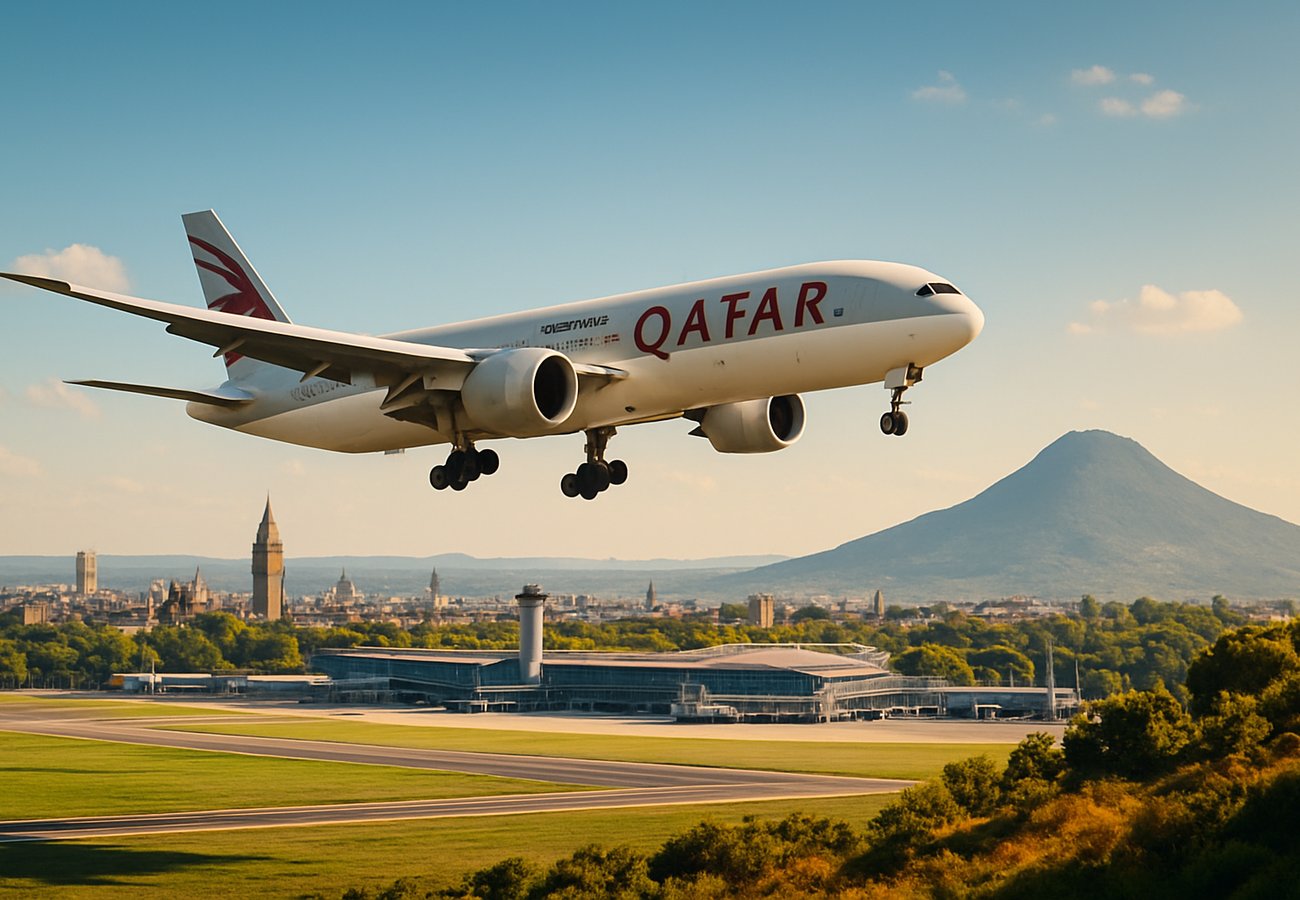
Image generated by AI
A highly restrictive era of global transit has come to a definitive close. Resolving months of devastating travel chaos and localized airport disruptions, Qatar has officially and completely lifted its severe airspace restrictions. This landmark policy shift directly follows a finalized regional ceasefire, delivering immediate and profound relief to a web of intertwined economies spanning the UK, Italy, India, Germany, Turkey, Spain, and Oman. By unsealing these vital corridors, Qatar has essentially heralded a massive rebirth of international economic connectivity and tourism access across the Middle East.
The Scale of Disruption and the Path to Recovery
For several agonizing months, the Middle East's normally flawless, bustling airspace routes were dramatically stifled by escalating regional tensions and hard geographical closures. These restrictions generated a cascade of ongoing flight cancellations, choked off high-value international cargo operations, and stranded everyday passengers. The abrupt lifting of these closures arrives as deeply welcome airline news for a global travel industry desperate to rebuild.
At the absolute center of this monumental recovery is Qatar Airways. Overcoming the immense logistical hurdles imposed by the conflict and subsequent rerouting, the flagship carrier has successfully clawed back ground, officially confirming a stabilization and recovery rate of 60%. As of the reopening, an astonishing 116 Qatar Airways aircraft are successfully back in the global skies, aggressively reconnecting the Middle East with the broader corners of the earth.
Section-Wise Breakdown: Global Reconnections
The liberation of Qatari airspace does not merely impact the Gulf. It functions as a master switch that immediately re-energizes bilateral trade routes and essential human connectivity across multiple continents.
The United Kingdom: Reclaiming a Vital Transit Bridge
For decades prior to the closures, the United Kingdom and Qatar maintained deeply intertwined economic and aviation relations. Qatar Airways boasted one of the most voluminous and consistent fleets operating nonstop pathways between Doha and the UK. With the restrictions eliminated, critical direct links to London, Manchester, and Edinburgh are resuming apace. This revival is critical for London’s status as an international business pivot point and is actively paving the way for thousands of stranded British nationals to secure swift, direct access flights back to their home soil.
Italy: European Tourism Receives a Resounding Boost
Italy, a perennial giant within the European tourism landscape, was particularly starved of Middle Eastern influx during the blackout period. Fast-tracking the return of Qatar Airways seamlessly re-links Doha with premier Italian economic and cultural centers, including Rome, Milan, and Venice. The return of these direct flights is a massive lifeline for the Italian hospitality and luxury sectors, while effectively allowing isolated Italian business personnel scattered across the Gulf to seamlessly return to European markets.
India: Reviving the Critical Expatriate and Trade Lifeline
No country feels the immediate relief of this reopening more acutely than India. The India-Gulf airspace corridor represents a fundamental economic and cultural lifeline for millions. With the airspace officially transparent once more, massive capacities from Doha to megacities such as Delhi, Mumbai, Bengaluru, and Kolkata are roaring back to life without the exhaustive delays of rerouting. This reopening instantly facilitates crucial bilateral trade and offers a seamless return trajectory for Indian nationals who found themselves totally marooned during the airspace closures.
Germany: Accelerating Export-Driven Economies
Germany, reigning as Europe’s paramount export economy, suffered visibly when Middle Eastern logistics chains were severed. The restoration of full operations by Qatar Airways immediately resurrects unbroken flight tracks linking Doha to industrial and financial bedrocks such as Frankfurt, Munich, and Berlin. This swift revitalization is supercharging the export transport of precision goods and technology to Asian and Gulf markets while concurrently enticing Middle Eastern tourists back to Germany’s historic cultural sites.
Turkey, Spain, and Oman: Reconnecting the Margins
For Turkey, the resolution is a major win for its lucrative transit status, as Istanbul can resume its critical role bridging East and West passenger traffic. Similarly, Spain’s premier destinations—Madrid and Barcelona—are anticipating a rapid influx of high-spending Gulf tourists, reviving relations built on agriculture and infrastructure. Lastly, regional neighbor Oman stands to immensely bolster its immediate regional ties and tourism ambitions as clear, direct transit to and from Qatar is reinstated.
Flight Details and National Benefits
The following verified data table explicitly outlines exactly how each participating nation stands to benefit from the immediate return of open airspace and Qatar Airways operations:
| Country | Benefits |
|---|---|
| UK | Regaining access to major flight routes, boosting business and tourism with easier connections between the UK and the Middle East. Enhanced connections for British nationals stranded in the region. |
| Italy | Resuming key connections to Italy’s major cities (Rome, Milan, Venice), reviving tourism and trade, especially from the Middle East. Increased flow of business and leisure travelers. |
| India | Restoring flights to key Indian cities (Delhi, Mumbai, Bengaluru, Kolkata), facilitating trade with the Middle East, and connecting Indian expatriates to the region. Boost to the tourism industry with direct Middle Eastern connections. |
| Germany | Resumption of direct flights to Germany’s cities (Frankfurt, Munich, Berlin), supporting business trade links and facilitating goods transport to the Middle East. Revival of tourism from the Middle East. |
| Turkey | Reconnecting Turkey with the Middle East, enhancing its role as a transit hub. Supporting Turkey’s tourism sector and business relations with the Gulf, facilitating exports and foreign investment. |
| Spain | Spain’s tourism sector benefits from returning Middle Eastern tourists to key destinations like Madrid and Barcelona. Boost to trade relations and easier access for Spanish nationals to the Gulf. |
| Oman | Strengthening Oman’s role in regional business and tourism. Boost in connectivity for Omanis with the Gulf, and revival of trade links with key Middle Eastern markets through Qatar Airways. |
The Passenger Impact: Escaping the Grounding
During the height of these airspace restrictions, standard aviation updates became a source of intense anxiety. Missed connections mounted into the thousands as temporary corridors extended flight times by hours, triggering missed layovers and brutal unanticipated financial costs in the form of emergency hotel stays and ruined itineraries. Today, the removal of the blockades provides sudden, tangible relief. Stranded expatriates, separated families, and business travelers can finally bypass endless rebooking queues and rely on standard schedules, eliminating the hidden daily tax of localized conflict.
Industry Analysis: The Core Causes of Congestion
The temporary shutdown of Qatari and adjacent airspace was a classic, albeit extreme, example of geopolitical friction directly dictating civilian logistics. Conflicts trigger immediate airspace closures to protect passenger craft from accidental, ground-based military engagement. When a critical geographic node like Doha is blocked, international carriers are forced to dangerously squeeze their heavy-haul metal into narrow, adjacent air corridors to bypass the conflict zone. This predictably causes massive air traffic control (ATC) congestion, extends fuel burns unnecessarily, and inherently caps the total volume of airframes allowed in the sky. The newly signed ceasefire effectively erased the physical danger, allowing airspace regulators to release constraints and finally drain the massive backlog of global transit demand.
Conclusion: A Triumphant Aviation Recovery
The fact that the UK, Italy, India, Germany, Turkey, Spain, and Oman are rapidly absorbing the profound benefits of Qatar's airspace liberation speaks directly to the deeply interconnected reality of modern trade. Led by Qatar Airways, which has triumphantly returned 116 aircraft to active rotation to achieve a 60% operational recovery rate, the broader Middle Eastern aviation market is unequivocally bouncing back. This moment marks much more than an adjustment to a flight map; it is the definitive end to a deeply turbulent chapter and the rebirth of open, boundless international travel.
Key Takeaways
- Airspace Reopened: Qatar has entirely stripped away conflict-imposed airspace restrictions following a successful ceasefire.
- Qatar Airways Recovery: The airline has hit an incredible 60% capacity recovery benchmark, deploying 116 aircraft back into full international service.
- European Reconnection: Direct, uninterrupted flights have triumphantly returned to the UK (London, Manchester, Edinburgh), Italy (Rome, Milan, Venice), Germany (Frankfurt, Munich, Berlin), and Spain (Madrid, Barcelona).
- Asian & Regional Links: Crucial transit pathways are restored to Indian hubs (Delhi, Mumbai, Bengaluru, Kolkata) as well as critical strategic nodes in Turkey and Oman, immediately erasing recent travel chaos.
Related Travel Guides
- US Aviation Industry Enters a New Growth Era as Passenger Demand and Airline Innovation Reshape Air Travel
- Breaking Airline News: UAE Battles Travel Chaos by Aggressively Deploying Massive Al Maktoum Mega-Airport to Replace Congested DXB by 2035
- Europe Flight Disruption Crisis: 1,063 Delays, 36 Cancellations Across 8 Countries
Disclaimer
This article is for informational and educational purposes only. It does not constitute legal, financial, or professional advice. While we strive to provide accurate and up-to-date information, travel policies, regulations, and conditions change rapidly. Always verify information with official sources before making travel decisions. Nomad Lawyer makes no representations about the accuracy, reliability, completeness, or suitability of the information provided. Readers should consult qualified professionals for advice specific to their circumstances. The views expressed in this article are those of the author and do not necessarily reflect the views of Nomad Lawyer.
Raushan Kumar
Founder & Lead Developer
Full-stack developer with 11+ years of experience and a passionate traveller. Raushan built Nomad Lawyer from the ground up with a vision to create the best travel and law experience on the web.
Learn more about our team →