Slovenia And Thai Airways Linked Via New Turkish Airlines Codeshare Expansion

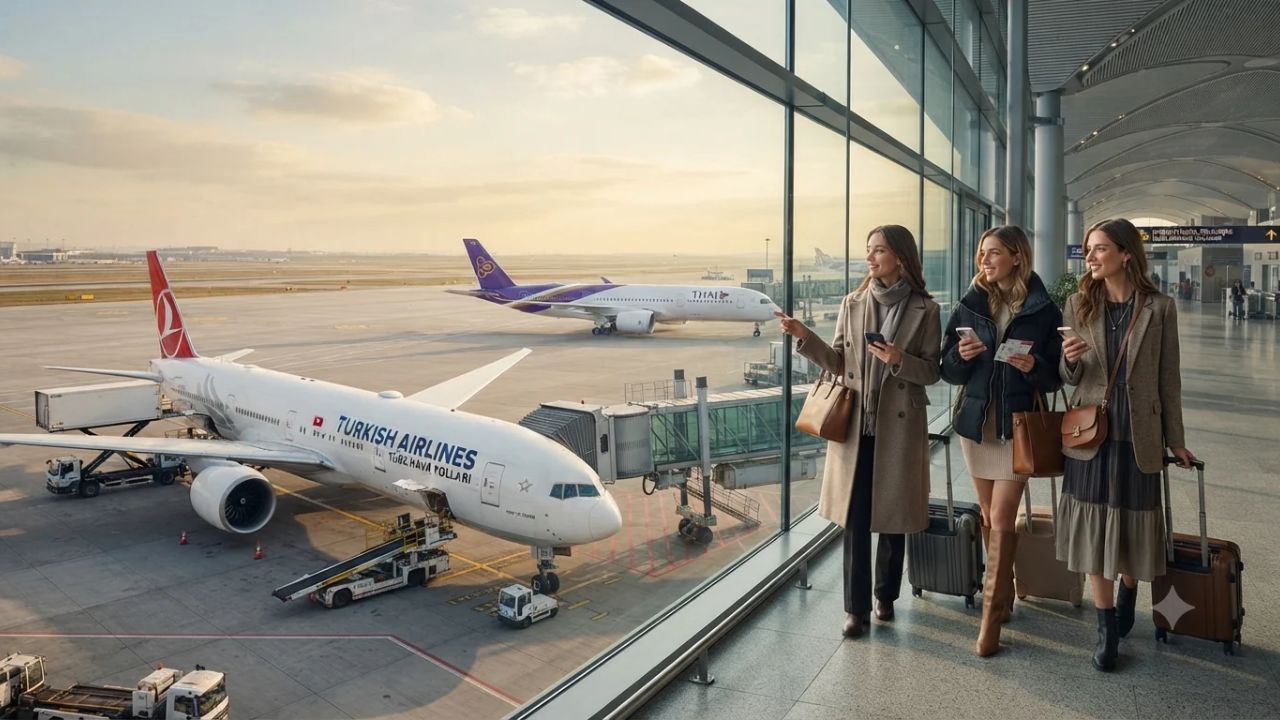
International commercial aviation between Southeast Europe and Southeast Asia is entering an expansive new chapter as Star Alliance partners Thai Airways International and Turkish Airlines inaugurate a landmark codeshare expansion taking effect on December 1, 2026. Under the bilateral pact, Thailand's flag carrier will place its signature ‘TG’ flight designator code for the first time onto Turkish Airlines-operated services connecting Istanbul Airport (IST) with Ljubljana Jože Pučnik Airport (LJU) in Slovenia and Belgrade Nikola Tesla Airport (BEG) in Serbia. The operational integration allows travelers from across the former Yugoslav region to book unified single-ticket itineraries to Bangkok Suvarnabhumi Airport (BKK) and onward to major destinations across the Asia-Pacific network, eliminating self-transfer risks and baggage re-check burdens.
The strategic launch on December 1 coincides directly with the beginning of the peak European winter holiday season, capitalizing on rapidly expanding outbound tourism from the Balkan peninsula to Thailand’s tropical coastlines and cultural heritage sites. Official statistical bulletins from the Tourism Authority of Thailand (TAT) confirm that the kingdom welcomed 97,655 visitors from the Balkan region during the first ten months of 2026 alone, marking a resilient 5.4 percent year-on-year increase. By leveraging Istanbul's geographical position as a natural crossroads situated directly along the great-circle air corridor linking Central-Eastern Europe with Indochina, the expanded partnership delivers a high-frequency Star Alliance alternative to Gulf carrier dominance across the Levant and Western Balkans.
Technologically, the codeshare expansion operates under an advanced "Freesale" agreement finalized in October 2026, granting Thai Airways real-time access to Turkish Airlines' live seat inventory rather than relying on legacy block-space seat allocations. For the Slovenian aviation sector—which has sought to rebuild international long-haul passenger connectivity following the 2019 insolvency of national carrier Adria Airways—the arrival of Thai Airways' virtual network footprint provides vital global reach, connecting business delegations, European holidaymakers, and Asian inbound travelers without requiring Ljubljana to support capital-intensive widebody long-haul infrastructure.
| Partnership Dimension | Codeshare Operating Term / Benchmark Metric | Institutional Source / Authority | Commercial & Passenger Significance |
|---|---|---|---|
| Effective Service Launch | December 1, 2026 | Thai Airways & Turkish Airlines Joint Notice | Opens winter 2026–2027 high-season holiday corridors |
| Agreement Classification | Freesale Codeshare Framework (Finalized Oct 2026) | Airline Commercial Operations Teams | Direct real-time inventory access without seat quotas |
| New Balkan Destinations | Ljubljana (LJU), Slovenia & Belgrade (BEG), Serbia | Civil Aviation Authorities of Slovenia & Serbia | First time ‘TG’ code operates into former Yugoslavia |
| Slovenia Flight Service | Istanbul to Ljubljana (Flight TG9524 / TK1061) | Daily Departure from IST at 08:05 SAST | Connects directly from early-morning Bangkok arrivals |
| Serbia Flight Service | Istanbul to Belgrade (Flight TG9522 / TK1081) | Daily Departure from IST at 08:10 SAST | High-frequency morning gateway into Serbian capital |
| Long-Haul Trunk Leg | Bangkok (BKK) to Istanbul (IST) | Thai Airways Daily Airbus A350 / Boeing 777 | Flagship widebody trunk route operating since Dec 2023 |
| Alliance Integration | Star Alliance Bilateral Joint Business Agreement | Star Alliance Coordination Office | Full frequent flyer reciprocal accrual & lounge access |
| Balkan Tourism to Thailand | 97,655 visitors (Jan–Oct 2026, +5.4% YoY) | Tourism Authority of Thailand (TAT) | High outbound demand for tropical winter sun holidays |
| Baggage Standards | Through-checked baggage from origin to destination | IATA Resolution 780 Interline Standards | Bags tagged directly between Ljubljana/Belgrade and Asia |
| Onward Asia-Pacific Reach | Tokyo, Osaka, Manila, Sydney, Melbourne | Thai Airways Suvarnabhumi Hub Operations | Connects Balkan travelers across East Asia & Australasia |
Chronology of Star Alliance Cooperation: A Structured Three-Year Evolution
The December 1, 2026 rollout of codeshare flights into Slovenia and Serbia is not an isolated tactical move; it represents the culmination of a meticulously planned three-year commercial roadmap between Thai Airways and Turkish Airlines.
Three-Year Strategic Convergence of Thai Airways and Turkish Airlines:
┌─────────────────────────────────────────────────────────────┐
│ DECEMBER 2023: THE INTERCONTINENTAL TRUNK ROUTE             │
│ - Thai Airways launches daily non-stop Bangkok-Istanbul     │
│ - Deploys modern widebody aircraft (Airbus A350-900)        │
│ - Establishes physical gateway into Turkish Airlines' hub   │
└──────────────────────────────┬──────────────────────────────┘
                               │
                               ▼
┌─────────────────────────────────────────────────────────────┐
│ JUNE 2025: BILATERAL EXPANSION & JOINT BUSINESS AGREEMENT   │
│ - Civil aviation authorities raise cap to 42 weekly flights │
│ - Formal Joint Business Agreement (JBA) executed            │
│ - Schedule harmonization & dynamic revenue coordination     │
└──────────────────────────────┬──────────────────────────────┘
                               │
                               ▼
┌─────────────────────────────────────────────────────────────┐
│ SEPTEMBER 2026: THE 21-ROUTE INTERCONTINENTAL SURGE         │
│ - Thai Airways adds 'TG' code to 21 Turkish routes          │
│   (London, Frankfurt, Zurich, Bucharest, Cairo)             │
│ - Turkish Airlines adds 'TK' code on Asian trunk lines      │
│   (Tokyo Haneda, Nagoya, Sapporo, Manila via Bangkok)       │
└──────────────────────────────┬──────────────────────────────┘
                               │
                               ▼
┌─────────────────────────────────────────────────────────────┐
│ DECEMBER 1, 2026: SOUTHEAST EUROPEAN & BALKAN EXPANSION     │
│ - Launch of TG9524 to Ljubljana (LJU) & TG9522 to Belgrade  │
│ - Freesale inventory integration unlocking real-time booking │
│ - Parallel addition of TG code on Istanbul-Paris CDG routes │
└─────────────────────────────────────────────────────────────┘
Phase 1: Establishing the Physical Bridge (December 2023)
Prior to December 2023, Thai Airways lacked direct access to Turkey, relying on third-party interline arrangements. The carrier took the decisive step of inaugurating its own daily non-stop widebody service between Bangkok Suvarnabhumi Airport and Istanbul Airport, deploying state-of-the-art Airbus A350-900 aircraft. This daily flight provided the fundamental trunk capacity required to channel Asian passenger traffic into Turkish Airlines' colossal hub at Istanbul, which connects more international countries than any other airline terminal on earth.
Phase 2: Regulatory Breakthrough and Joint Business Agreement (June 2025)
Recognizing the immense mutual value of traffic interchange between Europe, the Middle East, and Asia, Turkish and Thai civil aviation authorities concluded bilateral air service negotiations in mid-2025. The regulatory framework increased traffic frequency limits up to 42 weekly flights in each direction.
Building upon this expanded bilateral framework, the leadership of both Star Alliance carriers signed a comprehensive Joint Business Agreement (JBA). The agreement moved the airlines beyond passive interline ticket sales into coordinated commercial scheduling, corporate sales bundling, and synchronized connecting banks.
Phase 3: The 21-Route Intercontinental Wave (September 2026)
In September 2026, the carriers executed a massive expansion integrating 21 high-traffic routes:
- Thai Airways Network Expansion: Placed its ‘TG’ designator on Turkish Airlines-operated flights connecting Istanbul with major European capitals, including London Heathrow (LHR), London Stansted (STN), Frankfurt (FRA), Zurich (ZRH), Bucharest (OTP), Thessaloniki (SKG), and Cairo (CAI).
- Turkish Airlines Asian Feed: Placed its ‘TK’ designator on Thai Airways’ regional trunk routes radiating out of Bangkok, funneling Turkish passengers into Tokyo Haneda (HND), Nagoya (NGO), Sapporo (CTS), and Manila (MNL).
Phase 4: Balkan Integration and Western Expansion (December 2026)
The December 1, 2026 launch of Ljubljana and Belgrade marks the latest stage of this strategic expansion. By bridging the geographical corridor between Central Europe and the Mediterranean, Thai Airways establishes a virtual presence across the Western Balkans. Concurrently, Thai Airways reinforced its Western European trunk capacity by placing its ‘TG’ code onto Turkish Airlines' flights between Istanbul and Paris Charles de Gaulle (CDG).
Freesale Codeshare Architecture: Unlocking Real-Time Inventory
A technical milestone distinguishing this expansion is the transition to an upgraded Freesale Codeshare Agreement, finalized between the commercial revenue management departments of Turkish Airlines and Thai Airways in October 2026.
Traditional Block-Space vs. Modern Freesale Codeshare Architecture:
┌─────────────────────────────────────────────────────────────┐
│ TRADITIONAL BLOCK-SPACE MODEL (Legacy System):              │
│ - Marketing carrier buys fixed block of seats (e.g. 20 seats)│
│ - Unsold seats return to operating carrier before departure │
│ - Artificial capacity limits restrict peak holiday bookings │
│ - Risk of unsold seat liability for marketing carrier       │
├─────────────────────────────────────────────────────────────┤
│ MODERN FREESALE CODESHARE MODEL (October 2026 Standard):    │
│ - Thai Airways sells directly from live Turkish seat inv.   │
│ - Zero artificial seat caps; inventory dynamic & real-time  │
│ - Maximizes high-yield last-minute bookings                 │
│ - Real-time synchronization across global GDS & direct apps │
└─────────────────────────────────────────────────────────────┘
In a traditional block-space codeshare, the marketing airline purchases a rigid, pre-allocated allocation of seats on the operating carrier's aircraft. During periods of peak travel demand—such as Christmas, New Year, and the European winter holiday rush—the marketing airline frequently exhausts its limited seat block, turning away prospective high-yield customers even though the operating carrier may still possess empty seats in its general cabin inventory.
Under the Freesale framework, Thai Airways interfaces directly with Turkish Airlines’ inventory management system. When an Indian or Southeast Asian traveler searches for flights to Ljubljana on thaiairways.com or through an accredited travel agency, the booking engine displays seat availability reflecting Turkish Airlines' actual, real-time cabin capacity on flights TG9524 and TG9522 right up until scheduled departure. This dynamic integration maximizes flight load factors and provides travelers with uninterrupted access to lowest-available booking classes.
Flight Schedules and Transit Dynamics via Istanbul Airport
The operational schedule of the codeshare has been designed to take advantage of established connecting banks at Istanbul Airport (IST), providing coordinated flight connections for passengers moving in both directions.
Bangkok - Istanbul - Balkan Flight Schedule Matrix (Daily Operations):
[BANGKOK SUVARNABHUMI (BKK)]
           │
           │ Flight TG900 (Depart BKK 23:45 | Arrive IST 06:05+1)
           ▼
[ISTANBUL AIRPORT HUB (IST)] ── 2-Hour Transfer Buffer Window
           │
           ├───────────────────────────────┬───────────────────────────────┐
           ▼ (Flight TG9524 / TK1061)      ▼ (Flight TG9522 / TK1081)      ▼ (Parallel Expansion)
[LJUBLJANA (LJU), SLOVENIA]     [BELGRADE (BEG), SERBIA]        [PARIS CHARLES DE GAULLE]
- Depart IST: 08:05 SAST        - Depart IST: 08:10 SAST        - Depart IST: Morning Bank
- Arrive LJU: 08:25 Local       - Arrive BEG: 07:55 Local       - Western European Feed
- Transit Time: 2h 00m          - Transit Time: 2h 05m          - High-Density Hub
The Inbound Morning Bank to the Balkans
- Long-Haul Sector (Bangkok to Istanbul): Thai Airways operates daily overnight flight TG900, departing Bangkok Suvarnabhumi at 23:45 and touching down at Istanbul Airport at approximately 06:05 the following morning.
- Transfer Efficiency at Istanbul Airport: Passengers have an optimal two-hour transit window within Istanbul Airport’s single consolidated terminal concourse, allowing ample time to clear international transfer security screening and traverse to their departure gate.
- Connecting Flight TG9524 to Ljubljana (LJU): Operated by Turkish Airlines utilizing Airbus A320/A321 or Boeing 737 aircraft, flight TG9524 departs Istanbul at 08:05 and arrives at Ljubljana Jože Pučnik Airport at 08:25 local time (factoring in the two-hour time difference between Turkey and Slovenia). Total transit journey time from Bangkok to Ljubljana is approximately 14 hours and 40 minutes.
- Connecting Flight TG9522 to Belgrade (BEG): Departing Istanbul at 08:10, flight TG9522 lands at Belgrade Nikola Tesla Airport at 07:55 local time, delivering travelers into Serbia at the start of the business day.
The Outbound Eastbound Corridor
For travelers originating in Ljubljana or Belgrade, the return schedule mirrors this operational efficiency:
- Morning and afternoon Turkish Airlines departures from Ljubljana and Belgrade feed into Istanbul's evening departure bank.
- Passengers connect onto Thai Airways flight TG901 departing Istanbul at 16:30 or late-night departures, touching down in Bangkok the following morning, ready for direct hotel check-in or rapid onward connection to domestic resort islands (Phuket, Koh Samui, Krabi, Chiang Mai).
| Flight Designator | Operating Carrier | Departure Airport | Departure Time | Arrival Airport | Arrival Time | Operating Frequency |
|---|---|---|---|---|---|---|
| TG900 | Thai Airways (A350-900) | Bangkok Suvarnabhumi (BKK) | 23:45 | Istanbul Airport (IST) | 06:05 (+1 day) | Daily |
| TG9524 / TK1061 | Turkish Airlines (Narrowbody) | Istanbul Airport (IST) | 08:05 | Ljubljana Airport (LJU) | 08:25 | Daily |
| TG9522 / TK1081 | Turkish Airlines (Narrowbody) | Istanbul Airport (IST) | 08:10 | Belgrade Airport (BEG) | 07:55 | Daily |
| TG9525 / TK1062 | Turkish Airlines (Narrowbody) | Ljubljana Airport (LJU) | 09:15 | Istanbul Airport (IST) | 13:40 | Daily |
| TG9523 / TK1082 | Turkish Airlines (Narrowbody) | Belgrade Airport (BEG) | 08:45 | Istanbul Airport (IST) | 12:30 | Daily |
| TG901 | Thai Airways (A350-900) | Istanbul Airport (IST) | 16:30 | Bangkok Suvarnabhumi (BKK) | 05:35 (+1 day) | Daily |
Commercial and Tourism Analysis: Balkan Demand for Southeast Asia
The operational timing of the codeshare expansion is anchored by solid macroeconomic and tourism demand indicators. According to verified statistics released by the Tourism Authority of Thailand (TAT), Southeast Europe represents one of the fastest-growing emerging source markets for Thai tourism.
Balkan Inbound Tourism Growth into Thailand (Jan–Oct 2026):
2025 (Jan–Oct Baseline):   [==============================] 92,650 Visitors
2026 (Jan–Oct Actual):     [================================] 97,655 Visitors (+5.4% YoY Growth)

Key Consumer Drivers:
┌─────────────────────────────────────────────────────────────┐
│ - Tropical Winter Escapes (Nov–April Dry Season Peak)       │
│ - Cultural Heritage Tourism (Bangkok, Ayutthaya, Chiang Mai) │
│ - Expanding Regional Middle-Class Disposable Incomes        │
│ - Desire for Single-Ticket, Coordinated Itinerary Security  │
└─────────────────────────────────────────────────────────────┘
Strategic Campaign by the Tourism Authority of Thailand
Urai Mukpradabthong, Deputy Executive Director for Europe at the Tourism Authority of Thailand, emphasized that TAT has actively targeted Southeast Europe through dedicated trade workshops and joint marketing campaigns with Star Alliance partners.
Historically, outbound travelers from Slovenia and Serbia faced limited carrier options when traveling to Southeast Asia:
- Gulf Carrier Dominance: Travelers relied on carriers such as Emirates, Qatar Airways, or low-cost subsidiary Flydubai operating into Belgrade or neighboring Zagreb, which often required prolonged midnight layovers in the Persian Gulf.
- Fragmented Low-Cost Self-Transfers: Budget travelers purchased separate point-to-point tickets across unrelated European low-cost carriers into Western Europe, accepting severe luggage risks and zero protection against missed flight connections.
The new Thai Airways-Turkish Airlines codeshare provides a superior Star Alliance alternative: a unified ticket with through-checked luggage, protected transfers at Istanbul's world-class single-roof terminal, full mileage accrual across Star Alliance loyalty programs, and coordinated onward connections across Thai Airways’ domestic Thai network.
Revitalizing Slovenia's Long-Haul Connectivity
For Slovenia’s national aviation infrastructure, centered around Ljubljana Jože Pučnik Airport (LJU), the arrival of the Thai Airways flight code addresses a critical strategic need. Since the 2019 collapse of Adria Airways, Slovenia has worked to restore international connectivity. As an airport primarily served by regional narrowbody aircraft, Ljubljana cannot realistically support dedicated, year-round widebody non-stop flights to East Asia.
By linking Ljubljana directly into Turkish Airlines’ high-frequency Istanbul gateway under a Thai Airways marketing code, Slovenian travelers gain virtual non-stop access to Bangkok, while Asian travelers can book direct tickets into Slovenia to visit world-renowned attractions such as Lake Bled, the Postojna Caves, and Ljubljana's historic baroque city center.
Fleet Standards and Passenger Experience Across the Corridor
Travelers booking codeshare itineraries between the Balkans and Thailand experience high-standard in-flight hardware and service offerings:
Fleet and In-Flight Hardware Profile:
┌─────────────────────────────────────────────────────────────┐
│ LONG-HAUL SECTOR: THAI AIRWAYS AIRBUS A350-900 / B777-300ER │
│ - Royal Silk Business Class: 1-2-1 direct aisle access,     │
│   fully lie-flat beds, 18-inch HD touchscreen IFE           │
│ - Economy Class: 3-3-3 ergonomic configuration, 32-inch     │
│   seat pitch, complimentary hot Thai meals & beverages      │
├─────────────────────────────────────────────────────────────┤
│ REGIONAL BALKAN SECTOR: TURKISH AIRLINES A320 / A321 / B737 │
│ - Business Class: European or dedicated recliner seating,   │
│   premium Flying Chef gourmet Mediterranean catering        │
│ - Economy Class: Ergonomic slimline seating, onboard Wi-Fi, │
│   complimentary warm catering and personal entertainment    │
└─────────────────────────────────────────────────────────────┘
The Thai Airways Long-Haul Experience (BKK–IST)
On the long-haul sector between Bangkok and Istanbul, Thai Airways deploys its flagship Airbus A350-900 and Boeing 777-300ER aircraft. In Royal Silk Class (Business Class), passengers enjoy:
- A staggered 1-2-1 seating configuration ensuring uninterrupted direct aisle access for every passenger.
- Fully lie-flat beds extending up to 78 inches in length.
- Authentic multi-course Thai culinary dining paired with premium international wines.
- In-flight entertainment systems featuring hundreds of movies, television series, and global audio channels.
In Economy Class, travelers benefit from a comfortable 32-inch seat pitch, individual seatback USB charging outlets, and complimentary hot meals celebrating authentic Thai culinary flavors.
The Turkish Airlines European Regional Experience (IST–LJU / IST–BEG)
Turkish Airlines operates its modern narrowbody fleet—comprising Airbus A321neo and Boeing 737 MAX aircraft—on services into Ljubljana and Belgrade. Recognized consistently by Skytrax for Europe's best onboard catering, Turkish Airlines provides full complimentary meal and beverage service on all European routes, alongside seatback entertainment screens and high-speed satellite Wi-Fi connectivity.
Star Alliance Reciprocal Loyalty Benefits
Because both Thai Airways and Turkish Airlines are core members of the Star Alliance—the world’s largest global airline alliance founded in 1997—passengers traveling on codeshare flights TG9524 and TG9522 enjoy full reciprocal frequent flyer privileges:
Star Alliance Loyalty Benefits Architecture:
┌─────────────────────────────────────────────────────────────┐
│ 1. RECIPROCAL MILEAGE ACCRUAL & REDEMPTION:                 │
│    - Earn Royal Orchid Plus (ROP) miles on Turkish flights  │
│    - Earn Miles&Smiles miles on Thai Airways flights        │
├─────────────────────────────────────────────────────────────┤
│ 2. STAR ALLIANCE GOLD ELITE PRIVILEGES:                     │
│    - Priority Check-in at dedicated Business Class desks    │
│    - Priority Baggage Handling with priority luggage tags   │
│    - Fast-Track Security lane access at participating hubs  │
│    - Extra Baggage Allowance (typically +20 kg or +1 bag)   │
├─────────────────────────────────────────────────────────────┤
│ 3. WORLD-CLASS AIRPORT LOUNGE ACCESS:                       │
│    - Access to Turkish Airlines Lounge at Istanbul (IST)    │
│    - Access to Royal Orchid Prestige Lounge at Bangkok (BKK)│
│    - Contract business lounge access at Ljubljana & Belgrade│
└─────────────────────────────────────────────────────────────┘
- Royal Orchid Plus (ROP) Members: Thai Airways frequent flyers earn qualifying tier miles and redeemable miles on all Turkish Airlines-operated codeshare segments.
- Miles&Smiles Members: Turkish Airlines frequent flyers earn full status miles across Thai Airways-operated long-haul flights from Bangkok.
- Star Alliance Gold Tier Recognition: Elite members traveling in any cabin class receive priority boarding, additional checked baggage allowances, priority baggage delivery, and complimentary access to Turkish Airlines’ flagship Business Lounge at Istanbul Airport, featuring private day suites, live chef cooking stations, and luggage storage lockers.
Practical Traveler Guide: Booking and Flying the Balkan-Bangkok Route
For international travelers and travel management companies preparing to book itineraries under the new codeshare framework, several practical guidelines ensure smooth travel execution:
CODESHARE PASSENGER LOGISTICS CHECKLIST:
┌─────────────────────────────────────────────────────────────┐
│ 1. SINGLE-TICKET E-TICKET ISSUANCE:                         │
│    - Ensure entire journey is booked under a single 13-digit│
│      ticket receipt (Document starting with 217 for Thai)   │
├─────────────────────────────────────────────────────────────┤
│ 2. BAGGAGE ROUTING & INTERLINE TRANSIT:                     │
│    - Verify at check-in that baggage tags read final airport│
│      code (e.g. BKK, HKT, or LJU)                           │
│    - Bags automatically transfer across terminals at IST    │
├─────────────────────────────────────────────────────────────┤
│ 3. VISA & IMMIGRATION REQUIREMENTS:                         │
│    - Schengen Exit: Cleared in Ljubljana or Belgrade        │
│    - Turkish Transit: Airside transfer; no Turkey visa needed│
│    - Thailand Entry: Check visa exemption / eVisa status    │
├─────────────────────────────────────────────────────────────┤
│ 4. RECOMMENDED MINIMUM CONNECTING TIME (MCT):               │
│    - Istanbul Airport minimum transfer buffer: 60 minutes   │
│    - Recommended scheduled layover: 90 to 120 minutes       │
└─────────────────────────────────────────────────────────────┘
1. Document Preparation and Transit Visas
- Airside Transit at Istanbul Airport: Passengers connecting between Thai Airways and Turkish Airlines remain within the international airside sterile zone at Istanbul Airport. Travelers do not pass through Turkish passport control and do not require a Turkish transit visa, provided their entire journey is ticketed under a single itinerary.
- Thailand Entry Protocols: Citizens of Slovenia, Serbia, and most European nations benefit from Thailand’s visa exemption scheme, granting tourist stays of up to 60 days without requiring an advance visa. Travelers should verify passport validity (minimum six months remaining from arrival date) before departure.
2. Luggage and Baggage Through-Check
Under IATA interline resolution agreements, passengers departing from Ljubljana or Belgrade have their checked luggage tagged straight through to Bangkok Suvarnabhumi Airport (or onward domestic Thai airports such as Phuket or Chiang Mai). Passengers do not collect their luggage during the two-hour transit in Istanbul; ground handling agents at IST transfer baggage between aircraft automatically.
The launch of Thai Airways' codeshare services into Slovenia and Serbia marks a milestone in modern intercontinental route planning. By uniting Thai Airways’ Asian trunk operations with Turkish Airlines' regional network under a real-time Freesale model, both Star Alliance carriers have constructed an accessible, efficient aviation corridor bridging the Western Balkans directly with Southeast Asia.
Frequently Asked Questions
What is the new codeshare agreement between Thai Airways and Turkish Airlines?
Starting December 1, 2026, Thai Airways will place its ‘TG’ airline designator code onto Turkish Airlines-operated flights connecting Istanbul Airport (IST) with Ljubljana (LJU) in Slovenia and Belgrade (BEG) in Serbia, creating direct single-ticket connectivity between Southeast Europe and Bangkok.
What are the specific flight numbers and schedules for the new routes?
- Istanbul to Ljubljana: Flight TG9524 (operated by Turkish Airlines as TK1061), departing Istanbul daily at 08:05 and arriving in Ljubljana at 08:25 local time.
- Istanbul to Belgrade: Flight TG9522 (operated by Turkish Airlines as TK1081), departing Istanbul daily at 08:10 and arriving in Belgrade at 07:55 local time.
- Both flights connect directly from Thai Airways flight TG900, which departs Bangkok at 23:45 and arrives in Istanbul at 06:05.
What is a "Freesale" codeshare agreement and how does it benefit travelers?
Unlike traditional block-space codeshares where an airline is limited to a small, pre-purchased quota of seats, a Freesale model allows Thai Airways to sell seats directly from Turkish Airlines’ real-time, live seat inventory. This eliminates artificial capacity bottlenecks and ensures seat availability right up until flight departure during peak holiday travel periods.
Can passengers check their luggage straight through to their final destination?
Yes. Travelers booking a single-ticket codeshare itinerary have their checked baggage tagged at their origin airport (e.g., Ljubljana, Belgrade, or Bangkok) straight through to their final destination. Baggage is transferred automatically during the layover at Istanbul Airport without requiring passenger collection.
Do travelers need a Turkish visa during the layover in Istanbul?
No. Passengers connecting between Thai Airways and Turkish Airlines remain in the international airside transit area of Istanbul Airport. Because travelers do not exit the terminal or pass through Turkish border control, no Turkish transit visa is required.
What aircraft are used on the Bangkok–Istanbul and European connecting flights?
- Bangkok to Istanbul (TG900/901): Operated by Thai Airways using widebody aircraft, primarily the modern Airbus A350-900 and Boeing 777-300ER, featuring Royal Silk Business Class lie-flat suites and ergonomic Economy Class cabins.
- Istanbul to Ljubljana and Belgrade: Operated by Turkish Airlines using narrowbody aircraft, including the Airbus A320/A321 and Boeing 737, featuring European Business Class and complimentary warm meal service in Economy.
Can frequent flyers earn and redeem miles on these codeshare flights?
Yes. Because Thai Airways and Turkish Airlines are core members of the Star Alliance, passengers can earn and redeem frequent flyer miles across both Royal Orchid Plus (ROP) and Miles&Smiles. Star Alliance Gold members enjoy elite privileges, including priority check-in, additional baggage allowances, priority boarding, and access to business class lounges in Bangkok and Istanbul.
Why is this route expansion significant for Slovenia's aviation market?
Following the 2019 collapse of national carrier Adria Airways, Ljubljana Jože Pučnik Airport has sought to restore international long-haul links. This codeshare integrates Slovenia directly into Thai Airways’ global Asian route network via Istanbul without requiring the airport to maintain expensive widebody long-haul infrastructure.
How has tourism from the Balkan region to Thailand performed recently?
According to the Tourism Authority of Thailand (TAT), Thailand welcomed 97,655 visitors from the Balkan region during the first ten months of 2026, representing a 5.4 percent year-over-year increase compared to the same period in 2025.
What other routes were added in this partnership expansion?
In addition to Ljubljana and Belgrade, Thai Airways placed its ‘TG’ flight designator code onto Turkish Airlines' flights between Istanbul and Paris Charles de Gaulle (CDG). This follows an earlier September 2026 expansion that integrated 21 routes across Europe, the Middle East, and Asia.
Related Travel Guides
- Iceland’s Arctic Adventures Cuts Tour Prices by Up to 50% in Black Friday Sale - Discover how seasonal discounts open up sub-Arctic glacier hiking, Northern Lights boat tours, and Highland summer trekking.
- South Africa Travel Restores OR Tambo Domestic Terminal Power After Substation Fault - Learn how airport authorities and domestic airlines managed passenger processing and schedule recovery following an electrical outage in Johannesburg.
- Air India And KM Malta Partner On Single-Ticket Travel To Malta Starting December - Explore how Air India and KM Malta Airlines' codeshare unlocks single-ticket travel and through-checked baggage via six European hubs.
- Malaysia, Thailand And Other In Focus As ASEAN Medical Tourism Triples - Discover how Southeast Asia’s medical and wellness travel market is projected to expand to $218.4 billion by 2034.
This article is for informational purposes. Flight routes, passenger regulations, visa rules, and transit advisories are subject to change by airlines and aviation authorities. Readers are advised to verify schedules and travel documentation with relevant carriers and border agencies before departure.
Related Stories

Nepal Sees Strong Travel Demand as Pokhara Airport Expands International Connectivity

Jamaica Welcomes a New Wave of Canadian Travel With Four Nonstop Flight Routes