
Breaking Airline News: SkyWest Flight SKW4320 Suffers Terrifying Double Diversion, Trapping Passengers in Severe Travel Chaos
Breaking airline news: Amidst a terrifying era of severe regional hub congestion, SkyWest Flight SKW4320 executes a rare, grueling double diversion, plunging Yellowstone-bound tourists into agonizing travel chaos.

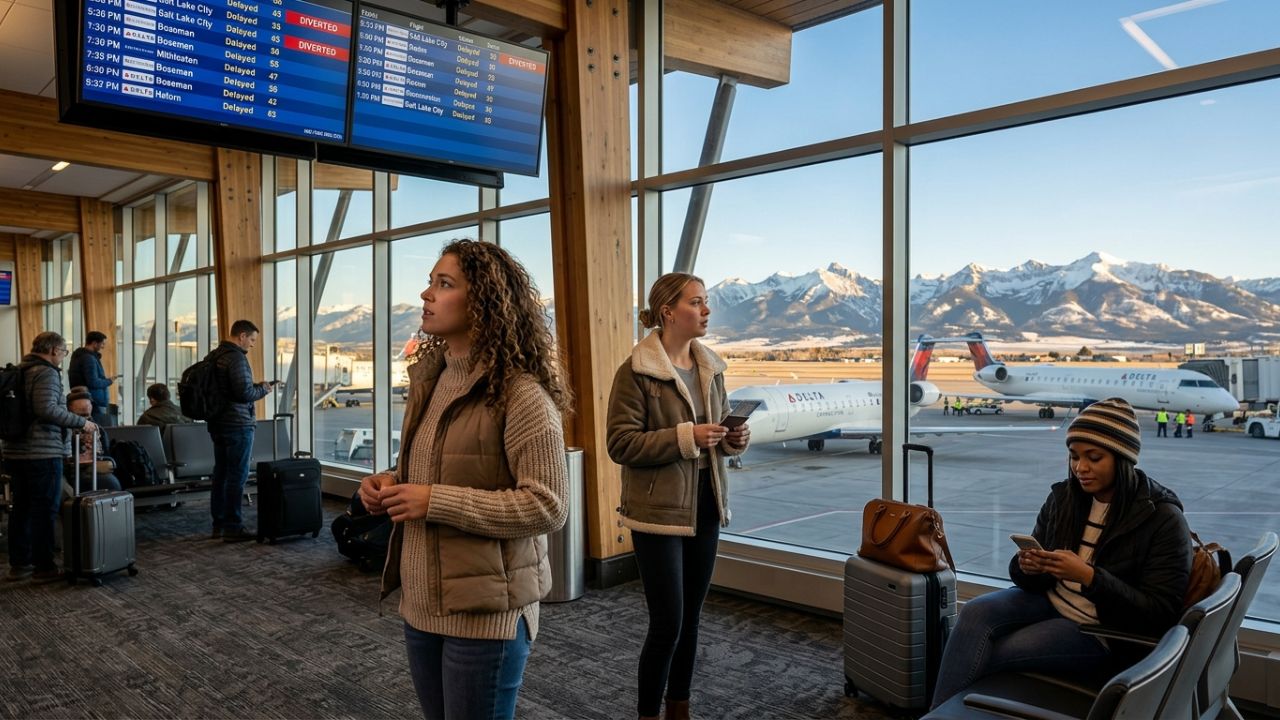
Image representing the intense strategic battle as global aviation authorities and flight crews desperately attempt to contain severe operational meltdowns and execute emergency diversions to bypass paralyzing weather and travel chaos.
Breaking Airline News: SkyWest Flight SKW4320 Suffers Terrifying Double Diversion, Trapping Passengers in Severe Travel Chaos
As paralyzing terminal congestion, terrifying infrastructural fragility, and severe weather volatility violently threaten to completely choke the absolute core of the regional transit grid, a highly unusual operational failure has triggered unprecedented passenger panic. In a harrowing display of modern aviation vulnerability, SkyWest Flight SKW4320 was aggressively slammed by an inescapable operational crisis on June 9, 2026. Operating a Mitsubishi CRJ-700 (CRJ-701ER) under the Delta Airlines banner, the aircraft executed a rare and grueling double diversion, entirely failing to reach its intended destination of West Yellowstone. Because regional airports operate as highly critical tourism gateways, this aggressive operational collapse did not remain localized; it violently plunged hundreds of passengers into extreme travel chaos, ultimately forcing the exhausted travelers back to their exact starting point in Salt Lake City after hours of terrifying uncertainty. This cascading failure perfectly illustrates how rapidly changing mountain weather and airport disruptions can violently shatter meticulously planned itineraries, ensuring that vacationing families are directly exposed to the agonizing misery historically defining major flight cancellations.
In a brutal display of the ongoing global transit crisis, the sheer logistical nightmare of attempting to safely navigate through treacherous mountain terrain is currently being violently amplified by systemic network shocks. For the passengers boarding SKW4320 in Salt Lake City, the expectation of a seamless arrival at West Yellowstone was abruptly shattered as the flight crew faced inescapable approach challenges. When a commercial aircraft suffers a double diversion on a single rotation, the ensuing damage is catastrophic: passengers are trapped in the cabin for hours, forcing airlines into a terrifying scramble to manage furious travelers while the aircraft burns critical fuel reserves. This massive injection of operational uncertainty forced air traffic control systems and ground crews across Utah and Montana to work furiously to manage the failing itinerary, demonstrating exactly how fragile the regional travel grid has become when subjected to severe, high-altitude capacity strain.
Expanded Overview: The Massive Scale of the Transit Contagion
The terrifying crisis of overwhelming passenger stress currently gripping the regional transit grid brutally exposes the severe limitations of flying into environmentally sensitive outposts during operational breakdowns. Recognizing that aggressively forcing travelers to endure hours of sudden airborne holding leads directly to severe psychological friction, aviation authorities are attempting to forcefully decompress the tension through absolute transparency regarding safety protocols. The sheer scale of this disruption was massive. The aircraft, registered as N724EV, became locked in a desperate battle against the elements. While the SKW4320 incident captured massive attention, it wasn't the only regional failure that day; adding to the systemic travel chaos, SkyWest-operated United Airlines Flight SKW5528 (also a Mitsubishi CRJ-701ER) flying from Williston to Denver suffered its own severe disruption, being forced to aggressively divert to Grand Junction Regional Airport.
Section-Wise Breakdown: The Operational Realignment
Breaking the Initial Gridlock: The Bozeman Diversion
To survive the terrifying surge in volatile mountain weather without triggering a catastrophic incident, the flight crew of SKW4320 executed their first emergency maneuver. The CRJ-700 was initially scheduled to operate a direct sector from Salt Lake City to West Yellowstone. However, instead of completing the scheduled arrival, deteriorating visibility and hostile wind patterns violently choked the approach corridor. The aircraft was forced to abandon the landing and execute a high-stakes diversion to Bozeman Yellowstone International Airport. This initial diversion immediately trapped passengers in a grueling holding pattern on the tarmac, entirely disrupting their planned ground transport at West Yellowstone.
Deploying the Second Attempt: The Airborne Paralysis
Looking beyond the initial disruption, the airline attempted to violently salvage the itinerary. Flight records indicate the aircraft departed Bozeman at approximately 2:43 PM MDT after spending considerable time on the ground. The flight was expected to execute the short, remaining sector to West Yellowstone—a highly critical route used heavily during the busy summer tourism season. However, instead of arriving, the aircraft became trapped in an agonizing holding pattern, remaining airborne for approximately one hour and thirty-four minutes as the crew desperately attempted to find a safe approach vector.
Shattering the Schedule: The Return to Salt Lake City
The massive infrastructural anomaly defining this disruption is the ultimate failure of the rotation. The flight once again failed to complete its scheduled routing. Facing inescapable operational limitations, the crew executed a second, incredibly rare diversion, completely abandoning the Yellowstone sector and retreating all the way back to Salt Lake City. Tracking data confirms the aircraft ultimately landed in Salt Lake City at 4:17 PM MDT. The flight status recorded the arrival as a staggering three hours and twenty-five minutes behind schedule, delivering passengers back to the exact terminal they departed from hours earlier.
Flight Disruption & Diversion Matrix
To fully comprehend the massive logistical and strategic fallout of this terrifying operational failure, corporate travel managers and affected tourists must review the exact disruption metrics defining the crisis. The following matrix provides a granular, officially verified breakdown of the flight data driving this massive travel chaos, sourced from public flight tracking records.
| Operational Flight Data | Verified Disruption Telemetry |
|---|---|
| Operating Carrier / Flight | SkyWest (Delta Airlines) / Flight SKW4320 |
| Aircraft Type & Registration | Mitsubishi CRJ-700 (CRJ-701ER) / N724EV |
| Incident Date | June 9, 2026 |
| Primary Diversion Routing | Salt Lake City (SLC) ➔ Diverted to Bozeman (BZN) |
| Secondary Diversion Routing | Bozeman (BZN) ➔ Diverted to Salt Lake City (SLC) |
| Airborne Holding Time | 1 Hour and 34 Minutes (BZN to SLC attempt) |
| Final Arrival / Delay | Landed SLC at 4:17 PM MDT (3 Hours 25 Mins Late) |
| Secondary Carrier Incident | SkyWest (United) SKW5528: Williston ➔ Denver (Diverted to Grand Junction) |
Passenger Impact: Surviving the Airborne Stranding
For the tourists attempting to navigate the rapidly collapsing regional transit corridors, this massive operational failure represents a terrifying descent into travel misery. The brutal reality of enduring a grueling double diversion—only to deplane three and a half hours later in the exact same city you started in—inflicts intense psychological stress and completely destroys meticulously planned itineraries.
Survival Guide for Stranded Travelers
Travelers desperately preparing to navigate this highly unstable network must immediately execute the following survival protocols if their flight enters a diversion cycle:
- Leverage Digital Tracking: Passengers must aggressively monitor their flight status using verified platforms like FlightAware or Flightradar24. Understanding that your aircraft is holding over mountainous terrain allows you to immediately begin coordinating alternate ground transport before official terminal announcements are made.
- Anticipate Total Itinerary Destruction: When a double diversion strikes, travelers heading to remote destinations like Yellowstone National Park must recognize that their entire day is lost. Immediately contact hotel accommodations to prevent "no-show" cancellations and violently demand rebooking assistance from airline personnel upon landing.
- Acknowledge Operational Safety: While immensely frustrating, passengers must acknowledge that unlike major hub airports with multiple runways, smaller regional airports are hyper-sensitive to weather. Safety remains the overriding priority.
Industry Analysis: The Economics of Tactical Paralysis
From a strategic aviation perspective, the travel turmoil currently forcing these massive delays highlights the terrifying vulnerability of regional networks. Anup Kumar Keshan, Founder and Editor-in-Chief of Travel And Tour World, observed that the unusual double diversion involving Flight SKW4320 highlights the extreme operational challenges airlines face when serving regional destinations. He noted that passenger safety remained the foremost priority, demonstrating how crews must adapt instantaneously to changing operational conditions. A double diversion burns massive amounts of costly jet fuel and completely shatters the daily rotation of the airframe, causing severe, cascading flight cancellations later in the schedule.
Conclusion: A Strategic Retreat to Ensure Aviation Survival
As the extremely critical summer travel season accelerates, the massive disruption triggered by SkyWest SKW4320 represents a terrifying warning to passengers attempting to transit into complex geographic regions. The aggressive, safety-driven diversions prove that navigating the modern airspace requires terrifyingly swift and highly optimized booking strategies. By acting aggressively to demand policy clarity, utilizing flexible booking options, and maintaining comprehensive travel insurance, travelers can successfully survive these intense operational surges and attempt to avoid the paralyzing threat of airline-induced travel chaos.
Key Takeaways
- Massive Tactical Failure: SkyWest Flight SKW4320 (operating for Delta) suffered a highly rare double diversion on June 9, 2026, entirely failing to reach West Yellowstone.
- Crushing the Schedule: The Mitsubishi CRJ-700 (N724EV) diverted first from Salt Lake City to Bozeman, and then from Bozeman back to Salt Lake City, trapping passengers in the cabin for hours.
- Severe Delay Metrics: The aircraft remained airborne for 1 hour and 34 minutes during its second attempt, ultimately landing in SLC at 4:17 PM MDT, over 3.5 hours behind schedule.
- Systemic Network Strain: Regional instability was further highlighted by SkyWest (United) Flight SKW5528, which diverted from Denver to Grand Junction Regional Airport on the same day.
- Traveler Advisory: Passengers impacted by massive airborne holding and diversion cycles must aggressively leverage digital tracking tools (FlightAware/Flightradar24) to secure alternate ground transport before the terminal is overwhelmed.
Related Travel Guides
Disclaimer
This article is for informational and educational purposes only. It does not constitute legal, financial, or professional advice. While we strive to provide accurate and up-to-date information, travel policies, regulations, and conditions change rapidly. Always verify information with official sources before making travel decisions. Nomad Lawyer makes no representations about the accuracy, reliability, completeness, or suitability of the information provided. Readers should consult qualified professionals for advice specific to their circumstances. The views expressed in this article are those of the author and do not necessarily reflect the views of Nomad Lawyer.
Kunal K Choudhary
Co-Founder & Contributor
A passionate traveller and tech enthusiast. Kunal contributes to the vision and growth of Nomad Lawyer, bringing fresh perspectives and driving the community forward.
Learn more about our team →