
Shizuoka Travel and Cycling Guide 2026: Mount Fuji Trails, Green Tea Estates, and Izu Peninsula Geopark

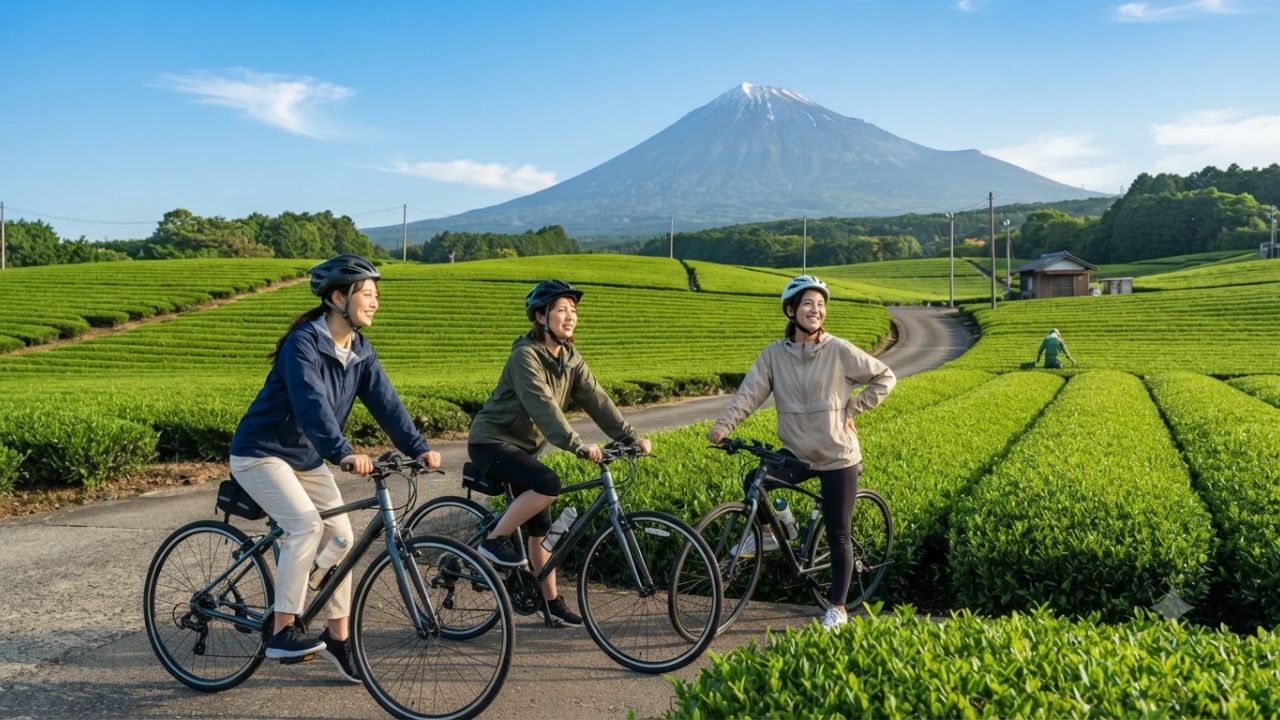
While millions of international travelers bypass Shizuoka aboard bullet trains racing between Tokyo and Kyoto, this coastal prefecture produces over 40% of Japan's green tea and offers direct access to Mount Fuji's southern slopes against the deep blue waters of Suruga Bay. Located less than an hour from Tokyo Station via the JR Tokaido Shinkansen, Shizuoka combines high-altitude volcanic trekking, four-century-old wasabi farms, and a 67 km cycling circuit around Lake Hamana with the rugged cliffs of the Izu Peninsula UNESCO Global Geopark.
For outdoor enthusiasts seeking alternatives to crowded urban centers, Shizuoka presents an authentic slice of rural Japan where cycling routes wind through terraced tea plantations and steaming thermal onsen villages line mountain riverbanks.
The Southern Slopes: Trekking, Volcanic Ridges, and Skywalks
Mount Fuji's southern and western faces in Shizuoka offer a dramatically different perspective from northern lake viewpoints, framing the snow-capped peak against open Pacific waters. During the official summer climbing window from July through September, mountain huts operate across high-elevation routes where summit temperatures typically hover between 0°C and 8°C (32°F to 46°F).
Shizuoka Outdoor Activities and Regional Matrix
| Adventure Region | Flagship Route or Attraction | Elevation & Distance | Key Experience & Local Specialty |
|---|---|---|---|
| Fujinomiya Trail | Southern Mount Fuji Ascent | Starts at 2,400 m (5th Station) | Most direct summit path; rugged volcanic rock and staffed huts |
| Gotemba Trail | Endurance Volcanic Trek | Starts at 1,440 m elevation | Famous Sunashiri sand sliding through deep volcanic ash scree |
| Hoei Crater | 1707 Eruption Flank Hike | Flank day trail (~2,700 m) | Volcanic geological field trek without requiring full summit push |
| Mishima Skywalk | Pedestrian Suspension Bridge | 400 m span (Longest in Japan) | 360-degree panoramic view of Mount Fuji, Suruga Bay, and forest |
| Shiraito Falls | Volcanic Spring Cascades | 20 m cliff face | Hundreds of filtered spring water streams fed by Fuji meltwater |
| Lake Hamana (Hamanako) | Perimeter Cycling Loop | 67 km paved circuit | Flat cycling route, e-bike rentals, and traditional freshwater unagi (eel) |
| Makinohara Plateau | Tea Plantation Countryside Ride | Rolling agricultural hills | Cycling through Japan's largest green tea estate; fresh sencha tastings |
| Wasabi Valleys (Aoi-ku) | Mountain Stream Gravel Routes | River headwaters | 400-year-old traditional spring-water wasabi cultivation farms |
| Jogasaki Coast (Izu) | Coastal Cliff Trail | 9 km coastal footpath | Suspension bridge over volcanic basalt sea cliffs and lava arches |
| Shuzenji Onsen (Izu) | Historic Thermal Spa Valley | Katsura River Basin | Traditional mineral ryokan soaking and bamboo forest walks |
Mount Fuji is recognized internationally through the UNESCO World Heritage Centre as a sacred place and source of artistic inspiration. For day visitors not attempting a full summit climb, the hike to the Hoei Crater—formed during Mount Fuji's catastrophic eruption in 1707—provides an intimate look at volcanic topography without requiring overnight hut reservations.
What Makes Shizuoka Different: Tea Country, Coastal Geoparks, and Culinary Roots
Japan's Green Tea Heartland
The rolling hills of the Makinohara Plateau represent the country's most expansive contiguous tea plantation. Cyclists riding along paved farm roads can stop directly at working tea factories, meet multi-generational farmers, and sample spring-picked shincha and shaded gyokuro. In the mountainous interior of Aoi-ku near Shizuoka City, pristine alpine runoff sustains stepped gravel beds where hon-wasabi has been cultivated using zero soil since the early Edo period.
The Izu Peninsula UNESCO Global Geopark
Formed through ancient submarine volcanic activity and tectonic plate collisions, the Izu Peninsula offers dramatic coastal topography. At Mt. Omuro, a chairlift ascends to the crater rim of an extinct cinder cone, providing sweeping views across the Pacific Ocean. Along the coast at Shimoda, clear waters provide conditions for sea kayaking, paddleboarding, and exploring sea caves.
Verified travel details from the Japan National Tourism Organization (JNTO) and Explore Shizuoka show how the region pairs active outdoor exploration with historic hot spring resorts like Shuzenji Onsen along the Katsura River.
Visitor Insider Tips: Navigating Trails, Transit, and Gastronomy
- Ride the Lake Hamana Perimeter: Rent an e-bike at JR Bentenjima or Kanzanji Onsen stations to tackle the 67 km Lake Hamana loop. Along the western shore, stop at heritage restaurants to sample grilled unagi kabayaki (freshwater eel glazed in sweet soy reduction), a regional specialty cultivated in local brackish waters for over a century.
- Master the Gotemba Sunashiri Descent: If tackling the Gotemba climbing route, bring gaiters, dust masks, and sturdy boots. The Sunashiri section allows hikers to descend hundreds of vertical meters in minutes by taking giant bounding strides through deep volcanic gravel.
- Leverage the Shinkansen Stopover: Shizuoka is exceptionally accessible via the JR Tokaido Shinkansen. Boarding the Hikari or Kodama trains from Tokyo Station brings you to Mishima or Shizuoka City in under 60 minutes, while direct bullet trains connect from Kyoto and Osaka in under two hours.
- Choose the Right Seasonal Window:
- Spring (March–May): Mild 10°C to 20°C temperatures ideal for cycling, tea harvesting, and cherry blossoms.
- Summer (July–September): Coastal temperatures (22°C–30°C) suited for marine sports in Izu, alongside the official Mount Fuji summit season.
- Autumn & Winter (October–February): Crisp 5°C to 15°C days delivering the highest atmospheric clarity for photographing snow-capped Fuji.
- Respect Onsen Etiquette in Shuzenji: Wash thoroughly at seated shower stalls before entering communal baths. Many traditional ryokan offer private rental onsen (kashikiri) for travelers with tattoos or families seeking privacy.
Cultural and Environmental Context: Sustainable Stewardship and Agritourism
Shizuoka's outdoor tourism model relies heavily on environmental stewardship practiced by local agricultural and fishing cooperatives. In the tea hills of Makinohara and the wasabi valleys of the Southern Alps foothills, farmers maintain traditional terraced drainage systems that prevent soil erosion and safeguard mountain watershed purity.
In the Izu Peninsula, geopark guides enforce strict "leave no trace" rules across coastal hiking paths to protect rare volcanic flora and nesting seabird colonies. By encouraging visitors to rent bicycles, stay in family-run ryokan, and purchase directly from agricultural cooperatives, Shizuoka distributes tourism revenue into rural communities while mitigating overcrowding along the traditional Golden Route.
FAQ: Visiting Shizuoka 2026
How far is Shizuoka from Tokyo?
Shizuoka City and Mishima are less than one hour from Tokyo Station via the JR Tokaido Shinkansen Hikari bullet train.
When is the official climbing season for Mount Fuji?
The official Mount Fuji climbing season runs from early July through early September, when summit mountain huts, medical clinics, and designated trails are open.
Can beginners complete the Lake Hamana cycling route?
Yes. The 67 km perimeter route is largely flat and well-paved, with numerous rental stations offering e-bikes, rest areas, and lakeside cafes.
What local dishes should I try in Shizuoka?
Key specialties include Lake Hamana freshwater eel (unagi), fresh hon-wasabi, Sakura ebi (tiny pink shrimp from Suruga Bay), Shizuoka oden, and locally brewed green tea (sencha).
From the volcanic ash of Mount Fuji's ridges to emerald tea terraces and rugged Pacific coves, Shizuoka reveals Japan's outdoor soul just beyond the bullet train tracks.
Related Travel Guides
Disclaimer
This article is for informational and educational purposes only. It does not constitute legal, financial, or professional advice. While we strive to provide accurate and up-to-date information, travel policies, regulations, and conditions change rapidly. Always verify information with official sources before making travel decisions. Nomad Lawyer makes no representations about the accuracy, reliability, completeness, or suitability of the information provided. Readers should consult qualified professionals for advice specific to their circumstances. The views expressed in this article are those of the author and do not necessarily reflect the views of Nomad Lawyer.
Kunal K Choudhary
Co-Founder & Contributor
A passionate traveller and tech enthusiast. Kunal contributes to the vision and growth of Nomad Lawyer, bringing fresh perspectives and driving the community forward.
Learn more about our team →