
Loreto Cruise Ban 2030: How Baja California Sur Protected Its Fragile Marine National Park

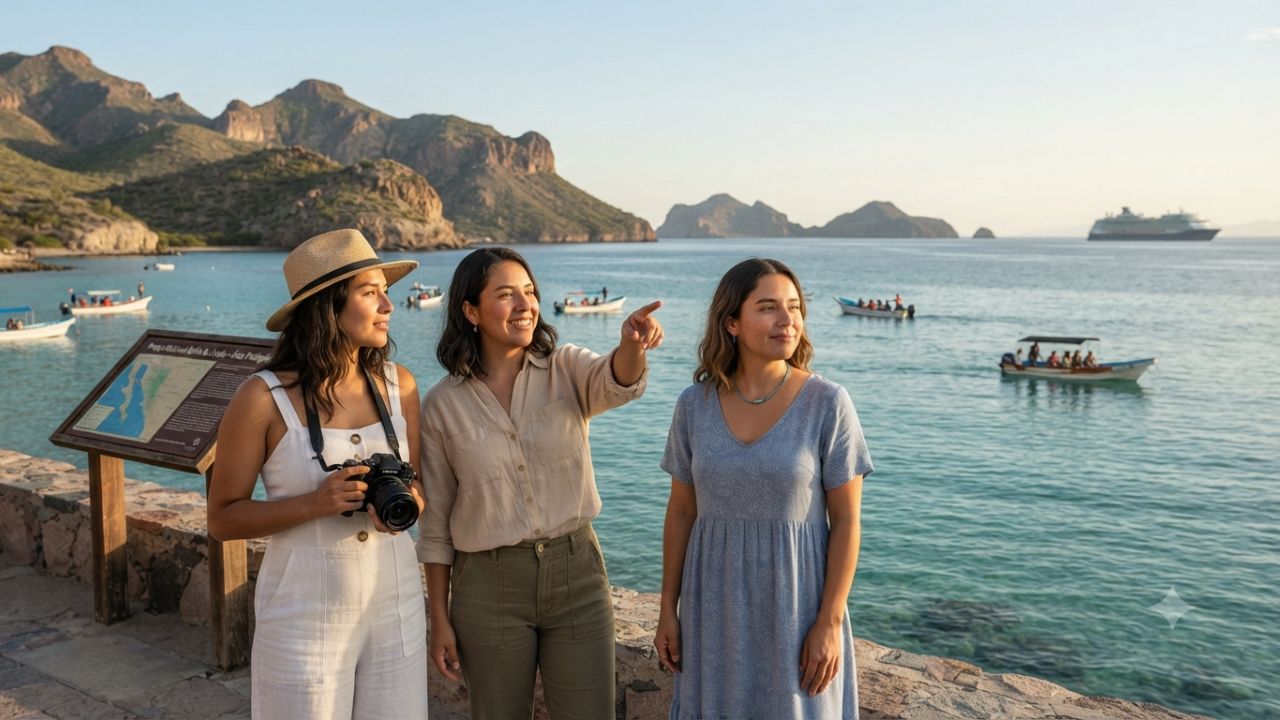
In a decisive victory for community-led conservation, the Mexican federal government officially revoked Loreto's international port status and rejected all cruise ship arrival permits through 2030 to shield Bahía de Loreto National Park from mass tourism. The policy reversal restores the historic Baja California Sur settlement to strict domestic coastal cabotage navigation, preserving over 206,000 hectares of marine sanctuaries along the Gulf of California.
The regulatory shift marks the culmination of intense advocacy by local fishermen, eco-tour guides, and municipal representatives. On 10 April 2026, a federal decree had initially designated Loreto as a port for both international and domestic navigation in an administrative effort by Mexico's Secretariat of the Navy to regularize maritime logistics. However, facing concerns regarding the environmental footprint of large cruise vessels on fragile marine mammal corridors, the federal government published a presidential decree in the Official Gazette on 25 May 2026 repealing the measure.
Safeguarding the Marine Sanctuary of Bahía de Loreto
Established by presidential decree in 1996, Parque Nacional Bahía de Loreto encompasses more than 206,000 hectares of marine waters, uninhabited islands, and coastal ecosystems. Recognized as a core component of the UNESCO World Heritage Islands and Protected Areas of the Gulf of California, the bay serves as a vital nursery and feeding ground for blue whales, fin whales, humpbacks, and pods of coastal dolphins.
During a federal regulatory review in July 2026, Environment Secretary Alicia Bárcena of the Secretariat of Environment and Natural Resources (Semarnat) confirmed that, under explicit directives from President Claudia Sheinbaum, Loreto will not host cruise liners or operate deep-sea maritime facilities. The Baja California Sur Port Administration simultaneously notified international cruise lines and maritime agents that all arrival applications spanning 2026 through 2030 have been formally rejected.
Management of the bay's navigation is now coordinated through a multi-agency working committee involving Semarnat, the Secretariat of the Navy, the Secretariat of Tourism, the National Commission of Natural Protected Areas (CONANP), state port authorities, and grassroots community defenders.
Chronology and Legal Milestones of the Loreto Port Policy
The policy trajectory reflects Mexico's commitment to prioritizing ecological integrity over high-volume maritime passenger numbers.
| Date / Period | Policy Action & Milestone | Practical Consequence for Loreto |
|---|---|---|
| 10 April 2026 | Federal decree published reclassifying Loreto as an international port | Created potential legal pathway for regular foreign mega-cruise ship arrivals |
| May 2026 | Grassroots mobilization by local guides, fishers, and conservationists | United community opposition against industrial-scale maritime port infrastructure |
| 25 May 2026 | Presidential decree published in the Official Gazette repealing the April measure | Rescinded international port designation; restored domestic cabotage status |
| July 2026 | Semarnat and Navy confirm cabotage navigation framework | Prohibits international deep-sea cruise vessels from docking or anchoring |
| 2026–2030 | Formal rejection of all cruise ship arrival applications | Guarantees multi-year protection for low-impact, small-scale eco-expeditions |
Low-Impact Ecotourism: What Makes Loreto Different
Unlike high-density cruise ports elsewhere in the Mexican Pacific such as Cabo San Lucas and Puerto Vallarta, Loreto’s visitor economy thrives on low-density, specialized ecotourism. Travelers visit the colonial capital of Las Californias to experience quiet cobblestone plazas, 17th-century Jesuit mission architecture at Misión Nuestra Señora de Loreto, and intimate marine expeditions conducted on small, licensed motor launches (pangas).
The cruise ban ensures that independent travelers can explore the Gulf of California without encountering thousand-passenger shore excursions. Instead of crowded souvenir corridors, visitors interact directly with certified local captains who maintain strict wildlife observation distances around Isla Coronado, Isla Carmen, Isla Danzante, Isla Monserrat, and Isla Santa Catalina.
Visitor Insider Tips for Exploring Loreto and the Sea of Cortez
Independent travelers planning an expedition to Loreto can optimize their experience with local knowledge.
- Plan Around Peak Cetacean Migration Windows: Blue whales and fin whales congregate in Loreto Bay between late January and late March. Book panga charters early with certified CONANP naturalists who follow strict engine-idle protocols near whale pods.
- Sample Local Almejas Chocolatas (Chocolate Clams): Loreto's culinary signature is the chocolate clam, traditionally prepared tatemada style—roasted beneath burning rosemary bushes on a bed of gravel—or served fresh with lime and serrano chili.
- Base Yourself in the Historic Center or Nopoló: Stay in boutique hotels within walking distance of the historic mission and malecón for cultural immersion, or base yourself in Loreto Bay (Nopoló) for direct sea kayak launches and snorkeling reefs.
- Hike the Sierra de la Giganta Canyons: Pair marine excursions with inland treks to Cañón del Tabor or the mountain oasis of San Javier to visit the 18th-century stone mission and thousand-year-old olive trees.
Cultural Context and Grassroots Conservation Leadership
The decision to exclude mega-cruise ships from Loreto illustrates the power of local stewardship in environmental policy. For decades, the families of Loreto have balanced artisanal fishing with regulated marine guiding, recognizing that an intact bay generates sustainable livelihoods across generations.
Community monitoring groups actively participate in reef restoration, sea turtle protection, and cleanups of uninhabited island beaches. By rejecting industrial cruise traffic, Loreto sets a precedent for sustainable destination stewardship across Latin America, proving that small coastal communities can safeguard their natural heritage while operating thriving, premium ecotourism models supported by Visit Baja California Sur.
FAQ: Traveling to Loreto, Mexico in 2026
Are cruise ships completely banned from visiting Loreto?
Yes. The Mexican federal government revoked Loreto's international port status and rejected all cruise ship permits through 2030, restricting port operations to domestic cabotage navigation.
Is Loreto still open for independent travelers and flight arrivals?
Yes. Loreto International Airport (LTO) operates regular commercial flights from the US and mainland Mexico, and overland travelers can drive via Highway 1.
When is the best time for whale watching in Bahía de Loreto?
January through March is prime season for observing blue whales, fin whales, and humpback whales feeding in the protected waters of the national park.
Do I need a special permit to visit the islands of Loreto Bay?
Yes. Visitors entering Parque Nacional Bahía de Loreto must purchase a daily CONANP conservation bracelet, which is typically included in licensed local panga tours.
By choosing living reefs and quiet waters over cruise ship terminals, Loreto preserves the timeless soul of the Baja peninsula for generations of mindful wanderers.
Related Travel Guides
Disclaimer
This article is for informational and educational purposes only. It does not constitute legal, financial, or professional advice. While we strive to provide accurate and up-to-date information, travel policies, regulations, and conditions change rapidly. Always verify information with official sources before making travel decisions. Nomad Lawyer makes no representations about the accuracy, reliability, completeness, or suitability of the information provided. Readers should consult qualified professionals for advice specific to their circumstances. The views expressed in this article are those of the author and do not necessarily reflect the views of Nomad Lawyer.
Raushan Kumar
Founder & Lead Developer
Full-stack developer with 11+ years of experience and a passionate traveller. Raushan built Nomad Lawyer from the ground up with a vision to create the best travel and law experience on the web.
Learn more about our team →