
UAE Defies $200 Oil Shock as Sharjah Unveils $190 Million Khor Fakkan Resort on Gulf of Oman: How Strait of Hormuz Blockade and US-Iran Conflict Accelerate Gulf's Eco-Tourism Shift
Overlooking the strategic Gulf of Oman, Sharjah launches a landmark $190 million beachfront resort in Khor Fakkan, demonstrating the UAE's economic resilience during the global energy crisis.

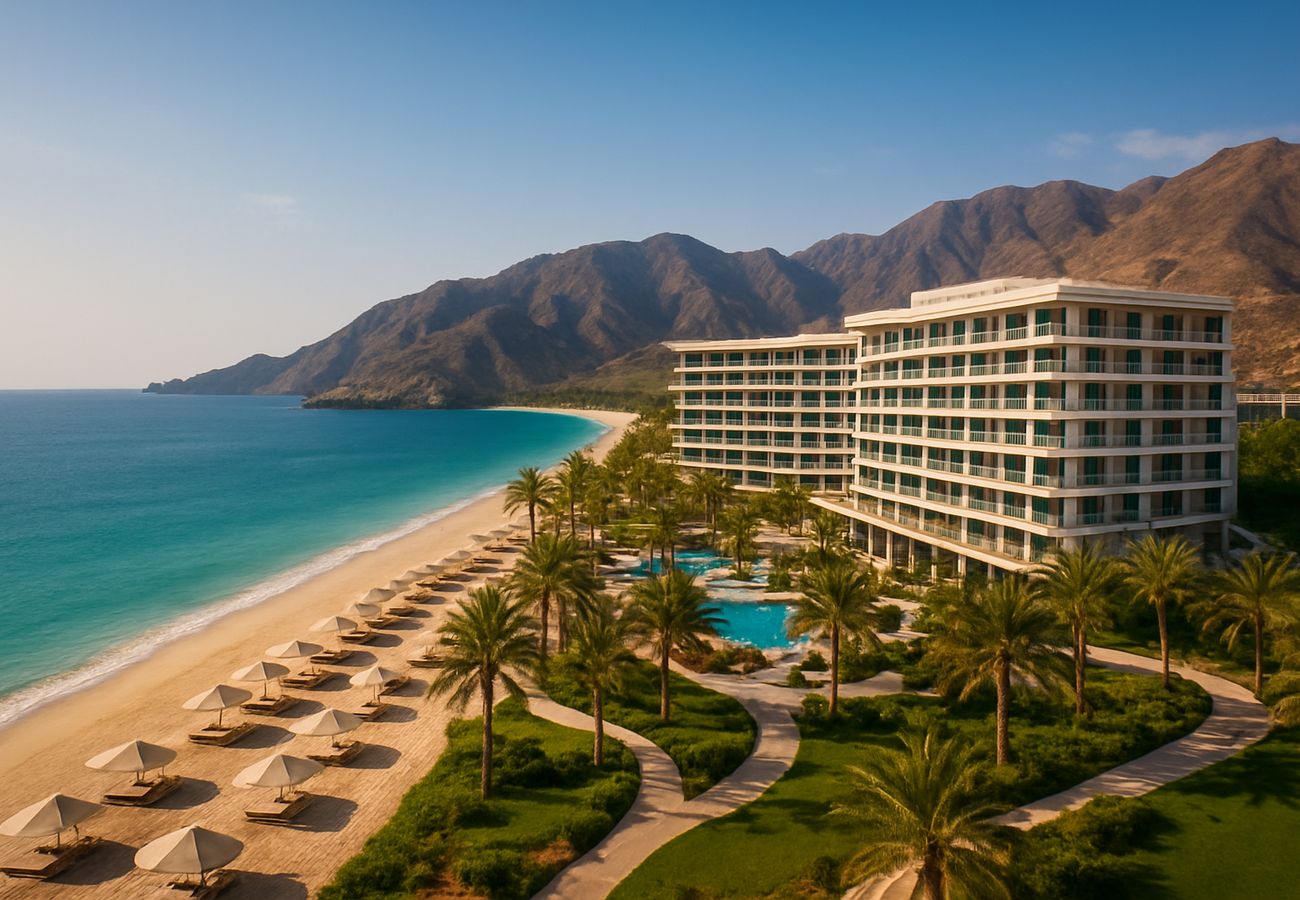
Image generated by AI
The United Arab Emirates is demonstrating exceptional economic strength. Facing a catastrophic $200 per barrel oil shock and the military blockade of the Strait of Hormuz, Sharjah has launched a massive tourism expansion, unveiling a groundbreaking $190 million beachfront resort in Khor Fakkan.
Geographically positioned on the UAE’s stunning east coast, directly overlooking the strategic Gulf of Oman, this massive development bypasses the high-tension waters of the Persian Gulf. As the escalating US-Iran conflict drives aviation fuel costs to record highs and disrupts traditional trade corridors, Sharjah’s strategic focus on eco-luxury, family travel, and cultural heritage is shielding its tourism sector from regional volatility. Backed by record-breaking hotel revenues and passenger volumes, this project establishes Khor Fakkan as a resilient tourism powerhouse in the Middle East.
Expanded Overview: Securing East Coast Tourism Amidst Persian Gulf Gridlock
The ongoing global energy crisis has forced a complete reorganization of international trade and travel logistics. The naval blockade of the Strait of Hormuz—the world’s most critical maritime oil corridor, handling roughly 20% of global crude transit—has taken millions of barrels of oil off the market, sending fuel prices soaring.
While this blockade has delayed shipping lanes inside the Persian Gulf, Khor Fakkan stands as a vital, strategic gateway directly facing the open Indian Ocean. By developing a luxury 330,000 square foot beachfront resort in this pristine mountain enclave, Sharjah is successfully turning a logistics crisis into an economic opportunity. The resort offers luxury hotel wings, residential units, retail spaces, and premium leisure amenities, providing international travelers with a safe, accessible, and high-value escape that completely bypasses the high-friction transport corridors of the inner Gulf.
Geopolitical Context: US-Iran Standoff and Gulf State Security Measures
The military standoff between the United States and Iran in the Persian Gulf has disrupted major trade corridors and airspace, keeping global energy markets highly volatile.
This conflict has directly impacted major Middle Eastern oil producers—including Saudi Arabia, the UAE, Qatar, Kuwait, Oman, and Bahrain—who are working hard to protect their energy supply lines and secure alternative shipping channels. In this climate of high volatility, Sharjah has positioned itself as a stable and welcoming safe haven. By investing in long-term, nature-centric infrastructure and enforcing family-oriented travel policies (including its alcohol-free status and emphasis on Islamic heritage), the emirate is successfully capturing a massive segment of responsible, high-value travelers who seek tranquility and safety.
Global Energy Impact: Squeezed Airlines and the Focus on Authentic Local Travel
With oil prices firmly established at $200 per barrel, airlines are under intense pressure to optimize operations. Skyrocketing jet fuel costs have forced carriers to raise airfares, making travelers highly selective about their destinations.
| Performance Metric (Sharjah 2025) | Key Tourism Figures | Core Strategic Advantage |
|---|---|---|
| Annual Hotel Guests | Over 2 Million | Driven by a strong mix of Russian, Indian, and European visitors. |
| Hotel Revenue | AED 780 Million | Solidifying the emirate's economic independence and post-oil diversification. |
| Airport Passenger Volume | Over 19 Million | Supported by expanding airline networks and upgraded aviation terminals. |
By offering a diverse mix of cultural, historical, and nature-based experiences, Sharjah is attracting premium travelers who are willing to pay higher flight prices in exchange for highly immersive and authentic travel experiences.
Shipping & Trade Impact: Mountain Enclaves and Localized Supply Chains
The ongoing Strait of Hormuz blockade has forced cargo fleets to bypass the Suez Canal and route around Africa’s Cape of Good Hope, sending maritime insurance rates soaring by over 500% and delaying global shipments of resort construction supplies.
To bypass these supply chain bottlenecks, Sharjah's developers are utilizing local resources and materials. The Khor Fakkan resort has incorporated traditional Hajar mountain stone, local craftsmanship, and native desert flora into its design. Furthermore, upcoming eco-resorts like LUX Khor Fakkan* (slated to open in late 2026) are utilizing solar-powered, modular cabins inspired by the region's rich archaeological heritage. This focus on localized logistics has protected the country's hospitality industry from import inflation, keeping luxury travel packages highly competitive and affordable.
Regional Impact: Strategic Diversification in the Gulf Cooperation Council (GCC)
The prolonged energy crisis has also forced major Gulf states to re-evaluate their long-term economic strategies. Saudi Arabia, the UAE, and Qatar are investing billions of dollars in building luxury, high-volume tourism sectors to prepare for a post-oil future.
While Dubai and Abu Dhabi focus on glitzy, high-rise luxury, Sharjah has successfully carved out a niche centered on heritage conservation, eco-tourism, and outdoor adventure. Key attractions in Khor Fakkan—including the majestic Khor Fakkan Amphitheatre, the dramatic mountain waterfall complex, and the lush, high-altitude trails of Shees Park—are drawing a massive volume of weekend road-trippers and eco-tourists from across the GCC, ensuring a steady, reliable source of tourism revenue independent of long-haul international flights.
Exploring Sharjah's Treasures: Eco-Luxury in Khor Fakkan in 2026
Nestled between the Hajar Mountains and the open sea, Khor Fakkan offers a refreshing contrast to the typical desert vistas found across much of the region:
- The $190 Million Resort: Covering an impressive 330,000 square feet, the newly launched resort offers private beach access, custom swimming pools, state-of-the-art fitness centers, and beautifully landscaped green spaces that blend seamlessly with the natural coastline.
- Cultural Landmarks: Travelers can explore the majestic Khor Fakkan Amphitheatre, combining Roman-style architecture with traditional Islamic influences, and a stunning 45-meter-high mountain waterfall built into the natural rock face.
- Mountain Adventures: High-altitude trails at Shees Park offer hikers and outdoor enthusiasts cooler mountain air, pristine freshwater streams, and breathtaking views of the surrounding valleys.
- LUX Khor Fakkan (Late 2026):* Slated to open in late 2026, this highly anticipated eco-resort will feature luxury cabins and wellness retreats designed to minimize the environmental impact while celebrating the region's heritage.
Industry Analysis: A Masterclass in Geographic Resiliency
Tourism and regional economists emphasize that Sharjah’s current strategy is a masterclass in geographic resiliency during a severe energy crisis.
By utilizing its unique east coast geography on the open Gulf of Oman, the emirate has insulated its tourism development from the high-tension areas of the inner Gulf. This strategic focus, combined with the emirate's exceptional air connectivity (with Sharjah International Airport handling over 19 million passengers in 2025) and safety guarantees, is helping Sharjah bounce back from regional volatility, positioning it as a leading choice for global travelers looking for a secure and authentic getaway.
What Happens Next: Future Scenarios and Travel Outlook
- Prolonged Energy Conflict: If Persian Gulf tensions remain high and oil prices stay at $200/bbl, Khor Fakkan's open-ocean port and direct access to the Indian Ocean will continue to draw travelers, permanently establishing the enclave as a premier global travel destination.
- Diplomatic De-escalation: If international diplomatic efforts successfully resolve the US-Iran conflict and stabilize global fuel prices, the state-of-the-art infrastructure, eco-friendly resorts, and sustainable partnerships developed during this crisis will continue to provide Sharjah with a massive competitive advantage.
Conclusion
Sharjah’s tourism sector is demonstrating remarkable strength and resilience. While the first half of 2026 has been dominated by the economic pressures of a $200 oil crisis and geopolitical tensions in the Middle East, the emirate has successfully adapted. By focusing on sustainable, eco-friendly developments, capitalizing on its unique east coast geography in Khor Fakkan, and celebrating its rich cultural heritage, Sharjah is successfully redefining the future of global travel, proving that environmental responsibility, authentic heritage, and strategic location are the ultimate keys to economic resilience.
Key Takeaways
- Historic Expansion: Sharjah launched a groundbreaking $190 million beachfront resort in Khor Fakkan, covering 330,000 square feet.
- Geographic Advantage: Nestled on the East Coast of the UAE, Khor Fakkan overlooks the open Gulf of Oman, bypassing inner Gulf tensions.
- Record Performance: Sharjah welcomed over 2 million hotel guests, generating AED 780 million in hotel revenue, while its airport handled over 19 million passengers in 2025.
- Diverse Markets: Russian tourists represent the largest visitor group, followed closely by travelers from India, the GCC, and Europe.
- Future Projects: Sustainable luxury developments like the eco-friendly LUX* Khor Fakkan are slated to open in late 2026 to capture the rising eco-conscious travel market.
FAQ: Sharjah Travel & Geopolitical Volatility 2026
Is it safe to travel to Sharjah and Khor Fakkan right now? Yes, Sharjah and Khor Fakkan are entirely safe and peaceful. Located on the UAE's east coast, Khor Fakkan offers a secure and tranquil environment away from any regional volatility.
What makes Khor Fakkan different from other UAE travel destinations? Unlike the high-rise cities of Dubai and Abu Dhabi, Khor Fakkan offers pristine beaches, dramatic mountain scenery, eco-tourism projects, and authentic cultural heritage sites like the Khor Fakkan Amphitheatre.
Are there eco-friendly accommodation options in Khor Fakkan? Yes, besides the newly launched $190 million resort, the eco-friendly LUX* Khor Fakkan is slated to open in late 2026, offering solar-powered, nature-inspired cabins.
Related Travel Guides
Disclaimer
This article is for informational and educational purposes only. It does not constitute legal, financial, or professional advice. While we strive to provide accurate and up-to-date information, travel policies, regulations, and conditions change rapidly. Always verify information with official sources before making travel decisions. Nomad Lawyer makes no representations about the accuracy, reliability, completeness, or suitability of the information provided. Readers should consult qualified professionals for advice specific to their circumstances. The views expressed in this article are those of the author and do not necessarily reflect the views of Nomad Lawyer.
Kunal K Choudhary
Co-Founder & Contributor
A passionate traveller and tech enthusiast. Kunal contributes to the vision and growth of Nomad Lawyer, bringing fresh perspectives and driving the community forward.
Learn more about our team →