
Singapore Overtakes Norway and Switzerland as World’s Second-Richest Nation with $90,700 GDP Per Capita: How City-State’s Economic Power Defies $200 Oil Shock and Strait of Hormuz Blockade to Deploy $584 Million Tourism Investment
Shattering economic records, Singapore Overtakes Norway and Switzerland as the world’s second-richest nation with a GDP per capita of $90,700, leveraging its massive wealth to launch a S$740 million (US$584 million) tourism injection.

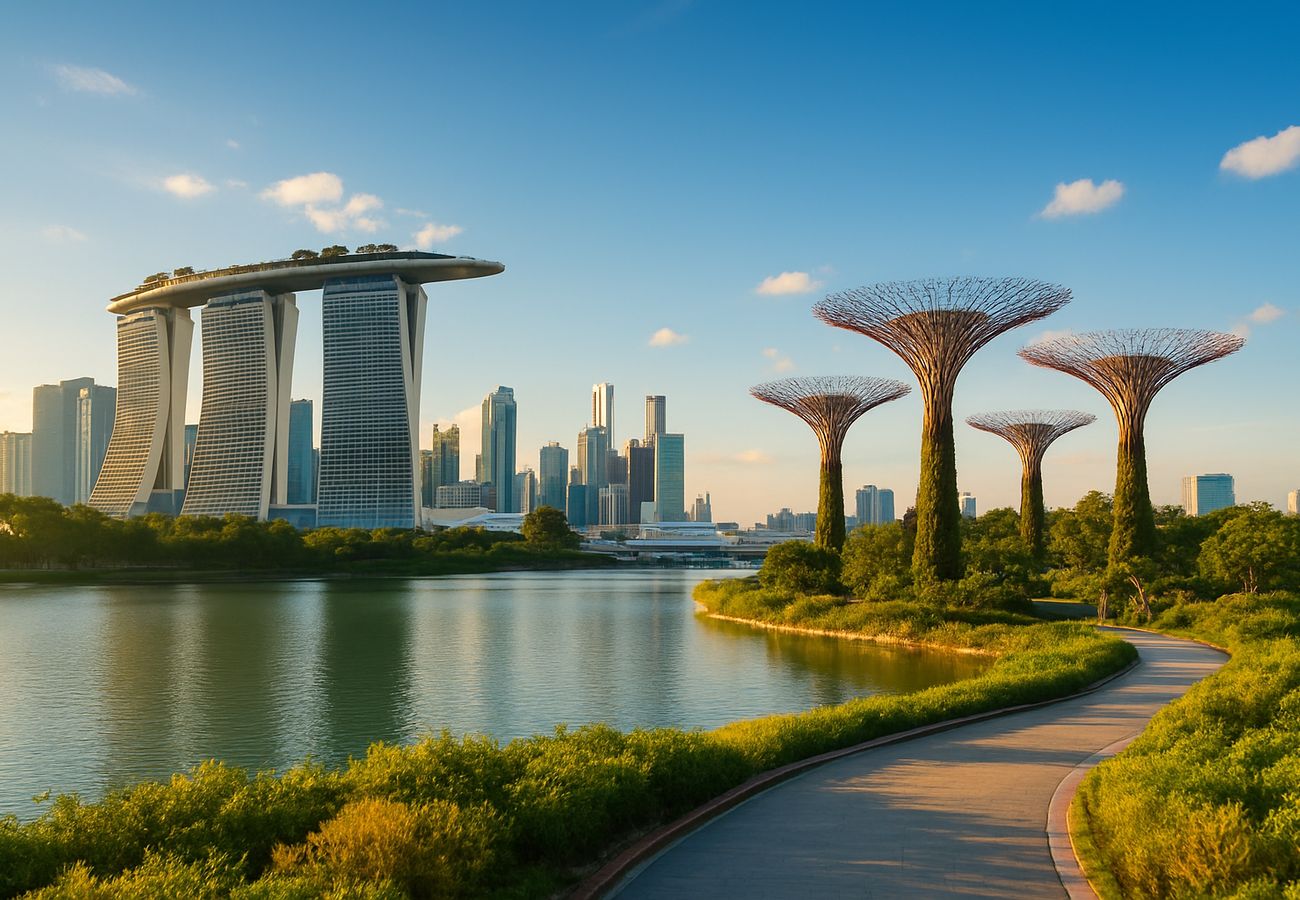
Image generated by AI
The global economic hierarchy is undergoing a historic realignment. Shattering previous wealth benchmarks, Singapore has officially overtaken Norway and Switzerland to become the world’s second-richest nation, achieving an astonishing Gross Domestic Product (GDP) per capita of $90,700 in 2025.
According to data compiled by British publication The Economist, Singapore’s economic surge places it just behind Switzerland—which holds the top spot with a GDP per capita of S$100,000—and ahead of third-place Norway at S$86,800. This monumental economic milestone comes at a critical time. Faced with a devastating $200 per barrel oil shock and the military blockade of the Strait of Hormuz, Singapore is leveraging its immense financial power to deploy a game-changing S$740 million (US$584 million) tourism development fund. As the escalating US-Iran conflict disrupts global trade and drives international aviation costs to historic levels, the city-state is using its sovereign wealth to protect its economic borders and secure its status as the world's most resilient travel and financial hub.
Expanded Overview: Singapore’s Sovereign Wealth Counter-Offensive
The ongoing global energy crisis has forced a complete reorganization of international trade and travel logistics. The naval blockade of the Strait of Hormuz—the world’s most critical maritime oil corridor, handling roughly 20% of global petroleum transit—has taken millions of barrels of crude off the market, sending fuel prices soaring.
For the international aviation and tourism sectors, this fuel crisis has led to significantly higher long-haul ticket prices and reduced flight capacities. However, rather than scaling back, Singapore’s leadership is leveraging its unprecedented wealth. Having recorded an all-time high of S$32.8 billion in tourism receipts in 2025 (a 10% increase compared to 2024, far exceeding the Singapore Tourism Board's projected range of S$29 billion to S$30.5 billion), the government is doubling down on infrastructure, digital transformation, and eco-tourism to attract high-value, long-stay travelers.
Geopolitical Context: Persian Gulf Volatility and Singapore’s Safe-Haven Status
The military standoff between the United States and Iran in the Persian Gulf has disrupted major trade corridors and airspace, keeping global energy markets highly volatile.
This conflict has directly impacted major Middle Eastern oil producers—including Saudi Arabia, the United Arab Emirates (UAE), Qatar, Kuwait, Oman, and Bahrain—who are working hard to protect their energy supply lines and secure alternative shipping channels. In this climate of high volatility, Singapore has positioned itself as a secure, neutral, and technologically advanced safe haven. By investing in regional transport infrastructure, community-based hospitality, and state-of-the-art cashless systems, the country is offering a safe travel destination that bypasses high-risk geopolitical areas, providing a model of sustainable travel resilience.
Global Energy Impact: Squeezed Airlines and the Pivot to High-Value Travelers
With oil prices firmly established at $200 per barrel, airlines are under intense pressure to optimize their operations. Jet fuel costs have forced carriers to raise airfares, making long-distance flights a premium purchase and prompting travelers to choose destinations where they can get the most value for their money.
| Key Metric (Singapore) | 2024 Performance | 2025 Record Actuals | 2026 STB Forecast |
|---|---|---|---|
| Tourism Receipts | S$29.8 Billion | S$32.8 Billion | S$31 Billion - S$32.5 Billion |
| Tourist Arrivals | 13.6 Million | 16.9 Million | 17 Million - 18 Million |
| TDF Funding | S$300 Million | S$740 Million | S$740 Million (Committed) |
By doubling the TDF budget from S$300 million in 2024 to S$740 million, Singapore is actively supporting local hospitality operators, ensuring that high-end resorts, luxury shopping corridors, and fine-dining establishments continue to deliver world-class experiences that justify premium flight pricing.
Shipping & Trade Impact: Cape of Good Hope Detours and Localized Sourcing
The ongoing Strait of Hormuz blockade has forced cargo fleets to bypass the Suez Canal and route around Africa’s Cape of Good Hope, sending maritime insurance rates soaring by over 500% and delaying global shipments of luxury resort supplies.
To bypass these supply chain bottlenecks, hospitality operators in Singapore are focusing on localized sourcing. High-end resorts and luxury hotels in Marina Bay and Sentosa are sourcing food, building materials, and organic spa products directly from regional agricultural cooperatives, local indoor vertical farms, and domestic tech-driven greenhouses. This focus on localized logistics has protected the country's hospitality industry from import inflation, keeping luxury travel packages highly competitive and insulated from import inflation.
Regional Impact: Strategic Diversification in the Gulf Cooperation Council (GCC)
The prolonged energy crisis has also forced major Gulf states to re-evaluate their long-term economic strategies. Saudi Arabia, the UAE, and Qatar are investing billions of dollars in building luxury, high-volume tourism sectors to prepare for a post-oil future.
While major Gulf states invest billions of dollars to build their domestic tourism infrastructure for a post-oil future, Singapore is utilizing its wealth to build a highly resilient, tech-driven, and green travel ecosystem. By integrating artificial intelligence, advanced robotics, and sustainable practices, Singapore aims to not only grow its tourism sector but also position itself as a global leader in eco-tourism and smart travel.
Securing the Future: Grace Fu Outlines the "Tourism 2040" Strategy
The S$740 million (US$584 million) funding injection will support the ambitious "Tourism 2040" roadmap, designed to achieve S$47 billion to S$50 billion in tourism receipts by 2040 by focusing on:
- Digital Transformation: Implementing advanced artificial intelligence (AI), biometric customs clearance, and digital concierge services to deliver a frictionless, high-tech visitor experience.
- Eco-Tourism & Green Initiatives: Developing sustainable attractions, energy-efficient resorts, and eco-certified dining to attract environmentally conscious travelers.
- High-Value Luxury Attractions: Supporting unique cultural exhibitions, premium shopping festivals, and international sports tournaments (like the Formula 1 Singapore Grand Prix) to secure Singapore's status as a top global destination.
- Empowering Local Businesses: Providing grants and funding to local travel agents, boutique hotels, and cultural tour operators to encourage innovation and service excellence.
Industry Analysis: A Masterclass in Hub Resilience
Global travel and aviation economists emphasize that Singapore’s current strategy is a masterclass in hub resilience during a severe energy crisis.
Rather than adopting a defensive posture, the city-state is aggressively doubling its tourism development budget. By investing heavily in green technology, digital innovation, and local partnerships, Singapore is successfully positioning itself to capture the premium segment of the global travel market, ensuring stable economic growth despite high international fuel prices.
What Happens Next: Future Scenarios and Travel Outlook
- Prolonged Energy Conflict: If Persian Gulf tensions remain high and oil prices stay at $200/bbl, the demand for highly efficient, secure, and low-risk travel hubs will continue to rise. Singapore's tech-driven, premium-travel model will likely attract even more affluent travelers, ensuring a steady stream of tourism revenue.
- Diplomatic De-escalation: If international diplomatic efforts successfully resolve the US-Iran conflict and stabilize global fuel prices, the state-of-the-art infrastructure, digital technologies, and sustainable partnerships developed during this crisis will continue to provide Singapore with an exceptional competitive advantage on the global stage.
Conclusion
Singapore's bold tourism investment represents a major step forward for the global travel industry. As the Strait of Hormuz blockade and $200 oil prices continue to disrupt traditional travel markets, the world's second-wealthiest nation has shown that investing in high-tech, sustainable, and premium travel is the ultimate defense against global economic volatility. By doubling its Tourism Development Fund, implementing the Tourism 2040 strategy, and promoting eco-conscious tourism, Singapore is successfully redefining the future of global travel, proving that adaptability, innovation, and strategic wealth are the ultimate keys to economic resilience.
Key Takeaways
- World Wealth Rankings: Singapore overtook Norway and Switzerland to become the world’s second-richest nation in 2025, reaching a GDP per capita of $90,700.
- Massive Funding: Singapore announced an S$740 million (US$584 million) tourism investment, more than doubling the TDF from S$300 million in 2024.
- Record Receipts: Tourism revenues hit an all-time high of S$32.8 billion in 2025, marking an impressive 10% increase compared to 2024.
- Future Projections: The STB projects 17 million to 18 million visitor arrivals in 2026, with forecasted receipts of S$31 billion to S$32.5 billion.
- Tourism 2040: The investment supports an ambitious strategy targeting S$47 billion to S$50 billion in tourism receipts by 2040.
FAQ: Singapore Tourism & Geopolitical Volatility 2026
How does the global energy crisis affect travel to Singapore? While jet fuel costs have raised flight prices, Singapore’s safe-haven status, advanced infrastructure, and premium luxury attractions continue to draw high-value, long-stay travelers.
What is the "Tourism 2040" strategy? It is an ambitious roadmap aimed at reaching S$47 billion to S$50 billion in annual tourism receipts by 2040, focusing on digital transformation, eco-tourism, and premium attractions.
How is the Tourism Development Fund (TDF) being utilized? The S$740 million fund is being used to support local travel businesses, develop sustainable tourist attractions, implement smart digital technologies, and create world-class visitor experiences.
Related Travel Guides
Disclaimer
This article is for informational and educational purposes only. It does not constitute legal, financial, or professional advice. While we strive to provide accurate and up-to-date information, travel policies, regulations, and conditions change rapidly. Always verify information with official sources before making travel decisions. Nomad Lawyer makes no representations about the accuracy, reliability, completeness, or suitability of the information provided. Readers should consult qualified professionals for advice specific to their circumstances. The views expressed in this article are those of the author and do not necessarily reflect the views of Nomad Lawyer.
Kunal K Choudhary
Co-Founder & Contributor
A passionate traveller and tech enthusiast. Kunal contributes to the vision and growth of Nomad Lawyer, bringing fresh perspectives and driving the community forward.
Learn more about our team →