
Shangri-La Asia Stock Reflects Uneven Luxury Hotel Recovery Across Asia in 2026
Shangri-La Asia stock struggles despite regional tourism growth, revealing investor skepticism over luxury hotel sector recovery. China weakness and margin pressures challenge 2026 outlook for Asian hospitality.

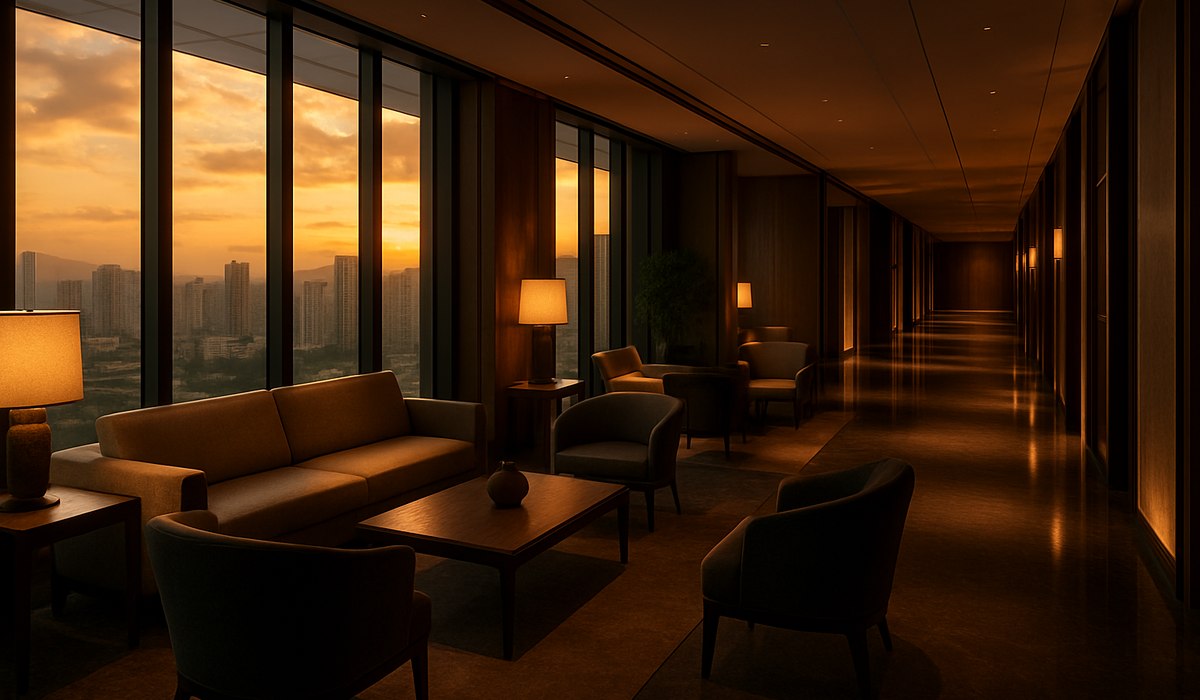
Image generated by AI
Luxury Giant's Stock Signals Divergence in Asian Travel Recovery
Shangri-La Asia's share price remains pressured despite broad Asia travel recovery, revealing a disconnect between regional tourism growth and investor confidence in the luxury hotel sector. The Hong Kong-listed company's latest financial disclosures show consolidated revenue growth hovering near 2% in 2024, while net profit declined over 10%, a sharp contrast to the optimism surrounding post-pandemic travel rebounds across Asia. More recent 2025 interim results point to deepening challenges, with net profit falling approximately 30% as cost pressures and uneven demand weigh heavily on the group's bottom line.
The shangri-la asia stock performance reflects broader questions about how quickly luxury hospitality can recover as travelers shift patterns and China's high-end spending softens. This earnings deterioration comes as international visitor arrivals to Asia Pacific climb incrementally but remain 10-15% below pre-pandemic 2019 baselines, creating an environment where property-level margins compress even as occupancy stabilizes.
Stock Performance Diverges from Regional Travel Trends
Shangri-La Asia's equity valuation tells a cautionary tale about the luxury hotel sector recovery. Despite measurable increases in Asia-Pacific tourism flows, the stock has traded within narrow ranges through early 2026, signaling that institutional investors remain skeptical about management's ability to defend profitability amid inflationary pressures and competitive intensity.
Market analysts point to a fundamental valuation disconnect: Shangri-La Asia stock trades at discounts to certain global peers on price-to-earnings metrics, yet long-term cash flow models suggest the company may be fairly valued or expensive depending on China demand assumptions. This ambiguity reflects the portfolio's heavy exposure to mainland China—still the group's largest revenue contributor—where luxury spending remains under pressure.
Public equity research emphasizes that the company's cost structure, particularly labor and property expenses in major Asian cities, has not contracted proportionally with the slower-than-expected revenue recovery. This margin squeeze is the primary culprit behind the luxury hotel recovery narrative diverging from Shangri-La Asia's actual financial trajectory. Investors are pricing in a multi-year period of compressed returns before normalization.
2024-2025 Earnings Reveal Deepening Profit Pressures
The financial data paints a sobering picture for luxury hotel operators across Asia. Shangri-La Asia's consolidated revenue growth of approximately 2% in 2024 was accompanied by a profit decline exceeding 10%, reflecting a profit margin compression that defies typical hospitality sector dynamics during recovery phases.
The situation deteriorated further in 2025. Interim and full-year results indicated net profit fell roughly 30% year-on-year, a decline management attributed to "mixed trading conditions" across its 70+ properties spanning Greater China, Southeast Asia, the Indian subcontinent, and the Pacific. This earnings collapse despite revenue stabilization points to structural cost challenges: wage inflation in developed markets like Hong Kong and Japan, property taxes, and higher financing costs all compressed operational leverage.
Industry commentators highlight that Asia hospitality operators face a unique challenge: international airfares remain elevated versus 2019 levels, reducing the propensity of price-sensitive leisure travelers to book premium accommodations. Simultaneously, the high-end corporate and meetings segment, which historically underpins luxury hotel economics, has only partially recovered as businesses optimize travel budgets.
China Weakness and Market Valuation Disconnect
China's softening represents the primary headwind clouding the shangri-la asia stock outlook. After a powerful 2023 rebound following zero-COVID reopening, mainland Chinese hotel revenue declined year-on-year in both 2024 and 2025, with profitability under sustained pressure from slower economic growth and ongoing property sector stress.
Luxury room rates across major Chinese cities—Beijing, Shanghai, Chengdu—have faced downward pressure from discounting, new lifestyle brand competition, and cautious consumer spending at the ultra-premium segment. This is particularly damaging for Shangri-La, whose brand positioning relies on commanding above-market rates. Public documents show that despite maintaining respectable occupancy levels in many locations, achieved room rates fell short of management guidance, signaling a rate-cutting environment.
The geographic divergence within Shangri-La Asia's portfolio has become crucial for understanding luxury hotel recovery dynamics. Hong Kong emerged as a bright spot in 2024-2025, recording double-digit revenue growth supported by restored regional business travel, meetings demand, and normalized cross-border visitor flows from mainland China. Japan similarly contributed strongly, with a weaker yen enhancing the competitiveness of luxury stays for overseas tourists and lifting both occupancy and average daily rates.
However, these bright spots cannot fully offset mainland China's weakness. Market analysts estimate that mainland China accounts for roughly 30-35% of group revenues, making the region's underperformance a drag on consolidated metrics that investors cannot ignore. This structural imbalance has contributed to the disconnect between regional tourism improvement and Shangri-La Asia stock valuation recovery.
What This Means for Luxury Hospitality Recovery
The Shangri-La Asia case study illuminates three critical realities for luxury hotel investors and travelers monitoring Asia hospitality trends through 2026 and beyond:
First, geographic dispersion matters intensely. Luxury hotel recovery across Asia is not monolithic. Singapore, the Maldives, and select coastal destinations are capturing strong room rates and healthy demand. Conversely, secondary Southeast Asian cities and many mainland Chinese properties are experiencing demand compression and rate pressure. Travelers seeking premium experiences should expect higher rates in Hong Kong and Japan, with more promotional activity in China.
Second, margin recovery lags revenue recovery. Even as international travelers return to Asia, luxury operators struggle to expand profit margins because cost bases remain fixed or inflated. Labor, property, and utility expenses have not contracted, creating a structural profitability challenge that could persist for 12-24 months.
Third, investor skepticism reflects real operational headwinds. The Shangri-La Asia stock underperformance is not irrational exuberance or temporary sentiment. Declining earnings in an expanding travel market signal that the luxury hotel sector faces genuine structural pressures—from competition, from cost inflation, and from consumer caution in high-end spending—that transcend the post-pandemic recovery narrative.
Key Financial Metrics and Performance Snapshot
| Metric | 2023 | 2024 | 2025 (Est.) |
|---|---|---|---|
| Consolidated Revenue Growth | Strong | +2% | Flat to Slightly Positive |
| Net Profit Change | Strong Rebound | -10%+ | -30% |
| Greater China Revenue Trend | Strong Recovery | YoY Decline | Continued Decline |
| Hong Kong Hotel Revenue Growth | N/A | Double-digit | Double-digit |
| Japan Hotel Performance | N/A | Strong | Strong |
| Asia-Pacific Int'l Arrivals vs. 2019 | -25 to -30% | -15 to -20% | -10 to -15% |
| Luxury Hotel Supply (Net New Rooms 2024-2025) | Moderate | Increasing | Accelerating |
What Guests Get: The Shangri-La Asia Property Experience
Shangri-La Asia operates over 70 luxury and premium properties across 20 countries. The portfolio spans the flagship Shangri-La Hotels & Resorts brand—known for high-end city center and resort properties—alongside Traders Hotels (four-star urban), Kerry Hotels (ultra-luxury), and Shang Residence serviced apartments.
What distinguishes Shangri-La Asia properties during this recovery period is consistent delivery of service standards and amenities despite operational cost pressures. Flagship properties in Hong
Disclaimer
This article is for informational and educational purposes only. It does not constitute legal, financial, or professional advice. While we strive to provide accurate and up-to-date information, travel policies, regulations, and conditions change rapidly. Always verify information with official sources before making travel decisions. Nomad Lawyer makes no representations about the accuracy, reliability, completeness, or suitability of the information provided. Readers should consult qualified professionals for advice specific to their circumstances. The views expressed in this article are those of the author and do not necessarily reflect the views of Nomad Lawyer.
Preeti Gunjan
Contributor & Community Manager
A passionate traveller and community builder. Preeti helps grow the Nomad Lawyer community, fostering engagement and bringing the reader experience to life.
Learn more about our team →