
Seychelles Rejects Mass Tourism With a 7-Year Strategy — Here's What That Means for Travellers
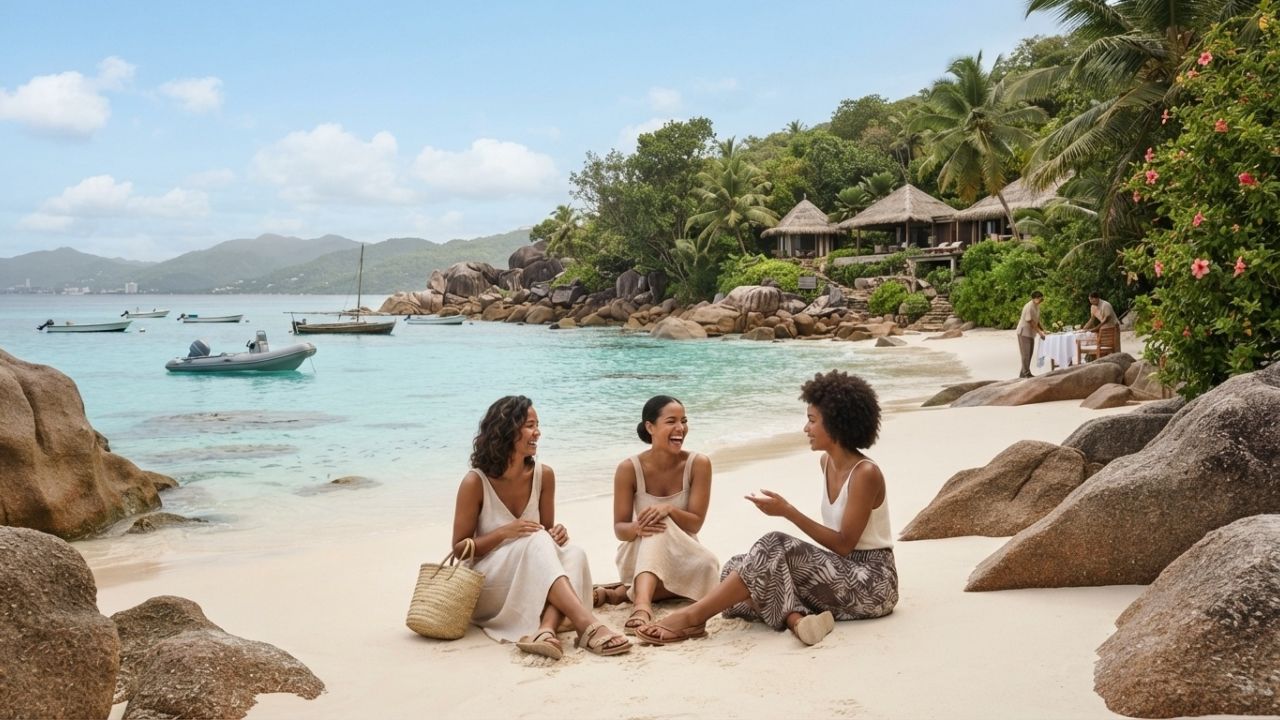
Image generated by AI
Seychelles received 41 cruise ship calls at Port Victoria in the 2025–2026 season — a 17% jump from 35 the year before — yet simultaneously watched stopover visitor numbers fall 13.6% by early July 2026. That contradiction is not a policy failure. It is the intended result of a deliberate national pivot that every serious traveller to the Indian Ocean needs to understand before they book.
The Pivot That Port Victoria Made Official in April 2026
Port Victoria has been running a quiet experiment for several years. Rather than competing with high-volume destinations on arrival numbers alone, Seychelles has been shifting the entire architecture of how it earns from tourism. In April 2026, that shift became formal policy.
On April 29, 2026, the government approved the Tourism Action Plan 2026 to 2030 — developed following a financial assessment conducted under an economic reform initiative supported by the International Monetary Fund. Two weeks earlier, on April 16, 2026, authorities validated a separate 7-year Cruise Tourism Strategy 2026 to 2033, created in close partnership with the United Nations Economic Commission for Africa.
Together, these two frameworks target the core structural problems that have plagued Seychelles tourism for years: stagnant per-visitor expenditure, high economic leakage to offshore corporations, and overdependence on fragile long-haul air corridors. The message encoded in both documents is the same — what matters is not how many people arrive, but how much of what they spend stays in the islands.
41 Cruise Calls, 6 Cancellations, and What the Season Actually Proved
The 2025–2026 cruise season, which ran from October 2025 through late June 2026, gave Seychelles an early stress test of its new thinking. Despite geopolitical friction in the Middle East forcing vessel operators to reroute itineraries and cancel 6 scheduled calls, the nation still received 41 maritime port visits at Port Victoria — including 8 maiden vessel arrivals. That represented a 17% expansion from the 35 calls logged during the previous season.
On paper, those numbers look positive. In practice, Seychelles officials used the season to validate a harder truth: more ships docking does not automatically mean more money staying in the economy. The real test was whether local excursion providers, transport operators, artisans, and family-owned food vendors were capturing a meaningful share of what passengers spent once they stepped ashore.
That question — local economic retention versus offshore leakage — is now the central metric driving every policy decision at Port Victoria. International cruise operators are already adjusting their Indian Ocean routes accordingly, with curated local shore excursions increasingly replacing mass sightseeing transfers.
The 13.6% Stopover Decline Is a Dubai, Doha, and Abu Dhabi Problem
The arrival numbers for stopover visitors tell a sharper story. Between January and May 2026, stopover visitors to Seychelles reached 145,858 — down from 165,155 during the corresponding months of the previous year. By early July 2026, the year-on-year decline had reached 13.6%, compared against 198,238 visitors recorded in the matching 2025 window.
The drop is directly attributable to air transit disruptions at the three major connectivity hubs that Seychelles depends on: Dubai, Doha, and Abu Dhabi. Regional tensions across the Middle East in the first half of 2026 compressed capacity on the long-haul corridors that feed the majority of European, Indian, and East Asian visitors into Mahé International Airport.
For Seychelles tourism planners, the lesson is structural: relying on sheer visitor volume through a small number of vulnerable transit hubs creates severe financial exposure when geopolitics disrupts those corridors. Attracting fewer, higher-spending guests who stay longer is not idealism — it is a practical stabilization mechanism for an island economy with no geographic buffers.
More Than 50% of the Country Is Legally Off-Limits to Development
The ecological argument for low-volume tourism in Seychelles is not marketing language. It is enforced by law. Over 50% of the national territory is officially protected, leaving virtually no room for the large-scale hotel infrastructure that mass tourism models require.
Comprehensive carrying-capacity assessments across Mahé, Praslin, and La Digue have confirmed that unrestricted visitor growth would risk damaging coral reef systems, straining municipal water supplies, and overwhelming electrical grids on islands where infrastructure has finite physical limits. The new strategic frameworks treat ecological carrying capacity not as an aspiration but as the hard ceiling for all visitor projections.
According to the Seychelles Tourism Board, this conservation-first approach directly underpins the country's premium destination positioning. When more than half the land is protected, the remaining accessible areas carry extraordinary natural value — and that value depends entirely on keeping visitor pressure within ecological limits.
What Authentic Creole Tourism Actually Looks Like on the Ground
The most direct expression of Seychelles' new strategy is the deliberate promotion of immersive Creole cultural experiences as an alternative to resort-only stays. For the visitor willing to move beyond the poolside, what is available on these islands goes well beyond beach holidays.
Authentic Creole culinary workshops in local homes and community kitchens offer direct access to recipes and techniques that have evolved across centuries of French, African, Indian, and Arab cultural exchange. Native craft markets on Mahé and Praslin sell work produced by local artisans using traditional materials — not imported souvenirs. Agricultural estate tours on the inner islands walk visitors through cinnamon, vanilla, and coconut cultivation that has shaped Creole identity since the eighteenth century. Heritage trails through the old quarter of Port Victoria connect the island's colonial architecture to its living multicultural population.
Every dirham, euro, or rupee spent in these settings goes directly to local guides, family-run eateries, and domestic transport drivers rather than disappearing into offshore resort management accounts. That economic retention is precisely what both the Tourism Action Plan and the Cruise Strategy are designed to formalize and protect.
Visitor Insider Tips: Planning a Seychelles Trip Under the New Framework
Book through locally registered operators: The 2026–2030 Tourism Action Plan specifically targets economic leakage from international booking platforms. Booking shore excursions and transfers through operators registered with the Seychelles Tourism Board ensures your spending contributes to the domestic economy rather than flowing offshore.
Factor eco-levies into your budget: Environmental protection fees are being expanded under the new frameworks. These are not optional and are applied at accommodation and activity level. Budget for them as a fixed cost rather than a surprise.
La Digue moves slower — use that: La Digue prohibits most motorised vehicles. Getting around by bicycle is not a novelty; it is the practical reality for everyone on the island. Hire locally, stay at family-run guesthouses, and you will experience a version of Seychelles that resort guests on Mahé rarely access.
Fly via Nairobi or Johannesburg as an alternative: Given the documented air transit disruptions through Dubai, Doha, and Abu Dhabi in 2026, routing through Nairobi (NBO) or Johannesburg (JNB) provides a more resilient connection to Mahé International Airport, particularly for UK, European, and South Asian travellers.
Off-peak windows: The Seychelles experiences two distinct monsoon seasons. The north-west monsoon (December–March) brings humidity and occasional rough seas but significantly lower accommodation rates. The dry season (May–October) is peak season. April and October are the shoulder months — calmer seas than full monsoon, lower rates than peak, and noticeably fewer visitors on popular beaches.
Praslin's Vallée de Mai: This UNESCO World Heritage Site — home to the endemic coco de mer palm — has daily visitor quotas. Book entry tickets in advance rather than arriving and assuming access. Numbers are capped under the conservation framework and sell out during peak weeks.
Tourism Outlook: A Model the Rest of the Indian Ocean Is Watching
Seychelles is not operating in isolation. Small island developing states across the Indian Ocean and Caribbean are following this experiment closely, aware that their own ecological and economic pressures point toward the same conclusions.
The combination of IMF-backed economic reform, a UN-partnered cruise strategy, and legally protected conservation zones creates one of the most comprehensive frameworks for sustainable island tourism currently operating anywhere in the world. If the 2026–2033 Cruise Strategy successfully raises per-visitor expenditure while holding arrivals within ecological limits, it will become a template that other island destinations will adopt under pressure from climate vulnerability, infrastructure constraints, and sovereign economic strategy.
For travellers, the practical implication is already visible: Seychelles will cost more to visit, require more advance planning, and offer fewer last-minute options than it did a decade ago. What it offers in return — functional coral reefs, genuinely uncrowded granite beaches, and direct cultural engagement with a Creole community that has decided to protect its own home — is exactly what premium travellers are prepared to pay for.
The 41 cruise calls at Port Victoria and the parallel stopover decline are not contradictory data points. They are two sides of the same deliberate choice: Seychelles is building for the long term, and it is doing so on its own terms.
FAQ: Seychelles Tourism Strategy 2026
Why did Seychelles stopover visitor numbers fall 13.6% in 2026? Arrivals declined due to air transit disruptions at Dubai, Doha, and Abu Dhabi — the main connecting hubs for long-haul flights to Mahé International Airport. Between January and May 2026, stopover visitors reached 145,858, down from 165,155 in the same period of 2025.
What is the Seychelles Cruise Tourism Strategy 2026 to 2033? It is a 7-year framework validated on April 16, 2026, developed in partnership with the United Nations Economic Commission for Africa. It targets higher local economic retention from cruise passengers, improved shore excursion standards, and reduced capital leakage to international operators.
How much of Seychelles is protected from development? Over 50% of the national territory is officially protected, making large-scale hotel infrastructure physically impossible and directly underpinning the government's high-value, low-volume tourism strategy.
Related Travel Guides
Seychelles Sustainable Tourism 2026: Exploring Mahé and the Ecological Wonders of Silhouette Island
Maldives Record Tourist Arrivals Mask Deepening Economic Pressures on Hospitality Workers
The 10 Best Eco-Island Destinations in the Indian Ocean for High-Value Travellers
Disclaimer
This article is for informational and educational purposes only. It does not constitute legal, financial, or professional advice. While we strive to provide accurate and up-to-date information, travel policies, regulations, and conditions change rapidly. Always verify information with official sources before making travel decisions. Nomad Lawyer makes no representations about the accuracy, reliability, completeness, or suitability of the information provided. Readers should consult qualified professionals for advice specific to their circumstances. The views expressed in this article are those of the author and do not necessarily reflect the views of Nomad Lawyer.