
Severe Weather Crisis Threatens Central US Aviation: Dallas, Houston, Kansas City Brace for Major Flight Disruptions Amid Tornado Warnings and Severe Thunderstorm Alerts
National Weather Service issues severe weather alerts across Kansas, Oklahoma, Texas, and Missouri, threatening major airline hubs DFW, Houston IAH, and Kansas City with tornado warnings and severe thunderstorm alerts. Airlines prepare for ground stops and flight cancellations.

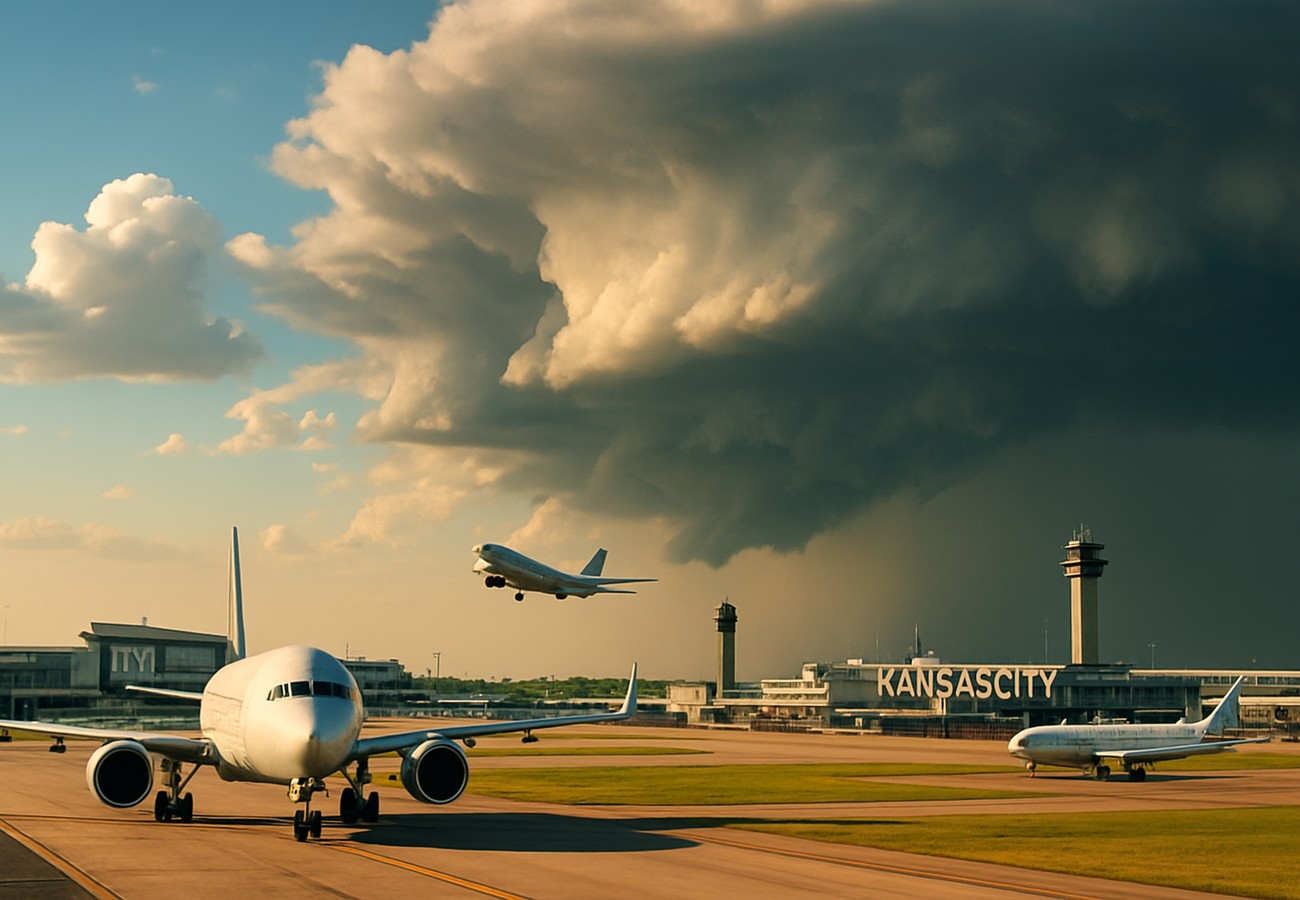
Image generated by AI
Quick Summary
- National Weather Service issues tornado watches and severe thunderstorm warnings across central US
- Major aviation hubs DFW, Houston IAH, and Kansas City face significant disruption risk
- Airlines preparing for ground stops, flight cancellations, and extensive rerouting operations
- Severe hail and thunderstorms can damage aircraft and force operational ground stops
- Passengers should expect 30-90 minute delays and potential cancellations during active weather
Severe Weather Crisis Threatens Central US Aviation: Dallas, Houston, Kansas City Brace for Major Flight Disruptions
National Weather Service Issues Multiple Warnings Across Kansas, Oklahoma, Texas, Missouri as Spring Storm Season Intensifies
TEXAS — The aviation industry is bracing for significant operational disruptions across America's central corridor as the National Weather Service and Storm Prediction Center have escalated severe weather alerts for thunderstorms, large hail, and potential tornadoes threatening multiple states. Major airline hubs including Dallas/Fort Worth International, Houston Intercontinental, and Kansas City International are in the direct path of developing storm systems, potentially affecting thousands of passengers and disrupting cross-country flight schedules heading into the weekend.
With millions of residents across Kansas, Oklahoma, Texas, and Missouri under active severe weather watches and warnings, aviation officials are coordinating emergency response protocols while airlines prepare for ground stops, flight cancellations, and extensive rerouting operations. The convergence of tornado watches, severe thunderstorm warnings, and flash flood alerts creates a complex operational challenge for carriers managing domestic and international traffic through America's most congested airspace.
Understanding the Threat: What Severe Weather Means for Air Traffic Operations
The distinction between weather watch and warning categories carries direct implications for flight operations. When the National Weather Service issues a tornado watch, meteorologists have identified atmospheric conditions favorable for tornado development across a region—alerting pilots, air traffic controllers, and airport managers to heightened caution. While a watch doesn't guarantee tornado formation, it prompts airlines to monitor conditions closely and prepare contingency protocols.
A tornado warning represents an elevated threat level, issued when a tornado has been sighted by spotters or confirmed by radar. When warnings are issued for airport vicinities, the Federal Aviation Administration may implement ground stops or redirect arriving traffic to alternate airports, directly disrupting scheduled operations.
Severe thunderstorm warnings for hail exceeding one inch in diameter and wind speeds surpassing 58 miles per hour pose direct threats to aircraft operations. Hailstorms can damage aircraft fuselage, windscreens, and engine components, forcing carriers to ground fleets temporarily for damage assessments. Dallas/Fort Worth and Houston—two of America's largest airline hubs—face particular vulnerability given their exposure to spring storm activity across the southern plains.
Central US Aviation Hubs in the Crosshairs: Dallas/Fort Worth International
As one of the world's busiest aviation facilities, DFW processes approximately 200,000 passengers daily across American, Southwest, United, and international carrier operations. Severe weather affecting North Texas creates cascading delays throughout the national aviation system. Thunderstorms over DFW typically trigger ground stops lasting 30 minutes to several hours, affecting flights throughout the western and eastern corridors.
Airlines operating from DFW are implementing enhanced monitoring of storm progression. The airport's dual-runway system provides operational flexibility, but severe hail or tornado warnings force suspension of all runway operations until conditions clear, creating bottlenecks for inbound and outbound traffic. The airport's geographic position means weather disruptions here ripple across transatlantic schedules and international connectivity to Mexico City, London, Paris, and Tokyo.
Houston Intercontinental Airport: United's Second-Largest Hub Under Threat
United Airlines' second-largest hub faces similar exposure. IAH's geographic location places it directly in the path of Gulf-generated severe weather systems. When severe thunderstorms develop, airport officials typically implement ground delays averaging 45 to 90 minutes, with potential for extended disruptions if tornado warnings are issued.
The airport's role as a major international gateway means disruptions ripple across transatlantic and transpacific schedules. Passengers connecting through IAH to Mexico City, Cancun, and Latin American destinations face heightened cancellation risk. The hub processes approximately 150,000 passengers daily, making even minor operational disruptions consequential for the broader aviation network.
Kansas City International: Southwest Airlines' Critical Midwest Connectivity Hub
Southwest Airlines' critical hub serves as a major connectivity point for domestic traffic throughout the central United States. Kansas' exposure to tornado activity makes MCI particularly vulnerable during spring storm season. When severe weather impacts Kansas City, the airline's point-to-point network experiences widespread cancellations and crew-scheduling disruptions that can cascade across its entire route network.
MCI processes roughly 40,000 passengers daily, and disruptions here directly impact Southwest's operational reliability and schedule integrity across the Midwest.
Operational Impact: Flight Delays, Cancellations, and Rerouting Protocols
Severe weather disruption to central US aviation typically unfolds in stages. Initial tornado watches trigger airlines to position aircraft strategically and prepare crews for potential ground stops. If conditions deteriorate, airports implement ground delay programs, limiting departures and creating runway capacity constraints.
When severe thunderstorm warnings or tornado warnings are issued, ground stops may be called, halting all takeoffs and limiting arrivals to emergency traffic. These stops can last 30 minutes to multiple hours depending on storm progression. Airlines prioritize flights carrying connecting passengers and those with tight schedule margins for departure.
For passengers already airborne, pilots request and receive vectors around storm cells. Air traffic controllers manage complex rerouting, adding 20–40 minutes to flight times and consuming additional fuel. This forces carriers to cancel subsequent flights due to crew duty-time limitations and aircraft availability constraints. A single three-hour ground stop cascades through an airline's schedule for 12–18 hours afterward.
The cascading effect creates a domino pattern across the national airspace. A three-hour ground stop at DFW triggers delays at Los Angeles, Chicago, Atlanta, and New York—amplifying disruption far beyond the immediate weather area. International flights experience particular vulnerability due to reduced scheduling flexibility on long-haul routes and time-sensitive international departure slots.
Passenger Experience During Weather Disruptions: Missed Connections and Rebooking Challenges
Travelers face compounded challenges when severe weather strikes during peak travel periods. Passengers navigating connecting flights through affected hubs risk missed connections. A two-hour ground stop at Dallas can cause connections in Atlanta or Chicago to be missed entirely, requiring rebooking on subsequent flights—often days later during busy travel windows.
Airlines activate customer service protocols, offering hotel accommodations, meal vouchers, and rebooking options. However, capacity constraints mean passengers may wait hours for rebooking assistance. Those with refundable tickets face complications as airlines reclassify cancellations as weather-related—exempting carriers from monetary compensation requirements under Department of Transportation regulations.
Passengers also experience ancillary service disruptions: check-in delays at airports, longer security lines due to reduced capacity during weather operations, and extended gate-hold times. Ground delays leave aircraft sitting on tarmacs consuming fuel and delaying crew rotations for subsequent flights, further compounding operational inefficiencies.
Industry Coordination: Airlines and Aviation Authorities Prepare Response
The FAA coordinates with the National Weather Service to disseminate real-time information to airlines, airports, and air traffic facilities. Collaborative decision-making platforms allow carriers to adjust schedules proactively rather than reactively canceling flights after passengers board.
Airlines have invested in advanced weather-prediction systems allowing flight dispatch teams to anticipate disruptions 3–6 hours in advance. Carriers implement strategic flight cancellations—deliberately canceling flights with low bookings to preserve crew and aircraft availability for high-demand flights.
Ground personnel at affected airports work extended shifts managing aircraft positioning, fuel management, and passenger processing during weather operations. Ramp crews, gate agents, and customer service representatives coordinate to minimize passenger impact.
Looking Ahead: Spring Storm Season and Aviation Stability Concerns
As severe weather continues threatening the central United States through spring 2026, aviation stakeholders emphasize passenger preparedness. Travelers with scheduled flights through DFW, Houston, or Kansas City during this period should monitor airline alerts, build extra connection time when possible, and prepare for potential disruptions.
Airlines are maintaining current staffing levels and have positioned reserve aircraft at major hubs to absorb disruptions without widespread service degradation. The National Weather Service continues issuing updated forecasts, with aviation officials monitoring developing systems closely.
Key Takeaways
- Major airline hubs including DFW, Houston IAH, and Kansas City face severe weather exposure through the extended spring storm season
- Tornado watches and severe thunderstorm warnings trigger immediate ground stops and operational delays lasting 30–90 minutes
- Severe hail can damage aircraft components and force temporary fleet groundings for damage assessments
- Passengers should expect cascading delays and cancellations during active weather periods
- Airlines are implementing strategic cancellations and rerouting to preserve network integrity
- Refundable tickets provide flexibility during weather disruptions
- Travelers should check airline alerts and build extra connection time into itineraries
- International flights face heightened disruption risk due to reduced scheduling flexibility
Severe weather monitoring continues. Travelers are advised to check real-time updates with airlines and the Federal Aviation Administration before departure.
Disclaimer
This article is for informational and educational purposes only. It does not constitute legal, financial, or professional advice. While we strive to provide accurate and up-to-date information, travel policies, regulations, and conditions change rapidly. Always verify information with official sources before making travel decisions. Nomad Lawyer makes no representations about the accuracy, reliability, completeness, or suitability of the information provided. Readers should consult qualified professionals for advice specific to their circumstances. The views expressed in this article are those of the author and do not necessarily reflect the views of Nomad Lawyer.
Kunal K Choudhary
Co-Founder & Contributor
A passionate traveller and tech enthusiast. Kunal contributes to the vision and growth of Nomad Lawyer, bringing fresh perspectives and driving the community forward.
Learn more about our team →