
Travelers Affected at San Jose Mineta International Airport as 39 Flights Face Delays — American Airlines, Delta, United, Alaska Airlines Hit on Routes to Seattle, Los Angeles, Chicago, New York, and Mexico City
San Jose Int'l Airport reports widespread delays today with 39 flights held but ZERO cancellations, highlighting ongoing travel slowdowns and operational pressure.

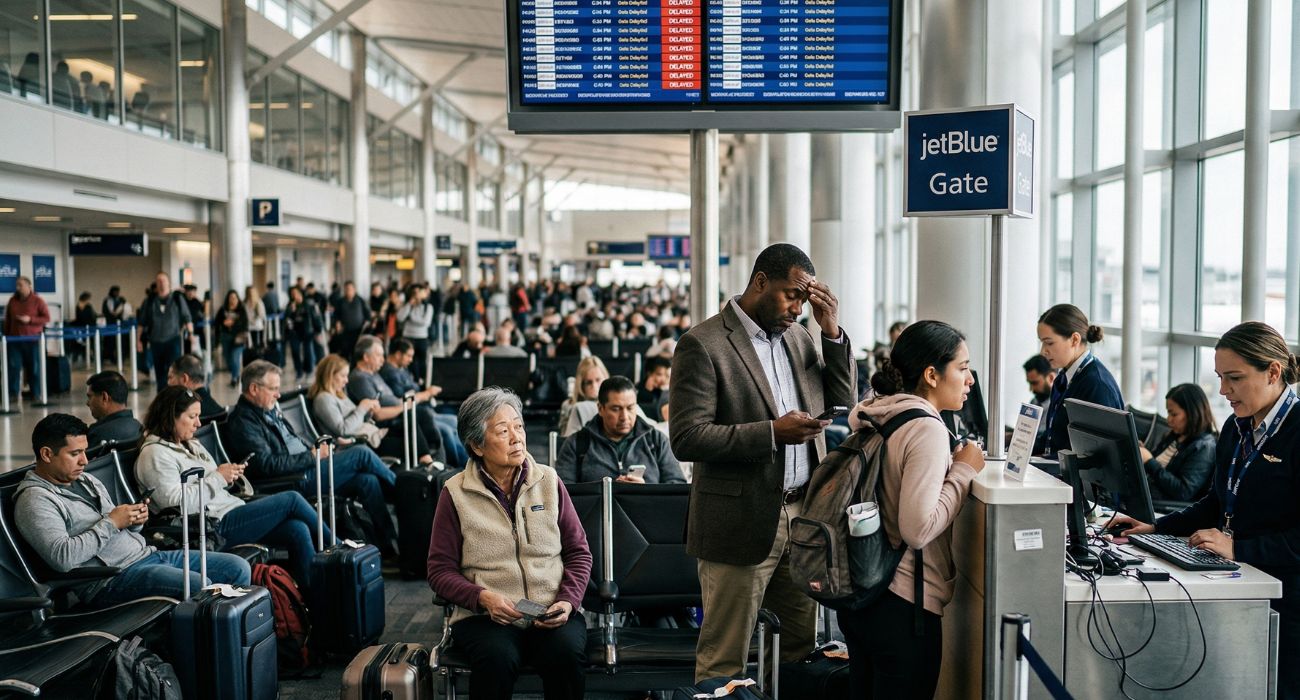
Image generated by AI
Quick Summary
- San Jose Mineta International Airport (SJC) reports 39 flights delayed on April 11, 2026, with zero cancellations
- Major carriers affected include American Airlines, Delta Air Lines, United Airlines, Southwest Airlines, and Alaska Airlines
- Disruptions impact routes to Seattle, Los Angeles, Chicago, New York, and Mexico City
- Delays attributed to post-Easter network recovery strain and FAA flow management
- Passengers advised to check real-time flight status and arrive early to airport
Travelers Affected at San Jose Mineta International Airport as 39 Flights Face Delays
SAN JOSE — San Jose Mineta International Airport (SJC) is navigating a significant wave of schedule disruptions on April 11, 2026, with 39 flights reported delayed across major carriers including American Airlines, Delta Air Lines, United Airlines, Southwest Airlines, and Alaska Airlines. Notably, the airport has maintained zero cancellations despite the elevated delay volume, a distinction that signals resilience even as disruptions ripple through key domestic corridors to Seattle, Los Angeles, Chicago, New York, and international routes to Mexico City.
The combination of high delay volume and zero cancellations is the defining operational story at SJC today. While aircraft movement is slowed due to airborne and ground delays, no services have been pulled from the manifest entirely. For passengers, this distinction matters enormously — a delayed flight creates inconvenience and potential missed connections, but a cancelled flight triggers far more disruptive consequences including rebooking challenges, compensation claims, and potential overnight accommodation costs.
39 Delays, Zero Cancellations — What That Means
This outcome reflects a deliberate operational posture from both the airport and its airline partners. Rather than cut services when pressure mounts — as larger hubs have done in recent days — SJC's operational teams are absorbing strain through managed slowdowns, keeping aircraft and passengers moving even if not always on schedule. Real-time tracking platforms confirm that while aircraft movement is slowed, the zero-cancellation performance represents genuine operational success under elevated network stress.
The FAA defines a flight delay as any departure or arrival occurring 15 or more minutes later than scheduled, and tracks these events continuously across major U.S. airports as part of its official Air Traffic by the Numbers reporting framework. Today's 39 delays at SJC fall well within this definition, though many may fall into the 15-45 minute range rather than multi-hour disruptions.
Airlines and Routes Most Affected
The disruptions today are spread across SJC's primary carrier network. Based on real-time departure tracking data, the following airlines and routes are experiencing delays:
- American Airlines — SJC → Dallas (DFW), with onward connections to New York, Chicago, and Denver
- Alaska Airlines — SJC → Seattle (SEA)
- Delta Air Lines — SJC → Minneapolis (MSP), with connecting hub effects
- United Airlines — SJC → Chicago (ORD), Denver (DEN), and hub connections
- Southwest Airlines — SJC → Seattle (SEA), Los Angeles (LAX), Las Vegas (LAS)
Connecting passengers routing through Dallas, Minneapolis, Denver, and Chicago toward New York and other East Coast destinations face the highest risk of missed connections due to cascading delay effects across the national network. FlightStats real-time tracking provides the most current departure and arrival information for affected flights.
Why Is This Happening?
Today's SJC delays do not occur in isolation — they are part of a broader pattern of U.S. aviation network strain that has persisted since the Easter travel rush earlier this month. Post-Easter aircraft and crew repositioning is creating a recovery tail that continues to drag on schedules days after the peak travel period. On April 6, Easter Monday, the U.S. aviation system recorded a staggering 4,722 delays and 307 cancellations nationally, followed by continued elevated disruption counts through April 10.
At SJC specifically, contributing factors include:
- Air traffic control flow management — The FAA actively manages traffic volumes into high-density airspace corridors serving the San Francisco Bay Area, and ground delay programs can hold departures at origin airports like SJC to prevent aerial congestion in shared airspace
- Cascading network delays — When connecting aircraft arrive late from hub airports in Dallas, Denver, or Minneapolis, departing flights from SJC are automatically pushed back through no local cause at the airport itself
- Post-Easter recovery strain — The U.S. aviation system has been operating in recovery mode since April 6, with record cancellations and delays reflecting the industry's struggle to reposition aircraft and crew after the Easter holiday surge
- Crew and aircraft positioning — International and domestic airlines are balancing limited crew and aircraft availability as they attempt to normalize schedules
How SJC Compares to Other U.S. Airports
San Jose's zero-cancellation performance today is genuinely noteworthy when set against the wider national picture. Major hub airports have experienced significantly higher disruption counts during comparable recent periods:
| Airport | Date | Cancellations | Delays |
|---|---|---|---|
| San Jose Mineta (SJC) | April 11, 2026 | 0 | 39 |
| Seattle-Tacoma (SEA) | April 7, 2026 | 8 | 71 |
| Hartsfield-Jackson Atlanta (ATL) | April 7, 2026 | 44 | 37 |
| Major U.S. Hubs Combined | April 9, 2026 | 145 | 3,281 |
While SJC's 39 delays represent an elevated figure above typical operational norms, the airport's management of today's pressure without a single cancellation reflects its mid-sized scale and the tighter operational coordination possible at a Bay Area gateway compared to mega-hub airports like Atlanta and Dallas.
What Affected Passengers Should Do Right Now
If you are traveling through San Jose Mineta International Airport today, here are immediate steps to take:
- Check flight status in real time — Use your airline's mobile app, the official SJC flight status tool at flysanjose.com, or FlightView for the most current departure and arrival times
- Arrive earlier than normal — Even without cancellations, delayed inbound aircraft can compress gate turnaround windows, causing last-minute gate changes and rushed boarding sequences
- Protect your connections — If you are connecting at Dallas, Denver, Minneapolis, or Chicago, alert your airline now so they can flag your reservation for priority rebooking if your connection is at risk
- Request meal vouchers for extended delays — Under DOT Customer Service Dashboard commitments, American Airlines, Delta, and United are obligated to provide meal vouchers for delays of three or more hours within their control
- Activate travel insurance if applicable — Check your policy for National Aviation System (NAS) delay coverage, which may entitle you to reimbursement for meals, accommodation, or ground transport costs incurred due to significant delays
The Bigger Picture for Bay Area Travelers
SJC's disruption today is a localized chapter in a nationally elevated delay environment that aviation analysts expect to persist through mid-April 2026 as the industry fully absorbs the Easter travel surge. IATA has noted that holiday travel disruptions can take 7-10 days to fully clear from system-wide networks, as aircraft and crew require time to return to normal rotation patterns.
Passengers with upcoming travel through San Jose — particularly those booking tight connections through major hub airports — should build additional buffer time into their itineraries. The FAA recommends at least 90 minutes for domestic connections and 2-3 hours for international connections during periods of elevated network strain.
The airport and its airline partners have demonstrated today that zero cancellations is achievable even under significant network pressure — a reassurance for travelers, even as the reality of longer waits and rolling delays continues to shape the SJC travel experience through mid-April.
Frequently Asked Questions
What is considered a flight delay by the FAA? The FAA defines a flight delay as any departure or arrival occurring 15 or more minutes later than scheduled. Delays are tracked continuously and categorized by cause: weather, National Aviation System (NAS) factors, carrier-controlled issues, or security-related factors.
Why does San Jose Mineta Airport have 39 delays but zero cancellations? SJC's operational teams chose to manage the April 11 disruptions through controlled slowdowns and managed timing rather than cancelling services entirely. This approach keeps flights operational but delays their departure and arrival times, often by 15-60 minutes depending on network conditions.
Which airlines are most affected by today's delays at SJC? American Airlines, Delta Air Lines, United Airlines, Southwest Airlines, and Alaska Airlines are all experiencing delays on routes from SJC. The largest cascading effects are on hub routes to Dallas, Denver, Minneapolis, and Chicago.
How long is the post-Easter travel recovery expected to last? Aviation industry analysis suggests the U.S. national system will require 7-10 days from the Easter peak (April 6) to fully normalize. This means elevated delays and potential disruptions could persist through mid-April 2026, particularly on routes connecting major hubs.
What compensation am I entitled to if my flight is significantly delayed? Under U.S. DOT rules, passengers are entitled to meal vouchers and ground transportation for delays of three or more hours that are within the airline's control. Some state and international regulations offer additional passenger protections. Contact your airline's customer service desk for specific compensation eligibility based on delay cause.
Should I add buffer time to my connections through San Jose? Yes. During periods of elevated network strain like this, the FAA recommends minimum 90-minute connections for domestic flights and 2-3 hours for international connections. If you have booked a shorter connection window, contact your airline immediately to discuss rebooking options.
Disclaimer
This article is for informational and educational purposes only. It does not constitute legal, financial, or professional advice. While we strive to provide accurate and up-to-date information, travel policies, regulations, and conditions change rapidly. Always verify information with official sources before making travel decisions. Nomad Lawyer makes no representations about the accuracy, reliability, completeness, or suitability of the information provided. Readers should consult qualified professionals for advice specific to their circumstances. The views expressed in this article are those of the author and do not necessarily reflect the views of Nomad Lawyer.
Raushan Kumar
Founder & Lead Developer
Full-stack developer with 11+ years of experience and a passionate traveller. Raushan built Nomad Lawyer from the ground up with a vision to create the best travel and law experience on the web.
Learn more about our team →