
United States Severe Weather Warning as Thunderstorms and Flash Flooding Threaten Central and Eastern States, Disrupting Summer Travel Across Colorado, Wyoming, Nebraska, and Beyond: Latest Update
A severe weather outbreak threatens the US Plains, Midwest, and East Coast with storms, tornadoes, and flash flooding. Check travel alerts.

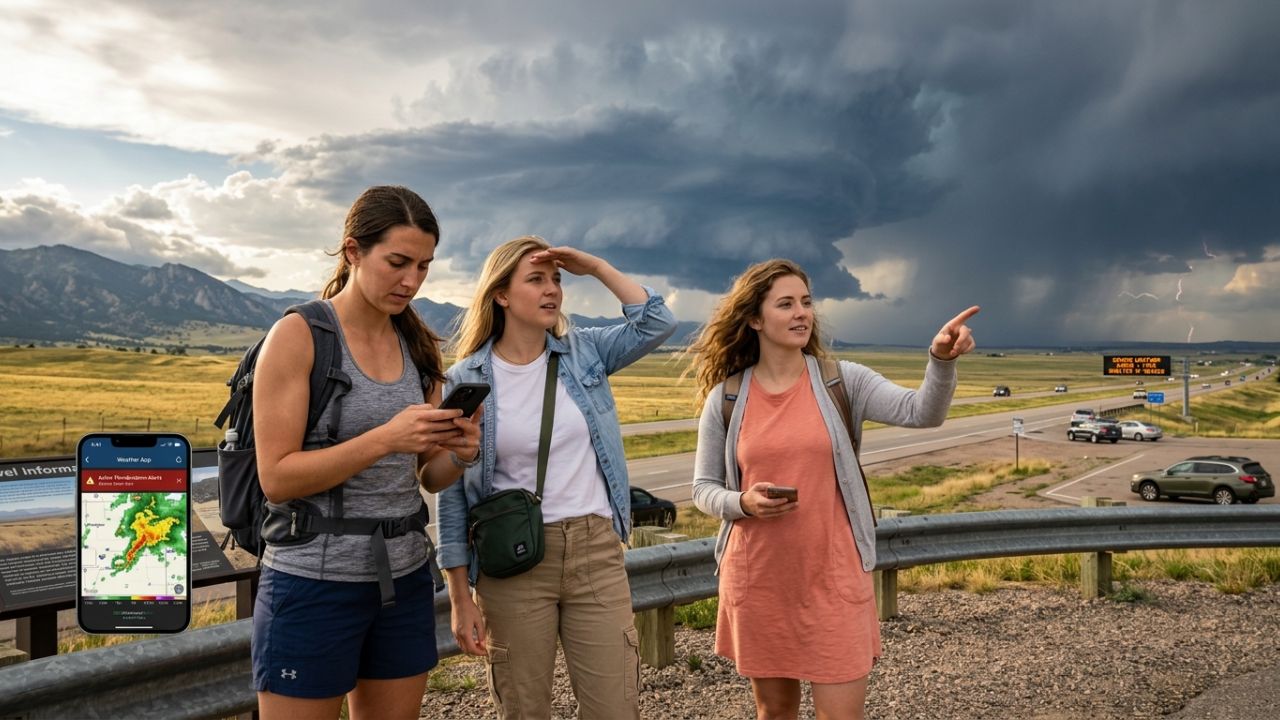
Image generated by AI
Published on June 21, 2026
On June 21, 2026, meteorologists warned that severe thunderstorms and flash flooding are set to strike a vast swath of the central and eastern United States, threatening millions of residents and travelers. The storm complex, emerging from the Rocky Mountains, is expected to expand across the High Plains and Midwest, bringing straight-line winds, giant hail, and isolated tornadoes. Authorities urge travelers and local communities to remain highly vigilant, prepare emergency supplies, and avoid flooded roadways to navigate the disruptions safely.
Quick Summary
- Multistate Threat: A powerful weather system emerging from the Rocky Mountains is triggering severe storms from the High Plains to the East Coast.
- Regions Hit First: Initial storm phases are targeting eastern Colorado, southeastern Wyoming, Nebraska, Kansas, southwestern Iowa, and western Missouri.
- Extreme Hazards: The weather outbreak brings straight-line wind gusts approaching hurricane strength, giant hail, isolated tornadoes, and intense lightning.
- Hydrological Emergency: Saturated soils and swollen major rivers (Illinois, Wabash, and Mississippi) have dramatically elevated flash flooding risks.
- Southern Rain Backlog: Southern states (Texas, Florida, Georgia, and the Carolinas) remain vulnerable as remnants of Tropical Storm Arthur sustain high rainfall.
Emergency management agencies have issued warnings as a volatile weather pattern develops over the central United States. Following a brief pause, a new storm system is emerging from the Rocky Mountains. Warm, moisture-rich air interacting with strong upper-level winds is creating conditions favorable for explosive, multi-hazard storm development that threatens regional transport networks.
Event and Incident Details: Tracking the Severe Thunderstorms and Flash Flooding Outbreak
The initial phase of the outbreak will target the High and central Plains, stretching from southeastern Wyoming and eastern Colorado into Nebraska, Kansas, southwestern Iowa, and western Missouri. Forecasters expect the strongest activity in northeastern Colorado, central Nebraska, and eastern Kansas, where supercells may merge into long-lived storm complexes.
The system will then move east, shifting hazards toward the Mississippi and Ohio Valleys, the Appalachians, and the Mid-Atlantic. Regions from Arkansas to Georgia, the Carolinas, Virginia, and West Virginia face repeated storms. Urban flooding and high winds may impact Washington D.C. and metropolitan hubs early next week.
| Impacted Region | Key States and Locations | Primary Weather Hazards |
|---|---|---|
| High Plains & Central Plains | Colorado, Wyoming, Nebraska, Kansas, Iowa, Missouri | Supercell storms, large hail, tornadoes |
| Southern Plains & Gulf Coast | Texas, Oklahoma Panhandles, Louisiana, Florida | Heavy tropical rain, remnants of TS Arthur |
| Midwest & Ohio Valley | Illinois River, Wabash River, Mississippi Valley | Elevated river basins, flash flood training |
| East Coast & Appalachians | West Virginia, Virginia, North Carolina, Washington DC | Mountain valley flash flooding, urban runoff |
To monitor these evolving systems, emergency management agencies analyze data from meteorological reports to issue timely alerts.
Risk and Impact: How Severe Thunderstorms and Flash Flooding Disrupt U.S. Travel
Storm disruptions create immediate travel setbacks, severing transit corridors and reducing regional mobility.
Key risks identified in this weather outbreak include:
- Hurricane-Force Winds: Straight-line gusts can down trees, damage power grids, and disrupt flights.
- Large Hail: Powerful updrafts inside supercells form giant hailstones, threatening vehicles and crops.
- Hydrological Emergencies: Saturated Midwestern soils cannot absorb new rainfall, increasing runoff.
- Training Storms: Repeated storms passing over the same areas trigger rapid urban drainage failures.
- Appalachian Runoff: Mountainous terrain channels massive water volumes rapidly into local valleys.
- Transit Closures: Severe conditions block highway routes and cause major airline delays.
What Authorities and Industry Leaders Are Saying
Authorities are monitoring river gauges along the Illinois, Wabash, and Mississippi Rivers, advising residents to prepare for rapid updates. Local meteorologists warn that isolated storm cells could quickly merge into massive, multi-state weather systems.
Anup Kumar Keshan, Founder and Editor-in-Chief of Travel And Tour World, emphasized:
"The evolving severe weather situation across the United States once again highlights why climate resilience and travel preparedness must become inseparable parts of modern tourism planning. Travelers today are moving across regions more frequently than ever before, and destinations must strengthen their communication systems to keep visitors informed and protected. This weather event also demonstrates the importance of investing in smarter infrastructure, emergency response systems and real-time travel intelligence. While these storms present significant challenges, they also offer an opportunity for governments, tourism authorities and transport operators to work together and build safer, more resilient and sustainable travel ecosystems for future generations."
Practical Traveler Advice: Navigating Severe Weather Outbreaks
To navigate storm disruptions, follow these actionable tips:
- Track Local Alerts: Monitor severe weather watches, flash flood warnings, and tornado alerts.
- Turn Around: Never drive through flooded roads; shallow water can carry vehicles away.
- Verify Flight Schedules: Check airline statuses before leaving, especially at Midwest and East Coast hubs.
- Prep Emergency Gear: Keep backup power, fresh water, and supplies ready for potential outages.
- Remain Flexible: Adjust travel routes to avoid active supercell and flood corridors.
Broader Context: Compound Weather Extremes and Saturated River Basins
Many rivers are already at capacity, and saturated soils leave no buffer to absorb additional rain. While agricultural sectors welcomed early rain to replenish soil moisture, the rapid accumulation has created severe flood threats.
This shift illustrates the complexity of modern climate patterns, where regions rapidly transition from severe drought to hydrological emergencies.
What to Expect Next / Looking Ahead
The storm front will progress east, bringing risks to the Mississippi Valley, Ohio Valley, Appalachians, and mid-Atlantic early next week. Meanwhile, lingering low-pressure systems behind Tropical Storm Arthur will continue to trigger rain across Texas, Florida, Georgia, and the Carolinas. Travelers should anticipate further schedule changes from airlines and rail operators.
Conclusion
With converging hazards across the central and eastern United States, proactive planning is crucial. By monitoring real-time weather updates and avoiding flooded routes, travelers can navigate the weekend's disruptions safely.
Related Travel Guides
- Carlos Ibáñez del Campo Airport Flight Cancellations by LATAM Airlines Group Ground Southern Cone Commuters and Sever South Atlantic Travel Links: New Travel Alert
- United States Warns of Surging QR Code Phishing Threat Across Miami, Dallas, Seattle, and Philadelphia, Urging Travelers to Inspect Codes Before Scanning to Prevent Mobile Cyber Fraud: New Travel Alert
- The 10 Best Severe Weather Survival Tips for Road Trips, According To Reddit
FAQ
Which states will experience the earliest severe weather development?
The High Plains and central Plains, including southeastern Wyoming, eastern Colorado, Nebraska, Kansas, southwestern Iowa, and western Missouri, are expected to see the earliest storms.
Why is the risk of flash flooding so high during these storms?
Soils across the Midwest are already saturated, and major river systems (such as the Illinois, Wabash, and Mississippi) are elevated. Additional rainfall cannot be absorbed, leading to rapid runoff.
What is the danger of training storms?
Training storms occur when multiple thunderstorms repeatedly pass over the same geographical area in a short period, leading to rapid rainfall accumulation and severe flash flooding.
How did Tropical Storm Arthur affect the current weather pattern?
Tropical Storm Arthur delivered extraordinary rainfall to the Gulf Coast, particularly Louisiana. Lingering low-pressure systems continue to sustain rain risks across Texas, Florida, Georgia, and the Carolinas.
How can travelers avoid disruptions during this severe weather outbreak?
Travelers should monitor real-time weather alerts, check flight and rail schedules at major hubs, and avoid driving through flooded roads under any circumstances.
Disclaimer
This article is for informational and educational purposes only. It does not constitute legal, financial, or professional advice. While we strive to provide accurate and up-to-date information, travel policies, regulations, and conditions change rapidly. Always verify information with official sources before making travel decisions. Nomad Lawyer makes no representations about the accuracy, reliability, completeness, or suitability of the information provided. Readers should consult qualified professionals for advice specific to their circumstances. The views expressed in this article are those of the author and do not necessarily reflect the views of Nomad Lawyer.
Raushan Kumar
Founder & Lead Developer
Full-stack developer with 11+ years of experience and a passionate traveller. Raushan built Nomad Lawyer from the ground up with a vision to create the best travel and law experience on the web.
Learn more about our team →