
United States Warns of Surging QR Code Phishing Threat Across Miami, Dallas, Seattle, and Philadelphia, Urging Travelers to Inspect Codes Before Scanning to Prevent Mobile Cyber Fraud: New Travel Alert
Quishing scams target tourists in Miami, Dallas, Seattle, and Philadelphia in 2026. Learn how fraudsters manipulate QR codes in public spaces.

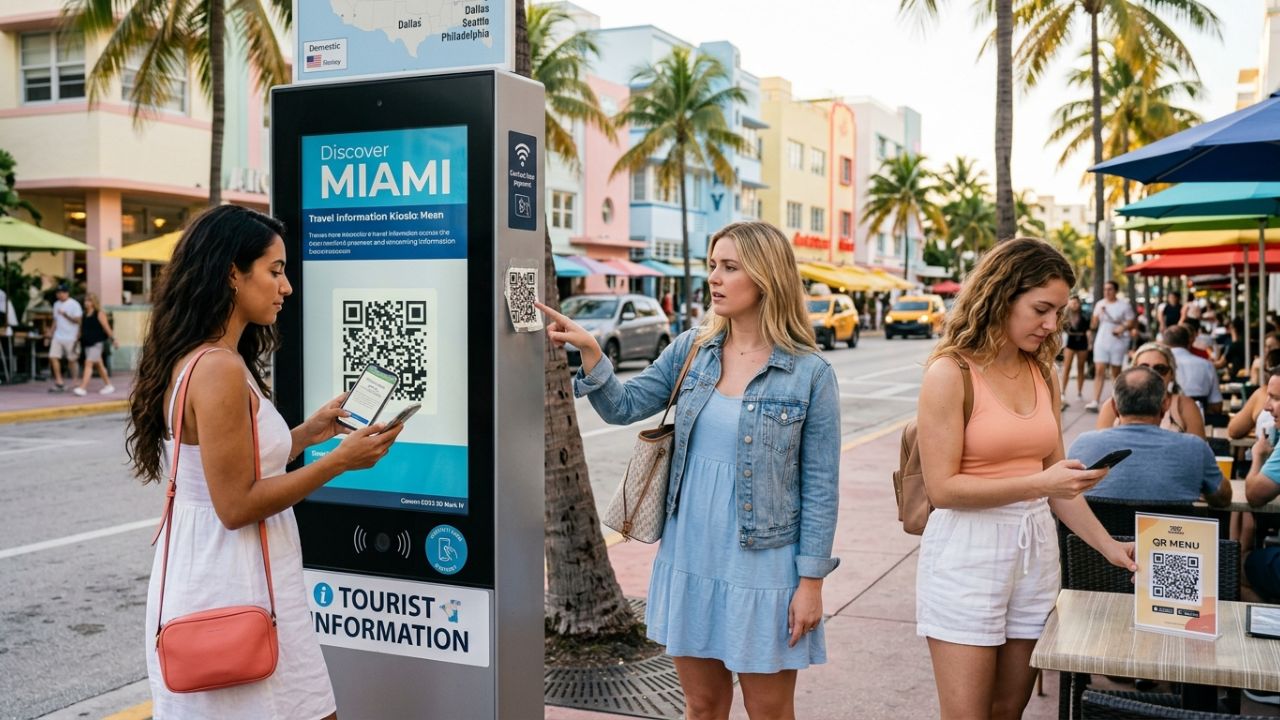
Image generated by AI
Published on June 21, 2026
On June 21, 2026, cybersecurity authorities warned that QR code phishing scams 2026 are rapidly expanding across major tourist zones in the United States, targeting mobile-first travelers. Fraudsters are placing adhesive overlays on legitimate signs at parking meters, restaurants, and information kiosks in cities like Miami, Dallas, Seattle, and Philadelphia. To avoid having their financial credentials and personal data stolen, travelers are urged to physically inspect codes and verify landing page URLs before scanning.
Quick Summary
- Scam Surge: Quishing (QR code phishing) incidents have risen by approximately 146% in the first half of 2026 across U.S. tourist destinations.
- Core Target Areas: Major exposure hotspots include Miami, Dallas, Seattle, and Philadelphia due to high tourist turnover and heavy digital payment use.
- Physical Manipulation: Cybercriminals place fake adhesive QR code stickers over authentic codes on parking meters, dining tables, and museum signage.
- Data Harvesting: Scanning altered codes redirects victims to spoofed portals designed to extract credit card details, logins, or install mobile malware.
- Security Gap: Quishing bypasses traditional digital email filters, relying on physical-world manipulation that exploits traveler convenience.
Verified cybersecurity intelligence reports from the first half of 2026 show a sharp rise in mobile-first cyber fraud across major U.S. travel destinations. Destination marketing organizations and cybersecurity experts have issued urgent warnings to protect travelers in public spaces where QR code usage has become routine. Fraudsters are actively exploiting these daily interactions to harvest personal and financial details.
Event and Incident Details: Break Down of QR Code Phishing Scams 2026
Quishing—a blend of "QR code" and "phishing"—is a fast-growing mobile threat targeting travelers. Unlike email-based phishing, it relies on physical manipulation in public spaces. Fraudsters paste adhesive stickers directly over legitimate codes on dining tables, parking meters, and signage, making them appear authentic to unsuspecting users.
Scanning the altered code redirects travelers to spoofed websites mimicking menus, parking portals, or booking systems. These malicious pages steal credit card data and credentials, or install spyware, effectively bypassing the secure gateways that filter email-based threats.
| Fraud Metric & Parameter | Reported Impact / Status in 2026 | Target Environments & Cities |
|---|---|---|
| Quishing Frequency Growth | ~146% Increase (First Half of 2026) | Physical public spaces and transit hubs |
| Altered Physical Assets | Overlay stickers on parking meters & signs | Restaurants, kiosks, and tourist signage |
| Data Harvesting Goal | Credit card numbers & login credentials | Spoofed hotel booking and menu interfaces |
| Target Mobile Devices | Smart devices outside secure networks | Public Wi-Fi grids in high-turnover zones |
To monitor these threats, agencies like the Cybersecurity and Infrastructure Security Agency (CISA) analyze the methods used to deploy physical-world cyber threats.
Risk and Impact: How QR Code Phishing Scams 2026 Exploit Tourist Behavior
Quishing exploits traveler behaviors, as visitors often prioritize convenience and speed over digital security when ordering meals or paying for parking.
Key risks identified in quishing campaigns include:
- Physical Stickers: Counterfeit stickers are pasted over official codes, making visual detection difficult.
- Spoofed Portals: Links lead to replica websites that mimic legitimate branding to steal data.
- Direct Theft: Users submit card numbers and logins directly to hacker-controlled databases.
- Malware Risks: Redirections can download background payloads that compromise mobile systems.
- No Email Filters: Because attacks start in the physical world, standard digital filters cannot block them.
What Authorities and Cybersecurity Experts Are Saying
Cybersecurity teams urge travelers to inspect public QR codes for signs of tampering, such as misaligned text, uneven layers, or rough borders. Officials recommend previewing URLs on your camera screen before launching the site to ensure the domain matches official portals. If a code-accessed page requests unexpected logins or credentials, users should exit the browser immediately. Ground staff are instructed to assist passengers with rebooking and alternative travel arrangements where available.
Practical Traveler Advice: How to Detect and Prevent Quishing Scams
To defend against physical travel fraud, adopt these simple safety habits:
- Check for Tampering: Feel the code surface to verify a counterfeit sticker has not been pasted over the original.
- Verify URL Previews: Use your camera app to inspect the web address before launching it.
- Avoid Login Requests: Never input credit card details or passwords on code-accessed pages.
- Use Alternatives: Request paper menus or type the official web address directly into your browser.
- Update Devices: Keep mobile operating systems updated to protect against background exploits.
Broader Context: Miami, Dallas, Seattle, and Philadelphia as High-Risk Zones
Quishing scams target high-traffic U.S. tourist destinations with high visitor turnover and heavy reliance on mobile transactions.
In Greater Miami and Miami Beach, extensive QR dining and beachside payments expose visitors to sticker overlays. Dallas has reported similar threats on public transit and municipal parking kiosks. In Seattle, tech-forward tourism districts face risks due to a high density of mobile-first experiences. Similarly, cultural zones in Philadelphia are vulnerable where travelers scan codes for museum tickets.
What to Expect Next / Looking Ahead
Municipalities and local businesses are reviewing public signage to implement secure digital access. Future controls may include security holograms or digital display screens that prevent physical overlays. Destination groups like Visit Dallas are also publishing online awareness guides to educate travelers on physical-world security vulnerabilities.
Travelers should expect to see more security alerts at public kiosks as businesses work to secure their digital touchpoints.
Conclusion
Quishing represents a shift from digital email scams to physical fraud in tourist hubs. By inspecting signage, previewing web addresses, and maintaining digital hygiene, travelers can safeguard their devices. Preparedness and vigilance remain the best defenses against mobile travel fraud in 2026.
Related Travel Guides
- LATAM Airlines AI Integration Accelerates Alongside Lufthansa, Delta, and Emirates to Elevate Global Hangar Maintenance and Passenger Experience: New Travel Alert
- Carlos Ibáñez del Campo Airport Flight Cancellations by LATAM Airlines Group Ground Southern Cone Commuters and Sever South Atlantic Travel Links: New Travel Alert
- The 10 Best Ways to Avoid Travel Scams, According To Reddit
FAQ
What is quishing in travel cyber fraud?
Quishing, or QR code phishing, is a scam where criminals place physical counterfeit stickers over authentic QR codes in tourist areas to redirect users to malicious, data-stealing websites.
How does quishing differ from traditional phishing?
Traditional phishing is delivered through emails or text messages that secure email gateways can block. Quishing is a physical threat that targets mobile devices outside secure networks, bypassing digital security systems.
Which cities are primary exposure zones for QR code scams in 2026?
Miami, Dallas, Seattle, and Philadelphia have been identified as high-risk environments due to their high volume of travelers and widespread use of QR code payments.
How can travelers identify a fake QR code sticker?
Travelers should check for physical signs of tampering (such as raised sticker edges or misaligned text) and preview the destination URL in their camera app to verify it matches the official business site.
Disclaimer
This article is for informational and educational purposes only. It does not constitute legal, financial, or professional advice. While we strive to provide accurate and up-to-date information, travel policies, regulations, and conditions change rapidly. Always verify information with official sources before making travel decisions. Nomad Lawyer makes no representations about the accuracy, reliability, completeness, or suitability of the information provided. Readers should consult qualified professionals for advice specific to their circumstances. The views expressed in this article are those of the author and do not necessarily reflect the views of Nomad Lawyer.
Raushan Kumar
Founder & Lead Developer
Full-stack developer with 11+ years of experience and a passionate traveller. Raushan built Nomad Lawyer from the ground up with a vision to create the best travel and law experience on the web.
Learn more about our team →