
Security failures strand hundreds at European airports in April 2026
EU's new biometric Entry/Exit System triggers security failures stranding hundreds across European airports in April 2026. Milan Linate and Vatry airports hit hardest by border control chaos and staffing gaps.

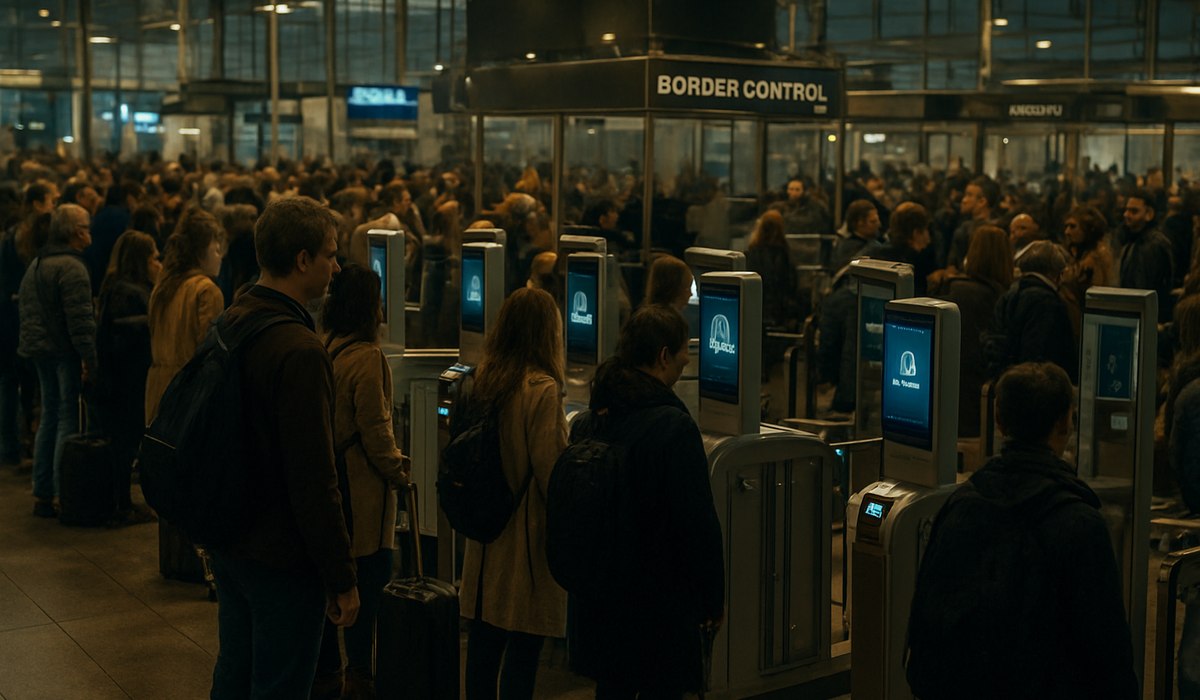
Image generated by AI
EU Border Technology Creates Unprecedented Airport Gridlock
The European Union's newly implemented biometric Entry/Exit System has triggered security failures stranding hundreds of travelers across major European airports during April 2026. The system's full operational launch at external Schengen borders coincided with peak spring travel demand, overwhelming airport infrastructure that was calibrated for pre-system passenger volumes. Milan Linate Airport in Italy and Vatry Airport in France have emerged as crisis epicenters, with more than 292 confirmed stranded passengers unable to reach their flights due to extended passport control queues and security staffing failures.
The combination of biometric registration requirements for non-EU nationals and insufficient border personnel has created bottlenecks that spill across terminal concourses, forcing flight departures with dramatically reduced passenger loads. EasyJet flights to Manchester, Ryanair services to Marrakech, and numerous other European routes have been directly impacted by processing delays exceeding four hours.
New EU Entry/Exit System Overwhelms Border Infrastructure
The European Union's Entry/Exit System represents a fundamental shift in how non-EU travelers enter and exit the Schengen zone. Beginning April 2026, all third-country nationals must undergo biometric registration using fingerprints and facial recognition technology before crossing external borders. While designed to enhance security, the system's implementation has exposed critical gaps between technological capability and operational capacity.
Border control queues at affected airports have stretched for three to five hours during peak periods. Processing times that were anticipated to average eight minutes per traveler have ballooned to twenty-five minutes or longer due to equipment malfunctions, insufficient trained personnel, and first-time system users requiring extended guidance. Travel industry associations had warned European governments for months that staffing levels needed to increase by thirty to forty percent to accommodate the biometric verification process alongside traditional document checks. Many airports failed to hire adequate additional personnel, prioritizing cost reduction over operational resilience during the critical launch period.
Milan Linate Airport Becomes Crisis Epicenter
Milan Linate Airport has emerged as the most visible flashpoint for security failures stranding European travelers. On April 12, 2026, an EasyJet flight scheduled for Manchester departed with fewer than sixty passengers instead of the booked 168 seats. Over 100 confirmed passengers remained trapped in passport control queues despite arriving three hours before scheduled departure.
Stranded travelers reported waiting in queues with minimal updates from either airport authorities or airline staff. Many passengers subsequently faced waits of up to four days in Milan while negotiating rebookings with EasyJet staff. The incident highlighted how government-operated security systems can trigger disruption that airlines cannot fully mitigate through advance notice or extended arrival windows. Hotels near Linate reported occupancy spikes as stranded passengers sought temporary accommodation, with some travelers accumulating unexpected expenses exceeding €800 per person.
Additional delays continued through the following week at Milan Linate as returning travelers and connecting passengers encountered persistent congestion. Airlines operating from the airport began issuing advisories recommending passengers arrive five hours before departure rather than the standard two to three hours. This guidance created cascading challenges for airport landside operations, as parking facilities and check-in areas were overwhelmed by the expanded passenger arrival window.
Staffing Gaps and Underestimated Passenger Volume Drive Delays
Beyond technological complications, basic staffing failures have created security failures stranding passengers at smaller European airports. Vatry Airport in eastern France experienced a particularly acute incident on April 14, 2026, when security personnel failed to report for duty. A Ryanair flight to Marrakech containing 192 ticketed passengers was unable to clear security screening because no checkpoint staff were available.
With its assigned departure slot approaching and no ability to delay further without regulatory penalties, the aircraft departed essentially empty. All 192 passengers were forced to seek immediate rebooking options, refunds, or alternative transportation methods with minimal airline support. This incident has prompted urgent debate regarding minimum service guarantees for critical airport functions and the obligations of both airport operators and airlines when essential infrastructure fails.
Smaller and mid-sized European airports typically operate with lean staffing models designed for standard operational conditions. These facilities lack the redundancy present at major hubs like Frankfurt or Paris Charles de Gaulle. A single critical staffing failure can strand an entire flight's complement of passengers, with limited ability to recover or provide alternative solutions. Industry analysts expect similar vulnerabilities exist at dozens of other regional airports across Europe, creating ongoing risk for summer 2026 travel.
What This Means for Spring and Summer Travelers
The security failures stranding hundreds of passengers in April 2026 signal potential challenges throughout the spring and summer travel seasons. The EU's Entry/Exit System will remain in full operation, and airports are unlikely to significantly increase staffing levels before peak summer demand. Travelers booking European routes should anticipate extended border control processing times and plan accordingly.
Airlines continue reporting flight delays and partial loads at affected airports as biometric verification backlogs persist. Compensation claims from stranded passengers are accumulating, with legal complexity surrounding whether government-operated security systems trigger EU Regulation 261/2004 compensation obligations. The European Commission has initiated an emergency review of the system's implementation, though substantive operational changes are unlikely before June 2026.
Traveler Action Checklist
If you're planning European travel during summer 2026, take these specific steps to minimize disruption risk:
-
Book flights departing Schengen zone external borders with minimum five-hour connection windows if transferring between airports.
-
Arrive at non-EU departure airports five to six hours before scheduled flight time to clear biometric registration and passport control queues.
-
Verify your airline's current arrival recommendations through their official website or contact center before heading to the airport.
-
Carry printed copies of passport biographical pages, entry permits, and booking confirmations to accelerate manual verification if biometric systems experience outages.
-
Document all border control wait times and queue positions using timestamped photos to support potential EU 261/2004 compensation claims.
-
Purchase travel delay insurance that specifically covers government security system failures and resulting missed connections.
-
Review your airline's rebooking and compensation policies on their website, noting customer service contact numbers for rapid response if you miss your flight.
-
Check real-time airport status using FlightAware before departure to identify current processing delays and congestion levels at your departure airport.
Key Disruption Data
| Metric | Value | Impact |
|---|---|---|
| Security failures strand total passengers (confirmed) | 292+ | Multiple missed flights and multi-day delays |
| Largest single incident (Ryanair, Vatry) | 192 passengers | Complete flight departure with zero boarded passengers |
| EasyJet Milan incident (April 12) | 108 passengers | Flight departed at 36% booked capacity |
| Average passport control wait time | 3-5 hours | Border processing 300-400% longer than pre-EES baseline |
| Maximum documented wait time | 7 hours 24 minutes | Recorded at Milan Linate, April 13 |
| Airports with confirmed security failures strand incidents | 2 primary hubs | Milan Linate, Vatry; likely dozens more unreported |
| Expected system operational duration | Permanent | EU Entry/Exit System will continue indefinitely |
Passenger Rights and Compensation Framework
Travelers stranded due to security failures face complex compensation questions. EU Regulation 261/2004 typically applies when "extraordinary circumstances" prevent airlines from operating scheduled flights. However, government-operated border security systems exist in a regulatory gray zone that often exempts airlines from compensation obligations.
Legal analysts emphasize that the responsibility for security failures stranding passengers remains ambiguous. European airports operate under national aviation authorities and customs regulations, while airlines bear commercial obligations to passengers. This division creates situations where stranded passengers receive no compensation despite suffering documented losses from missed flights, hotel stays, and missed connections.
If you're stranded due to biometric system failures or staffing shortages, document every delay using timestamped evidence and request written
Disclaimer
This article is for informational and educational purposes only. It does not constitute legal, financial, or professional advice. While we strive to provide accurate and up-to-date information, travel policies, regulations, and conditions change rapidly. Always verify information with official sources before making travel decisions. Nomad Lawyer makes no representations about the accuracy, reliability, completeness, or suitability of the information provided. Readers should consult qualified professionals for advice specific to their circumstances. The views expressed in this article are those of the author and do not necessarily reflect the views of Nomad Lawyer.
Kunal K Choudhary
Co-Founder & Contributor
A passionate traveller and tech enthusiast. Kunal contributes to the vision and growth of Nomad Lawyer, bringing fresh perspectives and driving the community forward.
Learn more about our team →