
U.S. Air Force Reverses A-10 Retirement Plans, Extending Cold War-Era Warthog Fleet Through 2030
Breaking airline news and aviation industry updates for 2026.

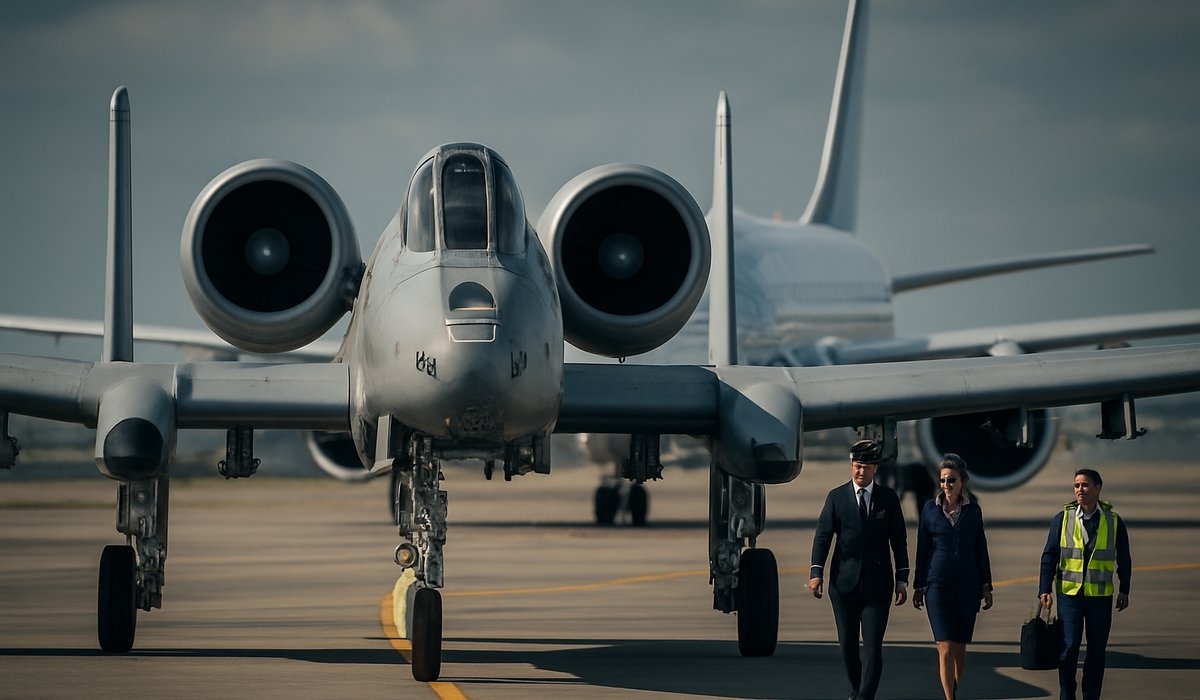
Image generated by AI
U.S. Air Force Reverses A-10 Retirement Plans, Extending Cold War-Era Warthog Fleet Through 2030
Legendary ground-attack aircraft proves indispensable in modern Middle Eastern conflicts, outperforming high-tech replacements
Extended Service Life Signals Strategic Shift
The U.S. Air Force has announced a significant reversal of its long-standing modernization strategy, extending the operational lifespan of the venerable A-10 Thunderbolt II—commonly known as the "Warthog"—well beyond previously planned retirement dates. Rather than phasing out the Cold War-era platform, the military branch will now retain one squadron through 2029, with two additional squadrons remaining in active service until 2030.
The decision marks a dramatic departure from decades of Pentagon doctrine aimed at replacing aging platforms with next-generation fighters. The shift underscores a hard-won lesson from recent combat operations: technological sophistication does not always translate to operational superiority in asymmetrical warfare scenarios.
Combat Performance Drives Strategic Recalibration
The extension comes following exceptional performance during Operation Epic Fury, where A-10s demonstrated decisive effectiveness against Iranian-backed forces and their lower-technology weapon systems. The aircraft's proven capability in this operational environment has convinced military leadership that retiring the platform prematurely would undermine tactical advantage.
The A-10's design—originally conceived in the 1970s for anti-tank warfare in Europe—has proven remarkably adaptable. Its distinctive features, including a heavily armored fuselage, exceptional loiter capability, and devastating 30mm rotary cannon, continue delivering results that modern, expensive alternatives have struggled to replicate in irregular warfare contexts.
Implications for Defense Modernization
This decision carries broader implications for U.S. defense acquisition strategy. It suggests that the Pentagon's assumption that newer systems automatically outperform older platforms warrants reconsideration, particularly for specialized roles like close air support.
The A-10's extended service life also reflects fiscal realities. Operating and maintaining proven systems often proves more cost-effective than accelerated development and procurement of replacement aircraft, particularly when those platforms must still develop operational proficiency in real-world conditions.
What This Means for Readiness
Extended retention of the A-10 fleet ensures continuity of close air support capabilities during a period of heightened Middle Eastern tensions. The decision allows additional time to evaluate whether successor platforms can genuinely replicate the Warthog's unique combination of durability, firepower, and low-altitude performance.
Military analysts indicate this represents a pragmatic acknowledgment that technological advancement must serve operational requirements rather than drive them.
Frequently Asked Questions
Why is the A-10 Warthog being kept in service longer? The aircraft has demonstrated superior performance in recent Middle Eastern operations against lower-technology threats, prompting the Air Force to extend retirement timelines to maintain proven close air support capabilities.
What makes the A-10 effective against modern threats? Its heavily armored design, extended loiter time, powerful 30mm cannon, and low-altitude agility provide advantages in irregular warfare that high-speed, high-altitude platforms cannot match.
What were the original A-10 retirement plans? The Pentagon had intended to phase out the Warthog in favor of modern fighter jets, but operational success has reversed this timeline by several years.
How long can the A-10 realistically remain operational? With extended service life approval through 2029-2030, aircraft maintainability and airframe longevity will determine actual operational windows.
Are successor aircraft failing to replace the A-10? Replacement platforms have not yet demonstrated comparable effectiveness in close air support roles, influencing the decision to maintain existing A-10 squadrons.
Related Travel Guides
Flight Delay Compensation Guide 2026
Understanding Airline Route Changes
Airport Security Process Updated (2026)
External Resources
Disclaimer
This article is for informational and educational purposes only. It does not constitute legal, financial, or professional advice. While we strive to provide accurate and up-to-date information, travel policies, regulations, and conditions change rapidly. Always verify information with official sources before making travel decisions. Nomad Lawyer makes no representations about the accuracy, reliability, completeness, or suitability of the information provided. Readers should consult qualified professionals for advice specific to their circumstances. The views expressed in this article are those of the author and do not necessarily reflect the views of Nomad Lawyer.
Preeti Gunjan
Contributor & Community Manager
A passionate traveller and community builder. Preeti helps grow the Nomad Lawyer community, fostering engagement and bringing the reader experience to life.
Learn more about our team →