
Seattle Tourism Growth Drives US GDP: Pacific Northwest Travel Guide 2026
Foreign arrivals and overnight stays up 9 percent propel Seattle alongside New York as premier economic engines of American tourism and travel exports in 2026.

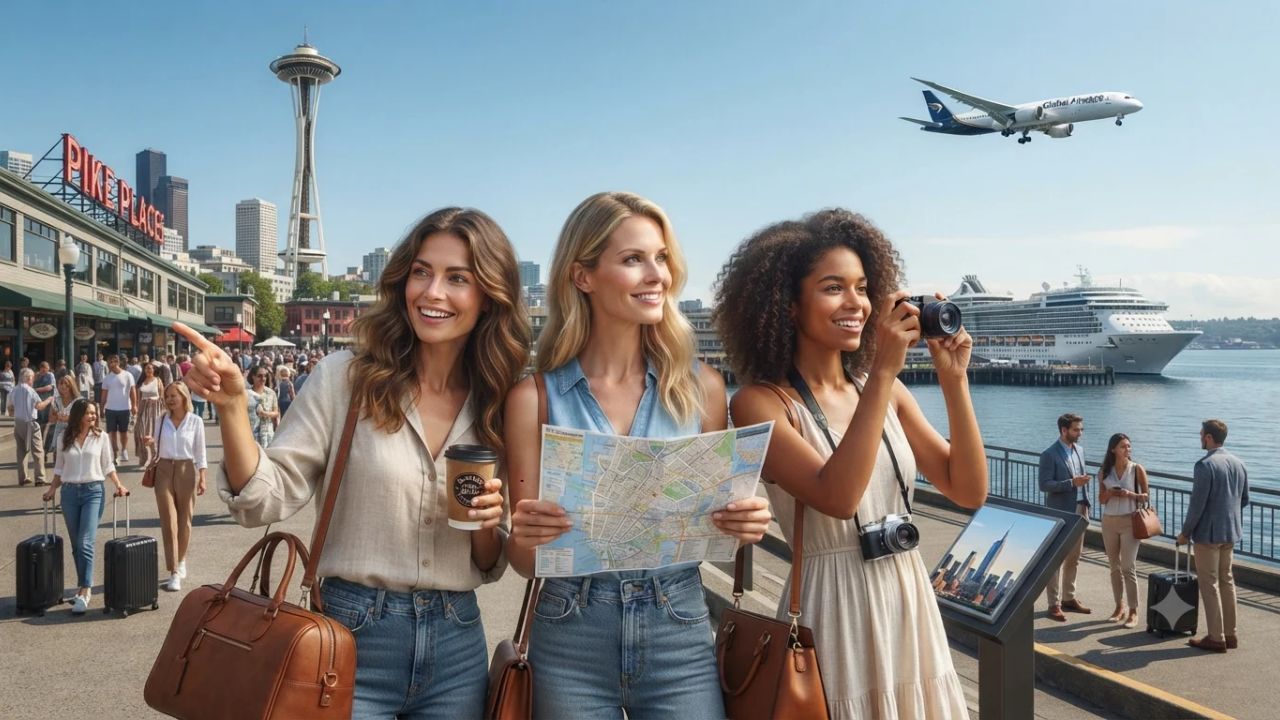
Foreign travelers staying overnight in Seattle spend more than double the daily budget of regional day-trippers, helping propel total United States travel exports to roughly 33 percent of all national service exports. While traditional East Coast gateways like New York City continue setting high-volume records through John F. Kennedy International and Newark Liberty International airports, the Pacific Northwest has emerged as the fastest-accelerating transpacific and maritime entry point in the country. With international overnight stays expanding across the nation by 9.0 percent year-over-year—a rate nearly three times faster than domestic travel volume—Seattle has transformed from a regional tech hub into an indispensable pillar of American macroeconomic performance.
Pacific Northwest Gateway Momentum and the Travel Export Boom
International tourism has evolved into one of the most powerful components of the American trade balance. Federal economic accounting through the Bureau of Economic Analysis treats foreign visitor expenditure—from long-haul flights on domestic carriers to hotel bookings, restaurant tabs, and local transit fares—as service exports that inject foreign currency directly into regional economies. In mid-2026, annualized real Gross Domestic Product expanded at a solid 2.1 percent, beating consensus forecasts largely because of resilient consumer demand and surging service exports across premier urban entry points.
Monthly non-resident arrivals entering the United States across air, land, and maritime borders stabilized between 5.4 million and 5.7 million during peak summer periods, steering the national total toward an annual projection exceeding 70 million international visitors. According to official data from the National Travel and Tourism Office, travel and tourism now account for approximately 11 percent of all United States exports and one-third of total service exports.
While New York State continues to capture massive Atlantic flows, Washington State has captured unprecedented long-haul traffic from East Asia, Southeast Asia, Europe, and Oceania. Three core operational drivers explain this geographic shift:
- Expanded Transpacific Aviation Routes: Direct widebody services deploying fuel-efficient Boeing 787 Dreamliners and Airbus A350s connect Seattle-Tacoma International Airport directly with Tokyo, Seoul, Taipei, London, Paris, and Frankfurt at high load factors.
- Historic Alaska Cruise Departures: The Port of Seattle recorded its busiest cruise season in maritime history, functioning as North America's premier departure base for wilderness itineraries to Alaska.
- Corporate Bleisure Extensions: Headquarters for global giants including Amazon, Microsoft, Boeing, and Nordstrom generate steady corporate delegations from the United Kingdom, Germany, Japan, and Australia, with foreign business travelers frequently extending their corporate itineraries into multi-day vacations.
| Gateway Economic Metric | 2026 Official Figure | National Impact Context |
|---|---|---|
| Annualized Real US GDP Growth | 2.1% | Exceeded early forecasts behind strong service exports |
| Foreign Overnight Stay Growth | +9.0% YoY | Expanding 3x faster than domestic leisure volume |
| Travel Share of US Service Exports | ~33% | Single largest service export category in balance of payments |
| Travel Share of Total US Exports | ~11% | Major contributor to narrowing national current account deficit |
| Peak Summer Monthly Foreign Arrivals | 5.4M to 5.7M | Tracking toward >70M annual international arrivals |
| Long-Term Projection (Late 2020s) | 75M to 85M | Bolstered by FIFA World Cup host city programming |
What Makes Seattle Different for Global Travelers
Seattle occupies a geographic setting unlike any other major American metropolitan center. Perched between the saltwater inlets of Puget Sound and the freshwater expanse of Lake Washington, the city offers immediate urban proximity to glaciated peaks, temperate rainforests, and protected maritime passages. Rather than being confined to high-rise corridors, visitors step from glass-towered corporate districts onto vintage public ferries gliding toward pine-forested islands in under thirty-five minutes.
The regional food culture is rooted in wild ingredients harvested across Cascadia. King salmon, Dungeness crab, geoduck clams, and foraged chantrelle mushrooms dictate seasonal menus in neighborhood bistros across Ballard, Capitol Hill, and Fremont. Seattle's coffee heritage runs far deeper than commercial chain flagships; independent micro-roasters roast single-origin beans sourced directly from Central American and East African farming cooperatives, creating neighborhood meeting rooms centered on precision espresso craft.
The integration of urban infrastructure with maritime terminals allows travelers to transition effortlessly from transatlantic flights to coastal expedition vessels. At the Port of Seattle, modernized waterfront docks enable passengers to disembark from an international widebody flight at Sea-Tac, clear customs via automated biometrics, and arrive at the Bell Street Pier Cruise Terminal in time for evening departures toward the Alaskan inside passage.
Visitor Insider Tips
To experience Seattle with the ease of a resident rather than an overwhelmed tourist, follow these practical logistics and neighborhood recommendations:
- Transit Hack from Sea-Tac Airport: Skip expensive highway taxis during weekday rush hours. Sound Transit's 1 Line Link Light Rail connects airport terminals directly to downtown stations (Pioneer Square, University Street, Westlake) in 38 minutes for less than $3.50.
- Navigating Pike Place Market: Arrive between 7:30 AM and 9:00 AM before cruise tour groups assemble. Head to the lower underground arcades to find artisan letterpress shops and local spice merchants, then grab fresh crumpets or ginger beer along Pike Place without waiting in block-long lines.
- Bainbridge Island Sunset Ferry: Board the Washington State Ferry from Colman Dock on Alaskan Way as a walk-on passenger in late afternoon. The 35-minute crossing delivers unobstructed views of the downtown skyline framed by Mount Rainier. Walk into the town of Winslow for dinner at local seafood kitchens before catching the night ferry back under city lights.
- Neighborhood Bases Over Commercial Hotel Chains: While downtown luxury hotels along 4th and 5th Avenues provide direct access to retail centers, boutique lodgings in Belltown, South Lake Union, or lower Queen Anne place you within walking distance of independent dining, craft bakeries, and the Olympic Sculpture Park.
- Weather Preparation: Locals rarely carry bulky umbrellas; instead, pack a breathable, waterproof hooded shell and comfortable water-resistant walking shoes to handle intermittent Pacific Northwest mists comfortably.
Cultural and Environmental Context
Seattle's rapid tourism expansion brings significant responsibilities regarding natural conservation and indigenous heritage preservation. The waters of Puget Sound provide vital habitat for endangered southern resident killer whales and wild Pacific salmon runs. In response to heightened cruise and commercial vessel traffic, Washington maritime authorities have mandated shore-power connectivity at city cruise berths, allowing vessels to plug directly into clean regional hydroelectricity and turn off auxiliary diesel engines while docked.
Indigenous Coast Salish nations—including the Suquamish, Tulalip, and Duwamish tribes—have inhabited these shorelines for millennia. Cultural tourism initiatives increasingly center tribal history, canoe carving traditions, and sustainable fisheries management. Travelers exploring local museums and regional parks are encouraged to learn the native place names and support tribal-owned enterprises that safeguard ancestral heritage throughout King County.
Efforts spearheaded by Visit Seattle and municipal environmental boards focus on distributing visitor spend beyond high-density waterfront zones into regional cultural centers, public trail networks in the Cascade foothills, and sustainable wine-growing regions across Woodinville.
FAQ: Visiting Seattle and US Gateways 2026
What is the best time of year to visit Seattle?
July through September offers the driest weather, warm sunny days averaging 24°C (75°F), clear views of Mount Rainier, and active outdoor ferry and kayaking seasons.
Do international visitors need a visa to enter the United States?
Travelers from Visa Waiver Program countries must obtain an approved ESTA electronic authorization before boarding. All other international visitors require an official B1/B2 tourist visa issued by a US embassy.
How do I get from Seattle to Olympic National Park or Mount Rainier?
Rent a vehicle from downtown or airport depots. Mount Rainier is a 2-hour drive south, while Olympic National Park requires a 2.5-hour journey via highway or Bainbridge ferry.
Is Seattle safe and walkable for solo travelers?
Seattle is generally safe and highly walkable throughout downtown, Belltown, Queen Anne, and Capitol Hill. Exercise standard urban awareness around late-night transit transfer stations and select third-avenue corridors.
From misty saltwater crossings to high-altitude alpine trails, Seattle proves that America's strongest economic gateways are also its most captivating cultural frontiers.
Related Travel Guides
Disclaimer
This article is for informational and educational purposes only. It does not constitute legal, financial, or professional advice. While we strive to provide accurate and up-to-date information, travel policies, regulations, and conditions change rapidly. Always verify information with official sources before making travel decisions. Nomad Lawyer makes no representations about the accuracy, reliability, completeness, or suitability of the information provided. Readers should consult qualified professionals for advice specific to their circumstances. The views expressed in this article are those of the author and do not necessarily reflect the views of Nomad Lawyer.
Naina Thakur
Contributor & Travel Specialist
Travel enthusiast and legal writer covering visa regulations, responsible tourism, and cultural journeys across global destinations.
Learn more about our team →