
Alaska Airlines, Delta, and SkyWest Ground Flights Triggering Widespread Seattle-Tacoma Flight Delays and Cancellations Across SEA, San Francisco, Chicago, and Dublin: New Aviation Updates
Seattle-Tacoma International Airport (SEA) faces major passenger backlogs with 140 delayed flights and 3 cancellations, disrupting Alaska, Delta, and United.

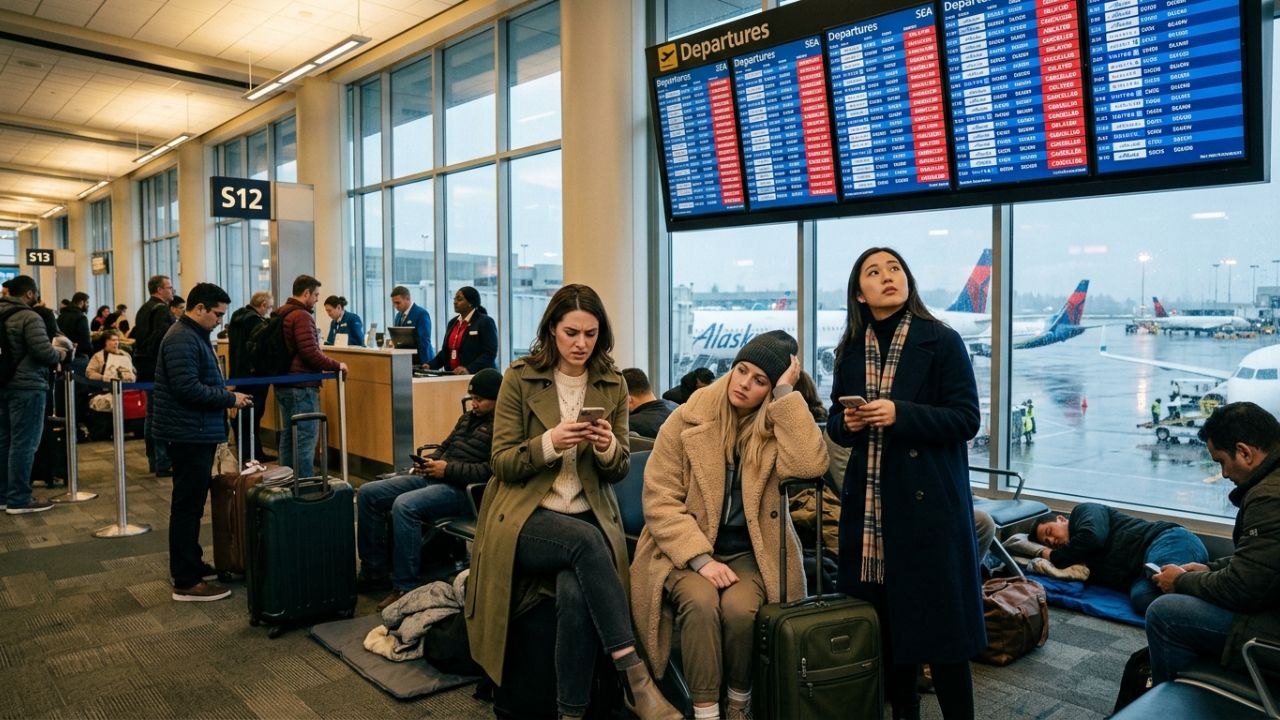
Image generated by AI
In a dramatic wave of operational disruption that has gripped the Pacific Northwest's primary aviation gateway, thousands of passengers are experiencing severe scheduling delays. On May 18, 2026, leading carriers—including Alaska Airlines, Delta Air Lines, and regional feeder SkyWest Airlines—grounded a handful of operations and triggered a massive wave of 140 flight delays and 3 cancellations at Seattle-Tacoma International Airport (SEA). This latest airline news update outlines the intense pressure on Sea-Tac's core domestic and international transit corridors, causing extensive travel chaos and airport disruptions that have left travelers isolated and facing extended terminal wait times.
Subheading: Pacific Northwest Gateway Gridlocked by 140 Delays and 3 Cancellations, Disrupting Essential Regional Shuttles and Transoceanic Corridors
Aviation data suggests that the widespread operational bottleneck was driven by a combination of Pacific Northwest spring weather patterns, air traffic control (ATC) flow controls, and localized gate congestion. In compliance with strict safety directives, airlines actively adjusted schedules to manage SEA’s high-frequency departures and regional connections. Because Seattle-Tacoma represents a critical northern gateway connecting the continental United States to Canada, Europe, Asia, and Mexico, minor delays at this central hub quickly cascade through global network alliances, disrupting transoceanic flight rotations.
The timing of these disruptions is particularly critical as U.S. carriers optimize fleet deployment ahead of the busy summer travel rush. Major carriers like Alaska Airlines utilize SEA as their primary operational hub, making them vulnerable to crew allocation constraints and gate delays when regional weather limits runway arrival rates. Meanwhile, regional carriers face concentrated operational challenges, directly impacting smaller communities across Washington, Oregon, and Montana.
Detailed Section-Wise Breakdown of Sea-Tac Airport Disruptions
The scheduling bottleneck has affected dozens of domestic, regional, and international destinations, forcing passengers to navigate long queues, crowded terminals, and rapidly changing departure boards:
Alaska Airlines and Pacific Northwest Networks Face Severe Congestion at Sea-Tac
As the primary hub operator at Seattle-Tacoma, Alaska Airlines registered the heaviest operational impact, reporting 37 delays and 2 cancellations (representing the bulk of today's outright cancellations). Feeder airlines Horizon Air (ASA) and SkyWest Airlines, alongside legacy carriers Delta Air Lines and United Airlines, registered delay volumes ranging from 10 to 32 flights each.
Furthermore, international airlines—including China Airlines, EVA Air, Turkish Airlines, Emirates, and Aer Lingus—experienced significant scheduling delays, with their local departure delay rates ranging from 33% to 100% of scheduled operations. Other major U.S. carriers including Southwest Airlines, American Airlines, and Hawaiian Airlines reported moderate delays.
Domestic Ripple Effects: SFO, Chicago O’Hare, and Western Regional Gateways
The operational gridlock at SEA had an immediate ripple effect across major domestic hubs. Busiest West Coast and transcontinental gateways experienced significant delays:
- San Francisco International (SFO): Recorded 8 delays (representing a 38% delay rate).
- Chicago O’Hare (ORD): Registered 5 delays (representing a 26% delay rate).
- Denver International (DEN): Reported 3 delays (representing a 16% delay rate).
- Charlotte Douglas (CLT): Suffered 2 delays (representing a 66% delay rate).
- West Coast Corridors: Flight paths to Portland (PDX), Los Angeles (LAX), and Oakland (OAK) were also delayed.
Importantly, regional destinations in the Pacific Northwest and Mountain regions—including Walla Walla (ALW), Billings (BIL), Idaho Falls (IDA), Tucson (TUS), and Helena (HLN)—suffered extensive delays, leaving regional travelers temporarily isolated without immediate air links to Seattle.
Global Corridors Interrupted: High-Impact International Delays
Because SEA represents a vital gateway connecting the Pacific Northwest to the world, the scheduling delays quickly extended to key global networks. Single-flight delays to key international destinations highlighted the global ripple effect of Sea-Tac’s operational constraints, with several long-haul international flights suffering a 100% delay rate today:
- Europe: Key transatlantic routes to Dublin (DUB) and Rome Fiumicino (FCO).
- Latin America: Critical flight corridors to Guadalajara (GDL) in Mexico.
- Asia-Pacific: High-volume transpacific connections to Tokyo Narita (NRT) and Taiwan Taoyuan (TPE).
Flight Details and SEA Airport Carrier Operational Matrix
The following table outlines the detailed breakdown of the scheduling disruptions across domestic and international carriers operating at SEA, highlighting the scope of the operational pressure:
Summary of Sea-Tac Flight Disruptions by Airline
| Operating Carrier | Delayed Flights | Cancelled Flights | Strategic Impact / Regional Corridor |
|---|---|---|---|
| Alaska Airlines | 37 | 2 | Primary Gateway Carrier / Heavy Domestic Corridor Impact |
| SkyWest / Horizon | 10 to 32 | 0 | Regional Connection Feeder network / PNW & Mountain routes |
| Delta Air Lines | 10 to 32 | 0 | Transpacific & Transatlantic Hub Gateways / Key Global Routes |
| United Airlines | 10 to 32 | 0 | Transcontinental Connections / Chicago, Denver, Newark hubs |
| International Carriers | High % Delays (33% to 100%) | 0 | China Airlines, EVA Air, Turkish Airlines, Emirates, Aer Lingus |
| Other U.S. Carriers | Moderate Delays | 0 | Southwest Airlines, American Airlines, Hawaiian Airlines |
Passenger Impact and Terminal Realities
The emotional and financial toll of these airport disruptions extends far beyond simple scheduling inconveniences. Stranded passengers at SEA reported long lines at check-in, security screening, and boarding gates. Because many international travelers utilize SEA as a major transpacific transit gateway, these flight delays resulted in numerous missed connections, requiring airlines to coordinate extensive hotel re-accommodations and baggage re-routing.
Furthermore, regional passengers faced isolation as flights to smaller airports like Walla Walla and Helena were delayed, cutting off essential connections. Ground staff and airline passenger teams worked efficiently to provide updates, coordinate baggage transfers, and rebook affected travelers.
Industry Analysis: Root Causes of Sea-Tac Flight Disruptions
Aviation analysts explain that SEA’s geographic and operational profile makes it particularly vulnerable to cascading delays:
- Pacific Northwest Spring Weather: Low ceiling clouds and marine layer fog frequently restrict regional arrival rates.
- Air Traffic Flow Control: High-density airspace around the Puget Sound corridor requires wider flight separation distances under restricted visibility.
- Crew Duty-Hour Limits: Widespread flight delays push crew allocations past legal duty-hour restrictions, forcing subsequent flight cancellations.
- Tight Hub Rotation Schedules: As Alaska Airlines' primary hub, delayed inbound regional flights quickly trigger subsequent delays across domestic networks.
Conclusion: Recovery Outlook and Stabilizing Operations
Despite the current turbulence, Seattle-Tacoma airport authorities and airline dispatch teams are working to stabilize flight schedules and restore passenger confidence. Departure boards continue to show updated times, and flight dispatchers are gradually returning delayed aircraft to their regular rotations. While terminals remain crowded, PNW aviation experts are optimistic that Sea-Tac operations will steadily stabilize over the next 12 hours.
Key Takeaways
- Scale of Disruptions: Exactly 140 flights were delayed and 3 flights cancelled at Seattle-Tacoma International Airport (SEA) on May 18, 2026.
- Hub Carrier Impact: Alaska Airlines logged the highest delay volume with 37 flights, and reported 2 cancellations.
- Regional Congestion: Horizon and SkyWest recorded delays ranging from 10 to 32 flights, leaving regional travelers temporarily isolated.
- Core Causes: Spring weather visibility constraints, air traffic control restrictions, crew duty limits, and tight hub schedules.
- Advice for Travelers: Monitor real-time FlightAware data, utilize official carrier apps, allow extra time for Sea-Tac terminal security, and remain flexible.
Related Travel Guides
- Breaking Airline News: Severe Travel Chaos Paralyzes Minneapolis Airport as Delta, SkyWest, and United Face 69 Massive Flight Delays and Cancellations
- Lufthansa Launches Massive Global Route Overhaul to Prevent Flight Cancellations and Travel Chaos: Upgraded Frankfurt and Munich Transatlantic Flights Tackle Airport Disruptions in 2026
- India Triggers Massive Ebola Aviation Shield on African Routes to Prevent Catastrophic Travel Chaos and Viral Spread: Latest Airline News
Disclaimer
This article is for informational and educational purposes only. It does not constitute legal, financial, or professional advice. While we strive to provide accurate and up-to-date information, travel policies, regulations, and conditions change rapidly. Always verify information with official sources before making travel decisions. Nomad Lawyer makes no representations about the accuracy, reliability, completeness, or suitability of the information provided. Readers should consult qualified professionals for advice specific to their circumstances. The views expressed in this article are those of the author and do not necessarily reflect the views of Nomad Lawyer.
Kunal K Choudhary
Co-Founder & Contributor
A passionate traveller and tech enthusiast. Kunal contributes to the vision and growth of Nomad Lawyer, bringing fresh perspectives and driving the community forward.
Learn more about our team →