
Seabourn Announces 138-Day 2029 World Cruise From Miami to Lisbon Visiting 58 Destinations
Seabourn unveils its 2029 'Iconic Islands & Remote Horizons' world cruise, a 138-day luxury voyage from Miami to Lisbon covering 32,000 nautical miles across five continents.

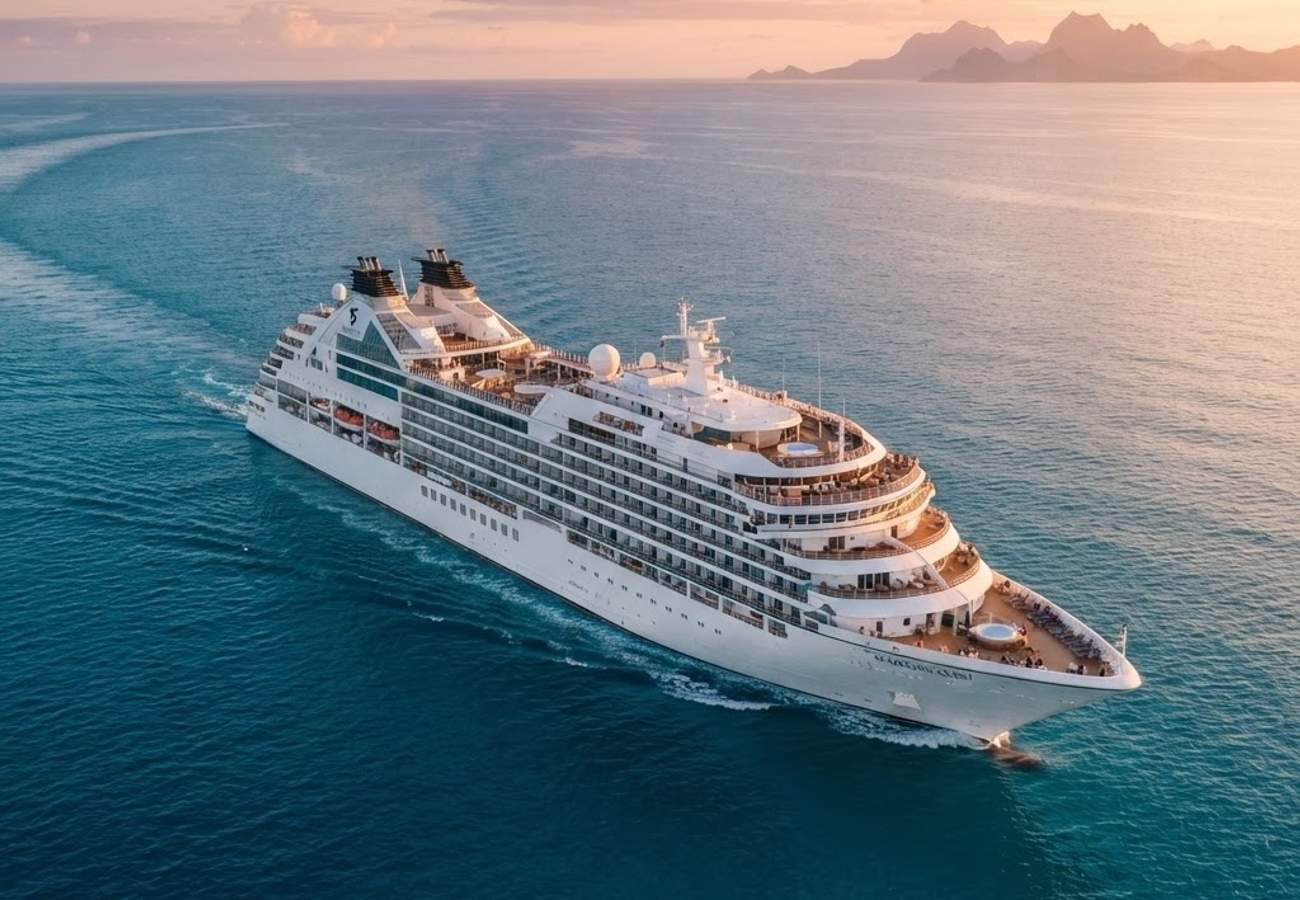
Image generated by AI
Seabourn has announced a massive 138-day global itinerary for 2029, transporting passengers from Miami to Lisbon across five continents. The voyage marks a significant shift toward "slow travel" in the luxury sector, prioritizing remote exploration over traditional port-hopping.
Voyage Logistics and Scale
The 2029 World Cruise, titled "Iconic Islands & Remote Horizons," will operate aboard the Seabourn Quest. The journey is scheduled to depart from Miami on 7 January 2029, concluding in Lisbon on 26 May 2029.
Our analysis of the itinerary shows a voyage covering more than 32,000 nautical miles. The ship will visit 58 destinations across 31 different countries and territories, incorporating over 25 UNESCO World Heritage Sites.
Regional Impact and Key Destinations
The route is designed to eliminate the logistical complexity of multi-leg international flights and transfers by providing a continuous transit through the following regions:
- The Americas & South Pacific: Includes high-interest stops at Easter Island (Rapa Nui) and Bora Bora.
- Oceania: Extensive coverage of New Zealand and Australia, including specific calls at Akaroa and Burnie (Tasmania).
- Asia & Indian Ocean: Visits to Southeast Asia, Sri Lanka (featuring the Sacred City of Kandy), and the Seychelles (Praslin).
- Africa & Europe: Exploration of Madagascar (Antsiranana), Zanzibar (Stone Town), and a final arrival in Portugal.
Operational Breakdown: Extended Stays
To combat "port fatigue," Seabourn has integrated a high ratio of extended stays. The itinerary features 20 extended stays and eight overnight calls.
Flight tracking and port data indicate that overnight stays are strategically placed in major hubs to allow for deeper cultural immersion. These locations include:
- Lima, Peru
- Easter Island, Chile
- Bora Bora, French Polynesia
- Bali, Indonesia
- Singapore
- Sydney, Australia
- Zanzibar, Tanzania
- Cape Town, South Africa
Passenger Capacity and Vessel Specifications
The Seabourn Quest is utilized specifically for its ability to access remote ports that larger mega-ships cannot enter. The vessel accommodates approximately 458 guests, ensuring a lower passenger-to-staff ratio. Onboard amenities include oceanfront suites, wellness facilities, and destination-specific cultural programming.
Passenger Rights & Advisory
For the affected passenger booking an ultra-long-haul voyage of this magnitude, the legal and financial implications differ from standard short-term cruises. Our analysis of maritime travel policies suggests the following considerations:
Contractual Obligations and Cancellations World cruises typically carry more stringent cancellation penalties than 7-day itineraries. Passengers should verify if their contract follows the Cruise Lines International Cruise Care (CLIA) standards or specific Seabourn terms. We strongly advise securing "Cancel for Any Reason" (CFAR) insurance, as medical or personal emergencies over a 138-day window are statistically more likely.
Jurisdictional Rights Because the ship crosses multiple international waters and docks in 31 different territories, the governing law for disputes can vary. Most luxury contracts designate a specific jurisdiction (often the US or UK). Passengers should review the "Forum Selection Clause" in their ticket contract to understand where legal claims must be filed.
Medical and Health Contingencies Given the remote nature of stops like Nuku Hiva or Antsiranana, passengers should be aware that the ship's medical facility is for stabilization, not long-term care. Our analysis suggests ensuring that travel insurance specifically covers "Emergency Medical Evacuation" from remote regions, as the cost of a private medevac from the South Pacific can exceed $100,000.
The move toward 138-day itineraries reflects a broader trend in the 2026-2029 luxury market: the commoditization of time. By targeting a demographic that views "time as the ultimate luxury," Seabourn is pivoting away from the volume-based model of mass-market cruising.
The inclusion of remote ports like the Marquesas Islands suggests a strategic effort to attract "experience collectors"—travelers who prioritize exclusivity and authenticity over traditional luxury markers. This strategy mitigates the risk of over-tourism in primary hubs by distributing passengers to lesser-known destinations.
A transformative journey where the destination is secondary to the experience of global transit.
Related Travel Guides
Disclaimer
This article is for informational and educational purposes only. It does not constitute legal, financial, or professional advice. While we strive to provide accurate and up-to-date information, travel policies, regulations, and conditions change rapidly. Always verify information with official sources before making travel decisions. Nomad Lawyer makes no representations about the accuracy, reliability, completeness, or suitability of the information provided. Readers should consult qualified professionals for advice specific to their circumstances. The views expressed in this article are those of the author and do not necessarily reflect the views of Nomad Lawyer.
Kunal K Choudhary
Co-Founder & Contributor
A passionate traveller and tech enthusiast. Kunal contributes to the vision and growth of Nomad Lawyer, bringing fresh perspectives and driving the community forward.
Learn more about our team →