
Scotland's Machines With Vision Targets $78 Billion Rail Maintenance Market via Network Rail Deal 2026
Scottish firm Machines With Vision secures a multi-million pound Network Rail contract to deploy millimetre-precise visual mapping, targeting a $78 billion global rail maintenance sector to eliminate $6 billion in annual waste.

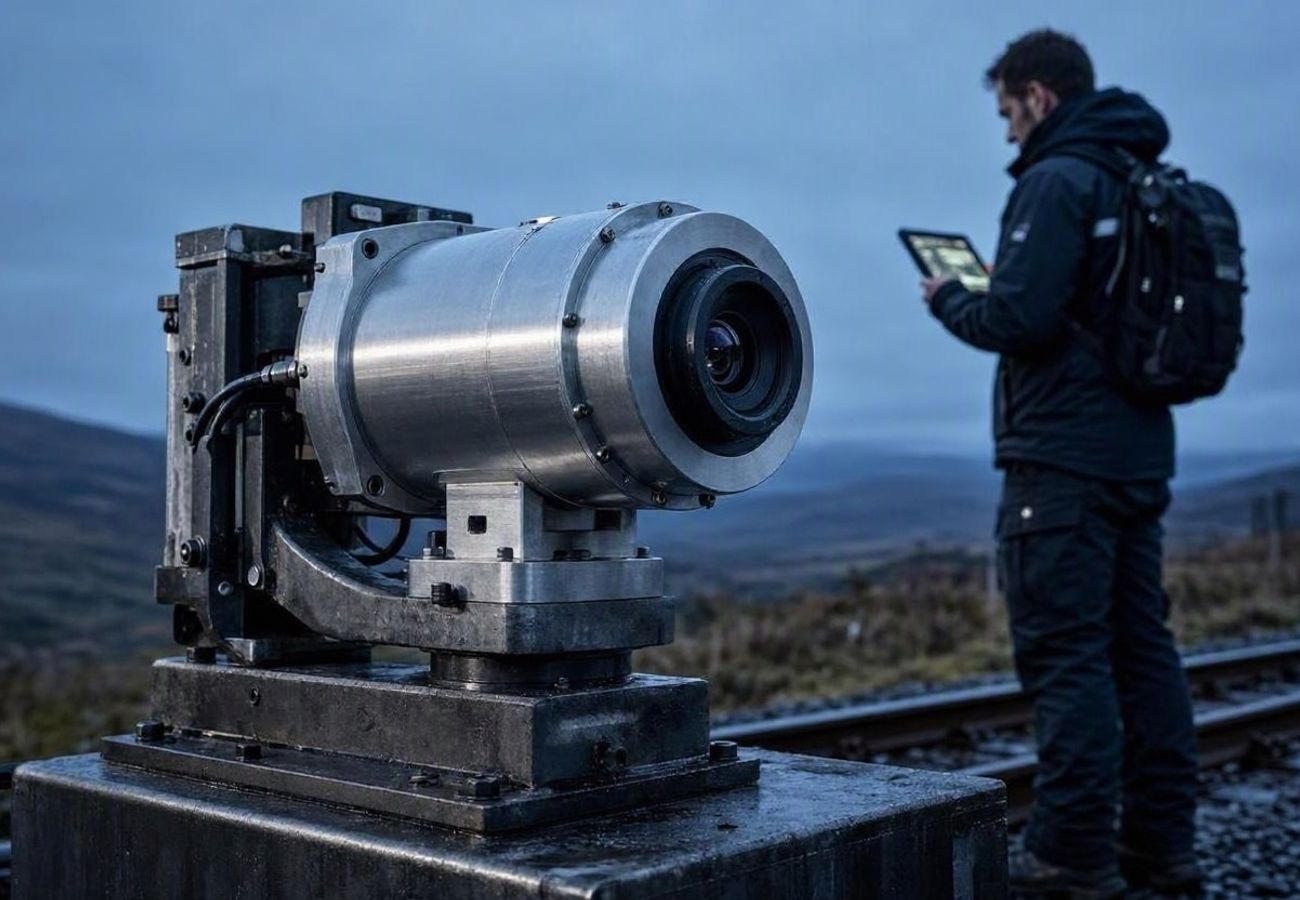
Image generated by AI
Will your future train journeys be more reliable and safer due to millimetre-precise tracking? A landmark multi-year, multi-million pound agreement between Scotland-based Machines With Vision and Network Rail is set to transform how global railway infrastructure is maintained.
The Shift to Visual Rail Mapping
Machines With Vision is moving beyond traditional GPS-based fault detection to enter the global railway maintenance sector, an industry valued at approximately US$78 billion. The core problem they are solving is "mislocation"—the gap between detecting a fault and actually finding it on the physical track.
Currently, the global rail industry loses roughly US$6 billion every year because maintenance crews are sent to the wrong sections of track or spend hours searching for reported defects. This inefficiency leads to wasted labor, extended repair windows, and unnecessary service disruptions for passengers.
The new system replaces approximate coordinates with a high-resolution visual map. By installing specialized cameras on inspection trains, the company creates a geospatial digital twin of the network. This allows operators to pinpoint a defect not just to a general area, but to a specific millimetre of track.
Technical Specifications and System Capabilities
The deployment involves two primary technological components: the RailLoc positioning system and the Fault Navigator mobile interface.
| System Component | Primary Function | Precision Level | Primary User | Status |
|---|---|---|---|---|
| RailLoc | Visual geospatial mapping | Millimetre-level | Infrastructure Managers | Active Deployment |
| Fault Navigator | Mobile defect guidance | Direct-to-fault | Maintenance Crews | Active Deployment |
| Inspection Cameras | Image-based data capture | High-Resolution | Automated Trains | Integrated |
Traveler Logistics Guide: How This Affects Your Transit
While this technology operates behind the scenes, its implementation directly impacts the passenger experience through reduced "planned engineering" delays and improved safety.
1. Reduced Maintenance Downtime Most rail disruptions occur during "engineering access periods"—scheduled closures where trains stop running. Because Fault Navigator guides crews directly to a defect, the time spent searching is eliminated. This means maintenance windows can be shorter and more predictable, reducing the likelihood of "overrun" delays that bleed into morning commutes.
2. Enhanced Safety Protocols Railway corridors are high-risk environments. By minimizing the time workers spend walking the tracks to find a fault, the system reduces human exposure to live rails and oncoming traffic. For the traveler, this translates to a more stable and safely managed network with fewer emergency closures.
3. Long-term Reliability The RailLoc system allows Office of Rail and Road (ORR) standards to be met more efficiently. By comparing visual records over time, operators can monitor how a crack or defect develops, allowing for "predictive" rather than "reactive" repairs. This prevents the sudden track failures that cause massive network gridlock.
Regional Connectivity Impact
The partnership with Network Rail serves as a commercial springboard for Machines With Vision to export this technology globally. For international travelers, the adoption of such systems across different national networks means a standardization of infrastructure quality.
When national infrastructure managers adopt visual mapping, the synchronization between inspection trains and repair crews becomes a data-driven process. This reduces the financial pressure on railway budgets, potentially freeing up capital for route expansions and fleet upgrades rather than wasting it on inefficient repair cycles.
FAQ: Rail Maintenance Tech 2026
Does this technology cause more track closures? No. It is designed to reduce the duration of closures by ensuring maintenance crews spend their limited access time repairing faults rather than searching for them.
How does this differ from GPS tracking? GPS can be unreliable in tunnels or deep cuttings. RailLoc uses visual landmarks and image-based mapping to achieve millimetre precision regardless of satellite availability.
Will this lead to faster train speeds? Indirectly, yes. By identifying and fixing defects more accurately and quickly, operators can maintain track geometry that supports higher safe operating speeds.
Precision in the tracks means predictability in the timetable.
Related Travel Guides
Disclaimer
This article is for informational and educational purposes only. It does not constitute legal, financial, or professional advice. While we strive to provide accurate and up-to-date information, travel policies, regulations, and conditions change rapidly. Always verify information with official sources before making travel decisions. Nomad Lawyer makes no representations about the accuracy, reliability, completeness, or suitability of the information provided. Readers should consult qualified professionals for advice specific to their circumstances. The views expressed in this article are those of the author and do not necessarily reflect the views of Nomad Lawyer.
Preeti Gunjan
Contributor & Community Manager
A passionate traveller and community builder. Preeti helps grow the Nomad Lawyer community, fostering engagement and bringing the reader experience to life.
Learn more about our team →