
Scotland Q3 Tourism Surge Reaches Record Highs Across Edinburgh, Glasgow, and the Highlands
Scotland's third-quarter tourism sector reaches record levels with 95% hotel occupancy in Edinburgh and 3.2 million visitors in Glasgow.

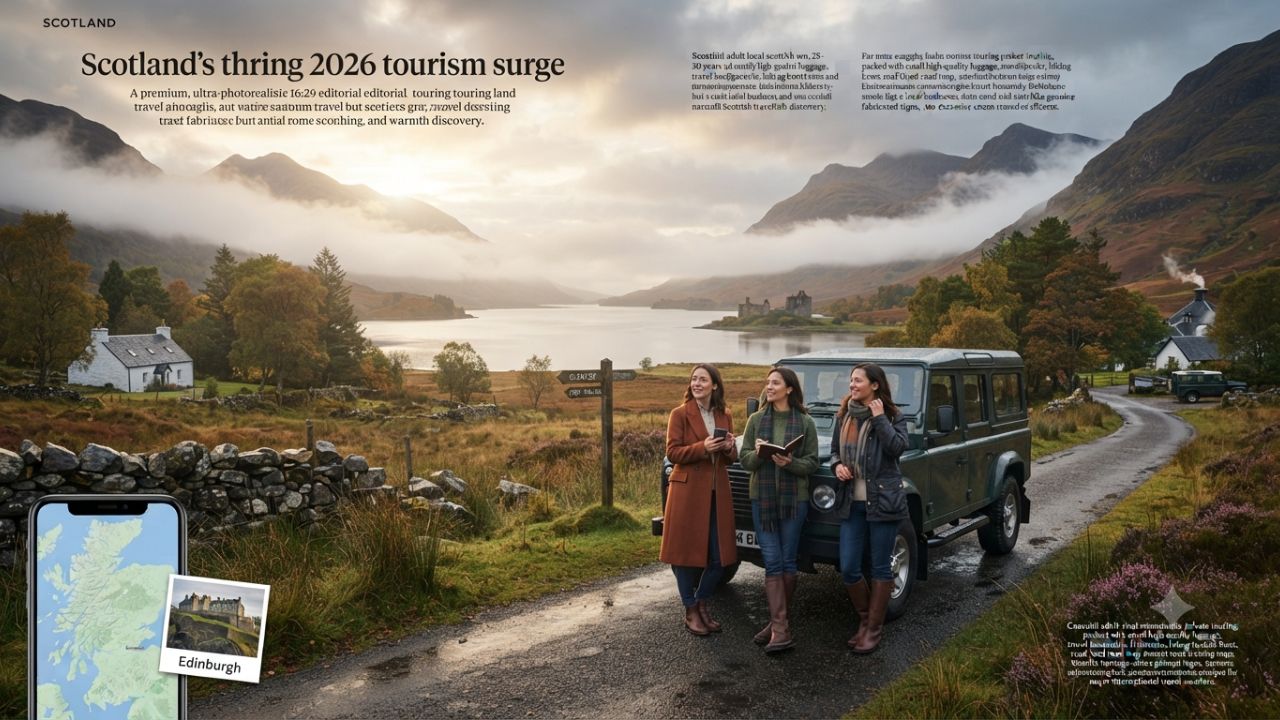
Image generated by AI
Scotland's tourism industry achieved record-breaking performance during the third quarter, driven by 95 percent hotel occupancy rates in Edinburgh, 3.2 million annual visitors in Glasgow, and a surging high-yield North American market.
Surging transatlantic air connectivity into Edinburgh Airport and expanded regional itineraries across the Highlands have distributed tourist expenditure nationwide. Official indicators from VisitScotland confirm that high-spending international travelers, scotch whisky heritage trails, and premium golf tourism are driving sustained economic growth across both urban centers and rural communities.
Edinburgh Gateways Lead Inbound Performance During August Festival Season
Edinburgh continues to function as Scotland’s primary international travel hub, logging unprecedented visitor traffic during the peak autumn festival calendar. Driven by international arts attendees and North American "Set-Jetting" travelers, August hotel occupancy in the capital pushed past 95 percent across metropolitan properties and the surrounding Lothians.
The iconic Edinburgh Festival Fringe alone generated over 3.5 million ticket sales, solidifying its position as the world's largest cultural gathering. Transatlantic air routes linking major US hubs straight into Edinburgh have streamlined transit, with American holidaymakers extending average stay durations to 7 to 8 nights while committing heavy expenditure to luxury lodging and private chauffeured tours.
Glasgow Expands Urban Hospitality and Culinary Tourism
In the central belt, Glasgow captured record third-quarter leisure travel, recording upward of 3.2 million overnight visitors annually. Supported by robust live music venues, arts festivals, and industrial heritage attractions, the city leveraged its targeted "Scran Seekers" culinary campaign to draw international gastronomy enthusiasts.
Scotland Metropolitan Tourism Impact Model
├── Edinburgh Hub : 95% August Hotel Occupancy | 3.5M+ Fringe Ticket Sales
├── Glasgow Hub   : 3.2M+ Annual Overnight Guests | "Scran Seekers" Culinary Focus
└── Direct Impact : Transatlantic US travelers averaging 7 to 8-night itineraries
Glasgow Airport logged sustained passenger traffic increases, while city-center hoteliers benefited from travelers using the urban center as a base for exploring the west coast and nearby lochs.
Scottish Highlands and North Coast 500 Experience Capacity Influx
The Scottish Highlands and Islands continue to serve as a primary destination anchor, capturing over 2.8 million overnight tourist stays annually. Drive-market tourism along the famous North Coast 500 (NC500) route generated substantial economic activity across rural communities throughout Caithness and Sutherland.
Simultaneously, a shift toward sustainable "Adventure Luxe" travel has transformed traditional group bus excursions into bespoke, private chauffeured itineraries. Flagship scenic locations—including Loch Ness, Glencoe, and the Isle of Skye—recorded heavy daily footfall, with local tour operators reporting record booking rates for high-end wilderness experiences.
Regional Tourism Sector Matrix
| Scottish Tourism Region | Primary Economic Driver | Key Statistical Benchmark | Target Traveler Demographic |
|---|---|---|---|
| Edinburgh / Lothians | Cultural festivals, set-jetting, luxury stays | 95% August hotel occupancy; 3.5M+ Fringe tickets | Transatlantic US & European culture seekers |
| Glasgow City Region | Music events, industrial heritage, culinary tours | 3.2M+ annual overnight visitors | Urban explorers, MICE delegates, food tourists |
| Scottish Highlands | North Coast 500, wilderness private touring | 2.8M+ annual overnight stays | High-net-worth "Adventure Luxe" travelers |
| Aberdeenshire & Moray | Speyside whisky trail, historic castles, golf links | £85M+ direct whisky tourism spend | Golf enthusiasts, malt whisky connoisseurs |
| Argyll and Bute | Coastal wellness, Oban seafood, island hopping | 900+ annual cruise ship calls across Scotland | Maritime tourists, eco-wellness travelers |
Whisky Trails and Championship Golf Drive Affluent Spending
Northeastern Scotland experienced a sharp surge in international arrivals driven by heritage sports and culinary tourism. In Aberdeenshire and Moray, global interest in authentic Scotch whisky trails along the Speyside route contributed to national distillery visitation metrics that exceed 2.2 million annual visitors, generating over £85 million in direct spending.
Niche High-Yield Tourism Revenue Components
├── Scotch Whisky Tourism : £85M+ Direct Spend | 2.2M+ Annual Distillery Visits
├── Championship Golf     : £300M+ Direct Economic Impact | 550+ National Courses
├── Domestic Tourism      : £1.4B+ Direct Overnight Expenditure
└── Maritime Cruise Sector: 900+ Annual Ship Calls to Scottish Ports
Concurrently, Scotland’s network of over 550 golf courses injects approximately £300 million annually into the economy. Aberdeenshire's championship links courses drew high-spending international players, generating direct revenue for local luxury lodges, fine dining establishments, and caddy networks.
Coastal Maritime Tourism and Island Dispersal in Argyll and Bute
Along the western seaboard, Argyll and Bute recorded strong booking numbers across ferry networks connecting Mull, Islay, and Oban. Hailed as the Seafood Capital of Scotland, Oban functioned as an essential hub for niche culinary tourists and island-hopping itineraries.
On Islay, expanded distillery operations welcomed international whisky enthusiasts during the shoulder season. Across the nation, Scottish ports collectively handle over 900 cruise ship calls annually, channeling day-visitors into coastal hubs like Oban, Greenock, and Invergordon, supporting local artisan crafts and maritime transport providers.
VisitScotland Dispersal Framework and Visitor Levy Strategies
Domestic overnight travelers contribute over £1.4 billion to the national economy, supporting a broader tourism footprint that handles nearly 92 million combined day and overnight visits annually across urban and rural zones.
To prevent overcrowding at traditional hotspots, national tourism bodies like VisitScotland are deploying regional dispersal strategies and supporting municipal visitor levy frameworks. Programs such as the Tourism Accommodation Registration Scheme aim to manage visitor density while channeling infrastructure funding directly back into local host communities.
Why This Matters
Scotland's third-quarter tourism performance demonstrates how cultural heritage, luxury infrastructure, and targeted regional dispersal can build a high-yielding, resilient visitor economy. For international travelers—particularly from North America—direct flight corridors, extended stay durations, and tailored private itineraries make exploring both urban hubs and remote Highland routes highly accessible.
For regional business operators, the growth of whisky tourism, championship golf, and coastal maritime routes extends visitor spending well past peak summer months into shoulder seasons. By balancing high-density urban events in Edinburgh and Glasgow with sustainable "Adventure Luxe" travel in the Highlands, Scotland continues to set a benchmark for European destination management.
FAQ: Scotland Q3 Tourism Surge 2026
What drove Scotland's third-quarter tourism boom in 2026?
The growth was driven by high North American inbound demand, 95 percent hotel occupancy during Edinburgh's festival season, strong culinary tourism in Glasgow, and luxury private road trips across the Highlands.
How much do whisky and golf tourism contribute to Scotland's economy?
Scotch whisky tourism generates over £85 million directly from 2.2 million distillery visits annually, while Scotland's 550+ golf courses contribute approximately £300 million in direct economic value.
What is the North Coast 500 (NC500) and how does it impact the Highlands?
The North Coast 500 is a premier 516-mile scenic driving route around the northern coast of Scotland, bringing vital tourist spending and luxury "Adventure Luxe" travel to rural communities in Caithness and Sutherland.
How many tourists visit Glasgow and Edinburgh annually?
Edinburgh's Festival Fringe alone draws over 3.5 million ticket sales during August, while Glasgow registers upward of 3.2 million overnight visitors annually.
Related Travel Guides
Disclaimer
This article is for informational and educational purposes only. It does not constitute legal, financial, or professional advice. While we strive to provide accurate and up-to-date information, travel policies, regulations, and conditions change rapidly. Always verify information with official sources before making travel decisions. Nomad Lawyer makes no representations about the accuracy, reliability, completeness, or suitability of the information provided. Readers should consult qualified professionals for advice specific to their circumstances. The views expressed in this article are those of the author and do not necessarily reflect the views of Nomad Lawyer.
Kunal K Choudhary
Co-Founder & Contributor
A passionate traveller and tech enthusiast. Kunal contributes to the vision and growth of Nomad Lawyer, bringing fresh perspectives and driving the community forward.
Learn more about our team →