
Schengen Entry Exit System (EES) Crisis 2026: Five-Hour Airport Queues Trigger Urgent Reform Calls
International travelers face five-hour delays at European borders as the Schengen Entry Exit System (EES) faces operational failure, prompting ACI EUROPE and A4E to demand immediate regulatory reforms.

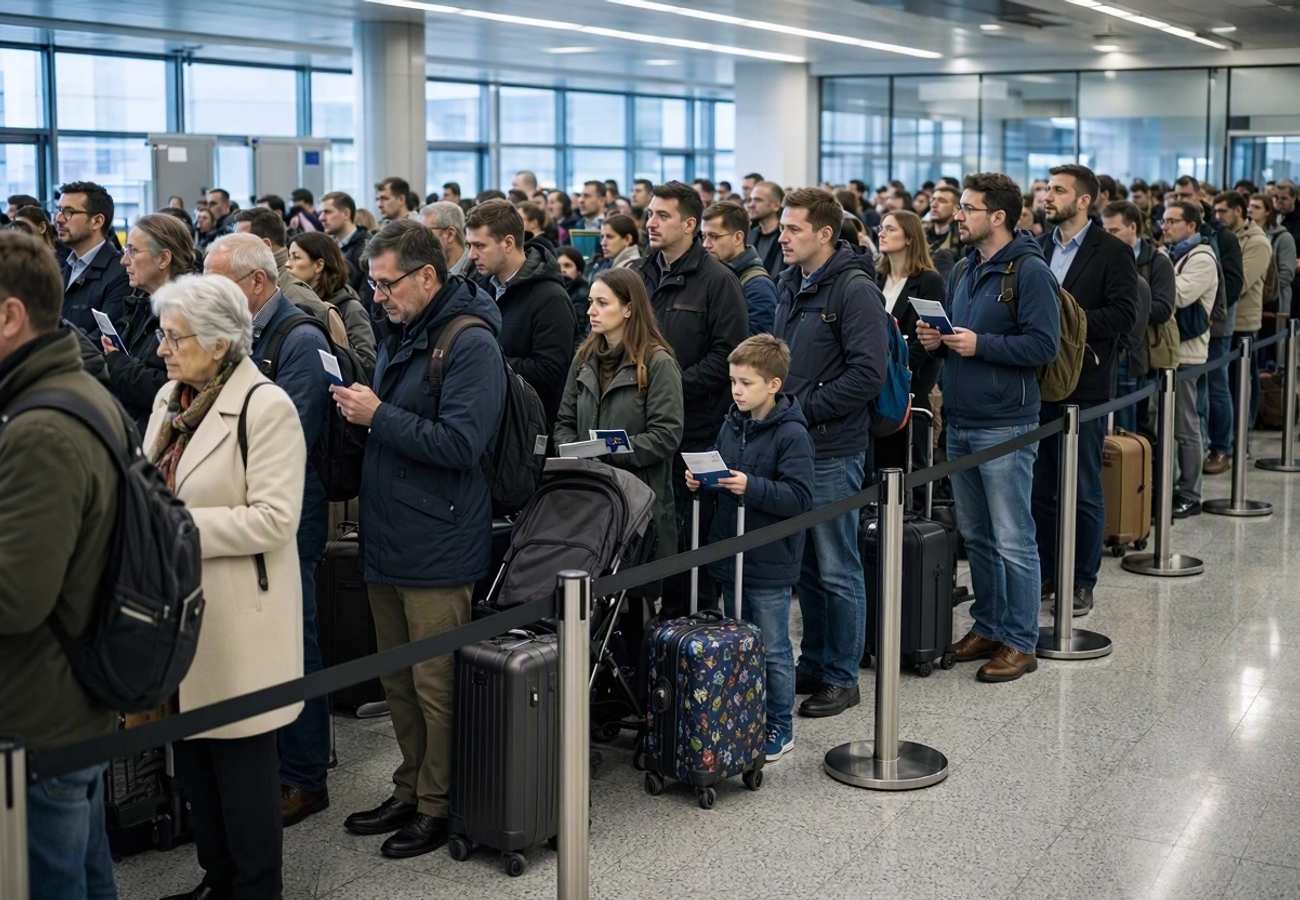
Image generated by AI
A non-EU passenger landing at a major European hub this morning finds themselves trapped in a serpentine queue that stretches past the immigration hall and into the terminal corridors. After three hours of waiting, they realize their connecting flight departs in ninety minutes, but the biometric kiosks are malfunctioning and the staffing levels are insufficient to clear the backlog. This is the new reality for thousands of international travelers as the Schengen Entry Exit System (EES) struggles under its own operational weight.
The Schengen EES Operational Failure: Timeline and Facts
The Entry/Exit System (EES), designed to modernize border management across 29 European nations, has transitioned from a security promise to a logistical nightmare. While the system began a phased rollout on 12 October 2025, it reached full implementation on 10 April 2026. Instead of streamlining the process, the digital transition has created severe bottlenecks at international entry points.
Aviation industry bodies, specifically Airports Council International Europe (ACI EUROPE) and Airlines for Europe (A4E), report that the system is currently unable to handle peak passenger volumes. The primary friction points are the mandatory collection of facial images and fingerprints for eligible non-EU travelers, which has replaced the traditional passport stamping method.
The crisis is compounded by a "perfect storm" of technical instability in the digital infrastructure and a chronic shortage of border control personnel. This has resulted in a systemic failure where the time required to process a single passenger has increased, leading to queues that frequently exceed two hours and peak at five hours.
Impact Analysis: Delay Statistics and Systemic Weaknesses
The following table outlines the current operational disparities between the EES objectives and the actual passenger experience.
| Metric | EES Design Objective | Current 2026 Reality | Primary Cause of Failure |
|---|---|---|---|
| Average Wait Time | Minimal/Automated | 2 to 5 Hours | Staff shortages & tech glitches |
| Processing Method | Digital/Biometric | Manual Overload | Unreliable self-service kiosks |
| Registration | Pre-arrival via App | Post-arrival Bottlenecks | Underutilized "Travel to Europe" app |
| Border Flow | Seamless Transition | Terminal Congestion | Double verification requirements |
| Implementation | Full (since April 10, 2026) | Operational Crisis | Inconsistent deployment of e-gates |
Your Rights as a Passenger
When border delays lead to missed flights or prolonged detention in terminals, passengers often feel powerless. However, depending on the cause of the delay and the nature of your ticket, several protections apply.
1. Duty of Care and Airline Responsibility If a border delay causes you to miss a connecting flight on the same booking, the airline is generally responsible for rebooking you on the next available flight. While border control is a government function (not an airline function), airlines must still provide assistance if the disruption occurs within their managed transit zones.
2. EU261/2004 Compensation Limitations Under EU Regulation 261/2004, compensation is typically granted for delays caused by the airline. Border control delays are often categorized as "extraordinary circumstances," meaning airlines may not be required to pay cash compensation for the delay itself. However, they are still obligated to provide "duty of care" (meals, refreshments, and hotel accommodation if an overnight stay is required).
3. Documentation and Evidence If you suffer financial loss due to these five-hour queues, you must document the delay. Take photos of the queues, keep your boarding passes, and request a written statement from the airport authority or the European Union Aviation Safety Agency (EASA) regarding the disruption. This evidence is vital for travel insurance claims.
Rebooking Strategy and Alternatives
If you are currently caught in an EES queue or planning a trip to the Schengen area, utilize these tactical steps to minimize risk:
- Pre-Registration Strategy: Use the "Travel to Europe" application to submit your data within 72 hours before arrival. While the app has not reached full potential, pre-registered passengers are often prioritized or processed faster through specific channels.
- Buffer Zone Planning: For those with connecting flights, avoid "tight" connections (under 3 hours) at major hubs like Paris (CDG), Frankfurt (FRA), or Amsterdam (AMS) until the EES reforms are implemented.
- Alternative Entry Points: If your itinerary allows, consider entering the Schengen area via smaller, secondary airports which may have shorter queues than the primary global hubs.
- Real-Time Monitoring: Use FlightRadar24 to monitor the arrival density at your destination. If ten wide-body aircraft land simultaneously, expect the five-hour peak delay.
The Six-Point Reform Plan for EES
To prevent a total collapse of airport efficiency, ACI EUROPE and A4E have proposed a specific regulatory overhaul:
- Elimination of Double Verification: Removing the need to verify the same data multiple times during a single entry.
- Biometric Optimization: Streamlining the facial and fingerprint capture process to reduce per-passenger processing time.
- Profile Consolidation: Resolving the issue of duplicate EES profiles that trigger manual reviews and administrative delays.
- Digital Portal Upgrade: Enhancing the "Travel to Europe" app to ensure more data is captured before the passenger reaches the booth.
- Harmonized E-Gates: Standardizing the use of automated border control gates for all eligible non-EU nationals across all 29 countries.
- Emergency Biometric Suspension: Implementing a permanent "pressure valve" mechanism that allows authorities to temporarily suspend biometric collection during extreme congestion to keep terminals safe.
FAQ: Schengen EES Disruptions 2026
Am I entitled to compensation for a missed flight due to EES queues? Generally, no cash compensation under EU261, as border delays are "extraordinary circumstances." However, your airline must rebook you and provide meals/hotels if the delay is overnight.
Can I avoid the EES biometric checks? No. For eligible non-EU citizens, the biometric recording (fingerprints and facial images) is a legal requirement for entry into the Schengen area as of April 2026.
How can I speed up my entry process? Download the "Travel to Europe" app and complete your pre-registration 72 hours before your flight to reduce the amount of data entered at the border.
What should I do if I miss my connection due to a 5-hour queue? Immediately locate your airline's transit desk. Request a rebooking and ask for a "delay certificate" or a timestamped note confirming the border congestion for your insurance provider.
The digital border is only as strong as its slowest kiosk.
Related Travel Guides
Disclaimer
This article is for informational and educational purposes only. It does not constitute legal, financial, or professional advice. While we strive to provide accurate and up-to-date information, travel policies, regulations, and conditions change rapidly. Always verify information with official sources before making travel decisions. Nomad Lawyer makes no representations about the accuracy, reliability, completeness, or suitability of the information provided. Readers should consult qualified professionals for advice specific to their circumstances. The views expressed in this article are those of the author and do not necessarily reflect the views of Nomad Lawyer.
Kunal K Choudhary
Co-Founder & Contributor
A passionate traveller and tech enthusiast. Kunal contributes to the vision and growth of Nomad Lawyer, bringing fresh perspectives and driving the community forward.
Learn more about our team →