
Saudia Boeing 787 Clips Parked Philippine Airlines Airbus A320 at Manila Airport to Trigger Jeddah Flight Cancellation
A Saudia Boeing 787 wingtip clipped a parked Philippine Airlines Airbus A320 tail at Manila Airport, forcing flight cancellations and safety reviews.

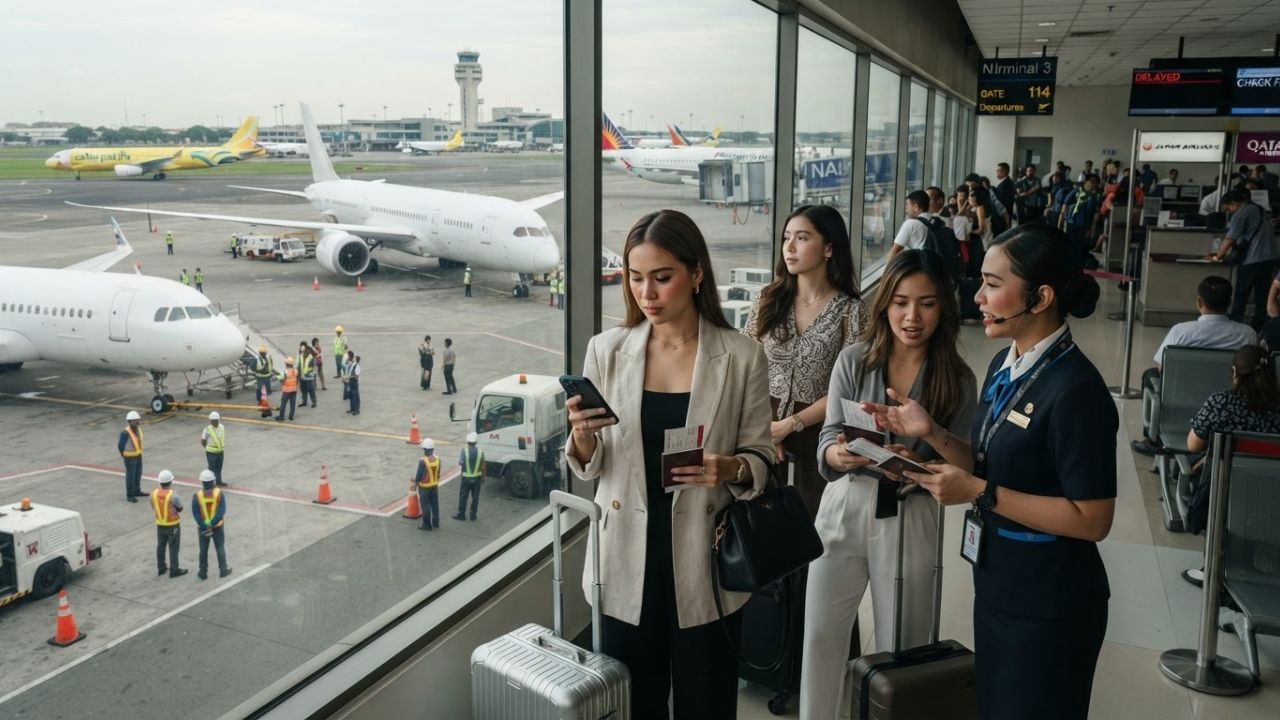
Image generated by AI
[Manila, July 8, 2026] — A ground movement accident at Manila's Ninoy Aquino International Airport (NAIA) has disrupted international schedules. A departing Saudia Boeing 787 clipped the rudder assembly of a parked Philippine Airlines Airbus A320.
Industry observers note that ground movement collisions present serious risks to airline scheduling yields. The wingtip of the Saudia Dreamliner made contact with the tail fin of the parked Airbus jet. Fortunately, airport officials confirmed that no injuries occurred during the incident.
The collision forced the immediate cancellation of Saudia Flight SV871, which was bound for Jeddah. Both commercial passenger planes were grounded so engineers could conduct structural safety reviews.
Wingtip and Rudder Contact Disrupts Long-Haul Jeddah Service
The incident happened during evening taxiing operations at Manila's primary international gateway. The Saudia Boeing 787 was moving along the apron toward the runway when the contact occurred.
The parked Philippine Airlines Airbus A320 was unoccupied at the time, with no crew or passengers on board. The impact damaged the Airbus jet's rudder, which controls the aircraft's yaw and flight path.
Aviation safety protocols require that both aircraft undergo structural inspections before returning to service. Saudia deplaned the passengers from Flight SV871 and began rebooking procedures.
Multi-National Implications of Boeing and Airbus Ground Collision
The incident involves four different country angles, reflecting the global nature of modern commercial aviation operations.
Saudi Arabia is involved as Saudia is the national carrier, and the cancelled flight was heading to Jeddah. The Philippines is the location of the accident, involving the country's national carrier and busiest airport.
The United States is linked because the taxiing aircraft was a Boeing 787, manufactured in America. France is involved as the struck aircraft was an Airbus A320, built by the European aviation consortium.
Ninoy Aquino International Airport Capacity Constraints and Tarmac Congestion
Ninoy Aquino International Airport has faced growing traffic demands over recent years. The airport handled a record 52.02 million passengers in 2025, pushing its terminal and airfield capacity to the limit.
As passenger volume rises, the density of aircraft movements on taxiways and aprons increases. High traffic increases the risk of ground collisions, particularly during peak departure banks.
Our analysis of the flight data indicates that taxiway clearances are tightly sequenced at NAIA. When large widebody aircraft operate close to parked narrowbody jets, the margin for error is reduced.
Aircraft Accident Investigation and Inquiry Board Mandate
The Civil Aviation Authority of the Philippines (CAAP) has launched an investigation into the ground collision. The inquiry is led by the Aircraft Accident Investigation and Inquiry Board (AAIIB).
Investigators will review air traffic control logs, cockpit voice recordings, and airport camera footage. They will check whether ground marshals were present and if taxiway markings were visible.
The board will also assess the wingtip clearances of the Saudia Boeing 787 along the specific taxi route. The final report will help determine if ground routing changes are required at NAIA.
Operational Contingency Management for Disrupted Passengers
A cancelled long-haul flight like the Manila-Jeddah service creates immediate logistical challenges. Jeddah serves as a major entry hub for migrant workers, business travelers, and religious pilgrims.
Saudia had to arrange hotel accommodation and alternative routes for the stranded passengers. Travelers connecting through Jeddah to destinations in the Middle East and Europe faced knock-on delays.
Meanwhile, Philippine Airlines had to adjust its domestic schedule. The grounded Airbus A320 was scheduled for subsequent flights, requiring the carrier to find replacement aircraft.
Airlines and Aircraft Involved in Manila Ground Collision
| Operational Category | Saudia Taxiing Aircraft | Philippine Airlines Parked Aircraft |
|---|---|---|
| Operating Carrier | Saudia (Saudi Arabia) | Philippine Airlines (Philippines) |
| Aircraft Manufacturer | The Boeing Company (United States) | Airbus SE (France/European Union) |
| Aircraft Model | Boeing 787 Dreamliner | Airbus A320 |
| Flight Assignment | Flight SV871 to Jeddah | Parked at terminal stand |
| Area of Contact | Wingtip section | Rudder and vertical stabilizer |
| Passenger Status | Deplaned safely; no injuries | Unoccupied; no passengers onboard |
| Repair Requirements | Wingtip structural inspection | Tail fin and rudder testing |
Ninoy Aquino International Airport Operational Traffic
| Traffic Metric Year | Passenger Volume (Millions) | Operational Network Status |
|---|---|---|
| 2023 | 45.3 million passengers | Post-pandemic route recovery |
| 2024 | 48.9 million passengers | Expansion of long-haul services |
| 2025 | 52.02 million passengers (Record) | High congestion on taxiways and gates |
| 2026 (Projected) | Over 53.5 million passengers | Ongoing ground safety modernization |
Investigational Focus Areas for Tarmac Accidents
| Investigation Area | Safety Equipment Evaluated | Operational Safety Objective |
|---|---|---|
| Taxiway Clearance | Airport ground radar logs | Verifies aircraft followed assigned path |
| Apron Spacing | Painted surface markings | Assesses if parked jet was inside safety box |
| Ground Guidance | Marshaller signals / Towing records | Checks if wingtip guides were deployed |
| Cockpit Visibility | Flight deck window geometry | Analyzes pilot line-of-sight during turn |
Key Takeaways
- Tarmac collision: A Saudia Boeing 787 clipped a parked PAL Airbus A320 at Manila Airport.
- Flight cancelled: Saudia Flight SV871 to Jeddah was cancelled following the collision.
- No injuries: No passengers or crew members were injured in either aircraft.
- Tail fin damage: The PAL Airbus A320 sustained damage to its rudder assembly.
- Investigation active: The CAAP Aircraft Accident Investigation Board is reviewing ground procedures.
Why This Matters
Our analysis of the flight data indicates that minor ground contact between a widebody wingtip and a narrowbody tail fin triggers high repair costs. Modern passenger jets utilize carbon-fiber composites that do not bend like aluminum under impact. Instead, they suffer internal delamination, which requires non-destructive testing to detect. These specialized engineering inspections keep aircraft out of service for weeks, reducing fleet utilization rates.
Furthermore, high-capacity airports like NAIA (52.02 million passengers in 2025) face mounting ground traffic risks during peak-hour pushbacks. When multiple flights depart simultaneously, taxiways become congested. Ground controllers must manage tight clearances, increasing the risk of wingtip clips if pilots or marshallers make minor judgment errors.
Additionally, the incident represents a multi-national supply chain disruption. With Saudia operating a U.S.-built Boeing 787 and PAL using a French-built Airbus A320, securing replacement parts requires coordination with overseas suppliers. If replacement rudder sections or wingtip fairings are delayed, both airlines face extended capacity shortages.
Industry Outlook
Market trends suggest that congested hubs will implement automated ground collision warning systems to assist pilots during taxiing. Expect airlines to enforce stricter towing procedures during night pushes. In the short term, investigators will focus on verifying the exact coordinates of the parked Airbus A320 relative to its gate lines.
FAQ
What happened in the Saudia Boeing 787 NAIA ground incident? A Saudia Boeing 787 taxiing for departure clipped a parked, empty Philippine Airlines Airbus A320, causing damage to both aircraft.
Were any passengers injured in the Manila Airport collision? No. There were no injuries reported among the passengers or crew on either plane.
Which flight was cancelled due to the tarmac accident? The scheduled Saudia Flight SV871 from Manila to Jeddah was cancelled, and passengers were deplaned.
Which agency is investigating the ground collision in Manila? The Aircraft Accident Investigation and Inquiry Board (AAIIB) of the Civil Aviation Authority of the Philippines (CAAP) is leading the inquiry.
Related Travel Guides
- JFK Airport Flight Cancellations: Airspace Reductions and Severe Weather Disrupt Transatlantic Summer Travel Coordinated by Delta and JetBlue
- Boston Logan International Airport Delays Mount as Airspace Volume and Air Traffic Control Initiatives Constrain New England Flights
- Miami International Airport Flight Cancellations: American, Delta, United, and Envoy Air Suspend Key Domestic and Caracas Routes
Disclaimer
This article is for informational and educational purposes only. It does not constitute legal, financial, or professional advice. While we strive to provide accurate and up-to-date information, travel policies, regulations, and conditions change rapidly. Always verify information with official sources before making travel decisions. Nomad Lawyer makes no representations about the accuracy, reliability, completeness, or suitability of the information provided. Readers should consult qualified professionals for advice specific to their circumstances. The views expressed in this article are those of the author and do not necessarily reflect the views of Nomad Lawyer.
Kunal K Choudhary
Co-Founder & Contributor
A passionate traveller and tech enthusiast. Kunal contributes to the vision and growth of Nomad Lawyer, bringing fresh perspectives and driving the community forward.
Learn more about our team →