
Saudi Arabia Travel Warning 2026: Riyadh King Khalid Airport Security Alerts and Flight Logistics
Critical security updates for travelers transiting through Riyadh following attacks at King Khalid International Airport, including FCDO warnings, EASA airspace restrictions, and essential passenger rights for cancelled flights.

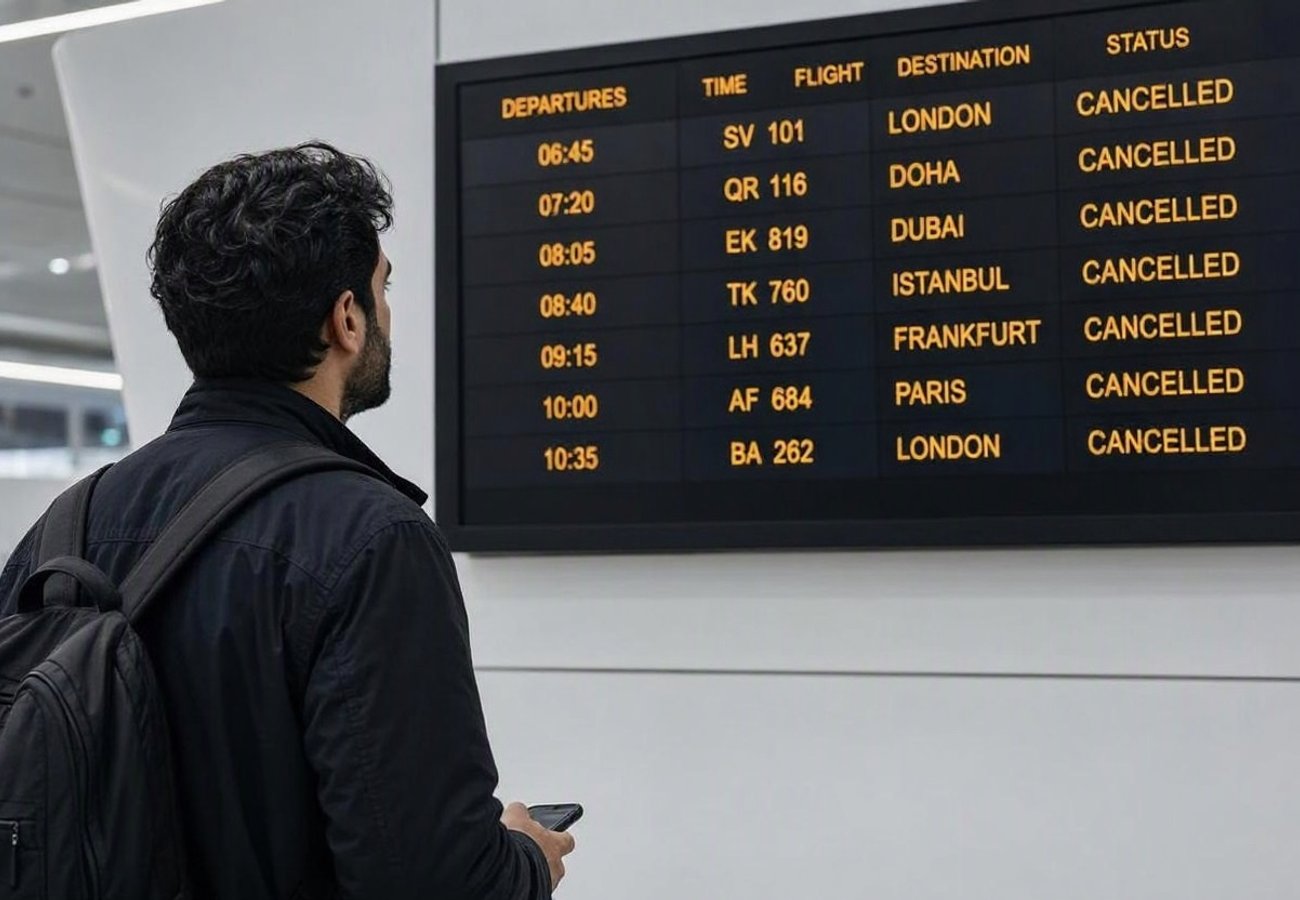
Image generated by AI
Are you currently booked on a flight to or through Riyadh? Following targeted attacks at King Khalid International Airport, travelers must now navigate a complex web of airspace restrictions and updated security advisories.
Security Breach at King Khalid International Airport
On 8 October 2026, two distinct attacks targeted facilities at King Khalid International Airport and a Saudia aircraft. According to the General Authority of Civil Aviation (GACA), these incidents resulted in the deaths of three Saudi nationals. While the UAE and Qatari foreign ministries have attributed these actions to the Houthi group in Yemen, specific details regarding the aircraft model targeted and the total number of injuries remain undisclosed by official sources.
It is imperative for travelers to distinguish these events from earlier, separate attacks in Abha and at King Khalid airport, which resulted in the deaths of three foreign nationals (Moroccan, Algerian, and Sudanese). These were independent incidents and should not be conflated with the 8 October casualty figures.
Regional Airspace and Travel Restrictions
The current security environment has led to a tiered warning system. The Foreign, Commonwealth & Development Office (FCDO) has issued specific guidance based on the level of risk in different provinces.
| Region/Location | Advisory Status | Scope of Warning |
|---|---|---|
| Riyadh Province | All but essential travel | Includes King Khalid International Airport |
| Aseer, Najran, Jizan | All but essential travel | High-risk border provinces |
| Taif City & Airport | All but essential travel | Specific urban and aviation hubs |
| Yemen Border (10km zone) | Against all travel | Strict no-entry zone |
Furthermore, the European Union Aviation Safety Agency (EASA) updated its airspace bulletin on 9 October. This directive instructs airline operators to avoid specific sectors of Saudi airspace at all altitudes. This bulletin remains active until 16 November 2026, unless revised. The risks identified by EASA include not only terrorist activity but also the danger of falling debris and air-defense interceptions.
Traveler Logistics Guide
If your itinerary includes a stop in Riyadh, you cannot rely solely on a "confirmed" status in your booking app. Logistics in high-risk zones change by the hour.
1. Route Validation Check every segment of your journey. If you are flying from London to Dubai via Riyadh, you are subject to the Riyadh province warning even if your final destination is safe. Contact your carrier to confirm if the flight is operating or if the route has been diverted.
2. Transit Visa Contingencies A flight cancellation or a significant delay can trigger a change in your legal status. Under current guidance, a transit visa is generally required if:
- You must pass through immigration to access a hotel.
- You are traveling on separate tickets (requiring baggage reclamation).
- Your layover exceeds 12 hours. If your airline reroutes you through a different city or extends your stay in Riyadh, verify your visa status immediately to avoid being denied boarding or detained.
3. Managing Flight Cancellations If your flight is cancelled due to security risks, your rights depend on the operating carrier and the jurisdiction of the ticket. Under UK passenger rights:
- Refunds: You can request a full refund of the ticket cost.
- Rerouting: You can request the earliest possible replacement flight.
- Duty of Care: Airlines must provide meals, communication, and hotel accommodation for overnight delays. Note: Security attacks are often classified as "extraordinary circumstances," which may exempt airlines from paying fixed monetary compensation, though they must still provide rerouting or refunds.
4. Documentation and Monitoring Ensure your passport is current and monitor local authorities. Because airspace closures occur with almost no notice, maintain a direct line of communication with your travel agent or airline's emergency desk.
Regional Connectivity Impact
The recent escalation has shifted the risk profile for the entire Jeddah Flight Information Region. While Jeddah remains a primary hub, the instability in Riyadh and the southern provinces is forcing airlines to conduct more rigorous risk assessments for every flight entering Saudi airspace. This likely means longer flight durations due to avoidance maneuvers and a higher probability of short-notice schedule changes. Travelers should anticipate increased security screenings at all Saudi ports of entry.
FAQ: Riyadh Transit Logistics 2026
Do I need a transit visa for a Riyadh layover? If you stay airside and your layover is under 12 hours on a single ticket, you typically do not. However, if you leave the airport or have separate tickets, a visa is mandatory.
What does "all but essential travel" actually mean? It means the government advises against tourism or leisure trips. You should only travel if you have urgent business or family commitments that cannot be postponed.
Is my travel insurance valid during a security alert? This depends on when you bought the policy. Many insurers will not cover "known events" after a warning is issued. Check your policy's "Force Majeure" or "Terrorism" clauses.
Will flights return to normal by November 16? The EASA bulletin expires on 16 November, but this is a regulatory review date, not a guarantee of safety. Flight operations depend on real-time security assessments.
Stay vigilant and prioritize official government advisories over third-party booking status.
Related Travel Guides
Disclaimer
This article is for informational and educational purposes only. It does not constitute legal, financial, or professional advice. While we strive to provide accurate and up-to-date information, travel policies, regulations, and conditions change rapidly. Always verify information with official sources before making travel decisions. Nomad Lawyer makes no representations about the accuracy, reliability, completeness, or suitability of the information provided. Readers should consult qualified professionals for advice specific to their circumstances. The views expressed in this article are those of the author and do not necessarily reflect the views of Nomad Lawyer.
Raushan Kumar
Founder & Lead Developer
Full-stack developer with 11+ years of experience and a passionate traveller. Raushan built Nomad Lawyer from the ground up with a vision to create the best travel and law experience on the web.
Learn more about our team →