
Travel Travellers Grounded: 34 Saudi Arabia Flight Cancellations Strand Thousands
Over 100 flight delays and 34 cancellations at Saudi airports left thousands of travelers stranded across Riyadh, Jeddah, Dammam and Medina in March 2026.

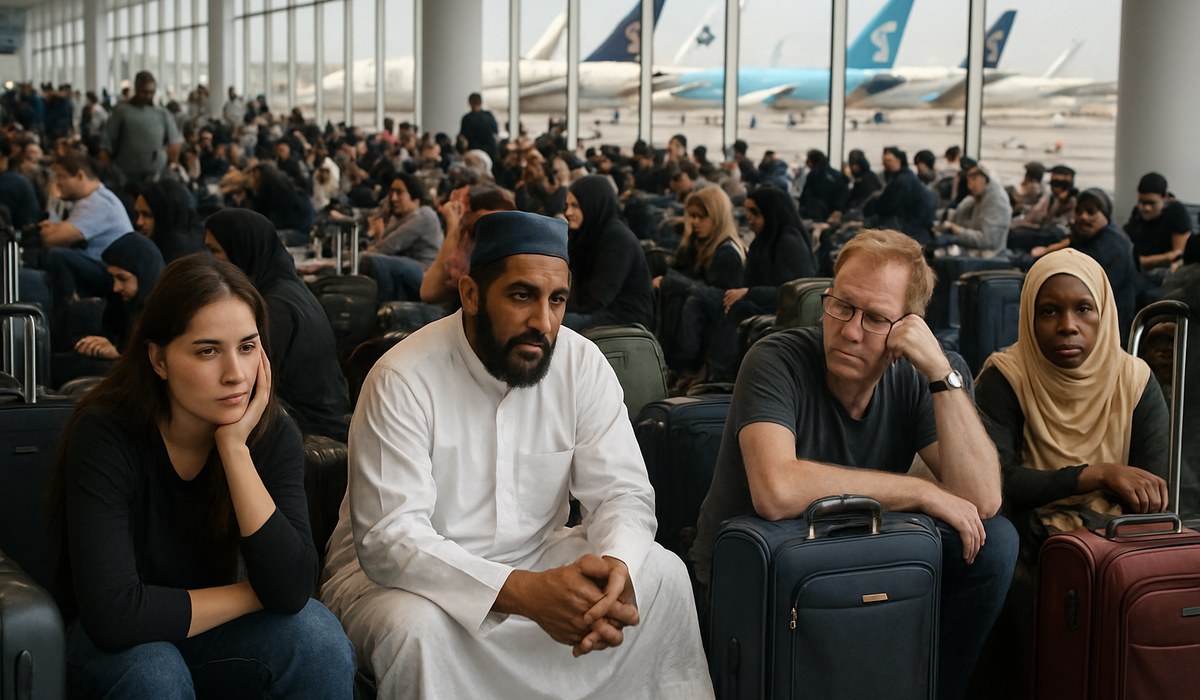
Image generated by AI
**> Quick Summary
- 34 flights cancelled and over 100 delayed across four major Saudi Arabian airports on March 28, 2026
- Multiple carriers affected including Gulf Air, Saudia, KLM Royal Dutch Airlines, Air Cairo, and EgyptAir
- Thousands of passengers stranded at Riyadh, Jeddah, Dammam, and Medina airports
- Regional connectivity disrupted as Gulf aviation faces cascading operational failures**
Thousands of international and domestic travelers remain stranded across Saudi Arabia today as a wave of flight cancellations and delays paralyzed operations at the Kingdom's four busiest airports. Thirty-four flights were scrapped entirely, while more than 100 additional departures experienced significant delays, creating a ripple effect throughout the Gulf region's aviation network.
The disruption has exposed critical vulnerabilities in Middle Eastern air travel infrastructure, affecting passengers traveling between Europe, North Africa, and the Arabian Peninsula. Carriers operating through Riyadh's King Khalid International Airport (RUH), Jeddah's King Abdulaziz International Airport (JED), King Fahd International Airport in Dammam (DMM), and Prince Mohammad bin Abdulaziz International Airport in Medina (MED) confirmed operational suspensions beginning early morning March 28.
What Caused the Mass Flight Disruptions Across Saudi Arabia
Aviation authorities have not yet released an official explanation for the widespread cancellations, though industry analysts point to a combination of technical issues, air traffic management constraints, and possible security protocols. The timing coincides with heightened regional tensions following the recent drone-related airport shutdown in Kuwait, raising questions about coordinated safety measures across Gulf Cooperation Council nations.
Weather conditions remained normal throughout the affected areas, eliminating meteorological factors as a primary cause. Initial reports from aviation tracking services suggest the disruptions originated from systemic operational challenges rather than isolated incidents at individual airports.
Flight data monitoring platforms recorded abnormal ground stop patterns beginning at approximately 06:15 local time, with affected airlines progressively suspending additional services throughout the morning hours. By midday, the cancellation count had reached 34 confirmed flights, with delays averaging between 90 minutes and seven hours for remaining departures.
The General Authority of Civil Aviation (GACA) has not issued a formal statement regarding the root cause, though airport operations teams confirmed implementing enhanced screening procedures that may have contributed to processing bottlenecks.
Which Airlines and Routes Are Most Affected
Gulf Air, the Bahrain-based carrier, cancelled six flights connecting Manama to Riyadh and Jeddah, leaving business travelers and pilgrimage visitors without alternative routing options. The airline's regional network, which relies heavily on Saudi connections, faced cascading delays across its Persian Gulf routes.
Saudi Arabia's flagship carrier Saudia suspended 11 domestic and international flights, including critical connections to Cairo, Dubai, and London. The airline operates over 200 daily flights from Saudi airports, making even partial suspensions significant for regional connectivity.
KLM Royal Dutch Airlines cancelled its Amsterdam-Riyadh service, affecting approximately 240 passengers transiting through Europe. The Dutch carrier's single daily frequency to the Saudi capital meant stranded travelers faced wait times exceeding 24 hours for alternative routing through partner airlines.
Air Cairo and EgyptAir together scrapped nine flights linking Egyptian cities to Jeddah and Medina, severely disrupting religious tourism traffic. March represents peak Umrah season, when hundreds of thousands of pilgrims travel to Islam's holy sites. According to FlightAware's live tracking data, the Egyptian carriers' cancellations affected an estimated 1,800 passengers specifically traveling for religious purposes.
Additional carriers experiencing disruptions included Emirates, Etihad Airways, and flynas, Saudi Arabia's leading low-cost carrier. Domestic routes between Riyadh, Jeddah, and Dammam saw particular congestion as airlines attempted to consolidate passengers onto remaining available flights.
The impact extended beyond direct cancellations. Over 100 flights reported delays exceeding two hours, creating knock-on effects for connecting passengers traveling through Saudi airports to destinations across Asia, Africa, and Europe. FlightRadar24 tracking showed abnormal departure queues at all four affected airports persisting into evening hours.
Passenger Rights and Compensation Options
Travelers affected by the cancellations hold specific entitlements under international aviation regulations, though the exact compensation depends on ticket origin and carrier policies. Saudi Arabia's aviation consumer protection framework follows modified versions of international standards, requiring airlines to provide minimum assistance during irregular operations.
Under IATA guidelines for irregular operations, carriers must offer passengers:
Immediate rebooking on the next available flight at no additional charge, regardless of fare class purchased. Airlines cannot require passengers to pay fare differences when involuntarily rescheduled due to carrier-controlled cancellations.
Meal vouchers and refreshments when delays exceed three hours. Several passengers reported receiving minimal assistance at Jeddah and Riyadh terminals, with airline service desks overwhelmed by rebooking requests.
Hotel accommodation for overnight delays when the next available flight departs the following day. This applies to both origin and destination points if passengers are stranded mid-journey.
Full refund options for those choosing not to travel, including return portions of round-trip tickets even if the outbound segment was completed.
Compensation amounts vary significantly. European passengers traveling on EU-based carriers like KLM may qualify for €250-€600 under EU Regulation 261/2004, depending on flight distance and delay duration. However, this regulation only applies when flights depart from EU airports or involve EU carriers arriving in Europe.
For flights operated by Gulf carriers departing from Saudi Arabia, compensation follows less standardized protocols. Passengers should reference the specific passenger rights during airline incidents applicable to their ticket contracts.
Documentation remains essential for claim processing. Travelers should:
- Retain all boarding passes and cancellation notifications from airlines
- Photograph departure boards showing flight status
- Collect written confirmation of cancellation reasons from airline staff
- Save receipts for meals, accommodation, and transportation expenses incurred due to delays
- Submit claims within 24 months of the scheduled travel date
Credit card travel insurance may provide additional coverage for non-refundable hotel bookings and prepaid tours missed due to flight disruptions.
How to Track Alternative Flights and Rebook
Stranded passengers face limited immediate options given the scale of disruptions across multiple carriers. Real-time flight monitoring becomes essential for identifying the earliest available departures.
Aviation tracking platforms offer the most current information during mass cancellation events. Passengers can monitor Saudi airport status through specialized tools showing live departure queues, gate assignments, and estimated recovery timelines.
For those seeking alternative routing:
Check partner airline availability through alliance networks. Saudia operates within the SkyTeam alliance, allowing rebooking on Delta, Air France, and Kenya Airways flights. Gulf Air partners with multiple carriers through codeshare agreements.
Consider nearby departure airports in neighboring Gulf states. Bahrain International Airport (BAH) sits just 80 kilometers from Saudi Arabia's Eastern Province, connected by the King Fahd Causeway. Kuwait International Airport (KWI) and Qatar's Hamad International Airport (DOH) offer alternative Gulf departure points, though ground transportation adds complexity.
Monitor airport recovery announcements through official GACA channels and individual airline mobile applications. Airlines typically restore normal operations in phases, prioritizing long-haul international flights before regional services.
Explore rail alternatives for domestic Saudi travel. The Haramain High-Speed Railway connecting Mecca, Jeddah, and Medina provides rapid ground transportation for pilgrims and business travelers, though capacity limitations prevent absorbing large passenger volumes during aviation disruptions.
The broader context of growing Middle East travel infrastructure highlights how dependent the region remains on aviation for connectivity. Unlike Europe or North America, limited high-speed rail alternatives mean flight cancellations create disproportionate travel disruptions.
Recovery timelines remain uncertain as of this publication. Historical patterns from similar Gulf region disruptions suggest normal operations resuming within 36-48 hours, though cascade effects may persist for several days as airlines reposition aircraft and crew.
FAQ: Saudi Arabia Flight Cancellations and Delays
Why were so many flights cancelled across Saudi Arabia on March 28, 2026?
Authorities have not released official explanations for the 34 cancellations and over 100 delays. Initial reports suggest operational challenges affecting air traffic management systems rather than weather or isolated technical issues. The timing follows regional security concerns that may have prompted enhanced screening protocols.
Which Saudi airports are experiencing the worst disruptions?
King Abdulaziz International Airport in Jeddah reported the highest cancellation count with 14 affected flights, followed by King Khalid International in Riyadh with 11 cancellations. Dammam and Medina airports each experienced 4-5 cancellations but proportionally higher delay percentages given smaller total flight volumes.
Am I entitled to compensation for cancelled Saudi Arabia flights?
Compensation eligibility depends on your departure location and carrier. European passengers on EU-based airlines may claim €250-€600 under EU261 regulations. Gulf carrier passengers should reference ticket contract terms, which typically guarantee rebooking and assistance but not fixed monetary compensation unless local regulations require it.
How can I find alternative flights during this disruption?
Check your airline's mobile app for automatic rebooking notifications first. Contact alliance partner carriers if your original airline cannot accommodate you within 24 hours. Monitor real-time availability through aviation tracking platforms and consider nearby Gulf airports if ground transportation is feasible.
What should I do if I'm currently stranded at a Saudi airport?
Proceed to your airline's service desk immediately to request rebooking, meal vouchers, and hotel accommodation if needed. Document all expenses and interactions for potential compensation claims. Avoid booking alternative flights independently without confirming your original ticket's refund or rebooking status, as airlines may refuse reimbursement for self-arranged travel.
Related Articles:
- Kuwait International Airport Shutdown Following Drone Strikes
- Faena Unveils Cultural Middle East Expansion Plans for 2026
- JetBlue Mint Incident: What Passengers Should Know About Airline Compensation
Disclaimer
This article is for informational and educational purposes only. It does not constitute legal, financial, or professional advice. While we strive to provide accurate and up-to-date information, travel policies, regulations, and conditions change rapidly. Always verify information with official sources before making travel decisions. Nomad Lawyer makes no representations about the accuracy, reliability, completeness, or suitability of the information provided. Readers should consult qualified professionals for advice specific to their circumstances. The views expressed in this article are those of the author and do not necessarily reflect the views of Nomad Lawyer.
Raushan Kumar
Founder & Lead Developer
Full-stack developer with 11+ years of experience and a passionate traveller. Raushan built Nomad Lawyer from the ground up with a vision to create the best travel and law experience on the web.
Learn more about our team →