
World Cup 2026 Surge Temporarily Masks Santa Monica's Long Term Tourism Volume Decline
Santa Monica is seeing a World Cup visitor surge, but underlying volume remains far below its pre-pandemic peak of 8.7 million.

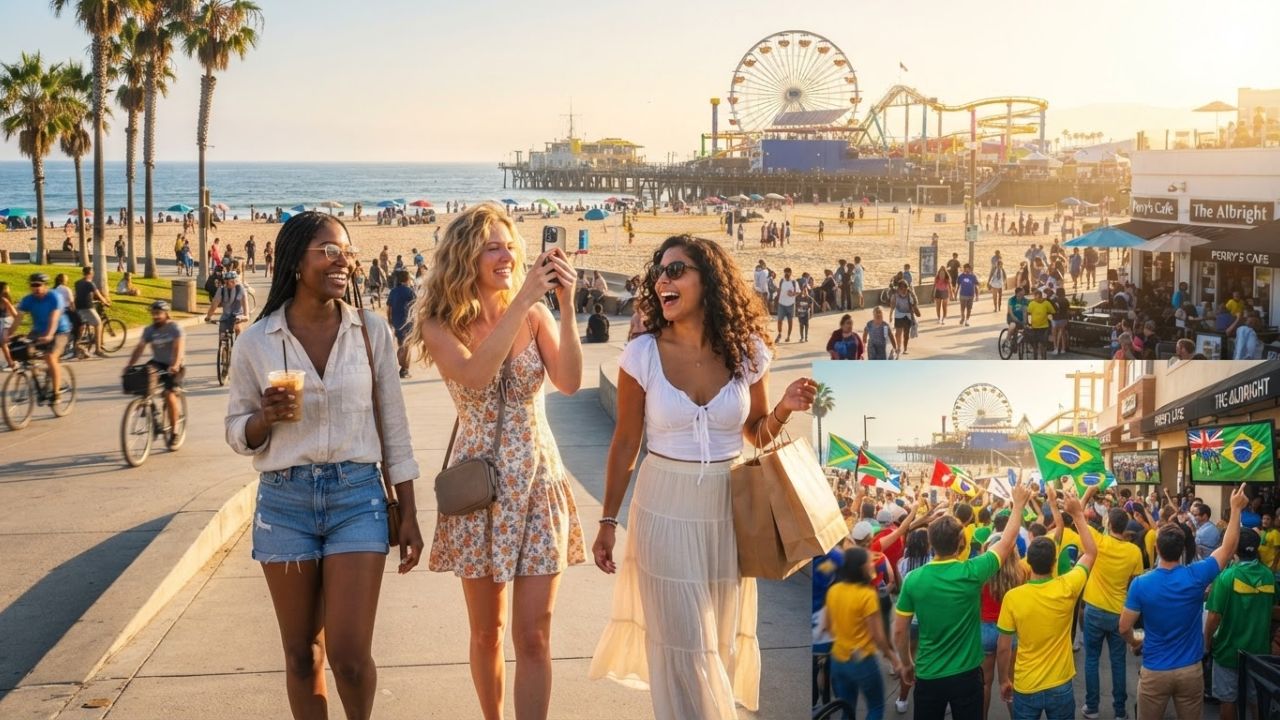
Image generated by AI
World Cup 2026 Surge Temporarily Masks Santa Monica's Long Term Tourism Volume Decline
SEO Title: Santa Monica Tourism World Cup Recovery 2026 Meta Description: Santa Monica is seeing a World Cup visitor surge, but underlying volume remains far below its pre-pandemic peak of 8.7 million. Slug: /santa-monica-tourism-world-cup-recovery-2026 Standfirst: The 2026 FIFA World Cup has brought a massive visitor surge to Santa Monica, generating record beach parking revenues. However, municipal data reveals that the temporary sports boom is masking a steep, long-term drop in total tourist volume compared to pre-pandemic peaks.
Article
[Santa Monica, July 10, 2026] — Muscular consumer spending from international soccer fans has temporarily revived Santa Monica's coastal economy. Since matches began in mid-June, hundreds of thousands of fans have flooded the city's beaches and retail zones. The regional Big Blue Bus transit network has delivered over 5,000 passenger rides to fans traveling from SoFi Stadium, which is hosting eight matches.
Local businesses report elevated revenues and high reservation rates. Beach parking collections generated $969,000 during the first thirteen days of the tournament, representing a 44 percent increase year-over-year. Downtown municipal garages collected over $624,000 as peak parking capacities were reached.
Despite the current tournament windfall, Santa Monica's broader tourism volume remains severely depressed. The city recorded only 3.89 million tourists recently, down eight percent year-over-year. This is a dramatic decline from the 2017 peak, when the beach destination welcomed 8.71 million international and domestic visitors.
During the 2020 pandemic lockdowns, arrivals collapsed to two million. Although tourist spending neared $1 billion last year, the physical headcount has failed to recover. Regional security concerns, slow international flight recovery at Los Angeles International Airport (LAX), and high visa costs continue to limit arrivals.
Other Southern California destinations are recovering much faster than Santa Monica. San Diego welcomed approximately 32 million visitors during the 2024 fiscal year, reaching 90 percent of its historical peak. West Hollywood has exceeded its 2019 levels, with unique visitor counts growing by four percent.
Santa Barbara has also fully recovered its pre-pandemic hospitality spending. The city drew 6.5 million tourists who spent $2.24 billion in the local economy. Santa Monica officials attribute their slower recovery to strict local health regulations that lasted longer than in competing counties, driving corporate events elsewhere.
Data Table
Southern California Tourism Performance Comparison
| Destination City | Recent Visitor Volume | Pre-Pandemic / Historical Peak | Recovery Percentage |
|---|---|---|---|
| Santa Monica | 3.89 Million | 8.71 Million (2017) | 44.6% |
| San Diego | 32.00 Million | 35.50 Million | 90.1% |
| Santa Barbara | 6.50 Million | 6.50 Million | 100.0% |
| West Hollywood | Exceeded pre-COVID | 2019 baseline | 104.0% |
Key Takeaways
- World Cup Surge: Hundreds of thousands of soccer fans have visited Santa Monica watch parties since mid-June.
- Parking Revenue: Beach parking generated over $969,000 in the first 13 days of matches, up 44% year-over-year.
- Volume Deficit: Santa Monica recorded only 3.89 million annual visitors, down from its 8.71 million peak in 2017.
- Competitive Contrast: Nearby cities like San Diego and Santa Barbara have recovered over 90% of their historical capacity.
Why This Matters
Our analysis of the Southern California hospitality data indicates that Santa Monica's tourism crisis is structural rather than temporary. While mega-events like the World Cup and the upcoming Olympics provide short-term capital infusions, they mask a fundamental shift in regional travel patterns. Travelers are increasingly choosing destinations like San Diego and Santa Barbara, which have faster transit linkages and lower parking costs. Additionally, Santa Monica's heavy reliance on international long-haul visitors—especially from Asian and European markets—leaves its economy vulnerable to flight capacity deficits at LAX. When international routes contract, domestic travelers are not spending enough to offset the loss of high-yield overseas tourists. To achieve sustainable recovery, the city must address safety perceptions, upgrade the historical pier infrastructure, and diversify its retail mix away from dependency on international shopping tourism.
Industry Outlook
Market trends suggest that hospitality revenues will stabilize temporarily as Olympic preparations begin in Southern California. However, year-round occupancy rates will remain under pressure until international flight routes to LAX return to pre-pandemic frequencies. Travelers should plan for elevated parking rates and dense crowds near transit corridors during matches.
FAQ
How has the 2026 World Cup impacted Santa Monica's economy?
The tournament has brought hundreds of thousands of fans, generating over $969,000 in beach parking and boosting downtown garage revenue to $624,000 in its first 13 days.
What is the long-term visitor deficit in Santa Monica?
The city welcomed only 3.89 million tourists recently, representing a drop of more than 55 percent compared to its 2017 peak of 8.71 million.
Why is Santa Monica recovering slower than San Diego or West Hollywood?
Strict local health mandates that lasted longer, security perceptions, and slower international airline recovery at LAX have all contributed to the delayed return of travelers.
Related Travel Guides
- Brevard North Carolina Experiences Eco Tourism Boom as Travelers Visit Land of Waterfalls
- Santa Fe Claims Top Spot in Annual U.S. Travel Rankings as Smaller Cultural Destinations Outperform New York City
- Micro Vacations Redefine United States Tourism Market as Short Duration Travel Gains Massive Traction
- Americans Redirect Summer Travel from Middle East to Safer Alternatives in the Americas Amid Regional Geopolitical Tensions
Disclaimer
This article is for informational and educational purposes only. It does not constitute legal, financial, or professional advice. While we strive to provide accurate and up-to-date information, travel policies, regulations, and conditions change rapidly. Always verify information with official sources before making travel decisions. Nomad Lawyer makes no representations about the accuracy, reliability, completeness, or suitability of the information provided. Readers should consult qualified professionals for advice specific to their circumstances. The views expressed in this article are those of the author and do not necessarily reflect the views of Nomad Lawyer.
Preeti Gunjan
Contributor & Community Manager
A passionate traveller and community builder. Preeti helps grow the Nomad Lawyer community, fostering engagement and bringing the reader experience to life.
Learn more about our team →